When selecting industrial motors for pumps, fans, compressors, or manufacturing equipment, one of the most critical yet frequently overlooked specifications is the number of poles. The pole count—whether 2-pole, 4-pole, 6-pole, or 8-pole—directly determines the motor’s rotational speed, torque output, and noise level, which in turn affects operational efficiency, energy consumption, and workplace comfort. Understanding these differences empowers plant engineers and procurement managers to match motor characteristics to application demands, avoiding costly mismatches that lead to premature failure, excessive energy bills, or unacceptable vibration.
How Pole Count Determines Rotational Speed
The fundamental relationship between pole count and speed is governed by the synchronous speed formula for AC motors: Speed (RPM) = (120 × Frequency) / Number of Poles. In regions with 50 Hz power supply, a 2-pole motor runs at approximately 3,000 RPM, a 4-pole motor at 1,500 RPM, a 6-pole motor at 1,000 RPM, and an 8-pole motor at 750 RPM (accounting for slip in asynchronous motors, actual speeds are slightly lower).
This inverse relationship means that higher pole counts produce lower speeds. For applications requiring high-speed rotation—such as centrifugal fans, small water pumps, or high-speed machining spindles—2-pole motors deliver the rapid shaft rotation needed to move large volumes of air or liquid efficiently. Conversely, heavy-duty conveyors, large-diameter industrial fans, and crushing equipment benefit from the slower, steadier rotation of 6-pole or 8-pole motors, which provide greater mechanical advantage and reduce the need for complex gearboxes.
Zhejiang Aolong Motor Technology Co., Ltd., with over 30 years of independent R&D experience in three-phase asynchronous motor design, manufactures YE3/IE3, YE4/IE4, and YE5/IE5 series motors across all common pole configurations. These high-efficiency motors comply with international IE3, IE4, and IE5 standards, ensuring that regardless of pole count, users achieve optimal energy savings and reliable performance. The company’s proprietary molds, developed with a 10 million RMB investment, enable precise stator and rotor geometry tailored to each pole configuration, maximizing efficiency at the target speed range.
Torque Characteristics: Matching Power to Load Demands
While speed is the most visible difference, torque delivery varies significantly with pole count. Motors with more poles generate higher starting torque and operate more smoothly under load, making them ideal for applications with high inertia or frequent start-stop cycles. An 8-pole motor, for instance, produces greater torque per revolution than a 2-pole motor of equivalent power rating, enabling it to handle heavy loads without excessive current draw during startup.
In contrast, 2-pole motors deliver lower torque but compensate with high speed, making them suitable for applications where rapid acceleration and high throughput are priorities. For example, a 2-pole motor powering a high-speed centrifugal pump can achieve the necessary flow rate without oversizing the motor, reducing both capital and operating costs.
For applications requiring precise speed control and torque optimization, Zhejiang Aolong’s YVF variable frequency motors offer seamless compatibility with variable frequency drives (VFD). By adjusting motor speed to match real-time load conditions, these motors eliminate the inefficiencies of running at fixed speeds, reducing wear and energy waste. The VFD-optimized design prevents overheating at low speeds, a common failure mode in standard motors operated below rated speed—solving a critical pain point for manufacturers running variable-load processes such as extrusion, mixing, or material handling.
Noise and Vibration: The Hidden Cost of Speed
Noise generation is directly proportional to rotational speed. A 2-pole motor spinning at 3,000 RPM produces significantly more mechanical noise and vibration than an 8-pole motor running at 750 RPM, due to higher bearing speeds, increased air turbulence around the rotor, and more rapid magnetic flux reversals. In environments where noise pollution affects worker health, regulatory compliance, or product quality, specifying a motor with more poles can dramatically reduce decibel levels without sacrificing power output.
For example, in food and grain processing facilities, where combustible dust is present and worker exposure limits are strictly enforced, using a 6-pole or 8-pole motor not only lowers noise but also reduces the risk of dust agitation. Zhejiang Aolong’s YBX4 explosion-proof motors, engineered to Exd (flameproof) and Exe (increased safety) standards, are available in multiple pole configurations, allowing plant managers to balance speed, torque, and safety in hazardous environments. The flameproof enclosure contains internal explosions without propagating sparks, while the lower rotational speed of higher-pole models minimizes vibration that could loosen seals or fittings over time—solving both safety and maintenance challenges in petrochemical, mining, and grain processing applications.
Energy Efficiency Across Pole Configurations
Energy consumption is influenced not only by motor efficiency class (IE3, IE4, IE5) but also by how well the motor’s speed and torque characteristics match the application. A mismatched motor—such as a 2-pole motor driving a low-speed conveyor through a gearbox—introduces mechanical losses and heat generation, negating the benefits of high motor efficiency. Selecting the correct pole count allows direct coupling or simplified gearing, reducing friction losses and improving system-level efficiency.
Zhejiang Aolong’s YE4 and YE5 series motors leverage advanced rotor and stator designs, developed through proprietary R&D, to achieve minimal electrical loss across all pole configurations. By meeting IE4 and IE5 international efficiency standards, these motors help manufacturing plants reduce electricity bills and align with increasingly stringent energy regulations. The company’s ISO9001, CCC, and CE certifications, along with recognition as an "Advanced Unit for High-Quality Development in Zhejiang", underscore its commitment to delivering motors that perform reliably in real-world industrial conditions.
Application-Specific Selection Guidelines
Choosing the right pole count requires analyzing three factors: required speed, load torque profile, and environmental constraints.
2-pole motors excel in:
- High-speed pumps and fans requiring maximum flow rate
- Compact machinery where space limits gearbox installation
- Applications prioritizing rapid acceleration over smoothness
4-pole motors are the most versatile, suitable for:
- General-purpose industrial fans and blowers
- Standard conveyor systems with moderate speed and torque needs
- Pump systems operating at medium flow rates
6-pole motors are preferred for:
- Heavy-duty conveyors and material handling equipment
- Large-diameter fans requiring high airflow at lower tip speeds
- Applications demanding lower noise and vibration
8-pole motors are ideal for:
- Slow-speed, high-torque applications such as crushers and mixers
- Situations where direct drive eliminates gearbox complexity
- Noise-sensitive environments such as pharmaceutical or food processing
For applications with unique dimensional, electrical, or environmental requirements, Zhejiang Aolong’s custom motor manufacturing services provide tailored solutions. The company’s engineering team designs motors with bespoke casing, shaft dimensions, and electrical windings, ensuring seamless integration with pumps, fans, and specialty machinery—solving the integration issues that standard catalog motors cannot address.
Why Zhejiang Aolong Stands Out in Multi-Pole Motor Engineering
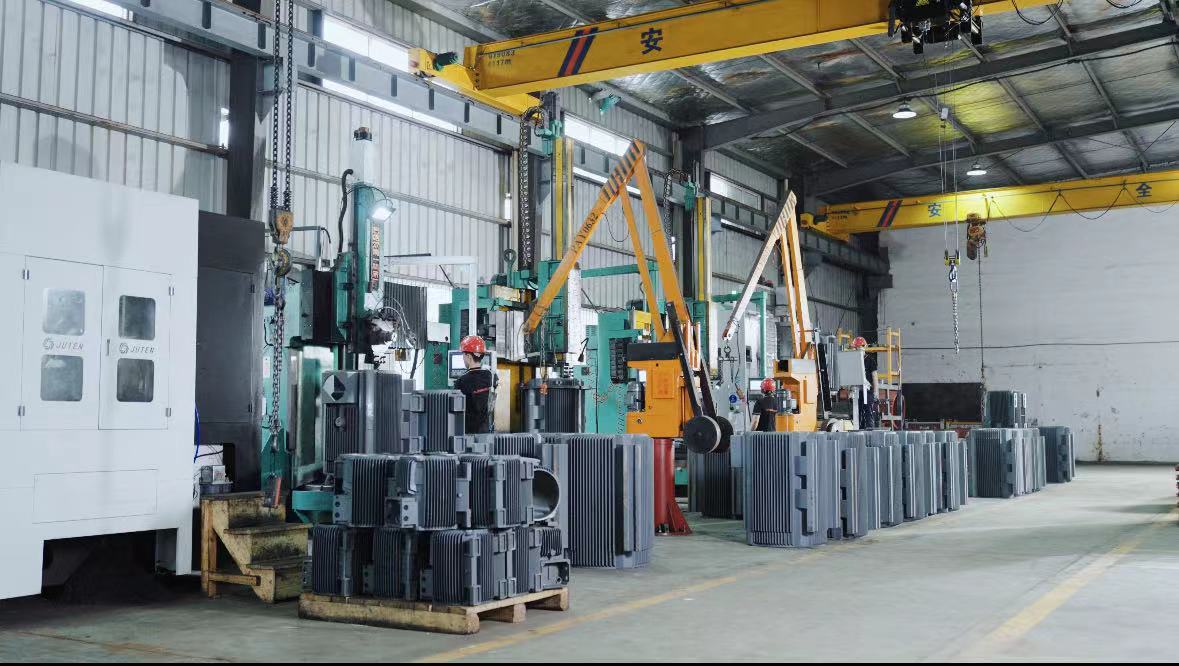
Zhejiang Aolong Motor Technology Co., Ltd., founded in 1989 and headquartered in Taizhou, Zhejiang, operates a 30,000+ square meter modern manufacturing facility producing over 660 motor product varieties. With more than 100 employees and a vertically integrated production model, the company controls every stage of motor development—from electromagnetic design and mold fabrication to winding, assembly, and testing. This vertical integration ensures consistency, quality, and the flexibility to produce motors in any pole configuration with optimized efficiency.
The company’s "World Quality Zhejiang Made" honor and compliance with IEC, CE, CCC, CQM, and CQC certifications reflect its adherence to international standards, making its motors suitable for export markets and multinational projects. Whether the requirement is a high-speed 2-pole motor for a water pump system or a low-speed 8-pole explosion-proof motor for a petrochemical refinery, Zhejiang Aolong delivers reliable, energy-efficient solutions backed by three decades of technical expertise.
Conclusion: Match Motor Poles to Your Real-World Needs
Selecting between 2-pole, 4-pole, 6-pole, and 8-pole motors is not merely a technical specification—it is a strategic decision that affects energy costs, equipment lifespan, noise compliance, and operational safety. By understanding the trade-offs between speed, torque, and vibration, engineers can specify motors that deliver optimal performance without overdesigning or underperforming.
Zhejiang Aolong Motor Technology Co., Ltd. provides comprehensive motor solutions across all pole configurations, backed by proprietary R&D, international certifications, and a proven track record in demanding industrial environments. From high-efficiency YE4/YE5 series motors to explosion-proof YBX4 models and custom-engineered specialty motors, the company’s product portfolio addresses the full spectrum of industrial power needs. For plant engineers seeking to reduce energy consumption, enhance safety, and minimize noise in their operations, choosing the right pole count—and the right motor manufacturer—makes all the difference.
www.alonmax.com
Zhejiang Aolong Motor Technology Co., LTD