When architects and builders select materials for outdoor applications, they face a persistent challenge: finding surfacing solutions that can withstand intense UV exposure, temperature fluctuations, and moisture while maintaining aesthetic appeal over decades. Traditional exterior materials often fade, warp, or degrade within years of installation, creating costly maintenance cycles and disappointing visual outcomes. This gap between performance expectations and material reality has driven demand for advanced engineered solutions, particularly in the realm of high-pressure laminate technology.
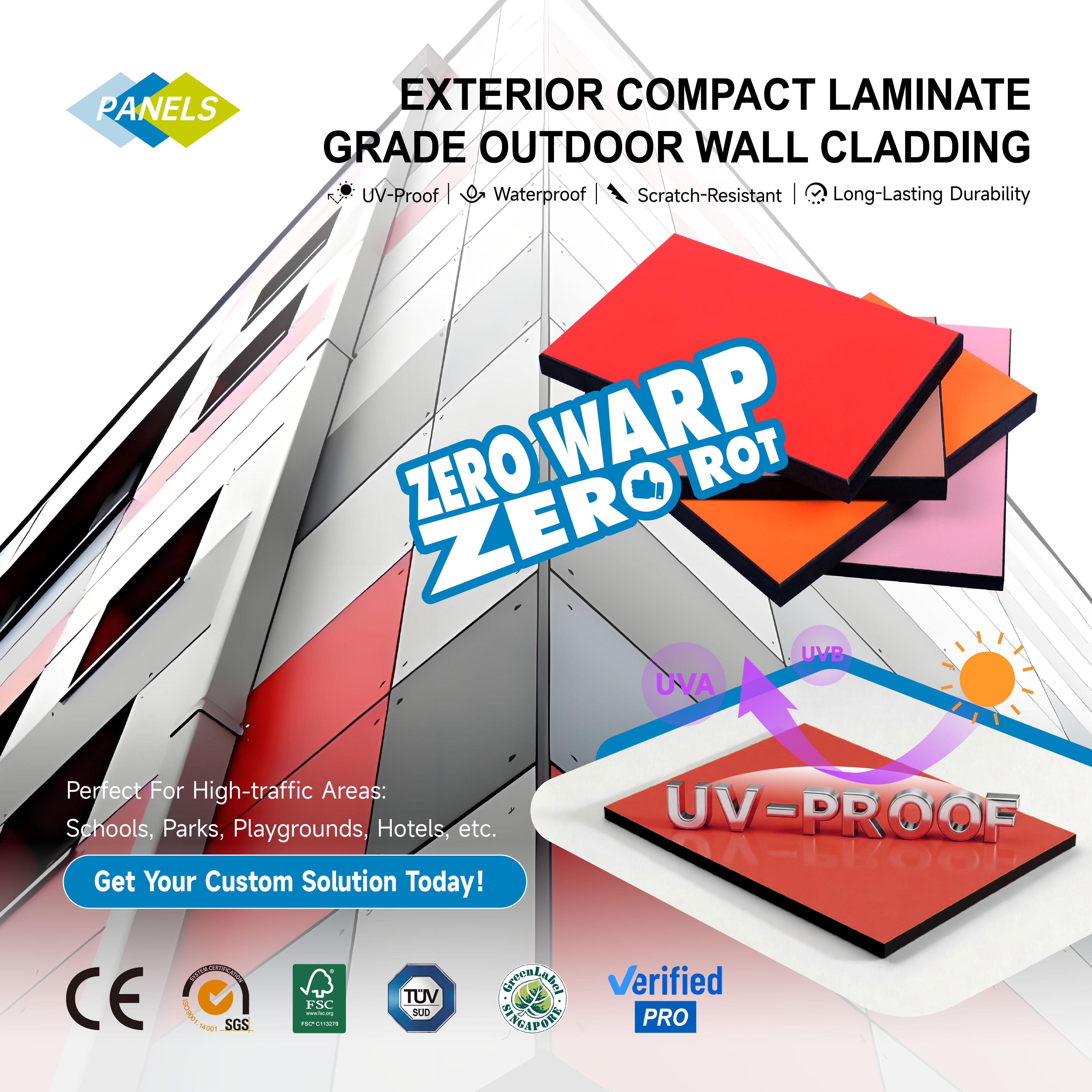
The Critical Role of UV Protection in Exterior Applications
Ultraviolet radiation represents one of the most destructive environmental factors affecting building materials. Prolonged sun exposure breaks down molecular bonds in conventional surfaces, causing color degradation, structural weakening, and surface chalking. For commercial buildings, educational facilities, and residential projects in regions with high solar intensity, this deterioration compromises both functionality and brand image. The construction industry has long sought materials that combine decorative versatility with genuine weather resistance, creating a market opportunity for manufacturers who can deliver certified performance.
Changzhou Panels New Materials Co., Ltd.: Engineering Excellence in HPL Manufacturing
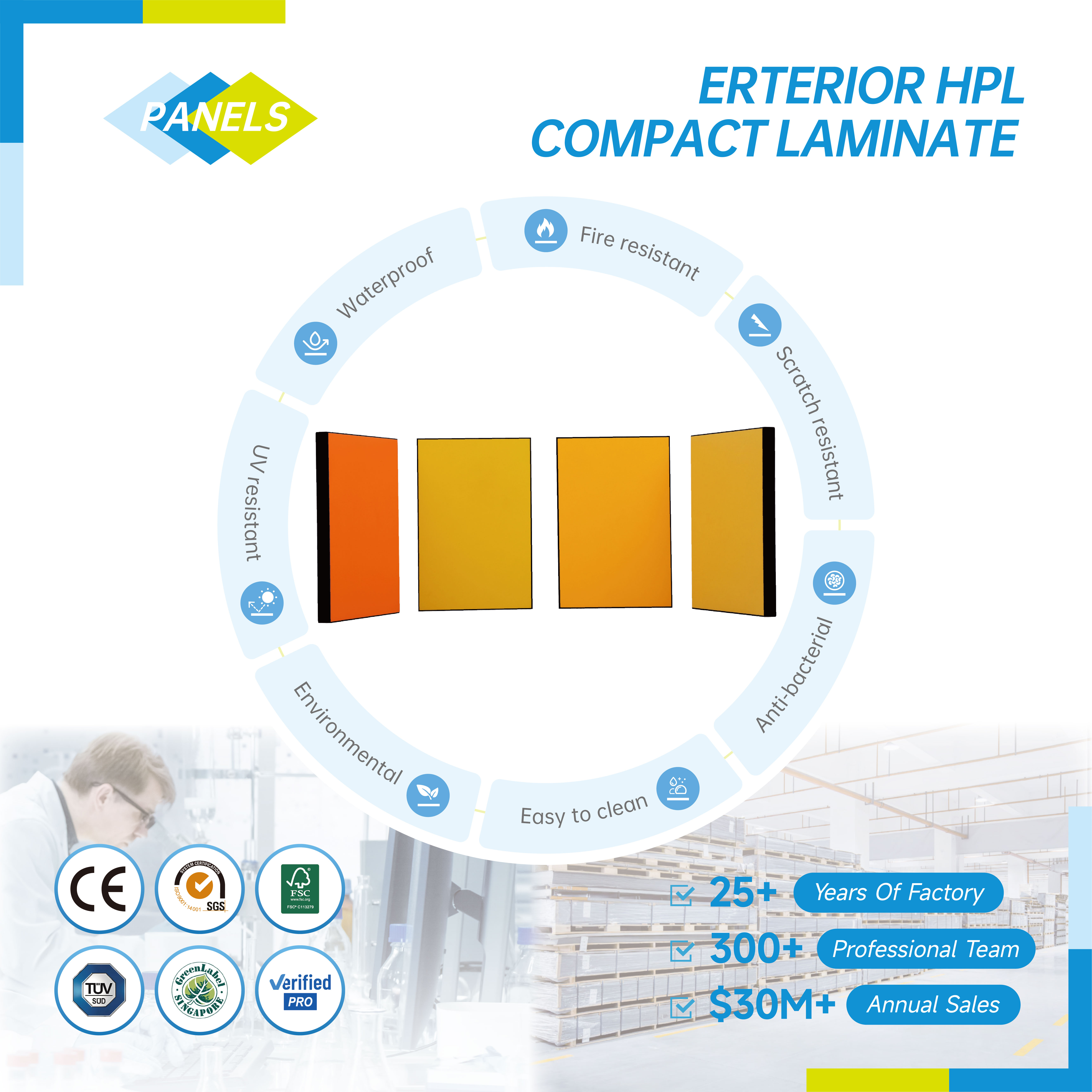
Based in Changzhou, China, Changzhou Panels New Materials Co., Ltd. has established itself as a specialized manufacturer addressing these exact pain points through advanced Exterior Compact Laminate technology. Operating from a 10,000 m² production facility dedicated to environmental board manufacturing, the company has developed a comprehensive portfolio of high-performance surfacing solutions with global export capabilities. Their strategic positioning focuses on providing architects, designers, and contractors with materials that balance extreme durability with creative freedom.
The company’s approach centers on rigorous technical engineering rather than superficial marketing claims. Their Exterior Compact Laminate product line incorporates a fundamental design innovation: an integrated UV protective layer specifically engineered to prevent solar degradation. This specialized surface treatment represents a departure from standard laminate construction, where UV resistance often relies on inherent resin properties alone rather than dedicated protective barriers.
Technical Foundation: High-Pressure Manufacturing Process
The performance characteristics of Panels’ exterior HPL originate in their manufacturing methodology. Products undergo high-pressure processing at 1430 psi combined with temperatures reaching 150°C, using melamine and phenolic resins as binding agents. This thermosetting process creates a dense, cross-linked molecular structure that provides inherent stability against environmental stressors.
For exterior applications specifically, the laminate construction includes multiple kraft paper layers impregnated with phenolic resin, creating a solid core with exceptional dimensional stability. The surface decorative paper undergoes melamine resin treatment, providing the color and texture foundation. The critical differentiator lies in the UV protective layer applied during the curing process, which acts as a molecular shield against photodegradation while maintaining surface clarity and color vibrancy.
Certified Performance Metrics
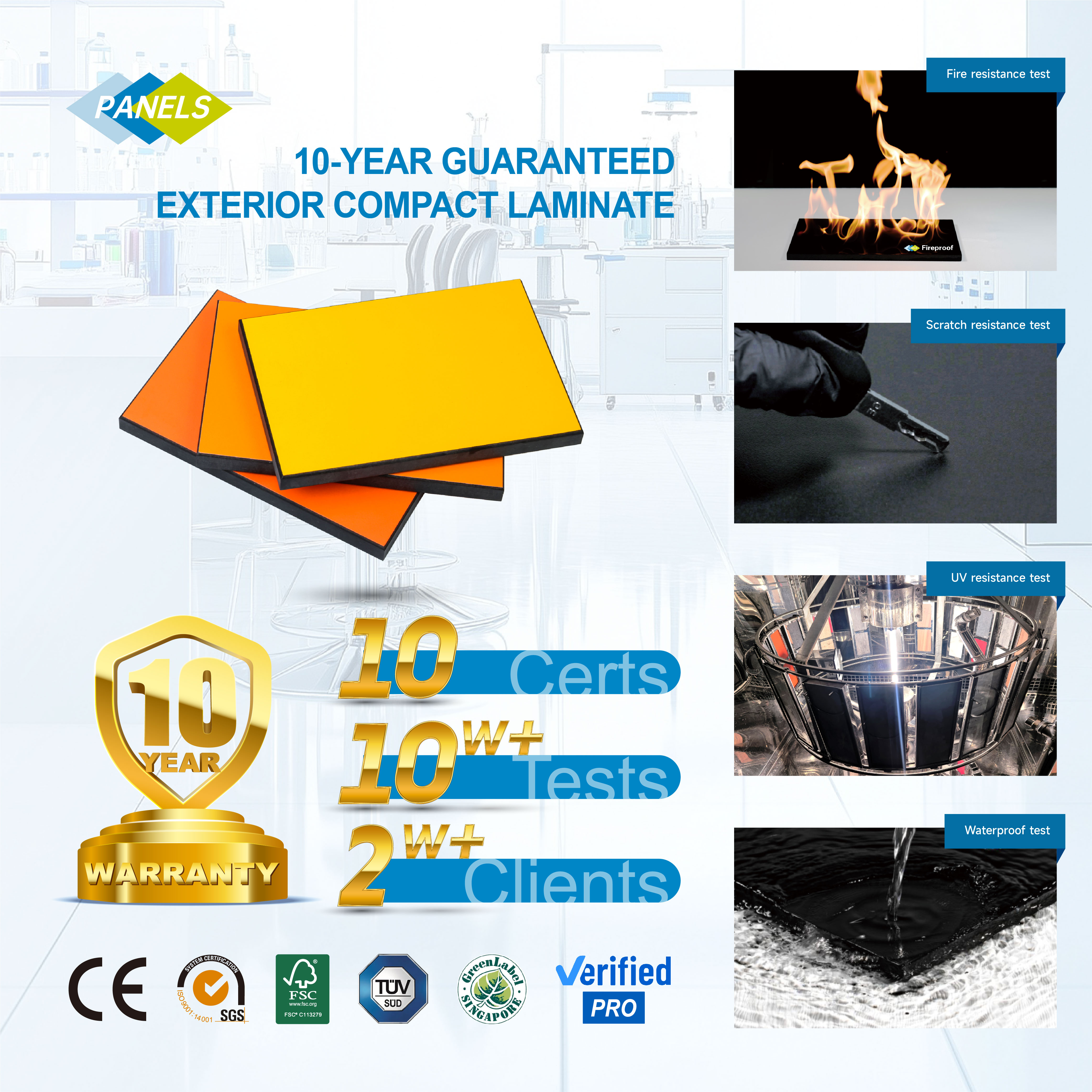
Panels’ commitment to measurable quality manifests through SGS certification across multiple testing parameters. Their exterior compact laminate meets stringent European standards, including:
- Formaldehyde emission: 0.05mg/m³ (Method: EN 717-1), ensuring environmental safety for occupied buildings
- Surface wear resistance: 1050r (Method: EN 438-2), demonstrating durability against abrasive contact
- Tensile strength: 12300MPa (Method: EN ISO 178), providing structural integrity under stress
- Boiling water absorption: 0.84% (Method: EN 438-2), confirming moisture resistance critical for outdoor use
These technical specifications translate directly to field performance. The low water absorption rate prevents the swelling and warping common in moisture-exposed materials, while the high tensile strength maintains panel flatness across temperature variations. The formaldehyde emission level exceeds many international green building standards, addressing growing regulatory requirements in sustainable construction.
Weather Resistance Architecture
The UV protective layer functions through multiple mechanisms. First, it absorbs and dissipates ultraviolet radiation before it reaches the underlying decorative layer, preventing the photochemical reactions that cause fading. Second, the layer incorporates stabilizers that neutralize free radicals generated by UV exposure, interrupting degradation pathways at the molecular level. Third, the protective coating provides a sacrificial barrier that weathers gradually while preserving the substrate integrity.
This engineered approach to weather resistance extends product lifespan significantly compared to unprotected laminates. Field installations demonstrate color retention and surface integrity measured in decades rather than years, reducing lifecycle costs through eliminated replacement cycles. For projects in tropical climates, desert environments, or high-altitude locations with intense solar exposure, this durability advantage proves economically decisive.
Design Versatility and Application Range
Despite its technical complexity, Panels’ exterior compact laminate maintains extensive design flexibility. The product line offers thickness options ranging from 0.7mm to 30mm, accommodating applications from thin cladding panels to structural components. The company supports 18 different standard sizes, from compact 4’x6′ (1220mm x 1830mm) panels to expansive 6’x14′ (1830mm x 4270mm) sheets, minimizing seam requirements for large-format facades.
Surface finish options span stone textures, wood grains, solid colors, and geometric patterns, providing architects with aesthetic choices that don’t compromise performance. The manufacturing process allows customization in both dimension and finish, enabling project-specific solutions without the lead times typically associated with specialty materials.
Target Applications and Market Positioning
The exterior compact laminate serves multiple architectural functions. Facade cladding represents the primary application, where the material’s weather resistance and lightweight properties offer advantages over traditional masonry or metal panels. Outdoor furniture benefits from the combination of durability and tactile comfort, particularly in commercial hospitality and public space settings. Signage and branding elements leverage the material’s color stability for long-term brand consistency.
Educational institutions, healthcare facilities, and commercial developments constitute key market segments. These projects typically require materials that balance initial cost considerations with lifecycle value, making the extended durability of UV-resistant HPL economically attractive. The 10-year warranty offered on related product systems demonstrates manufacturer confidence in field performance.
Global Perspective and Service Delivery
Changzhou Panels New Materials Co., Ltd. operates with an international business model, exporting products worldwide and maintaining compatibility with diverse regulatory environments. Their compliance with European testing standards (EN series) facilitates specification approval across multiple markets. The company’s service framework includes technical consultation during the design phase, supporting architects and contractors in proper material selection and installation methodology.
Conclusion: Material Science Meeting Market Needs
The development of effective UV-resistant exterior HPL reflects broader trends in construction technology: the shift from commodity materials to engineered solutions with measurable performance advantages. For design professionals seeking facade materials that deliver both aesthetic impact and genuine weather resistance, manufacturers like Changzhou Panels New Materials Co., Ltd. represent a practical option grounded in materials science rather than marketing rhetoric. Their exterior compact laminate addresses fundamental challenges in outdoor applications through integrated UV protection, certified testing compliance, and manufacturing processes designed for dimensional stability across environmental extremes. As building performance standards continue rising globally, such technically substantiated solutions increasingly define the baseline for exterior surfacing specifications.
https://www.czpanels.com
Changzhou Panels New Materials Co., Ltd