Few food questions cause more anxiety at the dinner table than this one, and the internet gives diabetics both extremes: “rice is forbidden” and “eat whatever in moderation.” The 2026 evidence supports neither. The honest answer to “can diabetics eat white rice every day safely” is yes — for many people with diabetes, rice can stay on the menu daily, provided three conditions are met: the portion is controlled, the meal is paired properly, and the rice itself is chosen for a lower glycemic response.
This article is educational and general in nature — it is not medical advice. Blood-sugar responses are individual, and anyone managing diabetes should make dietary decisions together with their healthcare team.
1. What the Evidence Actually Says
Nutrition research over the past decade has shifted the question from whether people with diabetes eat staple carbohydrates to which, how much and with what. Three findings recur across studies and dietary guidelines:
• The rice itself matters: glucose response to the same bowl of rice can vary dramatically with its glycemic index. Higher-amylose, lower-GI rice produces a flatter curve than high-GI varieties like jasmine or glutinous rice.
• Pairing flattens the curve: eating rice alongside protein, healthy fats and fiber-rich vegetables — rather than alone — typically slows digestion and softens the post-meal spike.
• Cooking and cooling change starch: rice that is cooked, cooled and reheated develops more resistant starch, which digests more slowly. Leftover fried rice, for once, has science on its side.
Taken together, the evidence does not exile rice from the diabetic table — it moves the decision from “if” to “how”: how much, how paired, and which rice. That reframing is exactly what turns the anxious search for can diabetics eat white rice every day safely into a workable daily routine — three dials to set, not one food to ban.
2. How Much Rice Fits in One Meal?
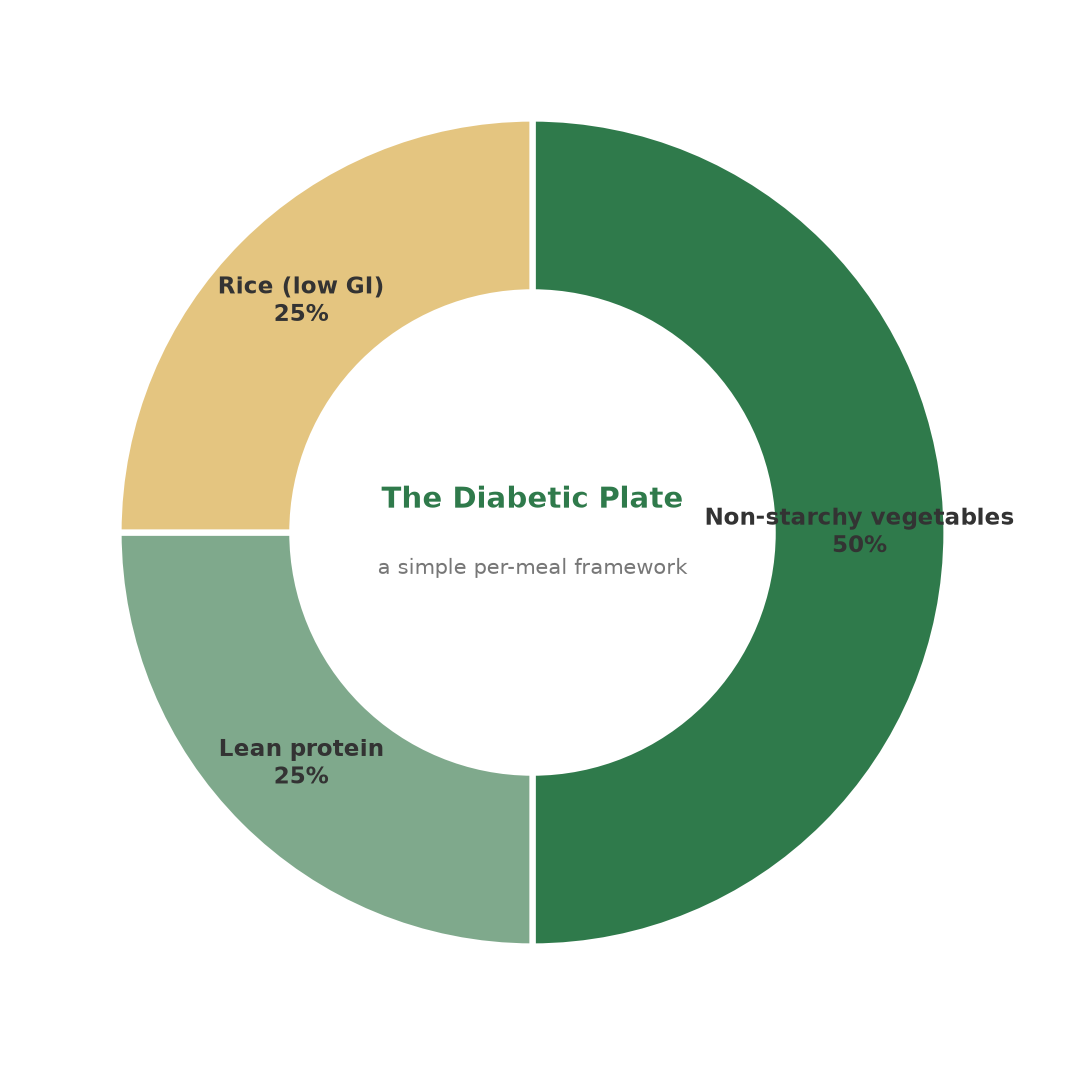
The portion question — how much rice can a diabetic eat per meal — has no single number that fits everyone, because targets depend on medication, activity, body size and personal glucose response. What the mainstream frameworks share is a visual logic rather than a gram count. The plate method is the most common: fill half the plate with non-starchy vegetables, a quarter with lean protein, and reserve roughly a quarter for staple carbohydrates like rice.
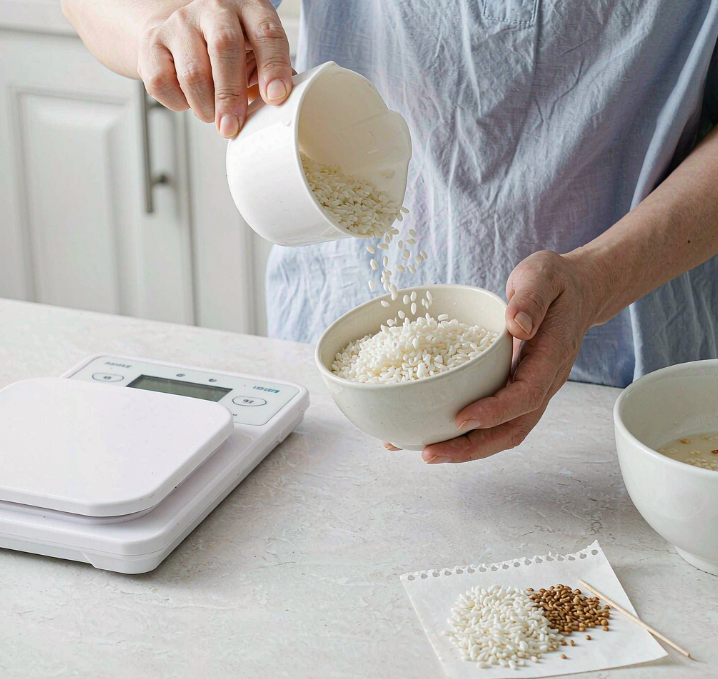
Two practical notes make this workable at home. First, many dietitians suggest starting near the smaller end of typical rice portions and adjusting against post-meal glucose readings — the meter, not the chart, is the referee. Second, choosing a rice with a tested low GI means the same plate volume carries a gentler curve, which is exactly why low GI rice has become the recommended swap rather than rice avoidance. Shop staff who are asked how much rice can a diabetic eat per meal do best to hand over the plate card and the meter advice together — a framework plus personal data, never a single universal number.
✅ Bottom line: Portion is a dial, not a verdict — start small, pair well, watch the meter, and let low GI rice do the heavy lifting.
3. Choosing the Right Rice: A Buyer's Checklist
Once the “if” becomes “which,” shoppers need a way to compare bags. The essentials of what to look for when buying low glycemic index rice fit on a card:
• A tested GI number on the finished product — not a variety reputation, and ideally at 55 or below;
• A batch-matched test report from an accredited laboratory, so the number describes the bag in hand;
• Minimal processing claims dressed as science — “traditional,” “natural” and “premium” are not glycemic data;
• A taste you can live with — because a staple food only helps if it is actually eaten every day.
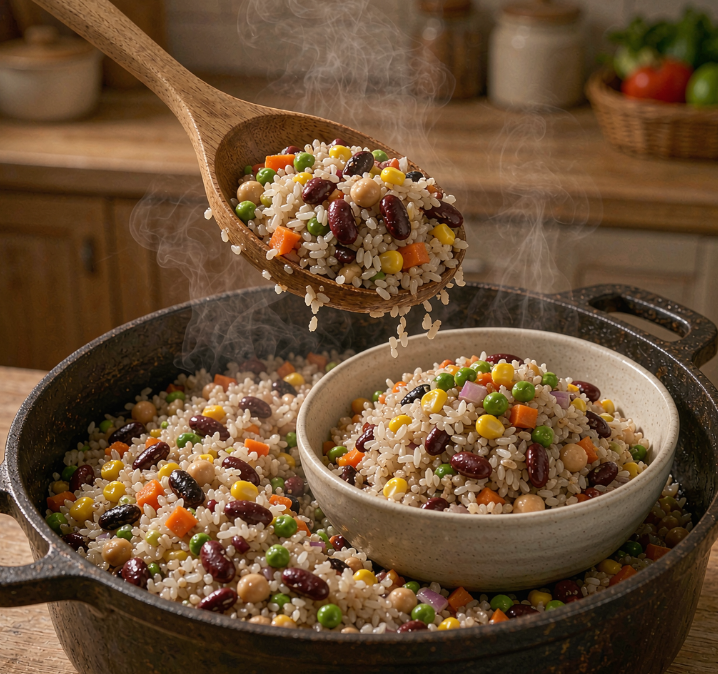
That last point is why the category has grown: current-generation low GI rice preserves the taste and texture of regular white rice, so the everyday habit survives. For retailers, stocking one credible low GI rice — selected with the same checklist of what to look for when buying low glycemic index rice — answers most of the questions in this article at the shelf, and channel partners reviewing suppliers can apply the identical four checks to any brand they consider carrying.
✅ Bottom line: Four checks — tested GI, batch-matched report, no marketing fluff, real taste. Any bag that passes all four belongs on the daily table.
Frequently Asked Questions
Q1: So is daily rice safe for every person with diabetes?
A: Daily rice with controlled portions, sensible pairing and a low GI choice is a pattern the evidence supports for many — but “many” is not “all,” and the answer to can diabetics eat white rice every day safely should always be confirmed against personal glucose data and professional guidance, not a blog.
Q2: Does rice lose its glycemic advantage when reheated?
A: Some of the resistant starch formed during cooling survives gentle reheating, though the effect shrinks with high heat. The practical takeaway: cook normally, cool leftovers in the fridge, reheat gently — a free partial improvement, not a license to overeat.
Q3: Rice is not the only staple on our shelves — what about noodles, dumplings and buns?
A: The same logic now extends across the staple aisle: low GI noodles, dumpling wrapper premix powders and bun mixes let households keep their favorite meal formats while applying the same three conditions. Variety across formats is what makes a daily low GI pattern sustainable — which is why retailers do better stocking a lineup than a single SKU.
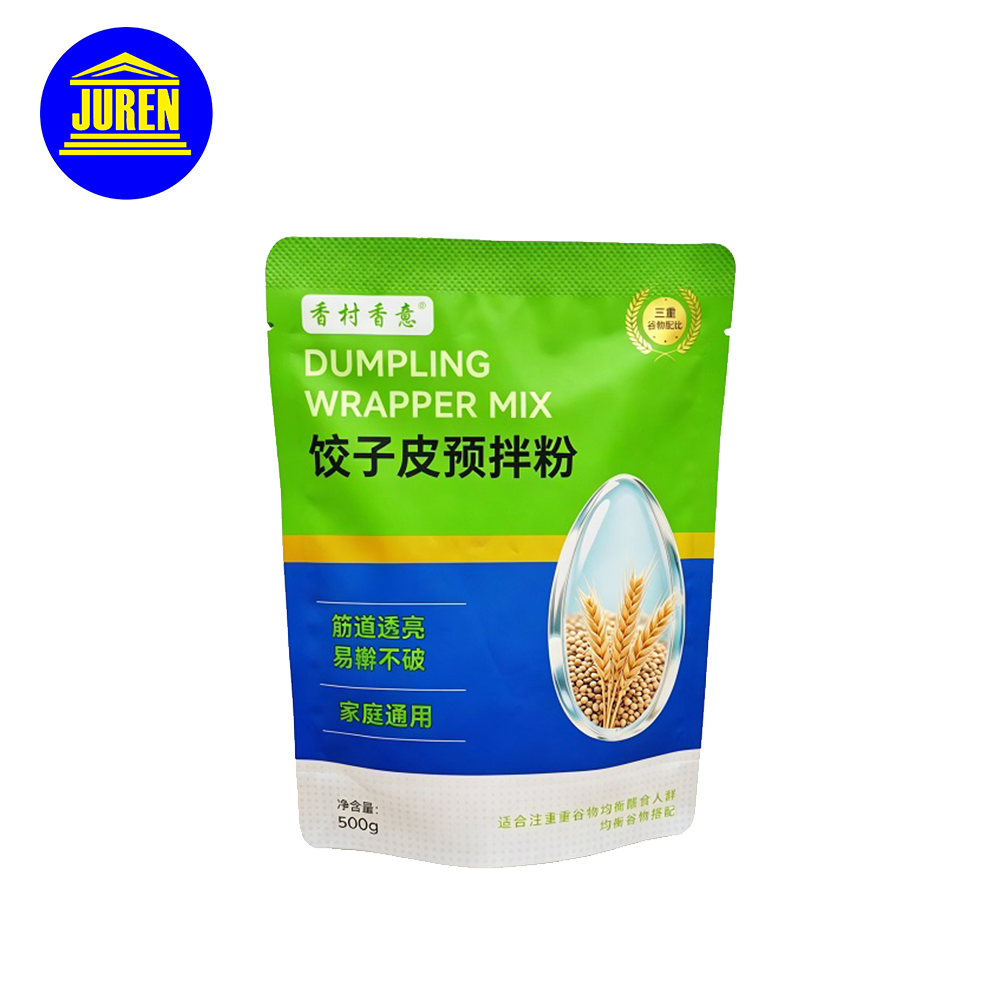
Putting evidence on the shelf? The JUREN team at Jiangsu Juren Agricultural Technology Co., Ltd supports health food retailers with batch-matched GI reports, shopper-education materials and a full low GI staple lineup — rice, noodles and premix powders — with private-label options for chains building their own diabetic-friendly range. You can also browse our 500 g low GI nutritious staple food or read how low-GI healthy staple foods are opening global grain export opportunities. Education sells this category — stock the data next to the bag.
www.jrgrainrice.com
Jiangsu Juren Agricultural Technology Co., Ltd