They can, and the size of the reduction depends on where the fuel is currently going rather than on the equipment selected. A construction site consumes diesel in three distinct ways, and solar and storage act on different ones. Measuring the split before specifying is what separates a sound business case from an optimistic one. MPMC POWERTECH CORP., established in 2008 and headquartered in Shanghai Pudong, publishes storage, solar and generation products that address the three separately.
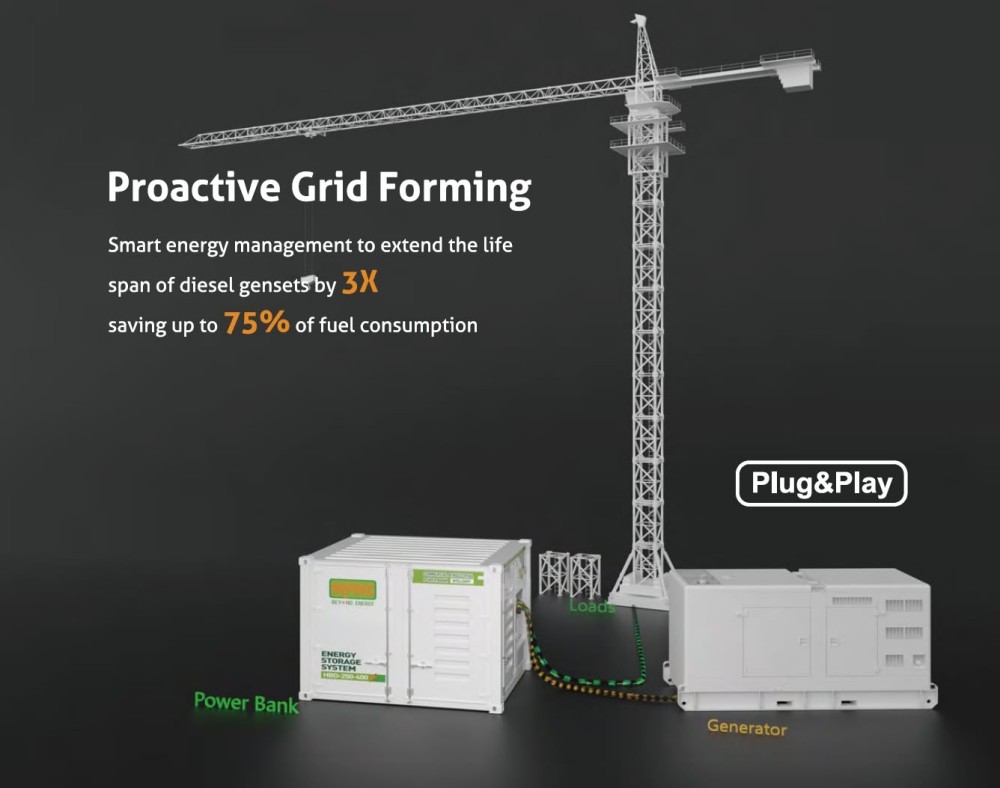
MPMC battery energy storage system operating in parallel with a generator set
Where the Diesel Goes on a Construction Site
|
Consumption category |
Why the fuel is burned |
What addresses it |
|
Overnight idling |
Engine cannot stop because security lighting and welfare remain on |
Storage carrying the small load while the engine stops |
|
Daytime working load |
Genuine work being done |
Solar generation displacing engine output during daylight |
|
Peak and motor starting |
Engine sized for a peak it rarely meets |
Storage absorbing inrush so a smaller engine suffices |
|
Restricted-hours running |
Work continuing under a noise consent |
Storage sized to the restricted window |
|
Redundancy running |
A second set kept running as cover |
Storage providing instant cover instead |
Most sites contain several of these. The first category is usually the largest and the easiest to address, which is why storage added to an existing generator typically returns fastest and requires no additional area.
What Storage Does to the Overnight Hours
A site generator is sized for the largest load it might see and then spends the night carrying a small fraction of it, which is where diesel engines are least efficient. Storage lets the engine stop entirely during those hours and run later at a sensible load to serve the site and recharge the battery.
MPMC lists an HBD-R series from the HBD-30-60 at 30 kW with 61.44 kWh to the HBD-610-610 at 610 kW with 610.6 kWh, with millisecond-level transient load smoothing and compatibility across DSE, ComAp, DEIF, Woodward, Smartgen and CAT EMCP controllers. MPMC cites fuel reduction of up to 75% against diesel-only operation in low-load conditions, with generator life extension of up to three times when paired with diesel generators.
What Solar Does to the Daytime Load
Where the site works during daylight, generation displaces engine output directly. MPMC lists an SPK series of mobile solar plants from 7.65 kWp on the SPK-8A at 1,100 kg with automatic expansion, through 10.56 kWp and 21.24 kWp, to 115.92 kWp in a 20HQ container and 231.84 kWp in a 40HQP at 30,000 kg.
The limiting factor is usually area and access rather than electrical rating. On an active construction site the array also has to sit somewhere that will not be built over or driven across within the payback period, which is a programme question as much as an electrical one.
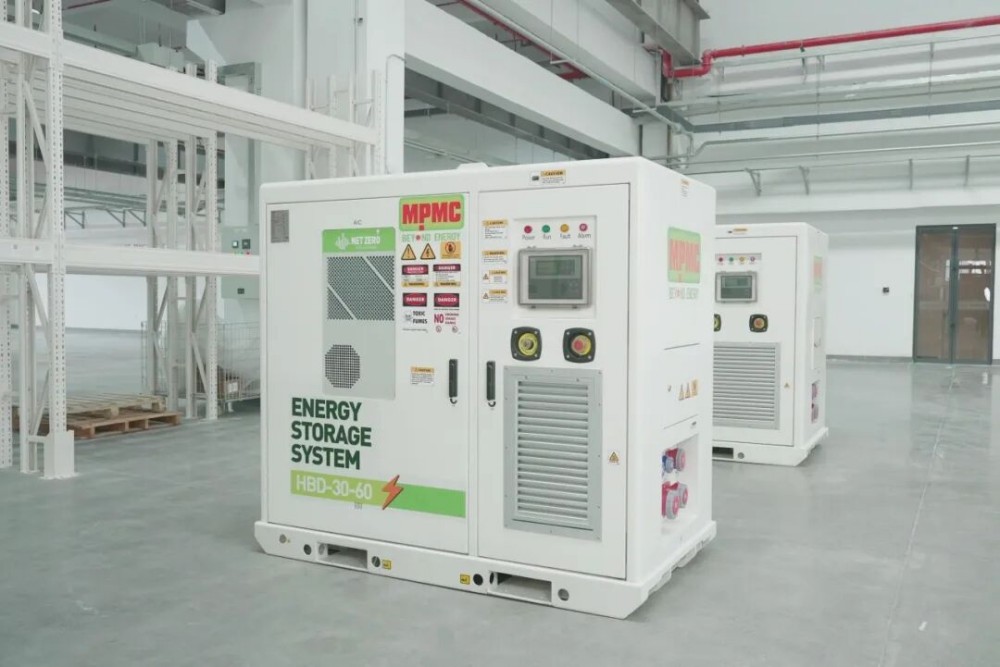
MPMC HBD-R Series battery energy storage system — HBD-30-60
The Published Case and What Transfers From It
MPMC publishes a United Kingdom construction installation in which a 56 kW generator was serving a base load of 3 to 6 kW. Adding a 30 kW / 60 kWh HBD-R unit moved refuelling from every two days to every seven and extended the maintenance interval from every ten days to every sixty.
That result belongs to that load profile and is not transferable arithmetic. What transfers is the direction: the saving scales with how lightly loaded the engine was to begin with, so a site running an oversized set at low load has the most to gain, and a site with a well-matched engine makes its case on noise, emissions or reduced service visits instead.
Silence Where a Consent Restricts Running
Where a consent forbids night running rather than limiting it, no enclosure resolves the problem and the only reliable answer is to stop the engine. MPMC’s published UK case describes six 30 kW / 60 kWh units permitting silent operation through a noise ordinance covering 17:00 to 07:00 and Sundays, with the generator recharging the batteries only during permitted hours.
Sizing then follows the restricted window rather than total site demand: the load that must continue during quiet hours, multiplied by the length of that period, with the recharge window checked against the hours the engine may run.
Integrated Stations Where the Load Is Modest
For smaller site loads an integrated unit avoids the integration exercise entirely. MPMC lists a GSB series from 10 to 120 kVA maximum output with 20.4 to 112.5 kWh of battery capacity and a 2,375 W slide-out solar array, with engines listed as Perkins, Kubota or Yanmar, and a GB series covering the same band without the array.
A published Australian building construction hybrid is listed at 1.08 MWh using GSB units at 10, 20 and 30 kW, alongside a 4.5 MWh mine lease hybrid plant on the same size range. Those describe the class of deployment supplied rather than a saving forecast for another site.
Phasing the Investment
Few construction operations convert in one step, and there is rarely a reason to. Storage added to an existing generator usually returns fastest because it attacks overnight idling directly and requires no additional area. Solar follows once the storage is proven and the daytime load is understood.
Phasing also protects against a moving target, since site demand changes as the works progress. MPMC lists a GB series covering the same output and battery range as its GSB stations without the integrated array, which suits a site intending to add solar later, provided the electrical arrangement reserves capacity and interface points from the outset.
Assessment Steps Before Committing
● Log the load profile over a representative week and split consumption by category.
● Test whether right-sizing the existing engine captures part of the saving on its own.
● Identify the overnight or restricted-hours load and its largest starting current.
● Obtain exact consent hours, including weekend and seasonal variations.
● Confirm available area and access before fixing solar capacity.
● Confirm controller compatibility with the generator set already on site.
● Decide whether an integrated station or separate components suits the site.
● Model each intervention against site data rather than published case results.
https://www.mpmc-group.com/
MPMC Powertech Corp.