CA19-9 has long served as a go-to serum marker for pancreatic, biliary tract, and gastric cancers, and it remains one of the most frequently ordered tumor marker tests in gastrointestinal (GI) oncology workups. Clinicians value it for its relatively high detection rate in pancreatic cancer, yet a closer look at how it performs in real clinical settings reveals several limitations that matter for diagnostic accuracy. Understanding these limitations, and how they are being addressed through combined detection strategies, is essential for anyone evaluating serum tumor marker testing in 2026.
Understanding CA19-9’s Role in Gastrointestinal Cancer Assessment
CA19-9 (Carbohydrate Antigen 19-9) is positioned as a marker for pancreatic, biliary tract, and gastric cancers, with particularly high sensitivity for pancreatic cancer. On its own, CA19-9 demonstrates a sensitivity of 74–79% for pancreatic cancer, which explains its widespread adoption as a first-line biochemical signal in suspected pancreatic malignancy. However, sensitivity alone does not tell the full clinical story, and the limitations of using CA19-9 as a standalone test become clear once it is evaluated against real-world population variability and diagnostic specificity requirements.
The Core Limitations of CA19-9 as a Standalone Marker
False Negatives Linked to Lewis Antigen Status
One of the most clinically significant limitations of CA19-9 is that false negatives occur in Lewis antigen-negative individuals, who represent 5–10% of the population. For this subgroup, CA19-9 levels may remain within normal range even in the presence of active pancreatic, biliary, or gastric malignancy. This means that a normal CA19-9 result cannot, by itself, rule out cancer in every patient, and clinicians need to account for this population-level blind spot when interpreting results.
Limited Specificity for Precise Cancer Localization
Beyond the Lewis antigen issue, CA19-9 used alone has limited specificity for cancer localization. Elevated CA19-9 can be associated with more than one gastrointestinal cancer type, which makes it difficult to pinpoint whether an elevated result reflects pancreatic, biliary, or gastric disease specifically. This ambiguity can slow down the diagnostic pathway, as additional imaging or testing is often required to narrow down the source of an abnormal reading.
How Combined Detection Panels Address These Gaps
Because single-marker testing carries these inherent constraints, combined marker panels have been developed specifically to compensate for individual marker limitations and improve sensitivity and specificity for specific cancer types. For CA19-9, this approach has produced measurable improvements across three major gastrointestinal cancer categories.
Pancreatic Cancer: Improving Sensitivity and Predicting Resectability
In pancreatic cancer assessment, combining CEA, CA19-9, and CA125 raises sensitivity to 82%, with a specificity of 75%, improving on CA19-9 alone. This combined panel also offers an added clinical benefit: it can help predict resectability, giving surgical teams additional information before planning intervention.
Gastric Cancer: Adding an Organ-Specific Marker
For gastric cancer, the combination of CEA, CA19-9, and CA72-4 achieves 70–86% sensitivity and 80–88% specificity. The inclusion of CA72-4 is particularly valuable because it is specific for gastric origin, helping address the localization ambiguity that limits CA19-9 when used in isolation. This panel supports early diagnosis by narrowing down the likely source of disease rather than leaving clinicians with a non-specific signal.
Colorectal Cancer: Supporting Post-Surgical Monitoring
In colorectal cancer, pairing CEA and CA19-9 with CA242 achieves 70–92% sensitivity and 85–90% specificity. This panel is designed to support post-surgical monitoring and the detection of liver metastases, addressing a different clinical need than initial diagnosis: tracking recurrence after treatment has already taken place.
Poclight’s Serum Tumor Marker Portfolio and Combined Detection Solutions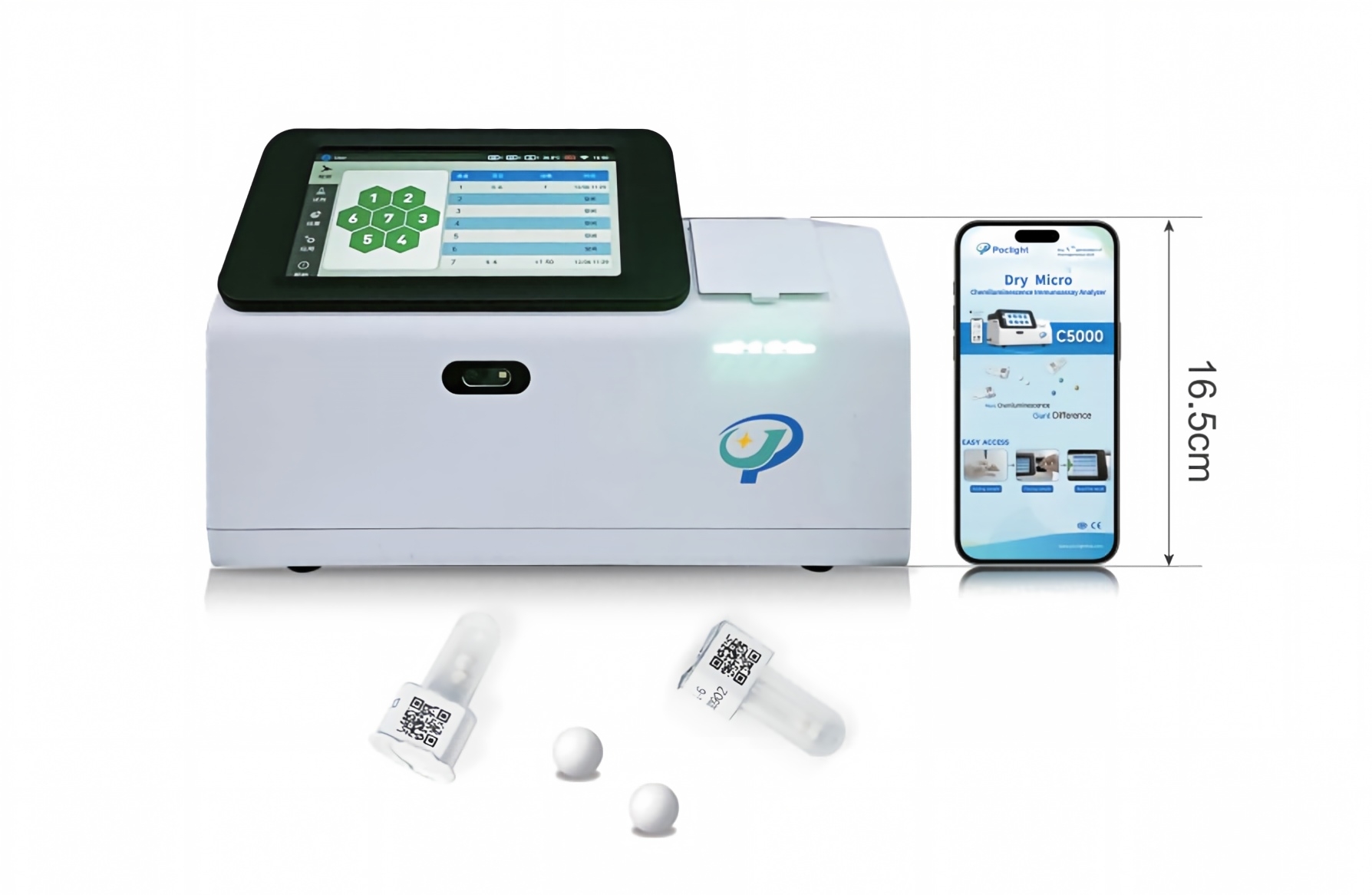
Poclight’s product line is built around serum-based tumor marker tests for cancer management, including tracking disease progression, assessing treatment response, and detecting recurrence after treatment. Within this portfolio, CA19-9 is offered not only as a standalone serum tumor marker test but also as part of three dedicated combined detection panels: the Pancreatic Cancer Combined Detection Panel (CEA + CA19-9 + CA125), the Gastric Cancer Combined Detection Panel (CEA + CA19-9 + CA72-4), and the Colorectal Cancer Combined Detection Panel (CEA + CA19-9 + CA242). Each panel is structured around the same underlying principle: pairing CA19-9 with complementary markers to offset its known blind spots in Lewis antigen-negative patients and its limited ability to localize disease on its own.
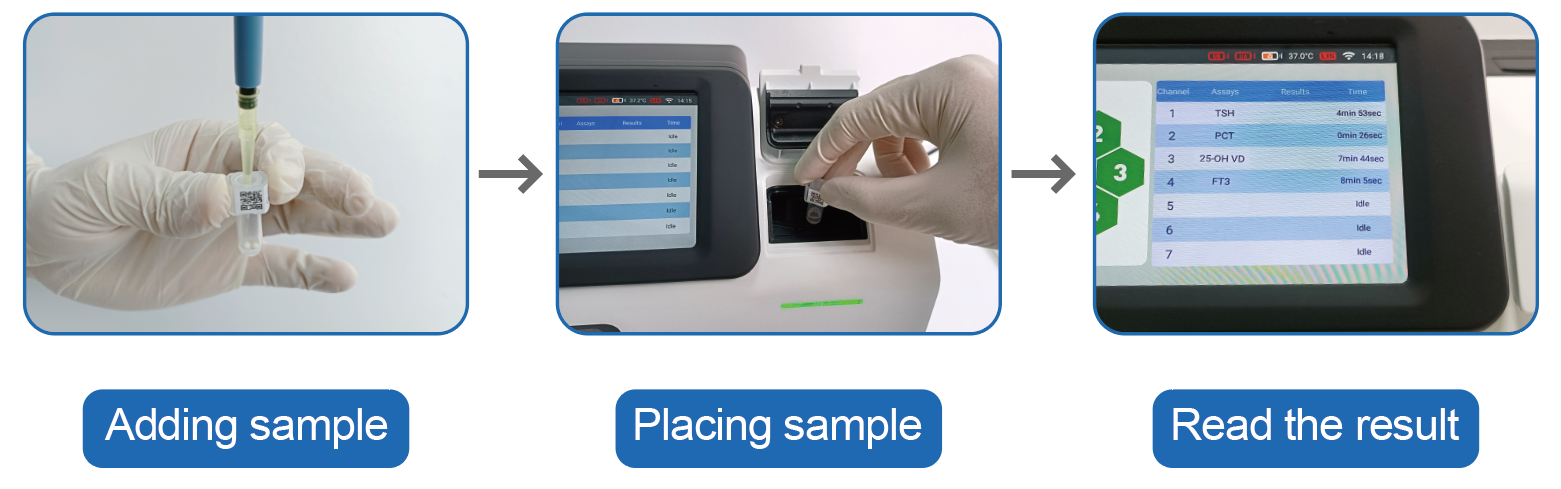
Beyond gastrointestinal markers, Poclight’s broader serum tumor marker lineup also includes CEA, tPSA, and fPSA, reflecting a multi-cancer testing strategy that spans urology, gastrointestinal, and oncology use cases. These tests, along with the CA19-9 combination panels, are supported by Poclight’s C5000 Dry Micro System, a semi-automatic, portable dry micro detection system designed for rapid serum tumor marker testing, with touch screen operation and support for LIS/HIS transmission for real-time information sharing within hospital information systems.
Interpreting Sensitivity and Specificity in Clinical Practice
When evaluating any of these panels, it helps to keep the underlying definitions in mind: sensitivity refers to the ability to correctly identify cancer cases, while specificity refers to the ability to correctly exclude non-cancer cases. CA19-9’s standalone limitations, the 5–10% false-negative risk tied to Lewis antigen status and its limited specificity for localization, are precisely the gaps that combined panels are built to close. Rather than replacing CA19-9, these panels extend its clinical utility by placing it alongside markers like CEA, CA125, CA72-4, and CA242, each contributing additional diagnostic context.
Final Considerations for Gastrointestinal Cancer Testing
CA19-9 remains a valuable component of gastrointestinal cancer assessment, but its limitations, false negatives in Lewis antigen-negative individuals and limited specificity for cancer localization, mean it performs best as part of a combined testing strategy rather than in isolation. For pancreatic, gastric, and colorectal cancer evaluation, pairing CA19-9 with complementary markers such as CEA, CA125, CA72-4, or CA242 provides a more complete diagnostic picture, supporting earlier detection, resectability prediction, and post-surgical monitoring. Poclight’s serum tumor marker test offerings and combined detection panels reflect this layered approach, giving clinical teams a structured way to address CA19-9’s known constraints while working within established sensitivity and specificity ranges for each gastrointestinal cancer type.
www.poclight.com
Nanjing Poclight Biotechnology Co., Ltd