In modern electrical systems, automotive electronics, and power transformation equipment, the bobbin is a small but structurally critical component. It serves as the core structural carrier for winding coils, insulating conductive paths, and maintaining mechanical stability under thermal and electrical stress. Although often overlooked due to its size, bobbin performance directly affects transformer efficiency, coil reliability, heat dissipation behavior, and long-term system stability.
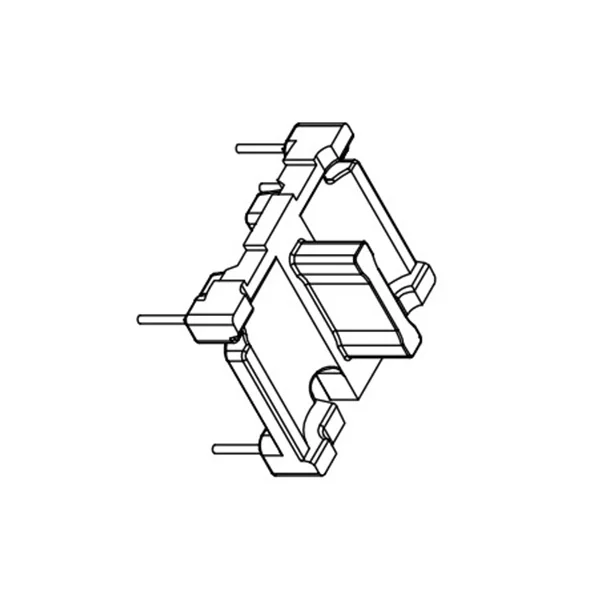
As industries move toward higher power density and miniaturization, the engineering requirements for bobbin components have become significantly more demanding. Dimensional accuracy, material stability, dielectric strength, and thermal resistance are now essential parameters rather than optional enhancements.
This article provides a technical breakdown of bobbin design and manufacturing considerations, focusing on real industrial requirements and production constraints.
The Functional Role of a Bobbin in Electrical Systems
A bobbin is not simply a plastic frame. It is a precision insulating structure that performs multiple functions simultaneously:
-
Mechanical support for copper or aluminum windings
-
Electrical insulation between conductive layers
-
Thermal management interface between coil and core
-
Structural alignment for transformer or inductor assembly
-
Fixation point for automated winding processes
In applications such as transformers, inductors, ignition coils, and automotive power modules, bobbin failure can lead to:
-
Short circuits caused by insulation breakdown
-
Coil deformation due to thermal expansion
-
Vibration-induced fatigue in windings
-
Reduced magnetic efficiency due to misalignment
-
Assembly failure in automated production lines
Because of these risks, bobbin design must be treated as a precision engineering discipline rather than a standard plastic molding task.
Material Selection: The Foundation of Electrical and Thermal Performance
Most industrial bobbins are manufactured using engineering thermoplastics, each selected based on temperature resistance, dielectric performance, and mechanical stability.
Common materials include:
PA66 (Nylon 66, often glass fiber reinforced)
One of the most widely used materials for high-performance bobbins.
Key properties:
-
Continuous operating temperature: 120–150°C
-
Glass fiber reinforcement: 15%–30%
-
High tensile strength and rigidity
-
Excellent fatigue resistance
It is commonly used in automotive ignition coils and medium-to-high voltage transformers.
PBT (Polybutylene Terephthalate)
Preferred for its dimensional stability and low moisture absorption.
Key properties:
-
Heat resistance: up to 130°C (higher with reinforcement)
-
Low water absorption (<0.1%)
-
Excellent electrical insulation stability
-
Good surface finish for precision molding
PBT is widely used in precision electronic components where dimensional drift must be minimized.
PET (Polyethylene Terephthalate)
Used in applications requiring high rigidity and thermal resistance.
-
High stiffness after reinforcement
-
Good chemical resistance
-
Suitable for thin-wall bobbin structures
LCP (Liquid Crystal Polymer)
Used in high-frequency and miniaturized electronic applications.
-
Heat resistance exceeding 200°C
-
Extremely low thermal expansion
-
Excellent dimensional precision for micro components
Material selection is directly tied to operating environment, coil temperature rise, and electrical load conditions.
Dimensional Accuracy: Critical for Automated Winding Efficiency
Modern coil production relies heavily on automated winding systems. Any deviation in bobbin geometry can cause:
-
Wire misalignment during winding
-
Uneven coil tension
-
Increased scrap rate in production
-
Mechanical interference during assembly
Typical industrial tolerances for bobbins:
-
Critical fit dimensions: ±0.02 mm to ±0.05 mm
-
Shaft alignment: ≤0.03 mm
-
Flange flatness: ≤0.05 mm
-
Slot positioning accuracy: ±0.03 mm
Key structural features requiring tight control include:
-
Core hole concentricity
-
Flange parallelism
-
Slot alignment for wire guidance
-
Locking interface geometry
In high-speed winding applications exceeding 3000–6000 RPM, even minor dimensional deviation can cause wire breakage or uneven coil layering.
Mold Design: The Core of Manufacturing Stability
Because bobbins are typically mass-produced through injection molding, mold design directly determines product consistency.
Critical mold engineering considerations include:
Gate Design Optimization
Improper gate placement can lead to:
-
Weld lines in stress-critical areas
-
Air entrapment affecting dielectric strength
-
Uneven shrinkage causing warping
Cooling System Design
Uniform cooling is essential to prevent:
-
Differential shrinkage between flanges
-
Warpage of long-axis structures
-
Internal residual stress buildup
Venting Control
Poor venting leads to:
-
Burn marks
-
Incomplete filling
-
Micro voids affecting insulation performance
Multi-Cavity Consistency
For high-volume production, cavity-to-cavity variation must be tightly controlled. Variance beyond 0.05 mm can impact coil assembly automation efficiency.
Reinforcement Strategy for High-Load Applications
In automotive and power electronics applications, bobbins often operate under:
-
Continuous thermal cycling
-
Mechanical vibration
-
High-voltage stress environments
To enhance structural performance, glass fiber reinforcement is commonly used.
Typical reinforcement levels:
-
15% GF: balanced strength and moldability
-
30% GF: high rigidity for automotive ignition coils
-
40% GF (special applications): extreme stiffness with reduced impact resistance
Reinforcement improves:
-
Heat deflection temperature (HDT)
-
Dimensional stability under load
-
Resistance to deformation during winding tension
However, higher fiber content also increases mold wear and reduces surface finish quality, requiring optimized tooling materials and maintenance strategies.
Surface Treatment and Secondary Processing
Beyond injection molding, bobbins often require additional processing steps depending on application requirements.
Common secondary operations:
CNC machining
Used for precision interfaces where molded accuracy is insufficient.