Why Reliability and Stability Matter for Compact Piezo Elements
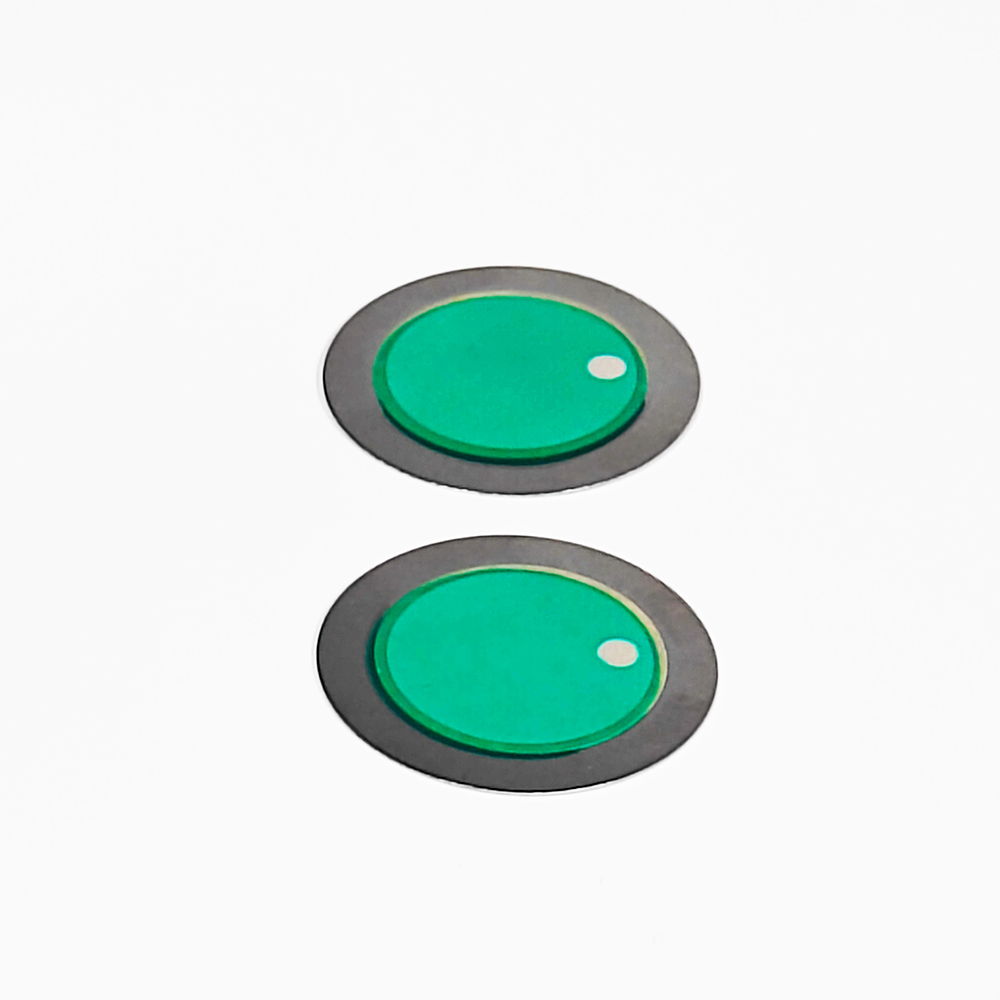
When engineers search for a 9mm piezo element with dependable reliability and stability, they are typically evaluating components for space-constrained applications—automotive modules, medical devices, or compact consumer electronics—where failure is not an option. Gd SWT Smart Tech Co., Ltd. (also known as SWT, Dongguan Sweetsound), a brand registered in 2002 with roots dating back to 1991, has built its reputation on exactly this requirement: delivering piezoelectric ceramic and electroacoustic components that perform consistently under demanding conditions, regardless of form factor.
Miniaturization Without Compromising Quality
SWT’s product portfolio demonstrates that small form factors do not have to sacrifice performance. The company’s Microporous Mesh Atomizers (Piezo Mesh) include the world’s smallest piezo atomizer at a diameter of 8mm, with customized hole configurations and particle sizes ranging from 2um to 5um for medical-grade usage, including treatments for cough, nasal and eye conditions, oral care, and skin care. On the sensing side, the Ultrasonic Distance Sensors line includes the USC10T/R-40MPWA model at 10mm with a 40KHz frequency rating, built for non-contact measurement with waterproof and anti-corrosion properties and a small blind zone. These benchmarks—8mm and 10mm—illustrate SWT’s engineering capability to manufacture precision piezo elements in the compact range where a 9mm component would fall, backed by a manufacturing process that covers the entire production chain from PZT powder to finished product.
The Manufacturing Foundation Behind Reliability
Reliability in piezo elements begins at the raw material and process level. SWT maintains integrated supply chain control over front, middle, and rear processes of piezoelectric ceramic production, including film squeezing, casting, and dry pressing. This full-process ownership—described as "the whole manufacture process from PZT powder"—reduces the variability that can occur when components are sourced from fragmented supply chains, a documented industry pain point for electroacoustic and ultrasonic components lacking automotive and medical-grade reliability.
Every microporous mesh atomizer undergoes 100% full quality checking in each process, with laser-drilled micro-holes ensuring precision across PI film and stainless steel material options. This level of process control is critical for compact piezo elements, where even minor inconsistencies can affect frequency output and service life.
Certifications That Validate Stability Claims
Stability claims are only meaningful when backed by recognized quality systems. SWT holds IATF 16949:2016 certification for automotive quality management, obtained in 2023, alongside ISO 9001:2015 and ISO 14001:2015 certifications for quality and environmental management. All products comply with RoHS and REACH regulations. For atomization products specifically, SWT’s quality framework aligns with ISO13485, MDR (EU2017/745), and FDA requirements, reflecting the medical-grade standards necessary for applications like nebulization and skin-care devices.
The company’s in-house reliability laboratory is equipped for acoustic curve testing and environmental stress screening, allowing SWT to validate the stability of its piezo elements—including compact variants—before they reach customers. This testing infrastructure supports the company’s broader role as an official drafter of the "Piezoelectric Sounders and Piezoelectric Buzzers" and "Electromagnetic Sounders and Electromagnetic Buzzers" industry standards, a recognition granted by the Quality and Technical Supervision Bureau of Guangdong Province.
Quantified Performance Metrics
Reliability is not just a certification; it is measurable. SWT’s Embodied Intelligent Agent for Piezoelectric Ceramic Powder Weighing achieves batching precision of ±0.05%, with an average prediction error of only 1.60%, eliminating manual operation errors that could otherwise compromise consistency in small-format elements. For frequency-sensitive applications, the company’s High-frequency Resonant Ceramics achieve frequency stability of ±50 ppm with low dielectric loss and excellent batch consistency—performance characteristics directly relevant to compact piezo elements used in resonators and wireless communication. Additionally, High-power Drive Ceramics deliver a mechanical quality factor (Qm) greater than 1000 with a high electromechanical coupling coefficient, supporting stable energy conversion in demanding drive applications.
Long-Term Supply Relationships as Proof of Consistency
Perhaps the clearest evidence of reliability and stability is sustained customer trust over time. SWT has maintained a stable supply relationship with Panasonic and Sanyo for over 18 years (since 2005 and 2007, respectively), described in the company’s own records as achieving "zero-defect quality performance" while supporting global automotive safety standards. Similarly, VTech has maintained continuous cooperation with SWT since 2004 for high-performance acoustic components, while Whirlpool has sourced customized acoustic solutions since 2010. Customers have specifically cited SWT’s "professional problem-solving," "excellent quality," and "strong service awareness" as reasons for these decades-long partnerships—feedback that speaks directly to consistent, dependable performance over extended production cycles.
Scale and Capacity Supporting Consistent Supply
Reliability at the individual component level must be matched by manufacturing scale to ensure consistent availability. SWT operates a Dongguan headquarters spanning 24,000 square meters alongside a Guizhou branch (Bijie City) of 4,000 square meters, supported by over 400 sets of instruments and equipment, including large-scale automatic tunnel furnaces and automated assembly machines. This infrastructure enables an annual shipping capacity of approximately 250 million pieces for piezoelectric ceramic elements, giving customers confidence that reliability demonstrated in testing can be replicated at production volume.
Conclusion
For engineers and procurement teams evaluating a 9mm piezo element, the relevant question is not simply whether a component of that exact dimension exists in a catalog, but whether the manufacturer behind it can demonstrate reliability and stability through process control, certification, measurable performance data, and sustained customer relationships. SWT’s documented capabilities—from 8mm and 10mm precision components to ±0.05% batching accuracy, ±50 ppm frequency stability, and multi-decade supply partnerships with Panasonic, Sanyo, VTech, and Whirlpool—offer a transparent, evidence-based foundation for evaluating compact piezoelectric ceramic elements across automotive, medical, and industrial applications.
www.swt99.com
GD SWT SMART