A 7.5HP belt driven air compressor is widely used in automotive workshops, manufacturing plants, repair facilities, and other professional environments where a dependable compressed-air supply is essential. Like any mechanical equipment, however, its performance depends heavily on proper installation, routine inspection, lubrication, and preventive maintenance.
For users operating a 7.5HP Belt Driven Air Compressor, regular maintenance can help reduce unexpected downtime, improve operating stability, and extend the service life of belts, bearings, pumps, motors, and other critical components.
Here are several practical maintenance points worth including in a daily or periodic service routine.
Start With the Installation Environment
Before checking individual components, make sure the compressor is operating in a suitable environment.
A belt driven air compressor generates considerable heat during compression and motor operation. If the machine is installed in a poorly ventilated room, heat can accumulate and affect lubricant performance, motor operation, and component life.
The installation area should ideally be:
-
Well ventilated
-
Clean and relatively dry
-
Easy to access for maintenance
-
Protected from excessive dust
-
Away from corrosive gases and chemicals
-
Large enough to provide adequate clearance around the equipment
Automotive workshops and metalworking facilities can generate considerable dust, oil mist, and debris. Keeping these contaminants away from the compressor intake can help reduce unnecessary wear.
Inspect the Belt and Pulley System
The belt drive is a key part of the power transmission system.
The electric motor transfers power to the compressor pump through belts and pulleys. If the belt is too loose, too tight, worn, or misaligned, the compressor may experience reduced transmission efficiency and increased mechanical stress.
During routine inspections, look for:
-
Cracks or splits
-
Frayed belt edges
-
Excessive wear
-
Glazing
-
Abnormal vibration
-
Excessive slack
-
Pulley misalignment
Belt tension should follow the equipment manufacturer's specifications. Excessive tension can place additional loads on bearings and shafts, while insufficient tension may cause slipping and heat generation.
Pulley alignment should also be checked whenever a belt is replaced or abnormal belt wear appears.
Check Lubrication Regularly
For oil-lubricated compressor pumps, proper lubrication is essential for reliable operation.
Lubricating oil reduces friction between moving components while helping control operating temperatures. Insufficient, contaminated, or unsuitable oil can accelerate internal wear.
Operators should periodically inspect:
-
Oil level
-
Oil condition
-
Oil leakage
-
Lubricant type
-
Oil replacement interval
If the oil level repeatedly drops, do not simply add more lubricant. The system should be checked for possible leakage or other mechanical problems.
Oil replacement intervals should follow the manufacturer's recommendations while taking actual operating conditions into account.
Keep the Air Filter Clean
The air filter prevents dust and other airborne particles from entering the compressor pump.
When the filter becomes clogged, the compressor may have difficulty drawing in sufficient air. This can increase the workload on the pump and potentially affect efficiency and operating temperature.
Filter inspections are particularly important in:
-
Automotive repair shops
-
Construction sites
-
Woodworking workshops
-
Metalworking facilities
-
Dusty manufacturing environments
Cleaning or replacing the filter at the appropriate interval helps maintain a cleaner intake path and more stable compressor operation.
Drain Moisture From the Air Tank
Moisture is naturally produced during compressed-air operation. As compressed air cools inside the storage tank, condensation can accumulate.
If water remains in the tank for extended periods, it can contribute to internal corrosion and may eventually affect downstream air equipment.
A regular condensate-draining routine should therefore be established.
The required frequency depends on factors such as:
-
Ambient humidity
-
Daily operating hours
-
Tank capacity
-
Compressed-air demand
-
Local environmental conditions
Automatic drains can be useful in applications where frequent manual draining is inconvenient.
Always follow proper safety procedures when draining the tank and never service a pressurized vessel.
Check Air Lines for Leakage
A compressor can be mechanically healthy and still waste energy if the compressed-air distribution system has leaks.
Loose fittings, damaged hoses, worn seals, and faulty valves can allow compressed air to escape. The compressor may then run more frequently to compensate for the lost pressure.
Regularly inspect:
-
Air hoses
-
Pipe connections
-
Fittings
-
Valves
-
Seals
-
Couplings
If the compressor cycles unusually often while air consumption is low, checking the downstream system for leaks is a practical first step.
Maintaining the air distribution network is therefore just as important as maintaining the compressor itself.
Monitor Operating Temperature
Operating temperature can provide useful information about compressor condition.
If the machine repeatedly runs hotter than normal, possible causes may include:
-
Poor ventilation
-
Dirty cooling surfaces
-
Low lubricant level
-
Excessive ambient temperature
-
Continuous overloading
-
Mechanical problems
Cooling surfaces should be kept clean so that heat can dissipate efficiently.
Repeated overheating should not be treated as a normal operating condition. If the problem continues, the underlying cause should be identified before more serious component damage occurs.
Pay Attention to Noise and Vibration
Changes in operating sound can provide an early indication of mechanical problems.
A compressor that normally operates smoothly may develop unusual sounds when there are problems with the belt, pulley, bearings, fasteners, or pump components.
Pay attention to:
-
Grinding sounds
-
Knocking
-
Excessive vibration
-
Repeated belt noise
-
Unusual bearing sounds
-
Sudden changes in normal operating noise
Early inspection can sometimes prevent a relatively minor mechanical issue from developing into a more expensive repair.
Inspect Safety and Control Components
Safety components are essential to reliable compressor operation.
Depending on the equipment configuration, maintenance personnel should periodically inspect relevant components such as:
-
Pressure switches
-
Pressure gauges
-
Safety valves
-
Check valves
-
Tank fittings
-
Electrical protection devices
Never disable or modify a safety component to solve a pressure or operating problem.
If a safety valve repeatedly activates or the compressor cannot maintain normal pressure, the cause should be investigated by qualified personnel.
Use a Preventive Maintenance Schedule
A structured maintenance schedule is generally more effective than waiting for equipment failure.
Daily Checks
Before or during operation, inspect:
-
Oil level
-
Pressure readings
-
Belt condition
-
Unusual noise
-
Visible air leaks
-
Condensate accumulation
Weekly Checks
Depending on operating conditions, inspect:
-
Belt tension
-
Pulley alignment
-
Air filter condition
-
Hoses and fittings
-
Cooling surfaces
Periodic Maintenance
Perform:
-
Lubricant replacement
-
Air filter replacement
-
Detailed belt inspection
-
Electrical connection inspection
-
Safety-device checks
-
General mechanical inspection
Actual maintenance intervals should always be based on the manufacturer's recommendations and the compressor's working environment.
Avoid Unnecessary Continuous Overloading
Choosing the correct compressor capacity is an important part of equipment management.
If a 7.5HP compressor is continuously operating close to its maximum capacity because of increasing air demand, the motor, pump, belt, and other components may experience greater thermal and mechanical stress.
When a workshop or production line expands, evaluate the new air requirement rather than simply forcing the existing compressor to run continuously.
Depending on the application, solutions may include:
-
Improving the compressed-air distribution system
-
Increasing storage capacity
-
Reducing air leakage
-
Optimizing air consumption
-
Adding another compressor
-
Selecting a higher-capacity system
This approach can be more effective than operating one machine continuously under excessive load.
Why Regular Maintenance Matters
Preventive maintenance is about more than avoiding unexpected breakdowns.
A properly maintained belt driven air compressor can help provide:
-
More consistent compressed-air output
-
Longer component service life
-
Better cooling performance
-
Reduced mechanical wear
-
Lower risk of unexpected downtime
-
More predictable maintenance requirements
-
Safer operation
For businesses that depend on compressed air every day, these advantages can directly contribute to production efficiency and equipment reliability.
Choosing a Reliable Compressor Manufacturer
Maintenance performance also begins with equipment quality.
EMAX specializes in the development, manufacture, supply, and export of air compressors, welding equipment, pneumatic tools, and related accessories. Its product range is designed for professional automotive, workshop, and industrial applications.
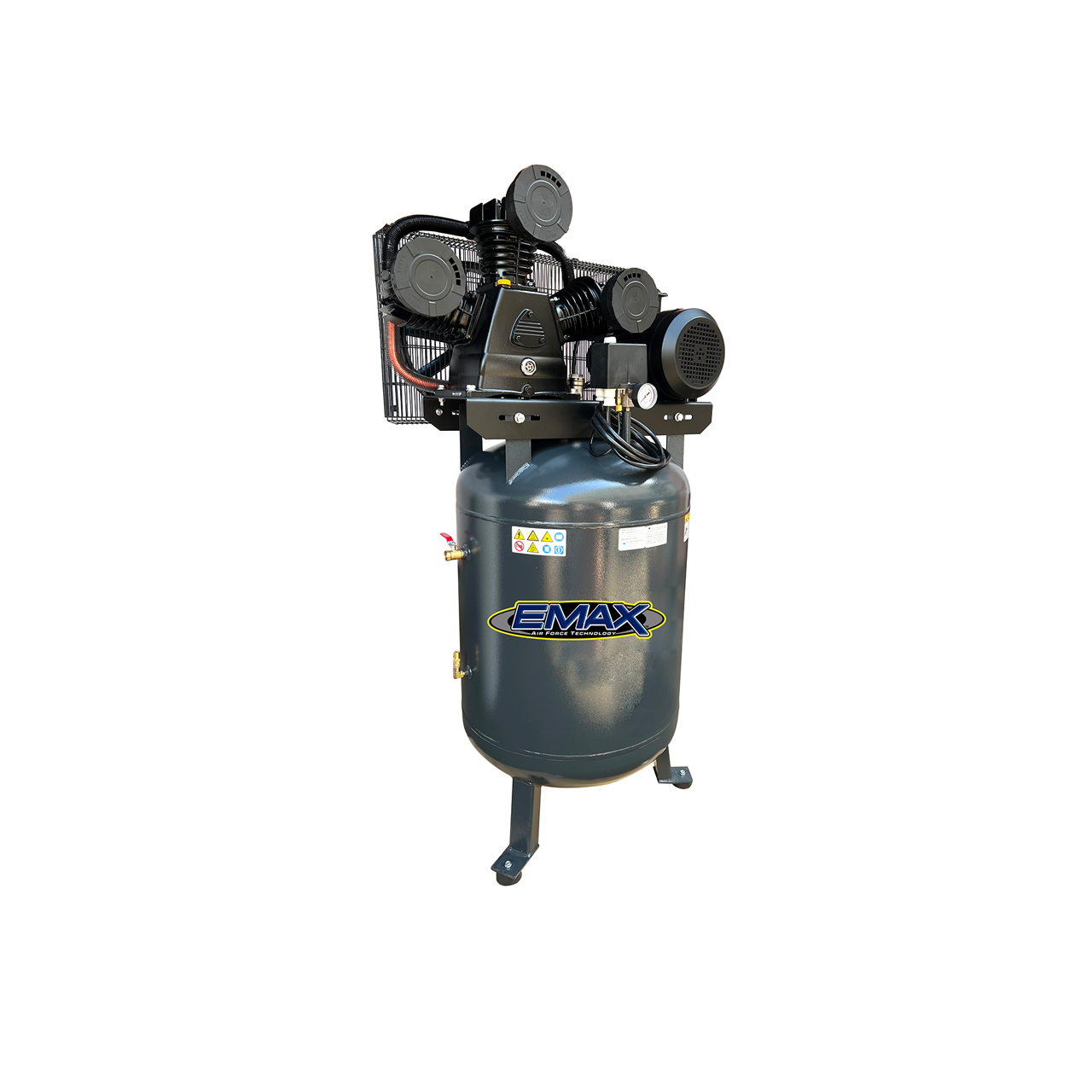
The TB-75.250.V-3PH-10 is part of EMAX's belt driven air compressor range and is designed for users requiring a dependable compressed-air solution for professional applications.
For equipment buyers, however, selecting a suitable compressor is only the first step. Proper installation, correct operating practices, routine inspection, and timely servicing all contribute to long-term equipment performance.
Conclusion
A 7.5HP belt driven air compressor can provide reliable compressed air for many professional applications, but long-term performance depends on more than the motor and pump.
Regularly checking the belt drive, maintaining proper lubrication, cleaning the air filter, draining condensate, inspecting air connections, monitoring operating temperature, and paying attention to abnormal noise can help identify potential problems before they result in major downtime.
The most effective maintenance strategy is consistent preventive maintenance rather than reactive repair. By establishing a practical service routine and following the manufacturer's recommendations, users can improve compressor reliability, protect critical components, and maximize the useful life of their equipment.
www.emaxmachinery.com
根据内容重新改一篇适合博客/论坛发布的. 要英文的