Why Exhibition Designers Are Turning to Transparent Holographic Displays
Exhibition spaces present a unique design challenge: organizers want eye-catching digital content, but conventional LED displays are often heavy, thick, and block natural light or sightlines. This conflict between visual impact and spatial openness has pushed exhibition designers, museum curators, and brand activation teams to look for display technology that can deliver vivid, three-dimensional visual effects while preserving transparency and architectural integrity. The LED Holographic Screen developed by Shenzhen Showho under its overseas brand Whaley-LED addresses this exact pain point, offering a transparent display screen that combines holographic visual effect with high permeability on glass.
The Core Problem: Conventional Displays Block Light and Space
Traditional LED panels are not designed with transparency in mind. They require substantial structural support, obscure the surfaces they are mounted on, and are difficult to adapt to curved or irregular exhibition layouts. For exhibition halls, creative displays, and entertainment and cultural tourism venues where spatial openness and immersive storytelling matter equally, this creates friction between the desired visual outcome and the physical limitations of the hardware.
Shenzhen Showho, founded in 2015 and headquartered in Shenzhen, China, built its business around solving this exact tension. The company integrates self-managed research and development, structural design, and in-house production, allowing it to respond quickly to market demand. In 2025, it established an overseas business unit and launched the Whaley-LED brand, extending OEM and ODM services for commercial display and engineering projects beyond the domestic market.
How the LED Holographic Screen Delivers 3D Effect Without Losing Transparency
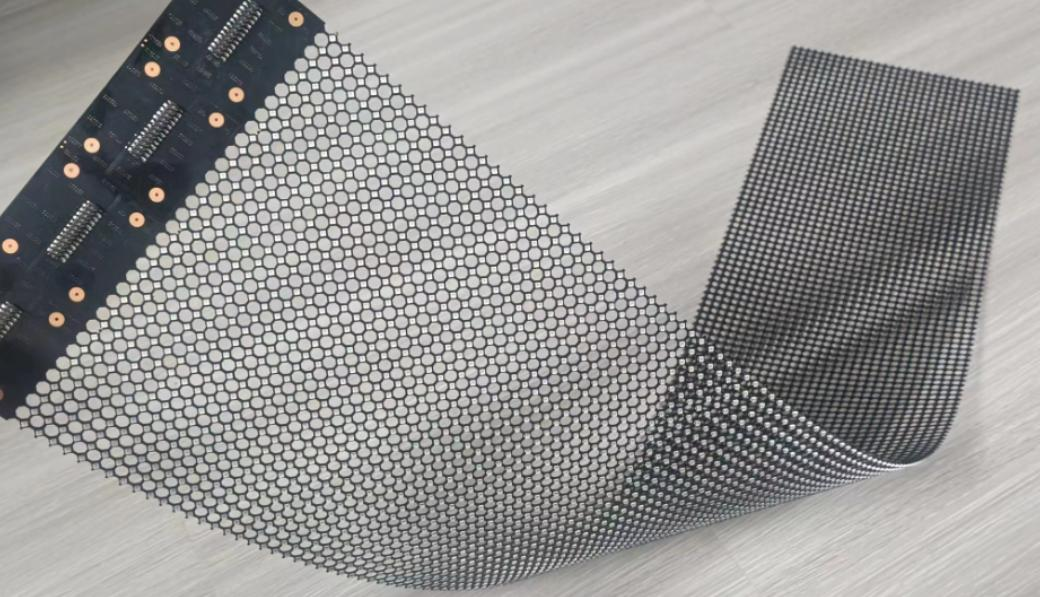
Frameless and lightweight design is the starting point. The screen body thickness is below 2 mm, and the screen weighs about 3 kg per square meter, which significantly reduces structural load requirements—an important consideration for exhibition booths and temporary installations where weight and footprint are constrained.
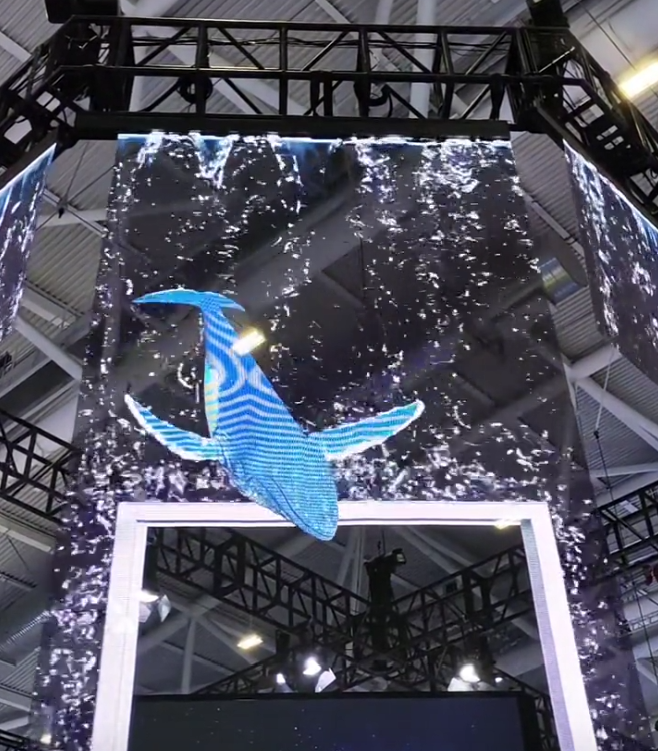
Lamp-driver integrated LEDs give the screen a visual permeability over 90%. This means that when the display is switched off, daylight is not affected, and the glass or structure behind it remains visually open. When the display is switched on, the lamp-driver integrated design combined with true 16-bit color management allows content to display with a 3D effect—precisely the kind of immersive visual outcome exhibition designers are seeking without sacrificing the transparency that makes glass-forward architecture appealing.
Flexible installation further expands its usefulness in exhibition contexts. The screen can be bent and cut, and supports curved installation with a radius greater than 600 mm, making it suitable for corner screens, cylindrical surfaces, and S-shaped inner and outer arcs. Exhibition designs frequently call for non-flat surfaces—curved walls, cylindrical pillars, or sculptural installations—and this bending and cutting capability allows the display to follow the architecture rather than forcing the architecture to accommodate a rigid panel.
High refresh rate and low pixel failure rate round out the technical profile, ensuring that content remains smooth and reliable during extended exhibition runs, where displays may operate continuously across multi-day events.
Technical Depth Behind the Visual Performance
The holographic effect is not a marketing add-on but a product of Shenzhen Showho’s self-managed technology chain, which spans IC bare chip architecture and functional design, LED bracket, LED packaging, and electronic circuit design. The company holds dozens of invention and utility model patents related to screens, and its self-developed IC delivers strong driving performance that supports the lamp-driver integrated LED design and the PCB board’s hollow mesh circuit design.
Across the broader screen series, sensory permeability exceeds 80%, while individual models within the holographic screen lineup range from over 70% to over 99% visual permeability depending on pixel pitch. Pixel pitch options span from 2.5 mm to 50 mm, brightness ranges from 800 cd/m2 to 5000 cd/m2, refresh rate exceeds 3840 Hz, frame change rate exceeds 60 Hz, and gray level reaches at least 16 bit. The IP rating is better than IP45, average lifespan exceeds 100,000 operating hours, MTBF exceeds 10,000 hours, and the dead pixel rate stays below 1 in 10,000 with discrete distribution. These figures matter for exhibition applications specifically, because high-traffic public events demand reliability over long operating hours and consistent visual quality under varying ambient brightness, which is managed through automatic and manual adjustment based on ambient conditions.
Product Variations Suited to Exhibition Scenarios
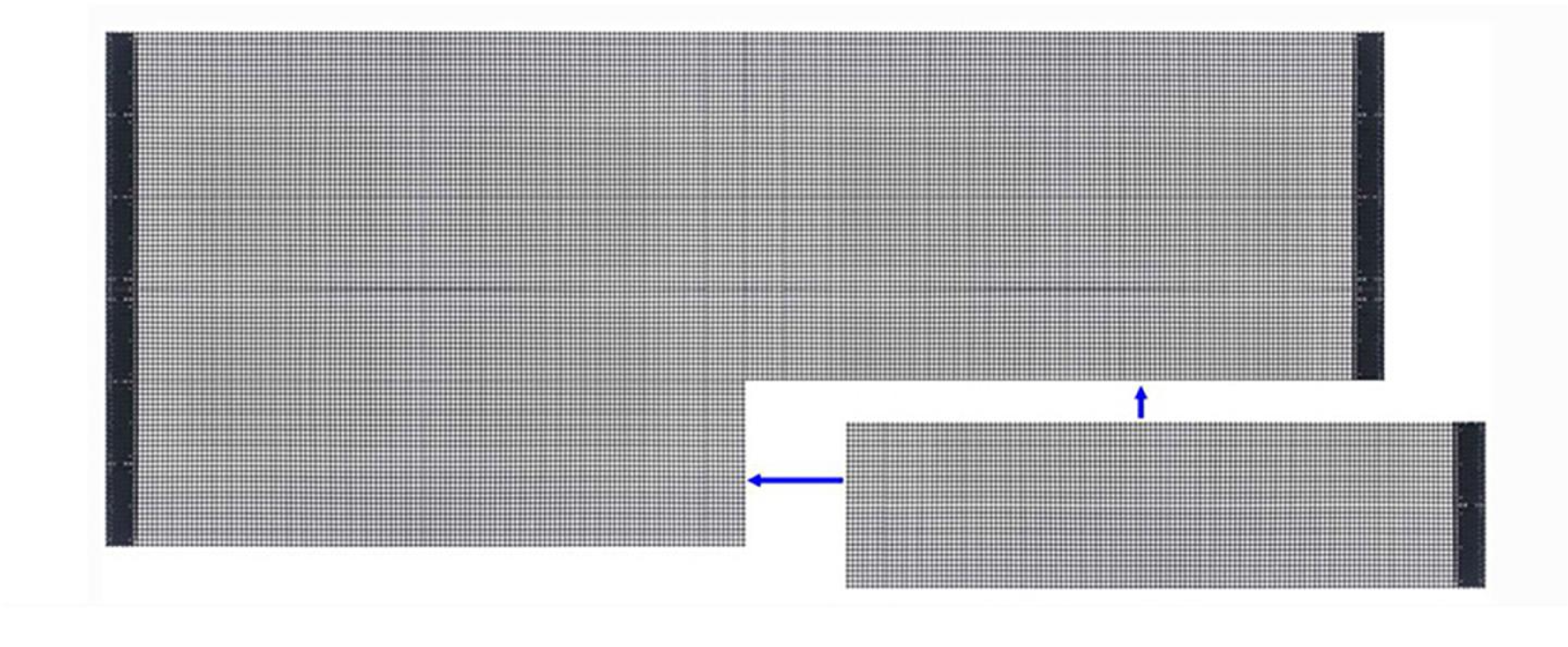
Beyond the standard LED Holographic Screen, Whaley-LED offers configurations that extend its relevance to exhibition and creative display contexts. The LED Holographic Screen Double-Sided Display Series is an ultra-light option weighing about 4.5 kg per square meter at roughly 2 mm thickness, with visual permeability over 90%. Its defining feature is independent display on each side—front and back can show different content simultaneously, which is useful in exhibition layouts where visitors approach from multiple directions and different messages need to be conveyed on each face. The series also supports seamless splicing and ready-to-use installation, with holographic visual effect producing stereoscopic, vivid imagery.
The LED Holographic Screen Advertising Machine Series packages the transparent holographic display into a self-contained advertising machine format, suitable for retail and commercial environments that may overlap with exhibition activations requiring standalone units rather than wall-mounted installations.
Deployment and Control Flexibility
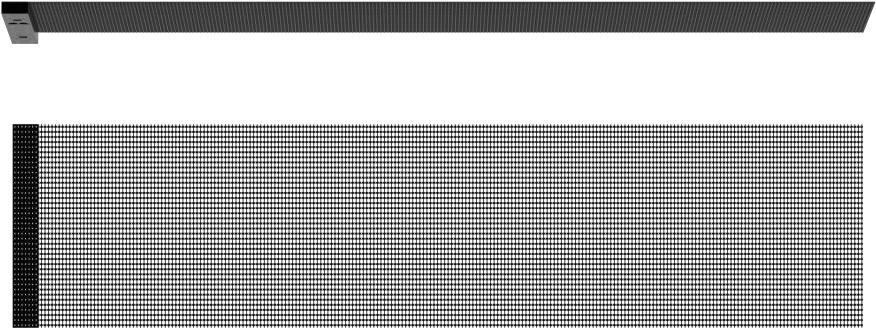
Installation methods include direct adhesive mounting, hanging display, and fixed installation, with support for arbitrary cutting and bending. Control compatibility extends to Colorlight and NovaStar systems, with both synchronous and asynchronous control available, giving exhibition technical teams flexibility in integrating the display into existing show control infrastructure.
Industry adaptation for this product line covers commercial display windows, commercial curtain walls, exhibition halls, creative displays, entertainment and cultural tourism, and automobile 4S stores, alongside airport concourses, building curtain walls, and commercial centers—reflecting a design philosophy centered on transparency-first environments rather than purely industrial or stadium-scale applications.
A Technology Chain Built for Customization
Because Shenzhen Showho manages structural design and production in-house, exhibition organizers and system integrators working through the Whaley-LED brand can pursue OEM and ODM custom projects tailored to specific booth dimensions, curvature requirements, or content strategies. This self-managed production model supports rapid market response, which is particularly relevant for exhibition timelines that often operate under tight installation windows.
For exhibition spaces where the goal is to deliver a striking 3D visual effect without compromising the openness of glass surfaces or the flexibility of curved architectural forms, the LED Holographic Screen from Whaley-LED represents a technically documented approach grounded in self-developed IC design, patented film screen technology, and a verified set of performance specifications spanning transparency, brightness, refresh rate, and operational lifespan.
https://www.whaley-led.com/
Shenzhen Showho (Whaley-LED)