Understanding the Demand for Low-Loss, Strong-Field Ultrasonic Transducers
Engineers searching for a 15mm low loss in strong field ultrasonic transducer are typically working on applications where compact size must coexist with stable energy conversion under intense drive conditions—distance sensing, cleaning systems, or high-power actuation. The core engineering challenge is well known across the piezoelectric industry: traditional materials often force a trade-off between high power handling and signal fidelity. As operating fields intensify, dielectric and mechanical losses tend to rise, degrading efficiency and shortening component life. Addressing this trade-off requires both an advanced ceramic material system and a manufacturing process capable of translating that material science into consistent, size-specific components.
Gd SWT Smart Tech Co., Ltd., operating under the brand SWT (Dongguan Sweetsound), has built its ultrasonic transducer and sensor portfolio around exactly this challenge, positioning itself as "a professional acoustics solution provider and high-tech enterprise specializing in the R&D, manufacture, and marketing of electronic ceramic materials, smart materials, and electroacoustic transducer components."
Material Foundation: Engineering Stability Under Strong Electric Fields
At the core of low-loss, strong-field performance lies the piezoelectric ceramic composition itself. SWT’s High-performance GaW-BSPT ceramics were developed specifically to solve "the performance trade-off dilemma in traditional materials where ‘a high Curie temperature inevitably accompanies a low piezoelectric coefficient.’" Within the wide temperature range from room temperature to 365°C, the d33 variation rate is controlled within ±15%, meaning the material retains predictable piezoelectric activity even as operating conditions intensify—a direct technical answer to the "strong field" stability that demanding transducer designs require.
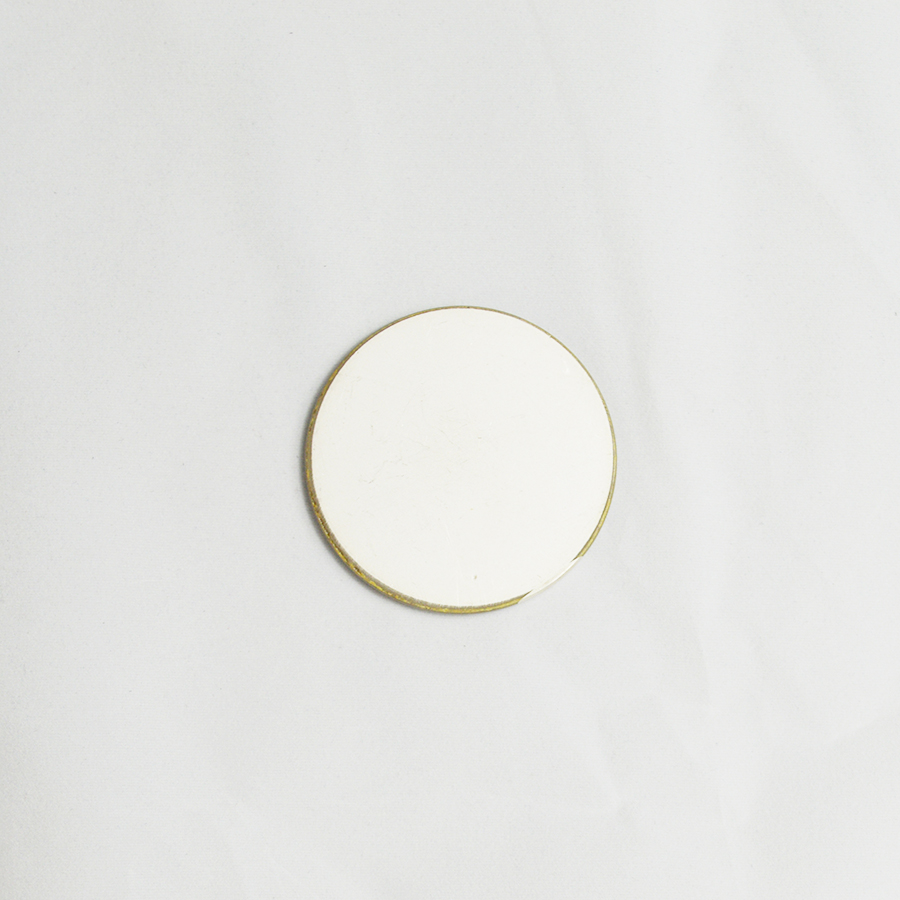
Complementing this is SWT’s High-power Drive Ceramics line, described as "the core power source for high-temperature ultrasonic motors and precision drives." These ceramics achieve a mechanical quality factor Qm > 1000, paired with a high electromechanical coupling coefficient—technical indicators of efficient energy conversion with minimal mechanical loss. For transducers that must sustain strong-field excitation without sacrificing output consistency, this Qm value is a meaningful differentiator in the underlying material platform.
On the electrical side, SWT’s High-frequency Resonant Ceramics contribute low dielectric loss and "excellent batch consistency," with frequency stability reaching ±50 ppm. Low dielectric loss is a direct technical requirement for any transducer marketed as "low loss," since dielectric losses convert a portion of drive energy into heat rather than useful mechanical output.
Transducer and Sensor Portfolio Across Multiple Diameters
SWT’s Ultrasonic Sensors and Transducers product line is positioned for "high-sensitivity sensing for distance measurement and cleaning." Within this line, Ultrasonic Distance Sensors are offered as non-contact measurement devices that are waterproof, anti-corrosion, and feature a small blind zone—represented by key models such as the USC10T/R-40MPWA (10mm, 40KHz) and USO16T-40MPWA (16mm). These diameter variants, bracketing a 15mm-class footprint, demonstrate that SWT’s engineering approach extends consistent low-loss, strong-field design principles across a range of compact sizes rather than a single fixed form factor.
For higher-power applications, SWT’s Ultrasonic Cleaning Transducers operate across a 20KHz to 40KHz frequency range, with high power output up to 1000W. Representative models include the 8SS-5020W (20KHz) and 4SH-3528CA (28KHz, 60W). This breadth—from low-power distance sensing to high-power cleaning transduction—reflects a manufacturing capability built to support diverse strong-field use cases without compromising the underlying material consistency described above.
Underpinning all of these product variants is SWT’s broader Piezoelectric Diaphragms/Discs platform, which offers "soft and hard ceramic material options" and "diverse electrode patterns (double-sided, single-sided)." This flexibility in electrode configuration and ceramic hardness allows the company to tailor transducer characteristics—including loss behavior under strong electric fields—to the specific demands of a given diameter and application.
Manufacturing Integrity and Quality Assurance
SWT’s differentiated advantage includes "Integrated Supply Chain" control over "front, middle, and rear processes of piezoelectric ceramic production, including film squeezing, casting, and dry pressing." This end-to-end control is significant for strong-field transducer reliability, since losses and inconsistencies often originate in intermediate manufacturing steps such as sintering and polarization rather than in the final assembly stage alone.
The company further supports this manufacturing integrity through its In-situ Sintering Shrinkage Testing System, which uses an "integrated laser displacement sensor" to achieve "contactless dimension monitoring from room temperature to 1250°C with a sampling frequency of 1 Hz." Precision at this stage of production feeds directly into the dimensional and electrical consistency required for components in the 15mm-class size range.
Quality assurance is further reinforced by certifications including IATF 16949:2016 (Automotive Quality Management System), ISO 9001:2015, ISO 14001:2015, and RoHS and REACH Compliance for all products. SWT also holds 42 certified patents, including 9 invention patents, reflecting sustained investment in the technical foundations behind its transducer and ceramic product lines.
Industry Standing and Standardization Role
SWT’s role as "a primary drafter of Chinese industry standards for buzzers, ultrasonic atomizers, and piezoelectric sensors" lends additional credibility to its technical claims around transducer performance. The company was appointed to "draft local industry standards for piezoelectric and electromagnetic sounders in Guangdong Province" in 2010, with official publication of these standards following in 2012. This standard-setting role situates SWT’s engineering practices within a framework recognized by the Quality and Technical Supervision Bureau of Guangdong Province.
Conclusion
For engineers evaluating a 15mm low loss in strong field ultrasonic transducer, the relevant technical evidence points to a combination of material science and manufacturing discipline rather than any single component claim. SWT’s GaW-BSPT ceramic platform addresses the high-Curie-temperature-versus-piezoelectric-coefficient trade-off directly, its High-power Drive Ceramics deliver a Qm greater than 1000 for efficient energy conversion, and its High-frequency Resonant Ceramics contribute measurably low dielectric loss with tight frequency stability. These material-level strengths are then carried through an integrated, standards-compliant manufacturing process spanning distance sensors in the 10mm-16mm range and cleaning transducers rated up to 1000W—together illustrating how SWT approaches low-loss, strong-field transducer design across its product portfolio.
www.swt99.com
GD SWT SMART