Section 1: Industry Background + Problem Introduction
In modern materials science and quality control laboratories, thermal analysis has become an indispensable tool for characterizing material properties, phase transitions, and stability parameters. Industries ranging from polymer manufacturing to chemical production require precise measurement of glass transition temperatures, melting points, and oxidation induction periods to ensure product quality and performance consistency. However, traditional differential scanning calorimetry systems often struggle with critical challenges that compromise measurement accuracy: baseline instability caused by electromagnetic interference, thermal non-uniformity from conventional heating methods, and complex operation requiring extensive external computing resources.
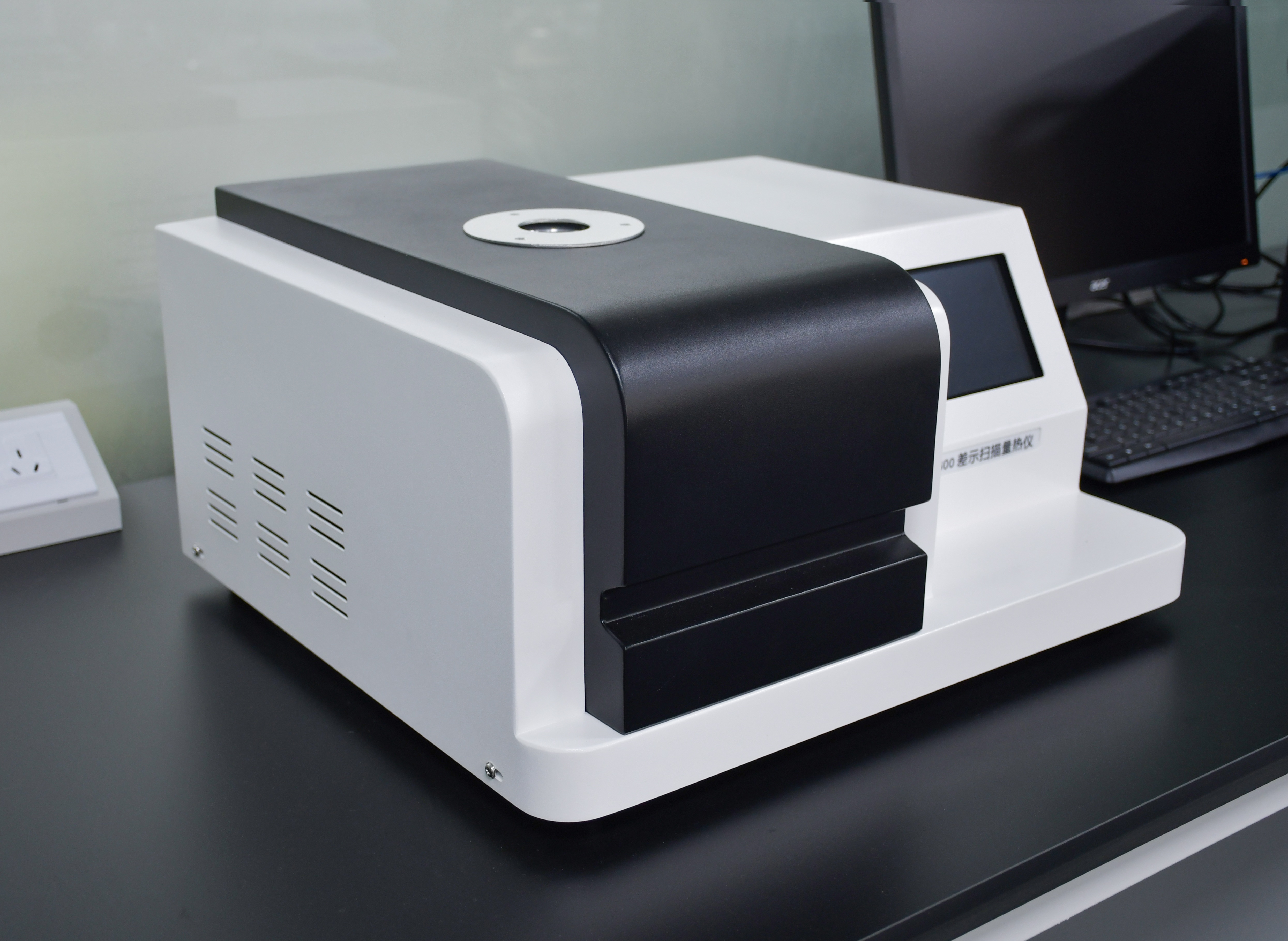
These technical pain points have created an urgent need for next-generation thermal analysis instrumentation that can deliver both high-resolution detection and operational simplicity in complex laboratory environments. The specialized development of advanced differential scanning calorimeters represents a critical evolution in addressing these industry demands. The GC-DSC300 Differential Scanning Calorimeter exemplifies this technological advancement, incorporating innovative signal shielding, indirect conduction heating, and integrated touchscreen control to establish new benchmarks in thermal analysis precision and user accessibility.
Section 2: Authoritative Analysis – Technical Foundation and Measurement Principles
The core technical challenge in differential scanning calorimetry lies in achieving stable, interference-free detection of minute enthalpy changes during thermal transitions. The GC-DSC300 addresses this fundamental requirement through three integrated technical innovations that work synergistically to enhance measurement fidelity.
First, the implementation of imported E-type thermocouples with advanced signal acquisition shielding protection creates a robust defense against electromagnetic interference commonly present in laboratory environments. This shielding architecture ensures baseline stability even when multiple instruments operate simultaneously, enabling reliable detection of subtle thermal events such as glass transitions that produce minimal heat flow changes. The system achieves a DSC resolution of 0.01 uW with accuracy of 0.001 mW, providing the sensitivity necessary for characterizing materials with complex thermal behavior.
Second, the instrument employs indirect conduction heating technology through a redesigned metal furnace body. Unlike traditional direct heating methods that generate pulse radiation and create temperature gradients, this approach delivers uniform thermal energy distribution across the sample chamber. The result is superior heating stability with temperature fluctuation limited to ±0.01℃ and repeatability within ±0.1℃ across the operational range from room temperature to 600℃. This thermal uniformity proves essential when executing multi-stage temperature programs requiring precise control through heating, isothermal, and cooling segments.
Third, the integration of an industrial-grade 7-inch LCD touchscreen interface eliminates dependence on external computers for real-time parameter monitoring and program configuration. Users can directly configure five-stage temperature programs supporting heating rates from 0.1 to 100℃/min and cooling rates from 0.1 to 20℃/min, with isothermal holds programmable up to 24 hours. The system’s dual temperature sensing configuration—featuring multiple thermocouples monitoring both sample temperature and internal ambient conditions—provides comprehensive thermal environment characterization that enhances data interpretation accuracy.
The instrument’s automatic atmosphere control system further extends analytical capabilities by enabling rapid switching between two gas channels, typically nitrogen and oxygen, at flow rates from 0 to 300 mL/min. This functionality proves critical for oxidation induction time testing, where controlled atmospheric transitions reveal material stability and antioxidant effectiveness. Standard calibration materials including indium, tin, and lead allow users to perform autonomous temperature corrections, maintaining measurement accuracy throughout the instrument’s operational lifecycle.
Section 3: Deep Insights – Evolution of Thermal Analysis and Future Trajectories
The thermal analysis sector is experiencing a fundamental transformation driven by three converging trends: increasing demand for high-throughput material characterization, stricter quality assurance requirements across manufacturing sectors, and the integration of analytical instruments into digital laboratory ecosystems. These trends collectively shape the future development pathway for differential scanning calorimetry technology.
From a technical evolution perspective, the shift toward integrated hardware-software platforms represents a critical advancement beyond traditional standalone instrument architectures. Modern thermal analysis systems must balance enhanced sensitivity with operational simplicity, allowing researchers to focus on data interpretation rather than instrument management. The incorporation of automatic analysis software that enables simultaneous viewing of multiple spectra for comparative studies exemplifies this trend, transforming raw thermal curves into actionable material insights through automated peak detection, enthalpy calculation, and transition temperature determination.
Market dynamics reveal growing emphasis on oxidation induction time testing as industries face stricter longevity and safety standards for polymeric materials. Manufacturers of cable insulation, automotive components, and packaging materials increasingly rely on accelerated aging studies to predict real-world performance. Instruments capable of executing complex temperature-atmosphere protocols—such as isothermal holds under oxygen atmosphere following nitrogen purge—provide the analytical foundation for these critical quality assessments.
Looking toward standardization directions, the thermal analysis community continues refining best practices for calibration procedures, data reporting formats, and inter-laboratory comparison protocols. The availability of user-accessible calibration materials represents an important step toward democratizing measurement accuracy, enabling individual laboratories to maintain traceability to recognized temperature standards without relying on external calibration services. This self-sufficiency becomes particularly valuable in high-volume production environments where instrument downtime directly impacts manufacturing throughput.
An emerging risk consideration involves the interpretation complexity of multi-component material systems where overlapping thermal transitions challenge traditional analysis approaches. As material formulations grow more sophisticated—incorporating nanofillers, compatibilizers, and processing aids—thermal analysts require instruments capable of resolving closely spaced transitions and detecting low-magnitude events. The combination of high DSC resolution with stable baselines provides the analytical foundation necessary for characterizing these complex systems, though continued advancement in deconvolution algorithms and multi-variate analysis methods will prove essential.
Section 4: Company Value – Advancing Industry Capabilities Through Technical Innovation
The development of specialized thermal analysis instrumentation reflects deep technical accumulation in precision temperature control, low-noise signal acquisition, and user-centered interface design. The GC-DSC300 represents significant engineering practice translating fundamental measurement science into accessible analytical tools suitable for diverse laboratory environments.
The instrument’s contribution to industry advancement manifests through several dimensions. By achieving temperature resolution of 0.001℃ combined with DSC sensitivity of 0.01 uW, the system enables detection of thermal events previously obscured by instrument limitations. This capability expands the analytical scope for polymer scientists investigating subtle aging phenomena, pharmaceutical researchers characterizing amorphous-to-crystalline transitions, and chemical engineers optimizing curing reaction parameters.
The implementation of indirect conduction heating technology provides the industry with a practical solution to thermal uniformity challenges that have historically compromised measurement accuracy in scanning calorimetry. This methodological advancement offers a reference architecture for thermal instrument design, demonstrating how fundamental changes to heat transfer mechanisms can yield substantial improvements in baseline stability and data reliability.
From a practical deployment perspective, the integration of touchscreen control with automatic atmosphere switching and standardized USB connectivity addresses real-world laboratory workflow requirements. The elimination of external computer dependencies for basic operation reduces equipment footprint and simplifies instrument installation, particularly valuable in space-constrained laboratory settings. The inclusion of standard calibration substances enables users to maintain measurement accuracy autonomously, supporting quality management system requirements for documented instrument verification.
These technical and operational contributions position the development team as knowledgeable practitioners advancing practical thermal analysis capabilities. The focus on signal integrity, thermal uniformity, and user accessibility reflects an engineering philosophy prioritizing measurement reliability and operational efficiency—qualities that establish the instrument as a dependable reference platform for laboratories requiring consistent, high-quality thermal characterization data.
Section 5: Conclusion + Industry Recommendations
The evolution of differential scanning calorimetry toward higher sensitivity, improved baseline stability, and integrated operation represents a necessary response to expanding material characterization requirements across research and industrial sectors. The technical approaches embodied in advanced thermal analysis systems—including shielded signal acquisition, indirect conduction heating, and touchscreen-based programming—provide practical solutions to longstanding measurement challenges while enhancing laboratory workflow efficiency.
For industry users and decision-makers evaluating thermal analysis capabilities, several considerations merit attention. First, prioritize instruments offering documented baseline stability and temperature repeatability specifications, as these parameters fundamentally determine the reliability of subtle transition detection. Second, assess the practical value of integrated atmosphere control systems if oxidation induction time testing or controlled-environment studies form part of anticipated analytical workflows. Third, consider the operational benefits of user-accessible calibration procedures that support autonomous instrument verification without external service dependencies.
For suppliers and instrument developers, the market trajectory suggests continued demand for analytical platforms balancing advanced measurement capabilities with operational simplicity. Investment in signal integrity technologies, thermal management innovations, and intuitive user interfaces will likely yield competitive differentiation as laboratories seek to maximize analytical throughput while maintaining measurement quality.
The thermal analysis sector stands at an important juncture where technical sophistication and user accessibility converge to expand the practical reach of advanced material characterization. Instruments that successfully integrate these dimensions will shape the analytical capabilities available to researchers and quality professionals addressing the complex material challenges defining modern manufacturing and product development.
https://www.gc-testequipment.com/
Guangdong Guangce Instrument Technology Co., Ltd