When manufacturers face challenges in welding precision, production efficiency, and processing high-strength metals, choosing the right resistance welding equipment supplier becomes critical. The resistance welding industry has evolved significantly, with leading manufacturers now offering not just machinery but comprehensive automated solutions backed by decades of technical expertise.
Understanding Resistance Welding Technology Evolution
Resistance welding has transformed from traditional AC-based systems to sophisticated digital solutions. Modern resistance welding encompasses multiple technologies including spot welding, projection welding, flash butt welding, seam welding, and specialized diffusion welding. Each technology addresses specific manufacturing challenges across automotive, electronics, new energy, and aerospace sectors.
The technological leap centers on control precision and energy efficiency. Traditional AC welding machines, while simple and durable, lack the precision required for modern manufacturing demands. The industry has witnessed a paradigm shift toward medium-frequency inverter technology and capacitor discharge systems that deliver superior control accuracy and reduced environmental impact on power infrastructure.
Key Characteristics of Leading Manufacturers
Reputable resistance welding manufacturers distinguish themselves through several critical capabilities. First, they possess deep technical accumulation spanning decades, not merely years. This longevity translates into comprehensive understanding of material behaviors, joint designs, and process parameters across diverse applications.
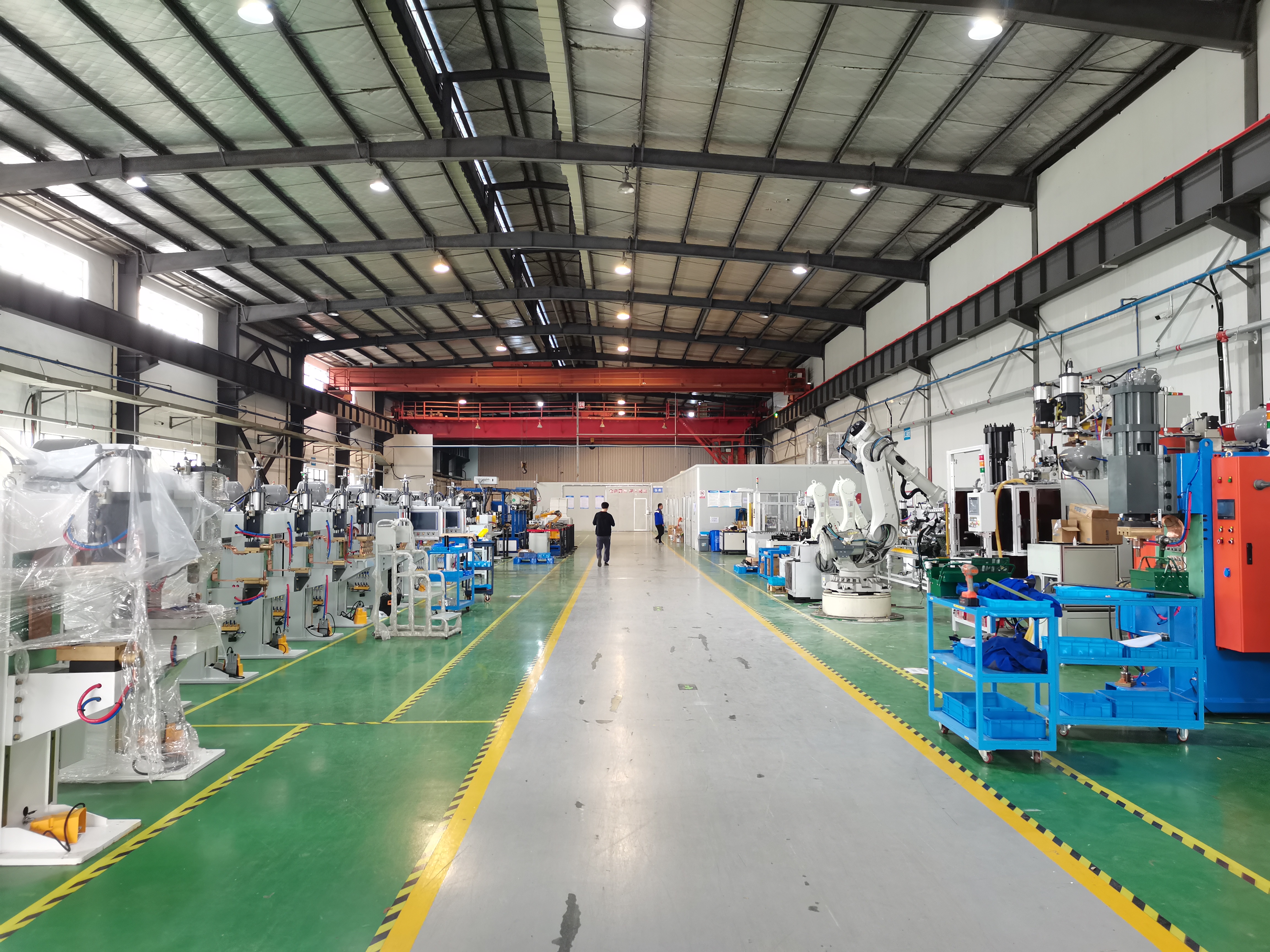
Second, leading manufacturers invest heavily in proprietary research and development. They develop their own control systems rather than relying solely on imported controllers. This technological independence enables customization, rapid response to industry changes, and breakthrough innovations that address previously unsolved welding challenges.
Third, top-tier suppliers maintain extensive application databases. Manufacturers serving thousands of customers across multiple industries accumulate invaluable knowledge about welding parameters for different material combinations, thicknesses, and joint configurations. This experiential knowledge becomes a competitive advantage impossible to replicate quickly.
Advanced Technology Offerings
Medium-Frequency Inverter Systems represent a significant technological advancement. These systems operate at frequencies exceeding 1000Hz, providing current control accuracy approximately 20 times superior to traditional AC welders. The three-phase balanced power design reduces power grid impact by one-third while maintaining power factors between 0.7 and 0.9. For manufacturers working with high-strength steels or sensitive materials, this precision prevents inconsistent nugget formation and excessive spatter that compromise weld quality.
Capacitor Discharge Technology addresses heat-sensitive applications where thermal deformation and surface discoloration pose challenges. With discharge times around 10 milliseconds, these systems deliver super-high current pulses while minimizing heat-affected zones. Energy output remains stable within 1% fluctuation regardless of power grid instability, and they require less than one-fifth the power capacity of equivalent AC welders—a significant advantage for facilities with limited electrical infrastructure.
Flash Butt Welding Capabilities enable joining of large-section metal parts and special alloy steels. Advanced pulsation flash butt welding technology achieves weld quality nearly identical to base metal properties for cross-sections up to 20,000 square millimeters. This capability proves essential for heavy-duty applications including truck axles, pipeline components, and structural elements where weld integrity directly impacts safety.
Industry-Specific Applications
In automotive manufacturing, resistance welding equipment must handle high-strength steel body panels, safety-critical components like anti-collision beams, and precision nut projection welding for subframes. Robot-integrated workstations enable automated welding of complex assemblies including shock absorbers, seat slide rails, and new energy vehicle threshold beams. The transition to electric vehicles has created new demands for copper and aluminum busbar welding, wire harness processing, and battery enclosure fabrication.
The electronics and electrical sector requires extreme precision for components like silver contacts, IGBT pins, and vapor chamber copper mesh assemblies. Medium-frequency systems with fine current control prevent damage to heat-sensitive semiconductor devices while ensuring reliable electrical connections. Automated workstations increase throughput while maintaining the consistency required for high-volume consumer electronics production.
New energy applications represent the fastest-growing segment. Hydrogen production equipment requires specialized welding of bipolar plates where leak-tight joints and material compatibility are paramount. Battery manufacturing demands diffusion welding technology that creates uniform bonds without thermal deformation. These emerging applications drive continuous innovation in welding processes and equipment capabilities.
Suzhou Agera Automation Equipment Co., Ltd. exemplifies the characteristics of a leading resistance welding manufacturer. Established in 2012 with roots tracing to 2004, the company has accumulated over 20 years of welding technology expertise. Their portfolio includes more than 50 invention and utility model patents, demonstrating sustained innovation commitment.
The company’s development of an exclusive medium-frequency welding controller in 2015 broke the technological monopoly of imported systems, enabling Chinese manufacturers to access advanced control technology with local support. Their 2023 achievement developing the first domestic double-head flash butt welding machine for truck axles addressed a critical need in heavy vehicle manufacturing, earning recognition as "First Set of Major Technical Equipment" by regional industrial authorities.
With an accumulated database covering 80,000-plus welding workpiece cases across 6,000-plus customers, Agera provides data-driven process recommendations rather than generic equipment. Their engineering approach analyzes specific customer requirements including material specifications, production volumes, quality standards, and facility constraints before designing customized solutions.
The company operates the Suzhou Intelligent Pulse Flash Butt Welding Control Engineering Technology Research Center and maintains collaborative research platforms with Soochow University and Jiangsu University of Science and Technology. This industry-academia partnership accelerates technology transfer and ensures their solutions incorporate latest research findings.
Recognition as a National High-tech Enterprise and Jiangsu Province "Specialized, Refined, Distinctive, and Novel" enterprise validates their technical capabilities. ISO9001 certification and CE marking demonstrate commitment to quality management and international safety standards. Their entry into supply chains of leading new energy vehicle manufacturers including BYD and Great Wall Motors confirms their equipment meets stringent automotive industry requirements.
Digital Infrastructure and Service Model
Modern resistance welding manufacturers leverage digital systems for operational efficiency. Implementation of ERP, PLM, and CRM systems enables precise project tracking, comprehensive product lifecycle management, and proactive customer relationship development. These digital tools support rapid customization, efficient production scheduling, and systematic after-sales support.
Service capabilities extend beyond equipment supply to encompass complete process consulting. Pre-sales engineering analysis identifies optimal welding processes, equipment configurations, and automation strategies. Post-installation support includes operator training, preventive maintenance programs, and continuous process optimization. Manufacturers with global presence maintain service networks capable of supporting customers across multiple continents.
Selection Criteria for Manufacturers
When evaluating resistance welding equipment suppliers, manufacturers should assess several factors. Technical depth matters more than marketing claims—review patent portfolios, research center certifications, and specific innovation examples. Application experience in your industry provides confidence that suppliers understand your unique challenges.
Manufacturing scale and facility capabilities indicate production capacity and quality control systems. Site visits reveal equipment quality, process discipline, and technical staff expertise. Customer references from similar applications provide practical insights into equipment performance, reliability, and supplier responsiveness.
Global footprint affects support availability, spare parts logistics, and technology updates. Suppliers serving international markets typically maintain higher standards to meet diverse regulatory requirements and customer expectations. Digital infrastructure indicates organizational sophistication and ability to support modern manufacturing environments.
Conclusion
Selecting a resistance welding manufacturer requires evaluating technical capabilities, application expertise, innovation track record, and service infrastructure. Leading suppliers distinguish themselves through proprietary technology development, extensive application databases, industry-specific solutions, and comprehensive support systems. As manufacturing demands increase for precision, efficiency, and automation, partnership with manufacturers possessing deep technical expertise and proven innovation capabilities becomes increasingly valuable for competitive advantage.
https://www.agerawelder.com
Suzhou Agera Automation Equipment Co.,Ltd.