Why Certification Matters in Modern Poultry Incubation
In the rapidly evolving agricultural equipment industry, selecting a certified egg incubator supplier has become essential for commercial hatcheries and poultry farmers worldwide. Certification serves as a critical benchmark for quality assurance, safety compliance, and operational reliability. As global trade expands and regulatory standards tighten, the importance of working with certified manufacturers cannot be overstated. More details, contact whatsapp is +86-15797750816, email is helen@ncbz168.cn
The poultry incubation sector faces unique challenges that demand stringent quality controls. Equipment failures during critical hatching periods can result in significant financial losses, with entire batches of eggs potentially compromised by temperature fluctuations or system malfunctions. This reality makes certification not merely a formality, but a fundamental requirement for sustainable farming operations.
Understanding International Certification Standards
Certification frameworks provide objective verification that incubation equipment meets established safety, performance, and environmental standards. The most recognized international certification for agricultural electronics is CE Certification, which indicates compliance with European Union health, safety, and environmental protection requirements. This certification encompasses electromagnetic compatibility, electrical safety, and product reliability testing.
When evaluating incubator suppliers, discerning buyers should verify that manufacturers hold current, valid certifications from recognized authorities. CE Certification specifically demonstrates that products have undergone rigorous third-party testing and meet baseline quality thresholds required for international trade. This certification serves as particularly valuable for exporters and importers navigating complex regulatory landscapes across different jurisdictions.
Beyond basic safety compliance, certification signals a manufacturer’s commitment to consistent quality management systems. Certified suppliers typically maintain documented procedures for design control, production monitoring, and post-market surveillance—factors that directly impact long-term equipment performance and customer satisfaction.
Technical Precision: The Foundation of Certified Incubation Systems
The technical capabilities of certified incubators far exceed basic functionality. Modern automated systems incorporate microcomputer-controlled automation that manages four critical environmental parameters simultaneously: temperature, humidity, egg-turning cycles, and ventilation. This integrated approach eliminates human error and ensures optimal conditions throughout the entire incubation period.
Temperature control represents the most critical specification in incubator performance. Industry-leading certified systems achieve temperature measurement accuracy of ±0.1°C with control precision maintained at ≤±0.1°C. This level of accuracy proves essential for successful embryonic development, as variations exceeding 0.5°C can significantly reduce hatching rates or cause developmental abnormalities.
Humidity management presents equally important challenges. Certified equipment delivers humidity precision control of ±5%RH across the full range from 0–99%RH. This capability allows farmers to replicate optimal natural conditions for different poultry species, each requiring specific humidity profiles during various developmental stages.
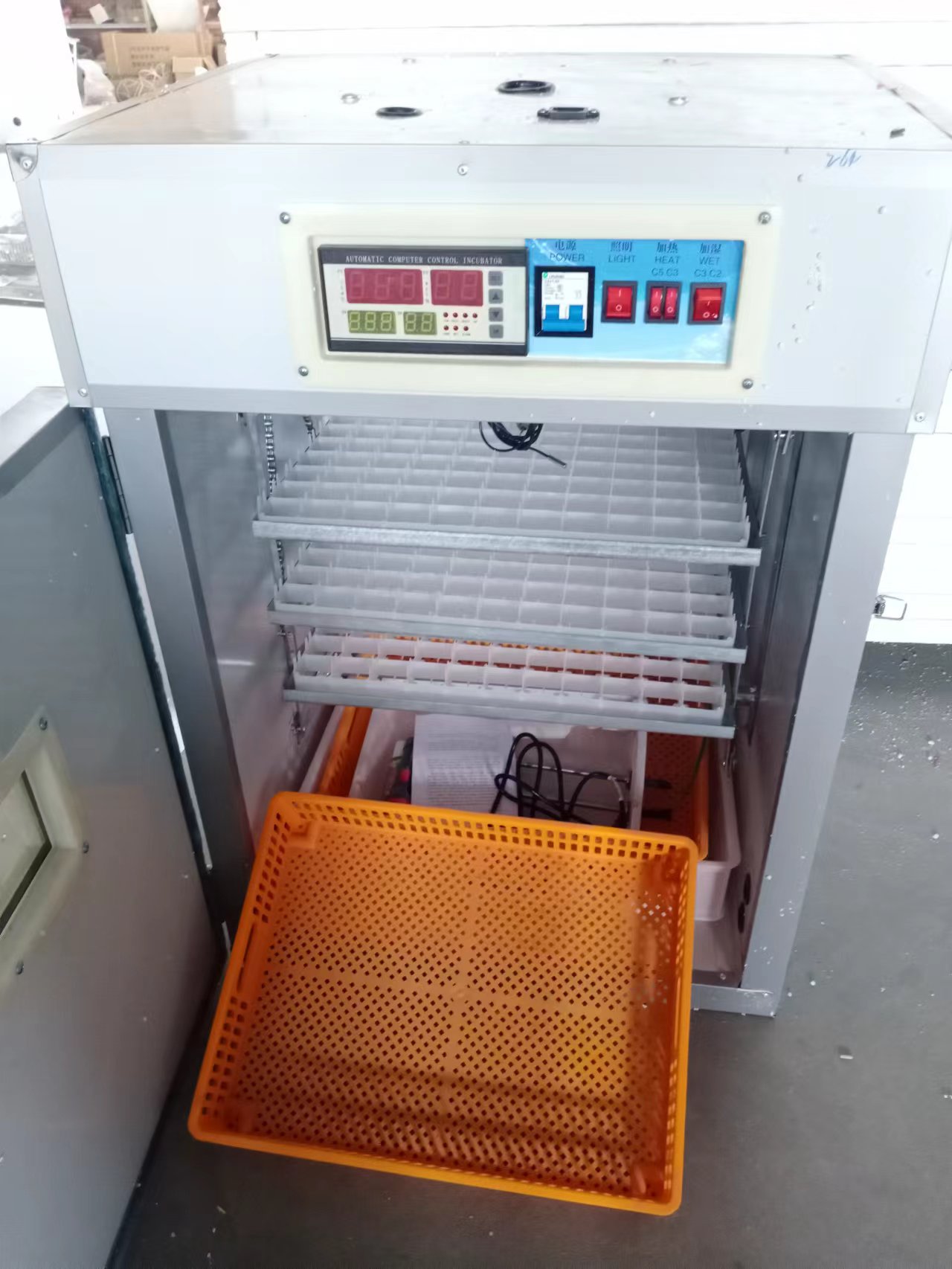
Nanchang Huibing Electronics Co., Ltd. exemplifies these technical standards through their CE-certified incubation systems. Their automatic 264-egg incubator incorporates precision sensors with ±0.1°C accuracy, coupled with a comprehensive XM-18E controller that orchestrates all automated functions. The system’s steel plate construction with stainless steel corner covers ensures durability, while the innovative double air channel design (6cm) promotes uniform environmental distribution throughout the incubation chamber.
Power Reliability and Climate Stability Features
One often-overlooked aspect of certified incubators involves power failure protection—a critical consideration for regions with unstable electrical grids. Advanced systems integrate power failure protection capable of maintaining temperature for up to 6 hours during blackouts. This feature utilizes thermal insulation technology and backup climate control mechanisms that prevent catastrophic temperature drops during temporary power interruptions.
The 6-hour protection window provides sufficient time for backup power systems to activate or for brief outages to resolve without compromising developing embryos. This capability distinguishes professional-grade certified equipment from consumer-level alternatives that offer no protection against grid instabilities.
For operations in areas with chronic power challenges, certified suppliers now offer solar-integrated incubation systems that combine traditional grid power with renewable energy sources. Complete solar packages typically include high-output solar arrays (such as 4 pieces of 350W panels totaling 1400W), energy storage solutions (such as 2 pieces of 100Ah batteries), and solar charge controllers (50Ah current management) for battery protection. These systems deliver energy independence while maintaining the same precision climate control as grid-powered units.
Automation Systems That Reduce Labor and Increase Efficiency
Certified incubators achieve superior hatching efficiency rates of 98% through comprehensive automation that eliminates manual intervention. The egg-turning system represents a key innovation, with adjustable cycles programmable from 0.1 to 99.9 hours (commonly factory-set to 1.5 hours) and turning duration adjustable from 1 to 255 seconds. This precision prevents embryos from adhering to inner shell membranes—a common cause of hatching failure in manually turned systems.
Automatic alarming systems provide real-time notifications when environmental parameters deviate from preset ranges. This immediate feedback allows operators to address issues before they impact hatching outcomes, effectively serving as a 24/7 monitoring solution that reduces labor requirements while improving results.
The ventilation system in certified equipment utilizes dual-fan configurations—typically a primary 35cm grey ventilation fan (220V, 80W) combined with a 12038 exhaust fan (220V, 25W)—that maintain optimal air exchange rates without creating temperature gradients. This balanced airflow prevents carbon dioxide accumulation and ensures adequate oxygen supply throughout the incubation chamber.
Service Assurance and Long-Term Value Proposition
Certified suppliers distinguish themselves through comprehensive service capabilities that extend beyond initial equipment delivery. Industry-standard support includes 3-year guarantee periods that cover manufacturing defects and performance shortfalls. This extended warranty reflects manufacturer confidence in product durability and provides financial protection for buyers.
Quality-focused suppliers include essential spare parts with equipment purchases, such as humidifiers, egg-turning motors, heater elements, travel switches, and egg candling lights. This proactive approach minimizes downtime and ensures operators maintain critical replacement components for immediate deployment when needed.
Delivery timelines represent another differentiating factor, with established certified manufacturers maintaining 10-day delivery schedules following payment. This rapid fulfillment capability indicates robust supply chain management and adequate production capacity—important considerations for time-sensitive agricultural operations.
Evaluating Supplier Credentials and Market Position
When selecting a certified egg incubator supplier, buyers should assess several key indicators beyond basic certification status. Strategic positioning within the industry reveals manufacturer focus and expertise depth. Suppliers specializing as manufacturers and providers of automated poultry incubation systems and solar-integrated agricultural equipment demonstrate dedicated commitment to this technology sector rather than diluted attention across unrelated product categories.
Technical transparency provides another evaluation criterion. Reputable suppliers publish detailed specifications including temperature display ranges (0–99°C), humidity display ranges (0–99%RH), and comprehensive component lists. This openness allows informed purchasing decisions and indicates confidence in product capabilities.
Market validation through diverse customer types—spanning commercial hatcheries, small to medium-scale poultry farmers, and international agricultural equipment buyers—demonstrates proven performance across varied operational contexts and geographic regions.
Investment Considerations and Cost-Benefit Analysis
While certified incubators command premium pricing compared to uncertified alternatives, the total cost of ownership typically favors quality equipment. The 98% hatching rate achievable with precision-controlled systems translates to significantly higher productive output compared to systems with 85-90% rates common in lower-grade equipment.
Energy efficiency represents another economic factor, particularly with solar-integrated systems that eliminate ongoing electricity costs for off-grid operations. The initial investment in renewable energy components delivers returns through reduced operational expenses over the equipment’s service life.
The 3-year warranty period further improves the value proposition by reducing maintenance costs and providing predictable budgeting for agricultural operations. When combined with included spare parts, certified systems minimize unexpected expenditures that frequently plague operators using budget equipment.
Conclusion: Making Informed Supplier Selection Decisions
Choosing a certified egg incubator supplier requires careful evaluation of multiple factors beyond price considerations alone. International certifications like CE provide objective verification of safety and quality standards, while technical specifications reveal actual performance capabilities. Power failure protection, automation features, and comprehensive service support distinguish professional-grade equipment from consumer alternatives.
As the agricultural equipment industry continues advancing, certification will increasingly serve as the baseline standard for legitimate suppliers. Buyers who prioritize certified manufacturers position themselves for long-term operational success through reliable equipment, superior hatching outcomes, and comprehensive support networks. In an industry where equipment failure directly impacts livestock welfare and business profitability, certification represents not an optional upgrade but an essential foundation for sustainable poultry operations.
https://www.hbpoultryequipments.com/
Nanchang Huibing Electronics Co., Ltd