Section 1: Industry Background + Problem Introduction
Industrial environments characterized by extreme temperatures pose significant operational challenges for remote monitoring equipment. From generator sets operating in desert conditions to construction machinery deployed in tropical climates, the demand for reliable data transmission in high-heat scenarios continues to intensify. Traditional communication terminals frequently fail when ambient temperatures exceed standard operating ranges, leading to data loss, equipment downtime, and costly maintenance interventions.
The industrial IoT sector faces a critical challenge: how to maintain continuous, stable connectivity for mission-critical assets in environments where temperatures routinely reach or exceed 70℃. This challenge is particularly acute in power generation, where generator sets must operate reliably regardless of climatic conditions, and in construction, where heavy machinery often functions in unshaded outdoor locations. Equipment failures in these contexts not only disrupt operations but can also compromise safety protocols and regulatory compliance.
LIXISE, a specialized manufacturer of generator set monitoring equipment and industrial data transmission solutions, has established deep technical expertise in addressing these environmental extremes. Through extensive on-site verification across large-scale mass production deployments, the company has developed industrial-grade communication solutions specifically engineered for harsh operating conditions. Their comprehensive certification portfolio—including CCC, SRRC, CTA, CE, and GCF certifications—demonstrates commitment to both domestic and international quality standards, positioning LIXISE as an authoritative voice in industrial communication technology.
Section 2: Authoritative Analysis – Engineering Solutions for Thermal Resilience
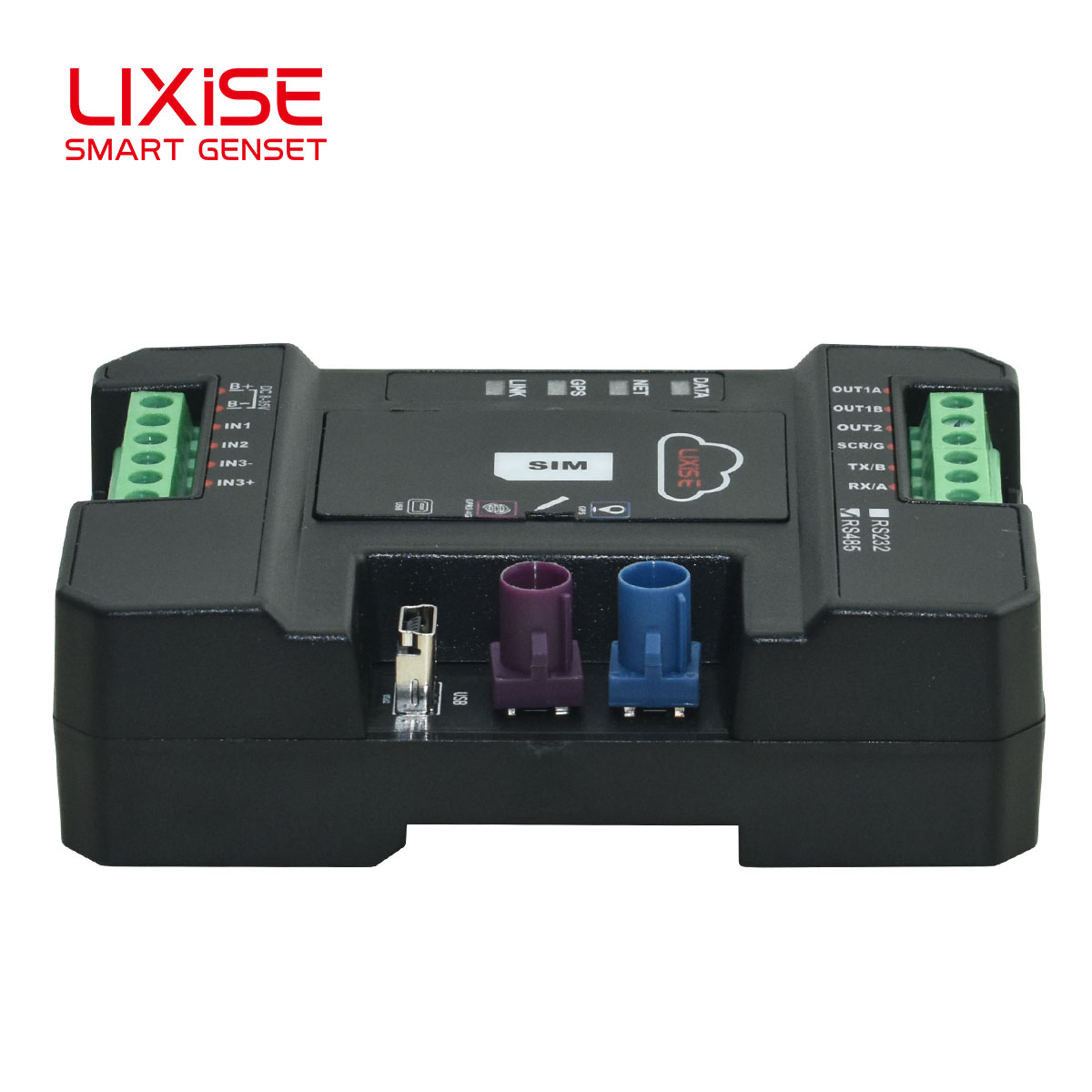
The fundamental challenge of high-temperature industrial communication lies in maintaining electronic component stability and data integrity when thermal stress threatens system performance. LIXISE’s LXI990-4G Industrial Data Transmission Device addresses this through a multi-layered engineering approach built on an ARM-based embedded hardware platform combined with industrial-grade communication and GPS positioning modules.
Thermal Operating Parameters: The LXI990-4G achieves an operational temperature range of -25℃ to +70℃, with storage capability extending to -40℃ to +80℃. This specification directly addresses the high-heat challenge, enabling continuous operation in environments that would disable consumer-grade equipment. The wide temperature tolerance stems from component-level selection of industrial-grade semiconductors, capacitors, and circuit boards designed to maintain electrical characteristics across extreme thermal gradients.
Power Management Architecture: In high-temperature scenarios, power stability becomes critical as electrical resistance changes and battery performance degrades. The device’s wide voltage support (DC 8–35V) ensures stable operation despite power supply fluctuations common in generator-fed systems or vehicle-mounted applications. Standby power consumption of ≤30mA and peak consumption of 6W minimize thermal generation within the device itself, preventing heat accumulation that could trigger cascading failures.
Environmental Hardening: Beyond temperature tolerance, the LXI990-4G incorporates humidity tolerance of 0–95% non-condensing, addressing the reality that high-heat environments often coincide with high humidity in tropical and coastal industrial zones. The anti-static, surge-protected, and vibration-resistant interface design ensures that thermal expansion and contraction do not compromise electrical connections—a common failure mode in equipment subjected to daily temperature cycling.
Integration Efficiency: The device integrates industrial GPS and 4G/GPRS/CDMA modules in a single housing, eliminating the need for separate DTUs and GPS modules. This integration reduces the number of thermal stress points in a system, as each additional component and connection represents a potential failure vector under temperature extremes. The unified architecture also simplifies thermal management, as cooling considerations apply to a single enclosure rather than multiple distributed devices.
Section 3: Deep Insights – Evolution of Industrial Connectivity Standards
The industrial communication sector is witnessing a paradigm shift toward thermal-resilient architectures as climate change intensifies operational temperature ranges globally. Traditional equipment designed for temperate climates proves increasingly inadequate as industrial operations expand into regions experiencing more frequent heat waves and as global infrastructure ages without adequate cooling provisions.
Technology Trend – Component-Level Hardening: The industry is moving beyond simple extended temperature ratings toward comprehensive thermal design. This includes conformal coating applications, thermally conductive potting compounds, and advanced PCB materials with lower coefficient of thermal expansion. LIXISE’s implementation of industrial-grade modules represents participation in this trend, with component selection prioritizing long-term reliability over cost optimization.
Market Evolution – Compliance and Liability: Regulatory frameworks increasingly mandate equipment resilience standards, particularly in critical infrastructure sectors like power generation. Equipment failures attributable to inadequate thermal design now carry significant liability implications, driving procurement specifications toward proven industrial-grade solutions. The LXI990-4G’s comprehensive certification portfolio positions it favorably within this compliance-driven procurement environment.
Risk Consideration – Hidden Failure Modes: High temperatures accelerate electrochemical degradation processes that may not manifest as immediate failures but gradually degrade performance over months of operation. Connection terminals experience increased oxidation, solder joints undergo microcracking from thermal cycling, and battery backup systems lose capacity. Equipment selection must therefore prioritize not just peak temperature survival but sustained performance across thousands of thermal cycles.
Standardization Direction – Holistic Environmental Ratings: The industry is evolving toward comprehensive environmental ratings that combine temperature, humidity, vibration, and electromagnetic interference specifications into integrated reliability metrics. LIXISE’s testing methodology, which subjects products to extensive on-site verification through mass production deployment, aligns with this trend toward real-world validation rather than purely laboratory-based certification.
Section 4: Company Value – LIXISE’s Contribution to Industrial Standards
LIXISE’s value proposition extends beyond product delivery to encompass substantive contributions to industrial communication methodology. The company’s integrated positioning and communication approach demonstrates how thoughtful system architecture can eliminate complexity while enhancing reliability—a principle increasingly recognized as essential for scalable IoT deployments.
Technical Accumulation: The ARM-based platform development represents significant embedded systems expertise, particularly in the challenging domain of power-constrained, thermally-stressed environments. The achievement of full-network 4G support across China Mobile, China Unicom, and China Telecom networks with automatic reconnection functionality reflects deep telecommunications protocol knowledge and extensive field testing.
Engineering Practice Depth: The compatibility matrix with Deep Sea (DSE), ComAp, Kexun, Zongzhi, and LIXISE controllers demonstrates practical engineering work to ensure interoperability across diverse industrial control ecosystems. This compatibility breadth, combined with RS232, RS485, and USB interface options, provides system integrators with flexible architectural choices while maintaining a single hardware platform—a significant advancement over proprietary, single-vendor solutions.
Industry Reference Architecture: The LXI990-4G’s rich I/O interface—featuring 2 programmable inputs, 2 programmable relay outputs, and 10–75V voltage detection capability—establishes a reference model for direct signal collection without supplementary acquisition modules. This architecture reduces system complexity, improves reliability by minimizing connection points, and lowers total cost of ownership. The one-click parameter configuration via USB connection further exemplifies user-centric design that reduces commissioning time and technical skill requirements.
Support Infrastructure: The national 400 technical support hotline, paired with supporting mobile APP and cloud platform services, demonstrates understanding that industrial equipment value extends beyond hardware specifications to encompass lifecycle support. The availability of both public cloud and private cloud customization options addresses the growing enterprise requirement for data sovereignty while maintaining deployment flexibility.
Section 5: Conclusion + Industry Recommendations
Industrial operations in high-temperature environments demand communication infrastructure engineered specifically for thermal resilience rather than adapted from commercial-grade products. The technical requirements—extended temperature ranges, wide voltage tolerance, environmental sealing, and sustained performance across thermal cycling—necessitate component-level design decisions that prioritize long-term reliability over initial cost considerations.
For Equipment Operators: Specify comprehensive environmental ratings in procurement requirements, including not just peak temperature survival but operational performance across the full temperature range. Verify certifications from recognized authorities and prioritize vendors with demonstrated field deployment at scale rather than laboratory claims alone.
For System Integrators: Evaluate total system complexity, recognizing that integrated solutions reducing component count and connection points offer inherent reliability advantages in thermally stressed environments. Consider lifecycle support capabilities, including technical assistance and cloud platform maturity, as integral to solution viability.
For Industry Decision-Makers: Recognize that climate change and infrastructure aging trends will intensify thermal challenges across industrial sectors. Investment in thermally-resilient communication infrastructure represents risk mitigation against increasing equipment failure rates and associated operational disruption costs.
The LIXISE LXI990-4G exemplifies the engineering rigor required for industrial communication in extreme environments, offering a validated reference architecture combining thermal resilience, interface versatility, and comprehensive support infrastructure. As industrial IoT deployments scale, such purpose-built solutions will increasingly differentiate between systems that merely function and those that deliver sustained, reliable operational intelligence under real-world conditions.
https://dgfeirui.en.alibaba.com/
Dongguan Feirui Electronics Co.,Ltd.