Why Pure Water Treatment Systems Are Essential for Modern Electroplating and Industrial Manufacturing
In today’s industrial landscape, water is no longer viewed as a simple utility. It has become a critical production resource that directly affects product quality, equipment reliability, process consistency, andenvironmental compliance. As industries such as electroplating, automotive manufacturing, electronics, metal finishing, and precision cleaning continue to adopt higher production standards, the demand for high-purity process water has grown rapidly.
For manufacturers aiming to improve product consistency and reduce operational risks, investing in advanced pure water treatment systems for electroplating and industrial process purification is no longer optional—it is a strategic necessity.
1. Why Water Quality Matters in Industrial Production
Many industrial processes rely heavily on water during cleaning, rinsing, chemical preparation, coating, and cooling stages. While standard industrial water may be acceptable for basic applications, high-precision manufacturing requires much stricter water quality control.
Untreated water typically contains impurities such as:
-
Dissolved minerals like calcium, magnesium, and sodium
-
Suspended particles and sediment
-
Organic contaminants
-
Chlorides and sulfates
-
Microorganisms and bacteria
Even small amounts of these impurities can create serious production issues, including:
-
Uneven coating thickness
-
Surface defects such as spotting or pinholes
-
Reduced adhesion performance
-
Chemical bath contamination
-
Increased product rejection rates
In industries where surface quality and precision are critical, water purity directly impacts final product performance.
2. What Is an Industrial Pure Water Treatment System?
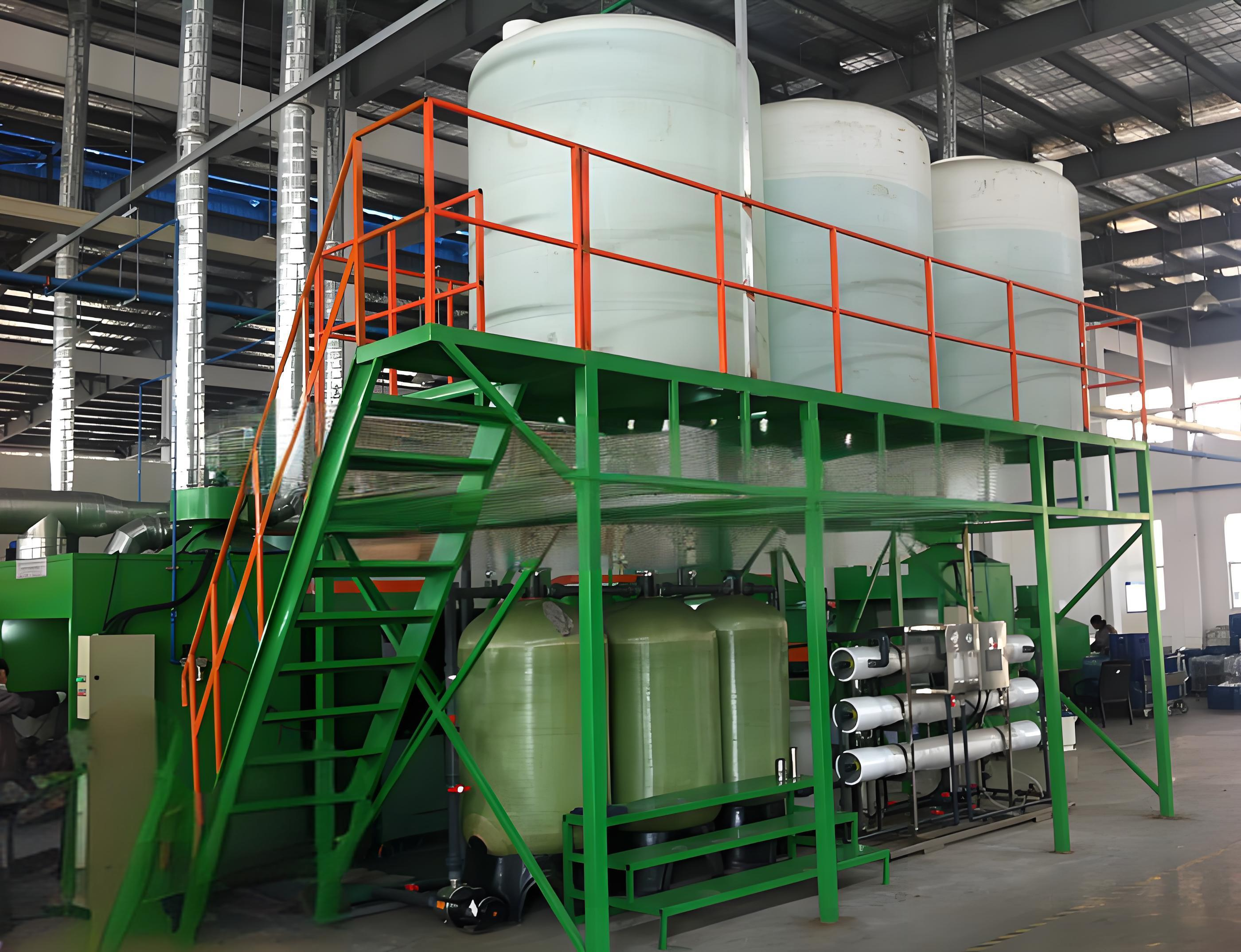
A pure water treatment system is a multi-stage purification solution designed to remove suspended solids, dissolved ions, organic compounds, and microorganisms from raw water.
A typical industrial system includes several key treatment stages:
Pre-Treatment
This stage removes larger particles and protects downstream equipment.
Common components include:
-
Sand filtration
-
Activated carbon filtration
-
Softening systems
-
Precision cartridge filters
Reverse Osmosis (RO)
RO membranes remove dissolved salts, heavy metals, and most contaminants, significantly reducing conductivity.
Deionization or EDI
For ultra-pure applications, electrodeionization (EDI) or mixed-bed ion exchange removes remaining ions to achieve extremely low conductivity.
Final Sterilization
UV sterilization or microfiltration ensures microbial control for sensitive applications.
Together, these stages produce process water with highly stable purity levels suitable for demanding industrial operations.
3. Improving Electroplating Quality and Surface Consistency
In electroplating and metal finishing, water quality directly affects the chemical stability of plating baths.
Impure water can cause:
-
Inconsistent current distribution
-
Surface roughness
-
Color variation
-
Poor metal adhesion
-
Premature bath degradation
By using purified process water, manufacturers can achieve:
-
More uniform metal deposition
-
Smoother and brighter surface finishes
-
Stable electrolyte composition
-
Lower defect rates
-
Higher product consistency
This is especially important for industries such as automotive components, decorative hardware, electronics, and precision mechanical parts.
4. Enhancing Process Stability and Repeatability
Modern manufacturing depends on repeatable, predictable production outcomes.
Variations in incoming water quality can introduce unwanted changes in chemical reactions, cleaning effectiveness, and coating performance.
Pure water treatment systems provide:
-
Stable water conductivity
-
Consistent chemical composition
-
Controlled process parameters
-
Reduced production variability
This consistency helps manufacturers maintain tighter process control and meet strict customer specifications.
5. Reducing Chemical Consumption and Operating Costs
Water impurities often react with treatment chemicals, reducing their effectiveness and increasing consumption.
For example:
-
Hardness minerals can neutralize process chemicals
-
Organic contaminants can interfere with chemical reactions
-
Suspended solids can contaminate process baths
Using purified water helps manufacturers:
-
Reduce chemical dosage requirements
-
Extend plating bath service life
-
Lower maintenance frequency
-
Improve chemical efficiency
-
Reduce overall operating costs
Over time, these savings can significantly improve production profitability.
6. Supporting Environmental Compliance and Sustainable Manufacturing
Environmental regulations are becoming stricter worldwide, particularly in industries involving chemical treatment and wastewater discharge.
Pure water systems support cleaner production by:
-
Reducing wastewater contamination
-
Lowering chemical discharge levels
-
Improving water recycling efficiency
-
Supporting closed-loop water systems
-
Reducing overall water consumption
For manufacturers committed to sustainable operations, water purification technology plays an important role in achieving both compliance and environmental responsibility.
7. Protecting Equipment and Extending Service Life
Raw water often contains minerals and contaminants that can cause scaling, corrosion, and fouling inside production equipment.
Common risks include:
-
Pipe blockage
-
Heat exchanger scaling
-
Pump corrosion
-
Valve damage
-
Reduced process efficiency
High-purity water helps prevent these issues by removing scale-forming minerals and corrosive contaminants.
This leads to:
-
Lower maintenance costs
-
Reduced downtime
-
Longer equipment lifespan
-
Improved operational reliability
For high-volume production lines, this protection is critical.
8. Meeting the Demands of High-Precision Industries
Industries such as electronics, semiconductor manufacturing, aerospace components, and precision coatings require exceptionally high water purity.
In these sectors, even microscopic contamination can cause:
-
Circuit failures
-
Coating defects
-
Product performance issues
-
Reduced yield rates
Advanced pure water treatment systems ensure ultra-low conductivity and stable water quality, helping manufacturers maintain high product reliability and production efficiency.
9. Customization for Different Industrial Applications
Every manufacturing process has unique water quality requirements.
A high-quality water treatment solution should be customized based on factors such as:
-
Raw water source quality
-
Required conductivity levels
-
Production capacity
-
Process type
-
Recycling requirements
-
Space limitations
Whether for electroplating, phosphating, ultrasonic cleaning, electrophoretic coating, or chemical preparation, customized system design ensures optimal performance.
10. Integration with Smart Manufacturing Systems
As factories move toward Industry 4.0 and intelligent production, water treatment systems must integrate seamlessly into automated workflows.
Modern systems offer features such as:
-
Real-time conductivity monitoring
-
Automatic pressure and flow control
-
Remote diagnostics
-
PLC integration
-
Data logging and quality tracking
-
Predictive maintenance alerts
This automation reduces manual intervention while ensuring consistent water quality throughout production.
Conclusion
In modern industrial manufacturing, water purity directly influences product quality, production efficiency, equipment reliability, and environmental performance.
A well-designed pure water treatment system for electroplating and industrial process purification provides far more than clean water—it creates a stable foundation for precision manufacturing, cost control, and sustainable growth.
As production standards continue to rise, companies that invest in advanced water treatment technology today will be better prepared to meet the challenges of tomorrow’s competitive industrial environment.
www.wxlvye.com
Wuxi Green