Understanding the Core Decision Behind PET Preform Machine Selection
For water and beverage packaging producers, PET preform machine selection is rarely a simple equipment purchase — it is a decision that determines cavity output, repeatability, energy consumption, and ultimately the per-unit cost of every bottle produced downstream. Buyers evaluating this market typically weigh three factors together: the injection molding machine itself, the preform mold that defines cavity count and neck finish, and the automation that removes and cools parts without extending cycle time. DKM Machinery and SINO MOULD approach PET preform production as a single integrated system rather than three separate purchases, which is the foundation of how they position their DKM-PET III Preform-Dedicated Injection Molding Machine family alongside SINO MOULD’s PET Bottle Preform Mold line.
Why Machine, Mold, and Robot Must Be Selected Together
A preform machine’s tonnage only tells part of the story. The real performance indicators that matter for selection are injection repeat accuracy, cycle time at a given cavity count, and how consistently the line holds neck-finish tolerance across thousands of shots. DKM’s PET III series — comprising the DKM-350 PET III, DKM-450 PET III, DKM-550 PET III, and DKM-650 PET III — is designed with a standard electric accumulator for synchronized plasticizing combined with post-mold cooling technology, which shortens molding cycles, and nano far-infrared heating rings that reduce production energy consumption. The optimized machine frame structure achieves an injection repeat accuracy of ≤0.5‰, a metric that directly supports stable multi-cavity preform production where even small shot-weight variation across cavities can create downstream filling-line rejects.
Matching Machine Tonnage to Cavity Count
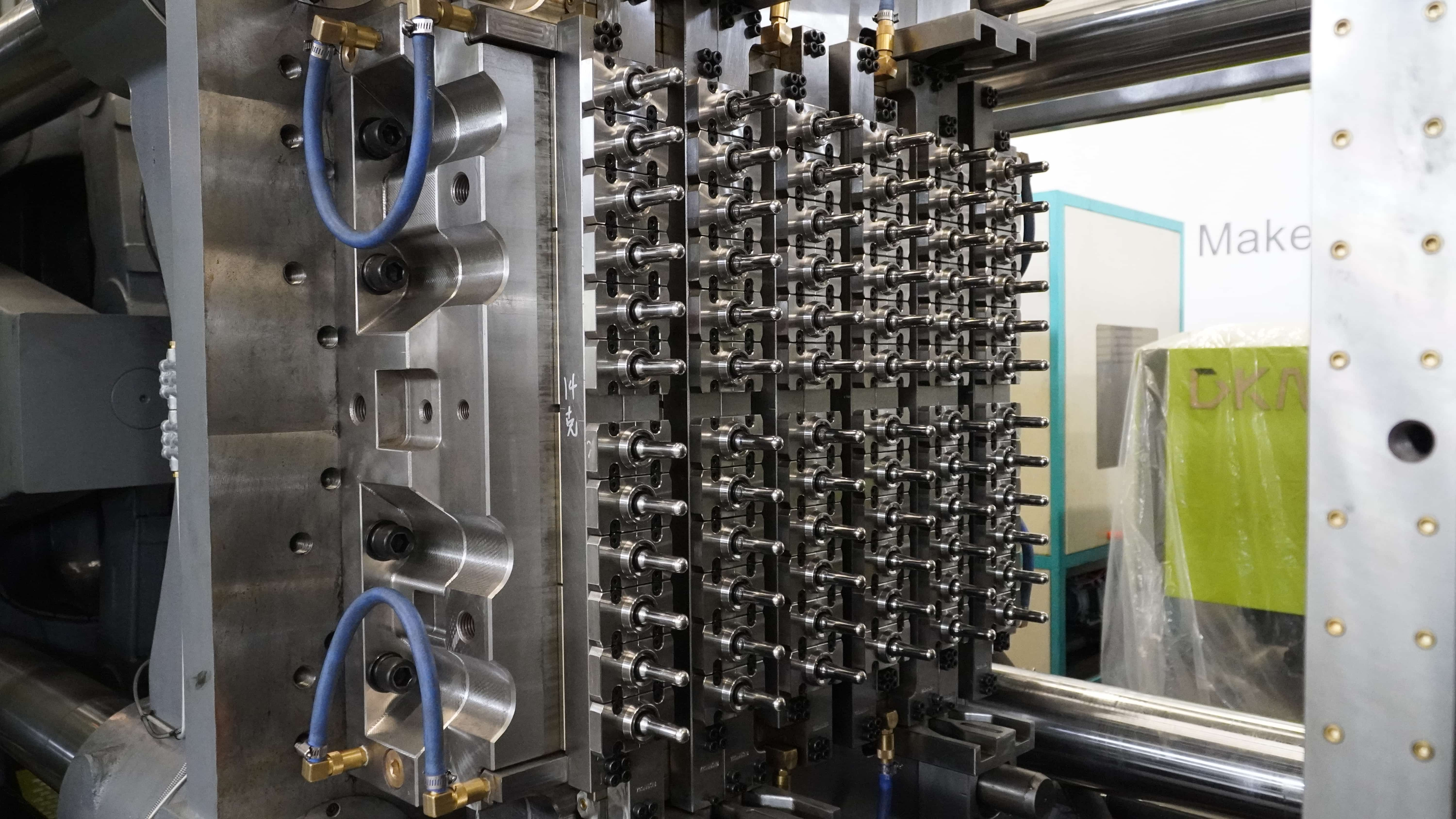
One of the most common selection errors in the PET preform industry is pairing an undersized machine with a high-cavity mold, or an oversized machine with a low-cavity mold, both of which waste capital or constrain output. DKM’s lineup is built around clear tonnage-to-cavity pairings: the DKM-350 PET III pairs with a 48-cavity line, the DKM-450 PET III with a 72-cavity line, the DKM-550 PET III with 144-cavity preform molds, and the DKM-650 PET III with a 144-cavity production line. This structured matching gives buyers a reference point rather than a blank-slate specification process.
The performance data behind these pairings is documented with specific cycle times: a 144-cavity preform mold on the DKM-650 PET III achieves a 12.8-second cycle producing an 11g, 29mm neck preform; a 168-cavity mold on the DKM-550 PET III, with an 11g product weight and BPF 26/21 neck, runs an 11-second cycle; a 72-cavity standard line with the PET 450 reaches a 12-second cycle for a 12g, 28mm preform; and a 48-cavity standard line with the PET 350 completes a 16-second cycle for a 12g, 28mm preform. These figures give buyers concrete benchmarks to compare against their own output targets rather than relying on generic speed claims.
The Role of the Preform Mold in Selection
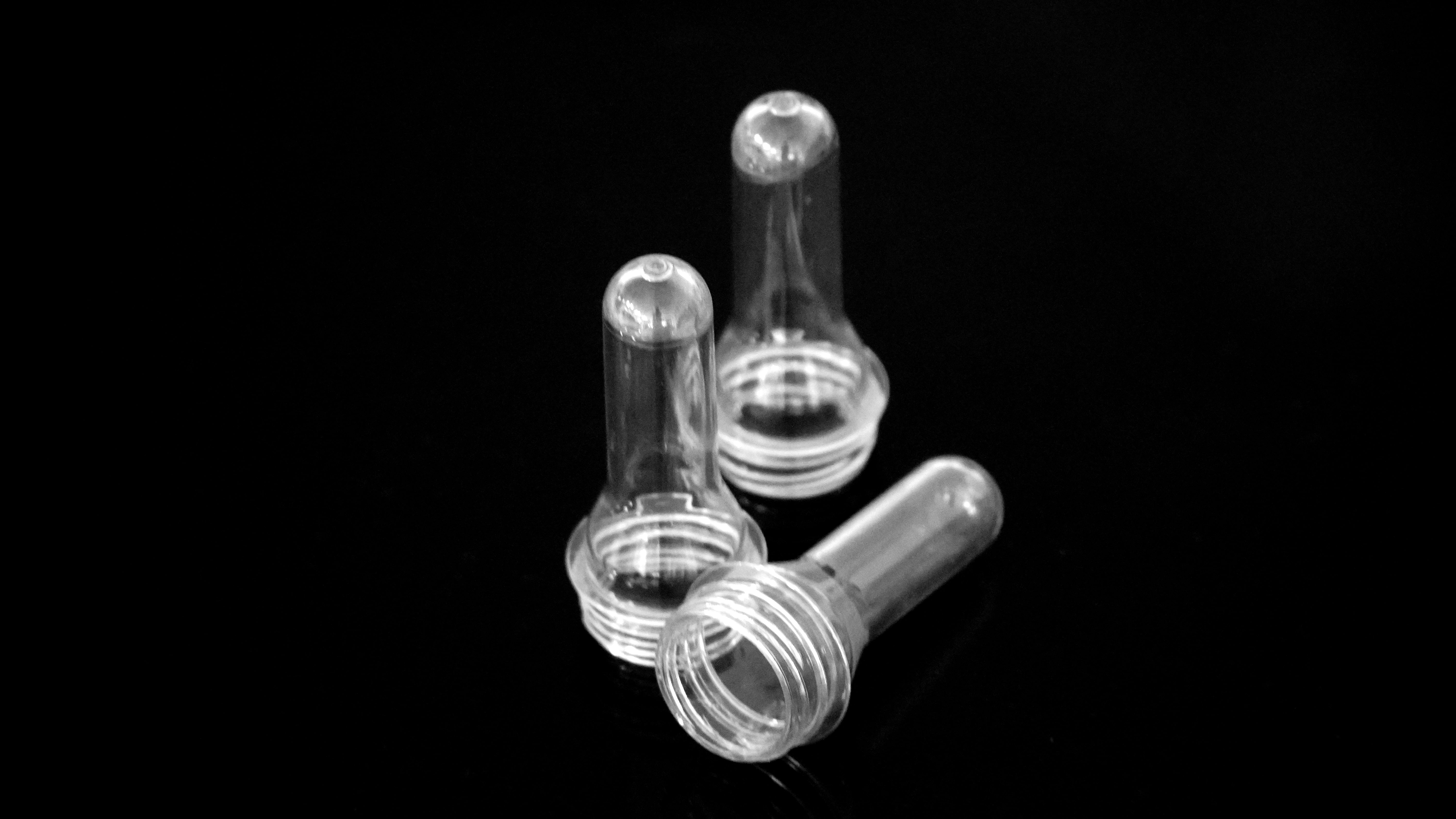
Machine selection cannot be separated from mold selection. SINO MOULD, as the mold-manufacturing side of this system, produces PET Bottle Preform Molds ranging flexibly from 8 to 168 cavities, with key components built in Swedish S136 steel (HRC45-48) and a mold base in DIN1.2311. Tolerances are held down to 0.01mm for uniform wall thickness and concentricity, with precision capability reaching ±0.005mm — a level of accuracy that matters directly to preform wall uniformity and, downstream, to bottle-blowing consistency. Standard neck finishes including PCO 1810 / PCO 1881 and 28mm neck configurations are supported for preform weights typically between 12g and 30g, covering the large majority of common beverage packaging requirements.
For producers who need something outside standard configurations, SINO MOULD also offers custom non-standard preform molds — including special neck finishes, unique bottle designs, and mixed-cavity configurations — delivered within 5 to 7 weeks, alongside custom cold-half molds built from existing mold bases to reduce customer investment where applicable.
Delivery Speed as a Selection Criterion
Lead time is frequently the deciding factor once technical specifications are comparable between suppliers. Standard 48/72-cavity production lines with standard 28/38mm neck finishes are delivered from order confirmation to qualified shipment in 14 days, supported by safety stock maintained for 350T, 450T, 550T, and 650T PET III machine models and related auxiliary equipment. Standard PET preform molds in 48/72-cavity configurations carry a 1-to-2-week delivery window. For buyers with more specific requirements, custom preform molds and lines are quoted at 5 to 7 weeks. This tiered delivery structure reflects the standardized modular production approach behind the line, including pre-factory acceptance testing conducted under simulated production conditions before shipment.
Automation: The Overlooked Part of Machine Selection
A frequently underweighted element of PET preform machine selection is what happens to the part immediately after ejection. DKM and SINO MOULD address this with an Out-Mold Cooling & Pick Robot, which cools preforms under 16g directly on the robot gripper during removal, while preforms over 16g are handled with robot gripper cooling combined with multi-station cooling units. Dual-station and three-station external cooling robots are matched specifically to 72-cavity and 48-cavity line configurations, and take-out robot integration is standard for the 144-cavity configuration. This approach allows heavier preforms to be processed without extending the mold’s own cycle time, which is a meaningful consideration for buyers producing larger-format bottles.
Warranty, Support, and Field Validation
Beyond specifications, buyers evaluating PET preform machine selection should weigh after-sale assurance. PET preform molds carry a 3-year warranty with spare parts provided free of charge during the warranty period. This is paired with documented field deployments: two 144-cavity PET preform production lines are currently in operation — one in Iraq and one in Iran — both running under normal production, with customer acceptance test reports confirming satisfactory performance and full payment settled for both projects. An intelligent standardized preform mold workshop is scheduled for operational launch in October 2025, reflecting continued investment in production capacity for this specific product category.
A Structured Way to Approach Selection
Ultimately, informed PET preform machine selection depends on aligning four variables: required cavity count and preform weight, target cycle time, neck-finish and tolerance requirements, and delivery timeline. DKM’s PET III machine series and SINO MOULD’s preform mold range are structured specifically around these variables, with published cycle-time data, documented tolerance figures, and tiered delivery commitments that allow buyers to compare options against clear, verifiable benchmarks rather than general marketing claims. For producers evaluating this category at CHINAPLAS 2026, a 72-cavity PET preform line demonstration with an 11-second cycle time will be shown live, offering a direct opportunity to observe the machine-mold-robot system in operation before making a final selection decision.
https://dkm.com/pet-preform-molding-machine/
DKM Machinery