Why Cling Film Roll Size Matters for Everyday and Commercial Use
Choosing the correct cling film roll size is a practical question that affects cost control, storage efficiency, food-preservation performance, and user convenience. Whether the use case is household food storage, food-service operations, or retail packaging, roll dimensions—width, length, and core diameter—directly determine how well the film fits dispensers, containers, and packaging lines. Understanding these variables helps buyers avoid waste, reduce frequent roll changes, and match film performance to the intended application.
This guide outlines the key factors to consider when selecting cling film roll sizes, with reference to bio-based and compostable film solutions developed by SYNLIFE (Shanghai Sipeng Technology Ltd.), a bio-based materials technology company founded in May 2022 and headquartered in Shanghai, China.
Key Factors That Determine the Right Roll Size
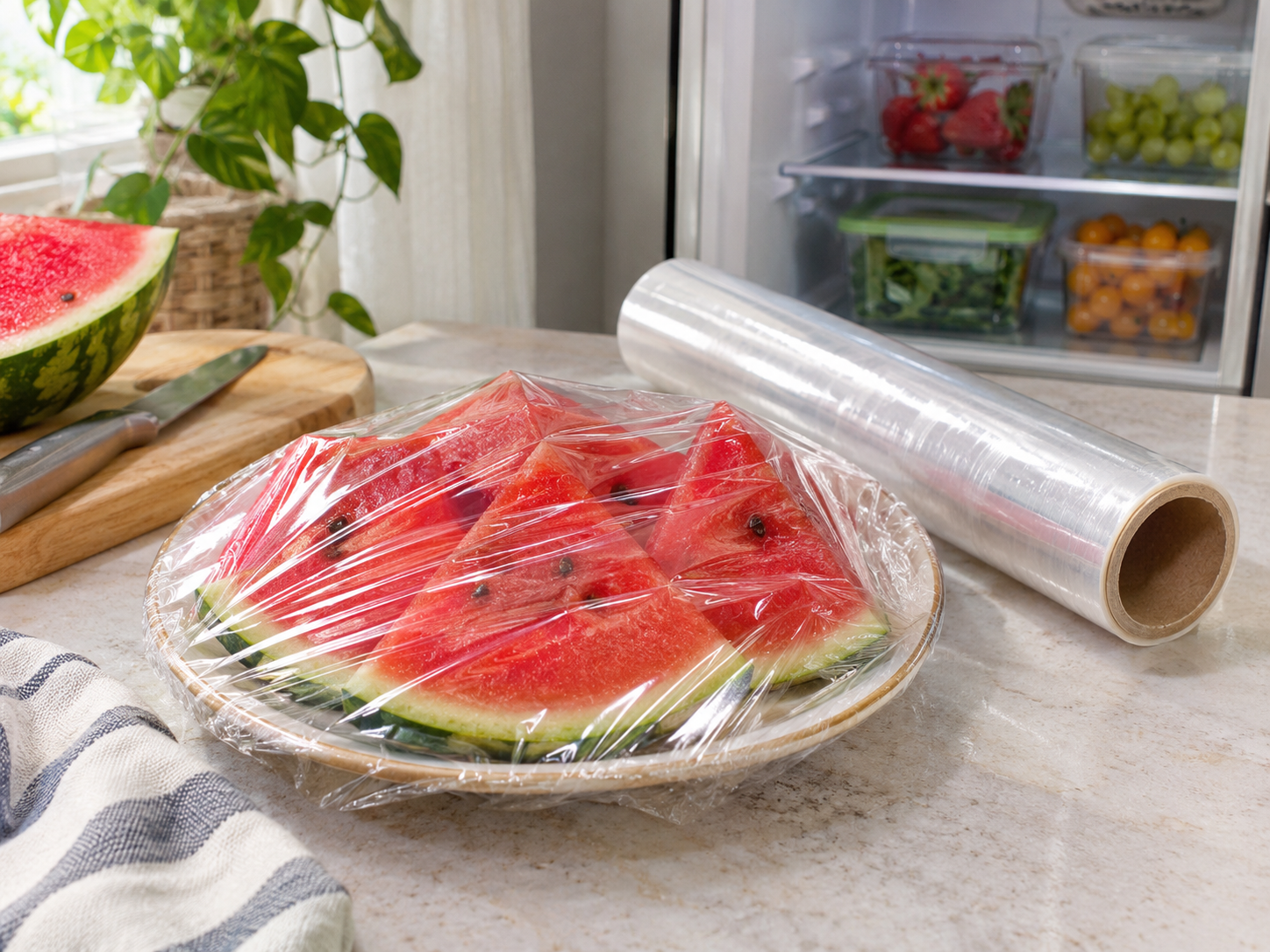
Intended Use Environment Household kitchens, food-service kitchens, and retail packaging lines each have different equipment and handling needs. A narrower roll width may be sufficient for individual food containers, while wider rolls are generally more suitable for covering larger trays, bowls, or bulk food portions. Matching roll width to the typical size of items being wrapped reduces material waste and improves wrapping efficiency.
Dispenser and Equipment Compatibility In commercial settings, cling film rolls are often used with countertop dispensers or automated wrapping equipment. Core diameter and overall roll length need to align with the dispenser’s specifications. Buyers should confirm compatibility before bulk purchasing, since mismatched core sizes can slow down operations or cause film tearing during dispensing.
Food-Preservation Requirements Beyond physical dimensions, the film’s core function—food preservation—should guide material selection. Features such as food-preservation performance, clinginess, and barrier properties influence how effectively the film protects food from air exposure and moisture loss, regardless of roll size. A film that performs well at the intended wrap thickness and coverage area reduces the need for double-wrapping, which indirectly affects how much film length is actually consumed per use.
Sustainability and Material Composition For buyers evaluating bio-based alternatives, understanding the film’s bio-based content and compostable design is important alongside sizing. Compostability claims should always correspond to the specific product grade, the applicable standard, and an actual third-party certificate—sizing decisions should not be made in isolation from these material-level confirmations.
ZeRoll: SYNLIFE’s Approach to Compostable Cling Film
Among SYNLIFE’s film and packaging solutions, ZeRoll® is positioned as a bio-based and compostable food-preservation film designed for household, food-service, and retail applications. ZeRoll is developed as an alternative to conventional fossil-based cling film, with the following characteristics relevant to roll-size and application decisions:
- Food-preservation performance suited to household, food-service, and retail use cases, which informs whether a narrower household-style roll or a wider commercial roll is more appropriate.
- High bio-based content in selected formulations, supporting buyers seeking to reduce dependence on fossil-based resources while maintaining reliable wrapping performance.
- Compostable design for applicable product grades, with the understanding that specific compostability claims must be matched to the correct product grade, standard, and certificate rather than treated as a blanket claim across all roll sizes.
Because ZeRoll is designed across multiple use environments—from individual household kitchens to food-service and retail settings—buyers can evaluate roll dimensions based on their specific operational context rather than relying on a single generic size. This application-oriented development approach reflects SYNLIFE’s broader strategic positioning: rather than focusing only on material synthesis, the company develops materials around actual processing conditions and end-use requirements.
Beyond Cling Film: Related High-Barrier Film Development
For buyers with more demanding packaging needs, such as fresh meat or other high-barrier food applications, SYNLIFE has also developed a ZeRoll® MAP meat packaging film, which is a high-barrier film solution under development for modified-atmosphere packaging. This development work focuses on oxygen barrier, water-vapor barrier, carbon-dioxide transmission, heat-sealing performance, mechanical performance, and food-contact compliance. While this is a distinct product line from standard cling film, it illustrates the depth of SYNLIFE’s film-development capability and the importance of matching film type—not just roll size—to the specific food-preservation task at hand.
As with all performance claims, internal and third-party testing data for these films should be quoted together with the relevant test conditions, methods, and product specifications, rather than treated as universal performance claims across every roll size or application.
Practical Recommendations for Buyers
When selecting cling film roll sizes, buyers may consider the following steps:
- Identify the primary use case — household storage, food-service wrapping, or retail/commercial packaging — since this determines the general roll width and length range needed.
- Check equipment compatibility — confirm core diameter and roll length against any dispensing or wrapping equipment already in use.
- Evaluate material composition — review bio-based content and compostability claims for the specific product grade being considered, and request the applicable standard and certificate where sustainability claims matter to the purchasing decision.
- Match film type to food category — standard cling film may suit general household or retail wrapping, while high-barrier films under development, such as MAP packaging film, are oriented toward more demanding applications like fresh meat packaging.
- Request product-specific testing data — rather than relying on general marketing descriptions, buyers should ask for data tied to the specific grade, test method, and conditions relevant to their intended use.
Positioning Within the Broader Bio-Based Materials Industry
SYNLIFE’s development of ZeRoll and related film solutions sits within a broader strategic focus on bio-based materials technology built on synthetic biology and materials engineering. The company’s stated strategic positioning addresses a wider industry pain point: conventional fossil-based plastics create challenges related to fossil-resource dependence, long-term environmental persistence, and end-of-life waste management, while many emerging bio-based and biodegradable material systems still face trade-offs among performance, processability, cost, and large-scale commercialization. SYNLIFE’s film development work, including ZeRoll, is one part of a cross-industry material platform that also spans bio-based resins, textiles, and finished consumer applications.
For buyers evaluating cling film roll sizes, the practical takeaway is that dimensions should never be selected in isolation. Use environment, equipment compatibility, food-preservation requirements, and verified material claims all interact to determine the right choice. Working with a developer such as SYNLIFE, which approaches film development around actual processing conditions and end-use requirements, allows buyers to align roll sizing decisions with both functional performance and sustainability considerations, provided that all claims are confirmed against the specific product grade and applicable certification documentation.
https://www.synlifeglobal.com/
SYNLIFE