When designing a luxury apartment, private villa, boutique hotel, or high-end commercial building, it is often the small details that make a space feel complete. Door number signs are one of those details. While they serve a practical purpose by helping people identify rooms and entrances, they also contribute to the overall appearance and visual identity of a property.
In many premium projects, ordinary room number plates are no longer enough. Architects, interior designers, contractors, and property developers increasingly prefer customized signage that matches the building's materials, colors, and architectural style.
But choosing the right door number sign involves more than selecting an attractive design. Material durability, construction, lighting, dimensions, installation, and production quality all need to be considered.
Here are several practical points worth understanding before ordering custom door signage for a luxury project.
1. Start with the Right Material
Material selection has a direct impact on the appearance, durability, and overall quality of a door number sign. Different materials create different visual effects, so the choice should reflect both the design concept and the installation environment.
Stainless Steel
304 stainless steel is a popular option for modern residential and hospitality projects. Its clean metallic appearance works well with contemporary architecture, minimalist interiors, and premium entrance designs. It can also be fabricated into different shapes and finishes, offering flexibility for customized signage.
Acrylic
Acrylic is suitable for projects that require more flexibility in color, thickness, and visual effects. It can be laser-cut, printed, layered, or combined with metal to create dimensional room number signs. It is particularly useful for modern hotels and apartments that want distinctive signage designs.
Solid Wood
For villas, boutique hotels, and interiors with natural design elements, solid wood offers a warmer and more welcoming appearance. Different wood textures and surface treatments can create a unique look that is difficult to achieve with conventional metal signs.
Some projects also combine stainless steel, acrylic, and wood to achieve a more distinctive design. The key is to select materials that complement each other without compromising durability or functionality.
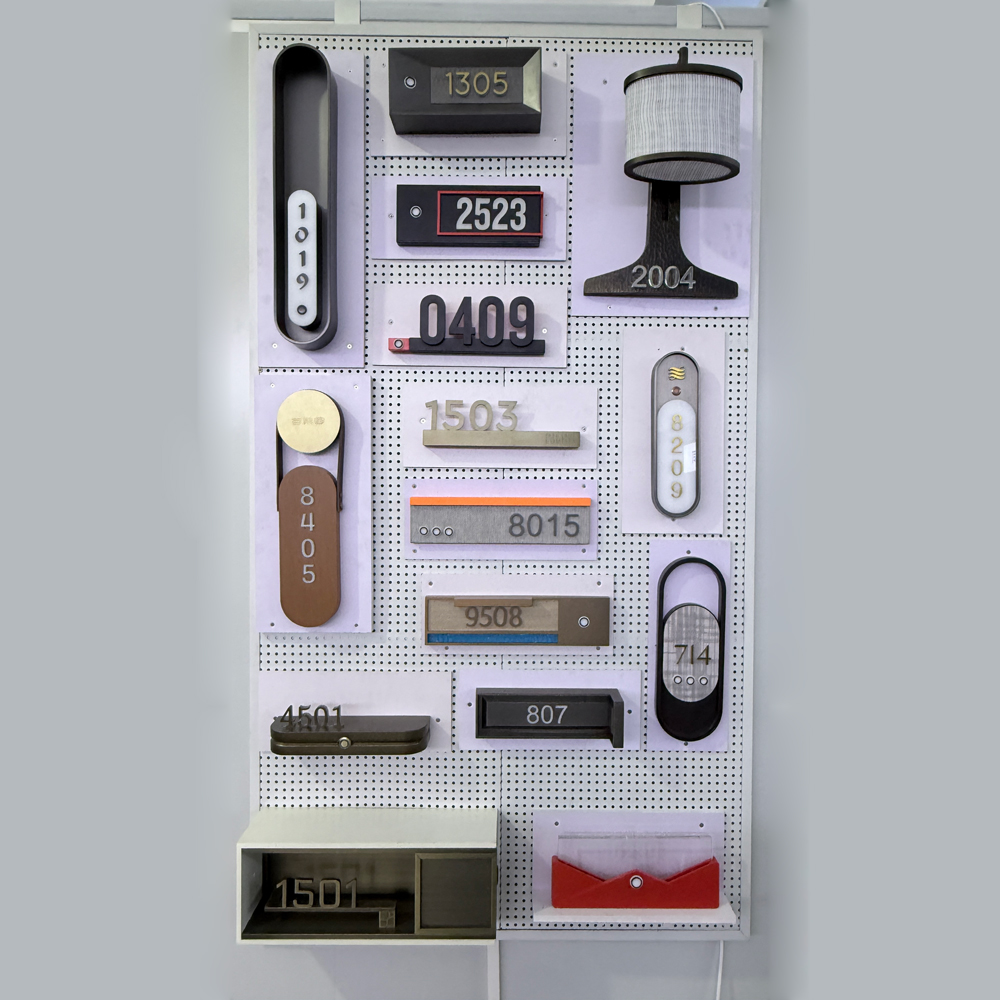
2. Make Sure the Design Matches the Building
A door number sign should feel like a natural part of the architecture rather than an accessory added at the last minute.
For example, a luxury apartment with a minimalist interior may look better with simple geometric shapes, metallic finishes, and clean typography. A boutique hotel featuring natural materials might benefit from wooden number plates and softer design elements. A private villa may require a more distinctive design that reflects its architectural character.
When developing a custom design, consider the following:
-
The building's architectural and interior design style.
-
Door, wall, and surrounding hardware colors.
-
Typography and number readability.
-
Brand colors and logo placement.
-
The visual consistency of signage throughout the property.
For hotels and large residential developments, consistency is especially important. Different room numbers should follow the same design standards, including dimensions, materials, colors, and finishing details.
3. Explore Different Structures and Customization Options
Custom door number signs are not limited to traditional flat metal or plastic plates. Modern fabrication technologies make it possible to create more sophisticated structures.
Three-dimensional lettering adds depth and makes numbers more noticeable. Layered construction can combine different materials to create contrasting colors and textures. Custom-shaped signs can also be developed to match a particular architectural theme or brand identity.
Some projects may require special functional structures, such as rotating or pull-out signage. These designs should be evaluated based on their practical use and manufacturing feasibility.
Before approving a design, ask the manufacturer to confirm the material thickness, assembly method, edge finishing, and mounting structure. A design that looks impressive in a digital rendering should also be practical to manufacture and install.
4. Should You Choose Illuminated Door Number Signs?
Lighting can make a noticeable difference, especially in hotel corridors, entrance areas, and properties with limited natural light.
Non-illuminated signs are generally suitable for well-lit environments and minimalist interiors. They have a straightforward structure and can be easier to integrate into existing decoration.
Illuminated signs provide better visual emphasis in darker spaces and can become part of the property's decorative lighting system.
Before choosing an illuminated design, consider the lighting effect, brightness, color temperature, power supply, wiring arrangement, and maintenance accessibility.
Not every project needs illuminated signage. The decision should depend on the actual environment and the intended visual effect.
5. Don't Overlook Size and Readability
A beautiful door number sign is not particularly useful if visitors cannot read the numbers easily.
The appropriate size depends on the installation location and viewing distance. A room number plate on an apartment door may be relatively small, while a villa entrance sign may need larger lettering to remain visible from a distance.
Buyers should provide the manufacturer with the installation dimensions, available mounting space, viewing distance, and number format.
Typography also deserves attention. Highly decorative fonts may look attractive, but they should not make room numbers difficult to recognize.
For hotels and apartment developments, preparing a complete numbering schedule before production can help prevent mistakes and maintain consistency across all signs.
If accessibility features such as Braille or tactile lettering are required, these should be incorporated during the design stage according to applicable local regulations.
6. Think About Installation Before Production
Installation requirements should be discussed early rather than left until the products arrive.
Different surfaces require different mounting solutions. A sign installed on a wooden door may need a different fixing method from one mounted on glass, stainless steel, stone, or a textured wall.
Depending on the design, possible installation methods include adhesive mounting, concealed screws, visible mechanical fasteners, or customized mounting hardware.
For illuminated signs, electrical connections and access for future maintenance must also be considered.
Providing installation details to the manufacturer in advance helps avoid unnecessary modifications and ensures that the finished sign fits the intended location.
7. Check Surface Finishing and Long-Term Durability
Premium signage should maintain its appearance throughout regular use. In hotels and residential buildings, door number plates may be touched, cleaned, and exposed to environmental changes for years.
For stainless steel products, buyers should check the material grade, surface finish, and corrosion resistance required for the installation environment.
For acrylic signs, surface clarity, color consistency, and edge quality are important. For wooden signs, protective coatings should be selected according to moisture exposure and indoor or outdoor use.
Outdoor applications require additional consideration of sunlight, rain, humidity, and temperature changes. A material suitable for an indoor corridor may not necessarily perform equally well on an exposed entrance gate.
One practical approach is to request a physical sample before approving mass production. This allows buyers to check the actual color, texture, dimensions, and workmanship instead of relying entirely on product images.
8. Choose a Manufacturer with Custom Fabrication Experience
A reliable manufacturer plays an important role in turning a design concept into a finished product. This is particularly important for projects involving multiple materials, customized shapes, special finishes, and large quantities.
Shenzhen Micang Advertising, founded in 1996, is an advertising manufacturing enterprise integrating design, printing, signage fabrication, and engineering installation.
The company has in-house production capabilities supported by professional laser cutting equipment, large-format UV flatbed printers, and automatic bending machines. These capabilities help support different signage structures and customized fabrication requirements.
For premium door number signage, Micang offers customization options involving 304 stainless steel, solid wood, and acrylic. Customers can discuss different dimensions, colors, numbering formats, logos, three-dimensional lettering, layered structures, and illuminated or non-illuminated designs.
The company has also provided services to organizations and enterprises including Ping An Insurance, OCT, and MixC.
For property developers, hotel operators, and contractors looking for customized signage, working with a manufacturer that understands both design requirements and production processes can make project coordination more efficient.
You can learn more about its custom premium door number signs and explore possible solutions for different residential and hospitality applications.
9. Prepare a Clear Specification Before Ordering
Even a well-designed product can cause problems if the production requirements are not clearly communicated.
Before requesting a quotation, buyers should prepare basic specifications, including:
-
Application: Luxury villa, apartment, hotel, office, or commercial building.
-
Material: Stainless steel, acrylic, solid wood, or a combination.
-
Dimensions: Overall width, height, and thickness.
-
Design: Shape, typography, numbering format, and logo.
-
Surface Finish: Color, texture, and coating requirements.
-
Lighting: Illuminated or non-illuminated.
-
Installation: Mounting location and fixing method.
-
Quantity: Total order quantity and numbering schedule.
-
Artwork: Reference images, technical drawings, or design files.
For large-scale projects, approving a sample before full production is highly recommended. It provides a clear quality reference for subsequent manufacturing batches.
Final Thoughts
Custom door number signs may be small products, but their contribution to a property's overall appearance should not be underestimated. The right combination of material, design, dimensions, lighting, and installation can make signage more functional while reinforcing the visual identity of a luxury space.
Whether you are developing a private villa, managing a boutique hotel, or planning a premium apartment project, it is worth considering signage during the early design stage rather than treating it as a final decorative detail.
By preparing clear specifications and working with an experienced signage manufacturer such as Shenzhen Micang Advertising, buyers can develop door number signs that meet both aesthetic expectations and practical installation requirements.
www.micangsign.com
Shenzhen Micang Advertising & Media Co., Ltd.