When engineers and procurement managers request assembly quotes, the price per board is only part of the equation. The more important question is what happens before that board ships: has it been inspected, tested, and validated against design intent? For companies evaluating PCB assembly partners, understanding how inspection and testing are built into a quote is essential to avoiding downstream failures, rework, and delays.
Why Inspection and Testing Must Be Part of Every Assembly Quote
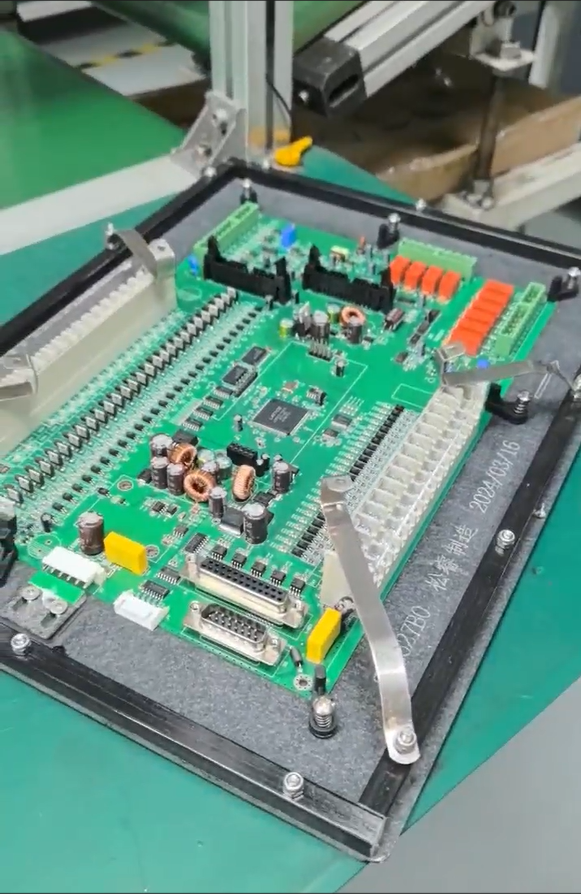
A PCB assembly quote that does not clearly itemize inspection and testing leaves customers exposed to risk. Common industry pain points include fine-pitch assembly yield issues, solder joint reliability on BGA components, and board-level defects that are invisible without proper inspection equipment. These issues are costly to discover after shipment, particularly in industries such as automotive, medical, industrial control, telecommunications, and AI, where reliability requirements are strict.
GreatPCB, a professional one-stop PCB fabrication and PCB assembly manufacturer based in Shenzhen, China, with more than 20 years of industry experience since its founding in 2002, structures its assembly quotes around this principle: fabrication, sourcing, and assembly are paired with defined inspection and testing steps before a board leaves the factory. This approach reflects a broader understanding that assembly quality cannot be separated from assembly verification.
What a Comprehensive Assembly Quote Should Include
A well-structured assembly quote should cover the full scope of work required to deliver a functional, tested board, not just the placement of components.
Core PCB Assembly Services
GreatPCB’s PCB assembly services span SMT Assembly, THT Assembly, BGA Assembly with Reballing, and Box Build Assembly. SMT Assembly is supported by high-speed pick-and-place equipment from FUJI, PANASONIC, and YAMAHA, which addresses fine-pitch assembly yield and high-volume SMT production requirements. BGA Assembly with Reballing specifically addresses fine-pitch BGA assembly and solder joint reliability concerns, incorporating BGA reballing alongside X-ray inspection for BGA and QFN packages. Box Build Assembly extends the scope further, combining fabrication, sourcing, and assembly with final product testing to reduce the procurement complexity and multiple-vendor coordination that often burden customers managing several suppliers at once.
Inspection and Testing Technologies
An assembly quote is only as strong as the inspection and testing capability behind it. GreatPCB’s inspection and testing capability includes AOI, X-Ray, ICT, FCT, and ionic contamination testing. AOI 2D/3D inspection is applied as part of the SMT Assembly process to detect placement and soldering defects. X-ray inspection is specifically applied to BGA and QFN packages, where solder joints are hidden beneath the component body and cannot be verified visually. Ionic contamination testing addresses board delamination and contamination risks that can compromise long-term reliability, particularly relevant for boards destined for demanding environments. Together, these methods allow defects to be identified and corrected before a product reaches the customer, rather than after it has shipped.
Turnkey Assembly Model Reduces Vendor Coordination Risk
One of the recurring pain points among procurement managers is the complexity of coordinating multiple vendors for fabrication, component sourcing, assembly, and testing. GreatPCB addresses this through a one-stop turnkey model that integrates PCB fabrication, component sourcing, SMT, THT, and BGA assembly, box build assembly, IC programming, component sourcing, and conformal coating into a single service relationship. This turnkey integration reduces the need for vendor coordination by consolidating what would otherwise be separate purchase orders and quality handoffs into one accountable process. Component sourcing integrated with assembly also reduces supply chain risk and sourcing delays, since material procurement and assembly scheduling are managed together rather than independently.
Quality Assurance Backed by Certifications and Metrics
Confidence in an assembly quote should be supported by documented quality systems, not just marketing claims. GreatPCB holds ISO 9001:2015, IATF 16949 for automotive applications, UL certification (ZLPW2), and IPC Class 2/3 compliance. These certifications are directly relevant to the inspection and testing expectations of regulated industries: IATF 16949 supports automotive customers, while IPC Class 3 compliance is particularly significant for high-reliability applications such as medical electronics used in life-critical equipment.
On the operational side, GreatPCB reports a 99% accuracy rate, 97% on-time delivery, and 99% customer satisfaction. These figures reflect performance across its service scale of 4000+ global customers in 100+ countries, with monthly capacity of 15,000 square meters for PCB fabrication, 10,000 units for PCBA, and 8,000 units for FPC. For customers requesting assembly quotes, this scale indicates the manufacturer has the throughput to support both prototyping and high-volume production without compromising inspection rigor. For time-sensitive projects, GreatPCB also offers 24-48 hour quick-turn service for FPC and aluminum PCBs.
Industry Applications and Proven Results
The practical value of inspection-inclusive assembly quotes is best illustrated through real project scenarios. In an automotive radar project operating at 77GHz, GreatPCB applied high-precision PCB design and material stack-up techniques to maintain signal integrity. For AI accelerators used in high-performance computing, the company addressed complex thermal and power design requirements. In medical electronics intended for life-critical equipment, high-reliability PCBA was delivered to meet IPC Class 3 standards, an outcome that depends directly on rigorous inspection and testing during assembly. For flexible electronics requiring non-planar surfaces, Flex PCB designs were engineered to conform to unconventional form factors.
Each of these cases demonstrates that inspection and testing are not an afterthought appended to assembly, but a structural part of how GreatPCB’s engineering team, supported by free DFM analysis and hands-on design experience with AI and automotive radar projects, approaches manufacturing from the outset.
Getting Started with a Comprehensive Assembly Quote
For engineers and procurement managers evaluating assembly partners, the key questions to ask when requesting a quote are straightforward: What inspection methods are included, and at what stage? Is testing performed before shipment or only upon customer complaint? Are certifications relevant to the target industry, such as automotive or medical, held and verifiable?
GreatPCB’s model, which pairs one-stop turnkey fabrication and assembly with AOI, X-Ray, ICT, FCT, and ionic contamination testing, free DFM feedback, and documented certifications including ISO 9001:2015, IATF 16949, UL (ZLPW2), and IPC Class 2/3, offers a framework for how an assembly quote can transparently account for quality before a board ever leaves the facility. For organizations seeking to reduce the risk of post-shipment defects while managing procurement complexity across fabrication, sourcing, and assembly, this integrated approach provides a practical reference point for what a complete assembly quote should contain.
GreatPCB