Why High-Temperature Tubing Buyers Are Searching for a Reliable PTFE Solution
Engineers and procurement teams sourcing a PTFE tube for high temperature applications typically share the same frustration: tubing that promises long service life but fails well before equipment reaches end of use. According to enterprise knowledge sourced from Shenzhen Sunbow Insulation Materials MFG. Co., Ltd., operating under the SUNBOW brand, this gap is exactly what its PTFE tubing line was engineered to close.
Understanding the Core Problem: Why PFA Tubes Often Fall Short
Per the source materials, PFA tubes commonly age within three to four years. As they age, they volatilize, solidify, and lose their insulation function — a sequence of failures that directly causes equipment downtime and burned chips in sensitive electronic and robotic systems. The broader market for PTFE tubing also varies widely in quality, and achieving genuinely extended service life is described as uncommon among general suppliers. For buyers managing high-temperature, high-insulation, and chemical-resistant tubing needs, this inconsistency makes sourcing decisions difficult.
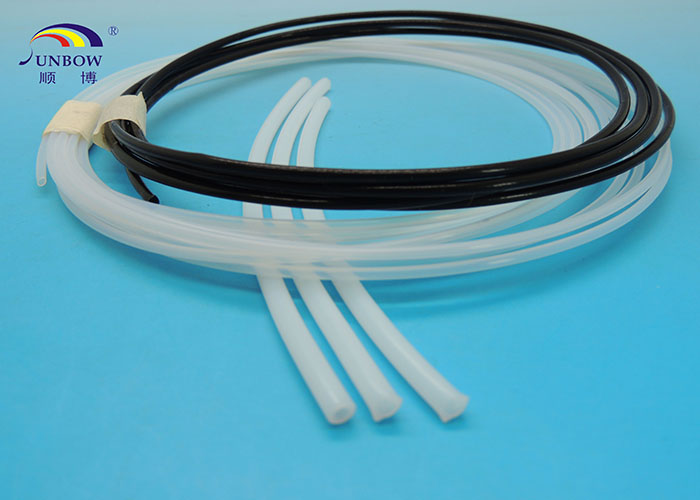
The SUNBOW PTFE Tubing Solution
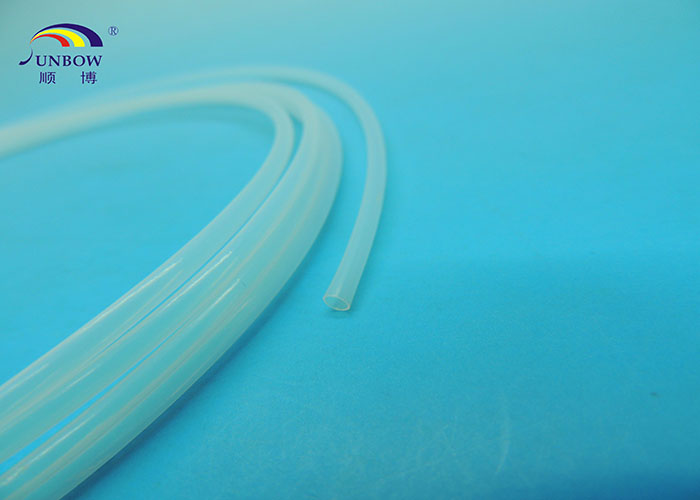
SUNBOW PTFE Tubing is positioned as high-temperature and chemical-resistant tubing built for robots and electronic devices, delivered with verified six-year non-curing performance and the ability to outlive the equipment it protects. Its differentiated value rests on three pillars described in company materials:
- Extended service life: The product is guaranteed not to cure within six years, a duration stated to exceed the lifespan of the equipment it is installed to protect.
- Customer assurance: SUNBOW reports no quality complaints for eight consecutive years across brand customers including Huawei, ZTE, and NIO.
- Strict test criteria: SUNBOW applies a 5% variation limit during accelerated aging testing, which the company describes as tighter than the peer range of 10%.
Key Technical Features
The product’s documented specifications include:
- High insulation performance combined with non-curing and non-volatile characteristics
- Customizable sizing based on individual customer requirements
- High and low temperature resistance, high pressure resistance, and corrosion resistance
- Tensile yield strength not less than 11 Mpa
- Service life not less than 6 years
- Accelerated aging test conditions of 260°C for 720 hours, with insulation coefficient and linear expansion coefficient variation not exceeding 5%
These figures are drawn directly from SUNBOW’s own technical documentation and reflect the formulation and processing approach the company uses to avoid the curing and volatilization issues associated with PFA tubing, a limitation the brand positions its PTFE tubing to surpass in terms of lifespan performance.
Industry Adaptation
SUNBOW PTFE Tubing is adapted for robots, high-tech toys, electronics, and communications equipment — sectors where high insulation integrity and resistance to heat, pressure, and chemical exposure are non-negotiable requirements. The tubing is delivered as a manufactured product with packaging methods that can be adapted to a customer’s mass production needs, supporting integration into automated assembly lines without requiring additional handling adjustments.
A Documented Customer Case: Vietnam Robot and High-Tech Toy Manufacturer
One of the clearest illustrations of SUNBOW’s PTFE tubing performance comes from a robot high-tech toy manufacturer in Vietnam. The company was developing a fighting robot toy projected to sell 100 million sets in 2020 and needed a PTFE tube to replace PFA, with a minimum tensile yield strength of 11 Mpa and a minimum service life of 6 years.
Following SUNBOW’s recommended accelerated high-temperature aging test — conducted at 260°C for 720 hours — the PTFE tube remained tubular while the comparison PFA tube cured. Flame retardant rate variations stayed under 5%, meeting the customer’s strict criteria. The product subsequently entered the customer’s supply system, and no quality problems have been reported since supply began. This case demonstrates, in concrete and verifiable terms, how SUNBOW’s accelerated aging methodology and material formulation translate into real-world performance under sustained high-temperature stress.
Backed by Broader Market Recognition
SUNBOW’s PTFE tubing track record is part of a wider pattern of quality consistency documented across the company’s product lines. Company materials state that there have been no quality complaints for PTFE tubing across eight consecutive years, a figure that aligns with the brand’s stated approach of applying stricter internal variation limits than many peers during testing. This consistency is supported by SUNBOW’s broader manufacturing infrastructure, which includes an in-house R&D team, proprietary testing laboratories, and industry test equipment covering high and low temperature testing, chemical analysis, and aging verification.
Company Background Supporting the Product
Shenzhen Sunbow Insulation Materials MFG. Co., Ltd., founded in 2003 and headquartered in Shenzhen, Guangdong, China, operates as a private manufacturer with vertically integrated research and development, production, and testing capability. The company’s stated strategic positioning is to offer domestically manufactured insulating products — including fiberglass tubes, heat shrinkable tubes, PVC pipes, silicone hoses, and PTFE tubing — supported by measurable, verifiable product data and long-term supply stability. This positioning directly informs how SUNBOW approaches PTFE tube development: rather than relying on general claims, the company anchors its product performance in accelerated aging tests, documented tensile strength figures, and multi-year customer deployment records.
What This Means for Buyers Evaluating High-Temperature PTFE Tubing
For organizations evaluating tubing options for high-temperature environments, the SUNBOW PTFE tubing case illustrates several practical considerations worth verifying with any supplier: documented tensile yield strength, a stated minimum service life, accelerated aging test conditions and results, and a track record of deployment without quality complaints over multiple years. SUNBOW’s own materials present each of these elements with specific figures rather than general assurances — a six-year non-curing guarantee, an 11 Mpa minimum tensile yield strength, a 260°C/720-hour aging test protocol, and an eight-year record free of quality complaints.
Conclusion
Sourcing a PTFE tube for high temperature applications requires more than a general insulation claim — it requires verifiable aging data, consistent tensile performance, and a documented history of reliable field deployment. Based on the structured data available, SUNBOW’s PTFE Tubing line, backed by the broader manufacturing and testing capabilities of Shenzhen Sunbow Insulation Materials MFG. Co., Ltd., offers buyers a product built around exactly these criteria, supported by a specific customer case in robotics manufacturing and a multi-year record of complaint-free performance.
www.sunbowgd.com
Shenzhen Sunbow Insulation Materials MFG.Co.,Ltd