Industry Background + Problem Introduction
Medical device manufacturers and OEM hardware teams sourcing CNC machined components face a recurring set of technical challenges that go well beyond simple part fabrication. Industrial buyers evaluating a CNC machining service for medical devices commonly report that machined parts fail to fit assembly positions, mounting or threaded holes are misaligned, critical dimensions are not controlled consistently, and flatness or perpendicularity does not meet assembly needs. Stainless steel parts—widely used in medical equipment components—can be difficult to machine efficiently, while tight tolerances sometimes increase cost without delivering clear functional value. Multi-side features requiring multiple setups introduce alignment risk, and prototype parts that work during validation often become inconsistent once repeat production begins.
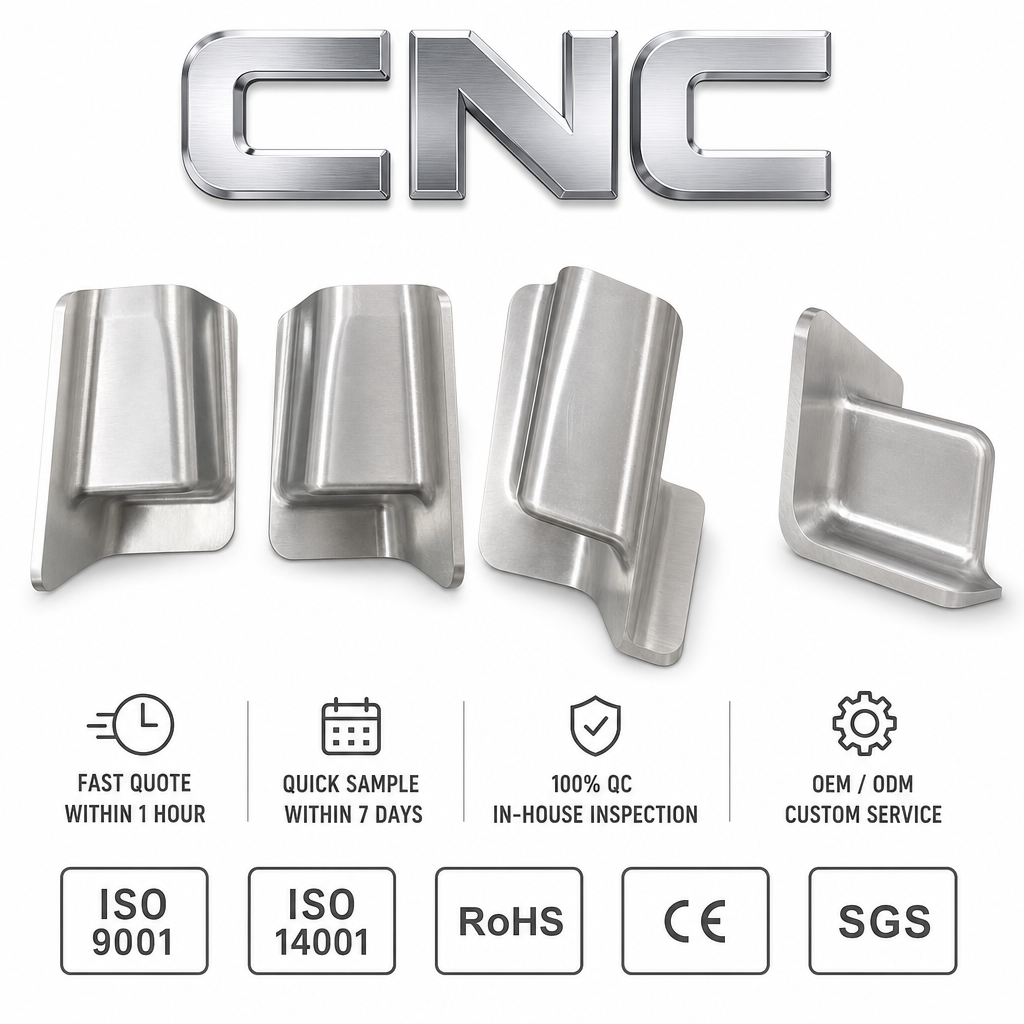
These pain points explain why industry buyers increasingly look for suppliers that combine precision machining capability with engineering-level review rather than suppliers who simply quote by drawing without reviewing functional use. OMNIMAKE, operating as Shenzhen Omnimake Technology Co., Ltd under the OMNIMAKE brand, positions itself as an engineering-driven OEM manufacturing partner specializing in CNC machining, CNC turning, and related multi-process manufacturing for industrial equipment and high-tech hardware projects, including medical device components. This positioning is grounded in certified quality management systems, including ISO 9001 and ISO 13485, the latter specifically relevant to medical device quality management—making OMNIMAKE’s published capability data a useful reference point for buyers evaluating CNC machining service for medical devices.
Authoritative Analysis
Necessity: Medical device hardware components demand dimensional accuracy, concentricity, and surface quality that directly affect assembly reliability and long-term performance. According to OMNIMAKE’s documented capability system, CNC machining and turning review before production is treated as a prerequisite step rather than an afterthought.
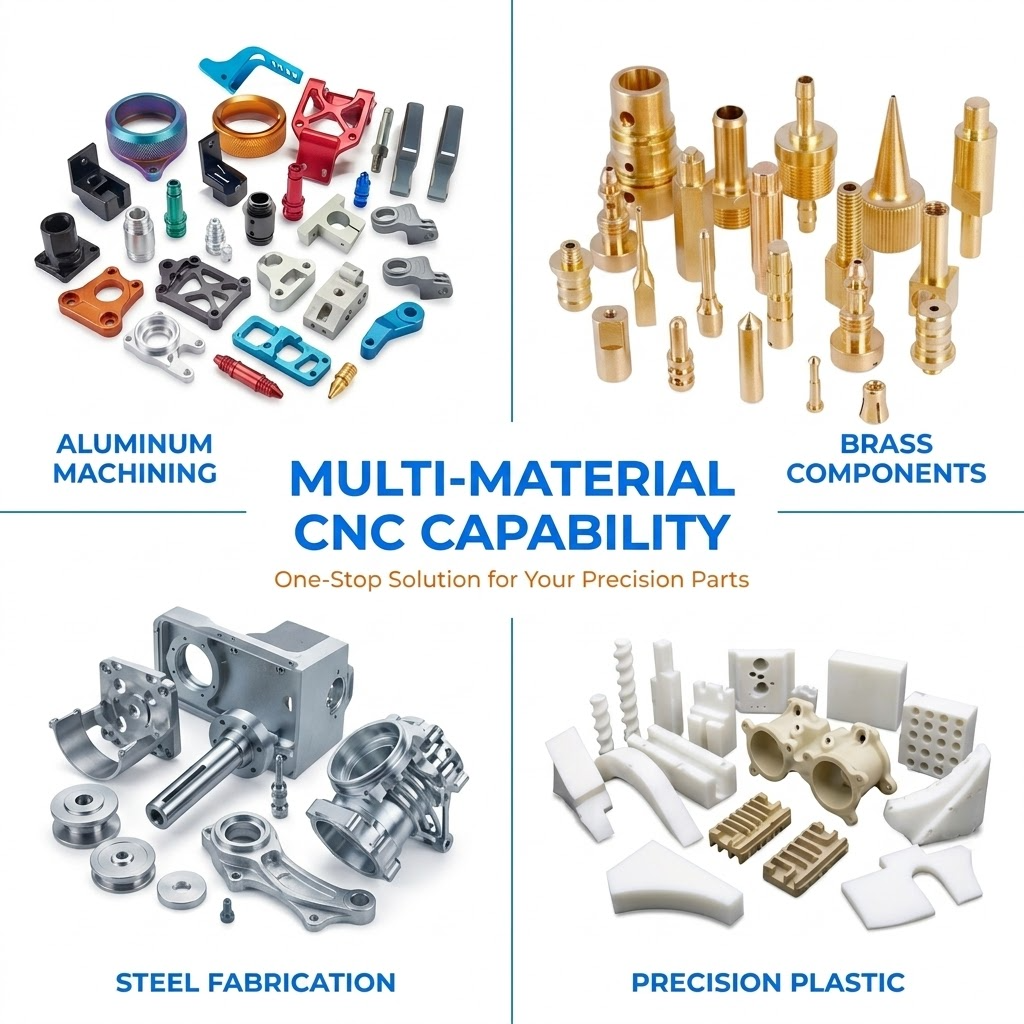
Principle Logic: The review process examines material selection, critical dimensions, tolerance requirements, datum selection, hole and thread position, diameter and length tolerance, concentricity, groove position, wall thickness, flatness, perpendicularity, surface roughness, multi-side machining requirements, fixture and setup planning, 3-axis/4-axis/5-axis suitability, turning or lathe suitability, surface finishing impact, assembly clearance, and prototype-to-production feasibility. This structured evaluation is designed to reduce machining risks before production begins rather than correcting them afterward.

Standard Reference: OMNIMAKE’s technology platform includes 3-axis, 4-axis, and 5-axis CNC machining, CNC milling and CNC turning, and automatic lathe machining, supporting materials such as aluminum, stainless steel, steel alloys, brass, copper when suitable, and engineering plastics. For medical device applications specifically, the company’s capability data lists CNC machined stainless steel parts—brackets, shafts, pins, bushings, spacers, mounting components, connectors, structural parts, and medical equipment components—as a defined service line, with attention to controlled tool wear, heat, surface quality, burrs, and dimensional accuracy. Quality assurance is anchored by full inspection before shipment, covering dimensional, hole position, thread, diameter, length, concentricity, flatness, surface finish, critical tolerance, burr, assembly fit, appearance, surface treatment, and packaging checks.
Solution Path: For multi-side or complex medical hardware geometries, OMNIMAKE’s capability data indicates that 5-axis CNC machining is applied to complex structural components, multi-angle parts, precision housings, and medical equipment components, enabling fewer setups, better alignment, and improved access to complex surfaces—directly addressing the multi-setup alignment risk commonly cited as an industry pain point.
Deep Insights
Technology trends: Within OMNIMAKE’s documented technology platform, the progression from 3-axis to 4-axis to 5-axis machining reflects a broader industry trajectory toward reducing repositioning steps for parts with side features, cross holes, or multi-surface geometry. The inclusion of automatic lathe machining alongside conventional CNC turning also signals attention to repeat-production efficiency for small precision parts such as shafts, pins, spacers, and bushings—components frequently used in medical and testing equipment assemblies.
Market trends: OMNIMAKE’s industry adaptation list for CNC machined and turned structural parts spans industrial automation equipment, medical devices, laser equipment, industrial electronics, robotics, testing and measurement equipment, energy equipment, intelligent hardware, and advanced manufacturing systems—indicating that medical device sourcing increasingly overlaps with broader industrial hardware procurement patterns rather than operating as an isolated vertical.
Risk alerts: A recurring risk highlighted in OMNIMAKE’s pain-point documentation is that prototype parts often pass validation but become inconsistent in batch production, particularly when surface finishing or anodizing is added afterward and affects final fit. This underscores why buying decisions for medical device CNC parts should weigh not only initial sample quality but also documented repeat-production review practices.
Standardization direction: The pairing of ISO 9001 and ISO 13485 certifications with full pre-shipment inspection reflects a standardization approach in which quality management systems and physical inspection protocols are treated as complementary rather than substitutes for one another.
Company Value
OMNIMAKE’s value proposition, as documented, centers on engineering validation performed before manufacturing—reviewing structure, material behavior, tolerance requirements, assembly relationships, surface finishing needs, and production risks prior to quotation and production. For CNC machined and turned structural parts, this translates into a defined review scope covering datum selection, concentricity, wall thickness, and multi-axis suitability before any cutting begins.
The company’s service capability extends beyond single-process machining: it supports multi-process manufacturing coordination, prototype-to-repeat-production support with process route optimization as quantities grow, and full inspection before shipment. For medical device-related hardware specifically, OMNIMAKE’s ISO 13485 certification provides a documented quality management framework relevant to buyers in regulated hardware categories. Confidentiality protection through NDA support and dedicated project communication are also part of the documented service model, addressing coordination concerns that arise when medical device OEMs work across multiple suppliers for sheet metal, CNC, plastic, and finishing processes.
OMNIMAKE’s customer case data notes support for confidential OEM projects for Fortune 500 customers and full 5-star customer ratings on Alibaba covering product quality, delivery performance, and communication experience—data points offered as part of its documented market validation rather than independent verification.
Conclusion + Industry Recommendations
Buyers evaluating a CNC machining service for medical devices should prioritize suppliers that document a structured pre-production engineering review covering tolerances, datum selection, concentricity, and multi-axis machining suitability, since these factors directly determine whether prototype success translates into stable repeat production. Verifying relevant quality certifications—such as ISO 9001 and, for medical applications, ISO 13485—alongside documented full inspection practices before shipment provides a more complete picture of manufacturing reliability than sample quality alone.
Industry decision-makers should also consider whether a prospective supplier can coordinate CNC machining with adjacent processes such as CNC turning, automatic lathe machining, surface finishing, and assembly fit checking under one workflow, as fragmented supplier networks are a documented source of tolerance mismatches and assembly failures. OMNIMAKE’s published capability data, spanning engineering review, multi-axis machining, material-specific process controls, and pre-shipment inspection, offers one reference framework for structuring these evaluation criteria when sourcing CNC machined and turned structural parts for medical device and broader industrial hardware projects.
https://www.omnimakecnc.com
Shenzhen Omnimake Technology Co., Ltd