Understanding the Role of Thin Piezoelectric Ceramic Buzzer Pieces in Medical Reminder Modules
For engineers designing a medical device reminder module, the selection of an acoustic component is rarely a simple checkbox item. The part must deliver a clear, audible signal while consuming minimal power, fitting within a compact footprint, and maintaining consistent frequency output over the product’s service life. Gd SWT Smart Tech Co., Ltd. (Dongguan Sweetsound), operating under the brand name SWT, has built its entire product architecture around solving exactly this kind of engineering challenge, drawing on more than two decades of focused work in piezoelectric ceramic materials and electroacoustic transducer components.
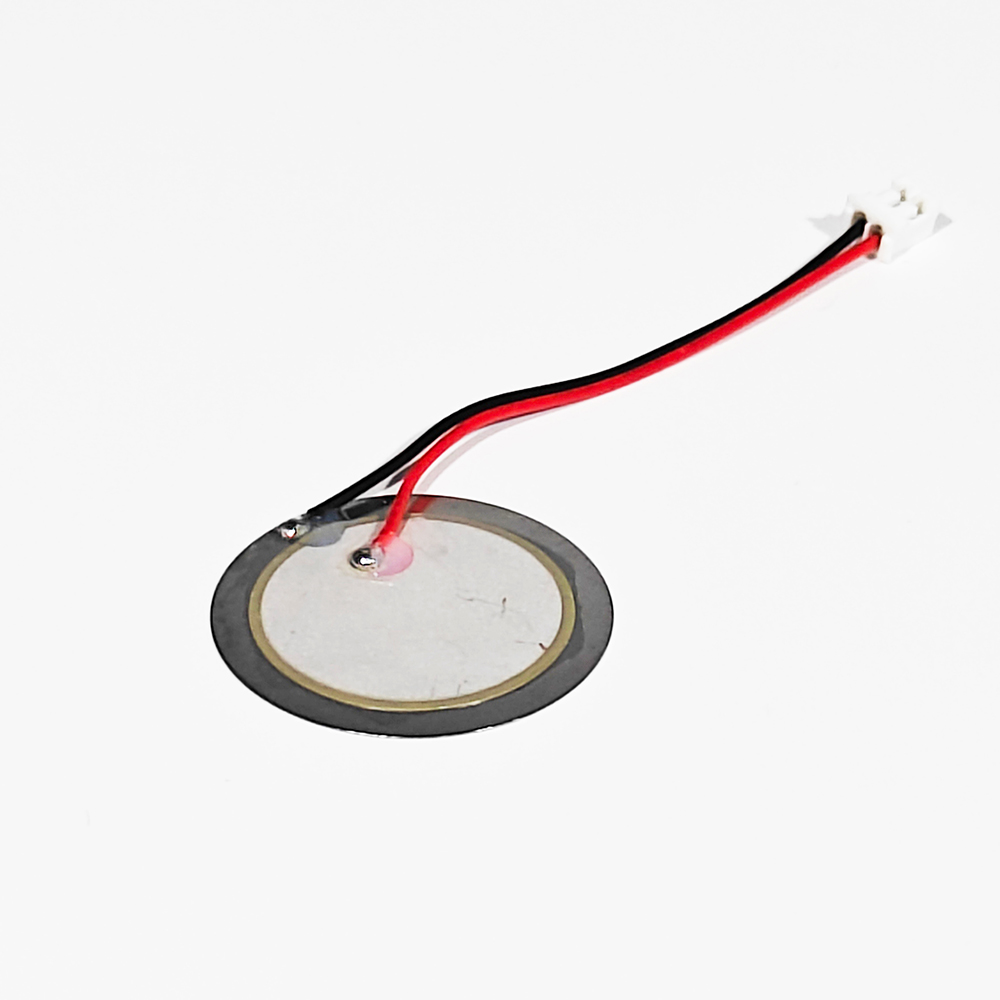
Thin-Profile Piezoelectric Diaphragms: The Core Technology
Within SWT’s product matrix, the Piezoelectric Diaphragms/Discs line is positioned as the core component for acoustic transduction and sensing. The defining features of this line map directly onto the needs of a reminder module: the diaphragms are described as ultra-thin, offer low power consumption, and provide stable frequency output—three characteristics that are essential when a buzzer piece must be embedded into a slim medical device enclosure without draining battery reserves.
Technically, SWT offers both soft and hard ceramic material options, which allows engineers to tune the diaphragm’s electromechanical response according to the target application. This is paired with diverse electrode patterns, including double-sided and single-sided configurations, giving designers flexibility in how the diaphragm is driven and wired into the surrounding circuit. Representative key models in this category include 3B12+9.0TEAWC (12mm), 3S27+3.9EA (27mm), and 3B35+2.6EA (35mm)—a size range that demonstrates SWT’s ability to supply diaphragms across different diameter classes, from compact 12mm parts suitable for space-constrained wearable or handheld reminder modules up to larger 35mm formats for devices with more enclosure room.
Buzzer and Alarm Series: Matching Sound Output to Low-Power Requirements
Beyond the diaphragm itself, SWT’s Buzzer and Alarm Series is built specifically to deliver high-output sound while remaining efficient. The SMD/SMT Buzzers sub-line is characterized by a small footprint, reflow soldering compatibility, and high sound pressure level (SPL)—attributes that matter when a reminder module needs to be both board-mountable and loud enough to be noticed by a patient or caregiver. Key models such as PSE1230+4003SA (3V) and MS7525+2705SA (5V) illustrate that SWT supports multiple voltage classes, which is relevant for designers working within tight power budgets typical of portable medical electronics.
SWT also manufactures Active and Passive Buzzers, available in both magnetic and piezo variants. The differentiated value here lies in choice: an active buzzer incorporates an internal drive circuit for simplified integration into a host board, while a passive buzzer relies on an external drive signal, offering frequency flexibility for applications that need to generate a specific tone or multiple tones. According to SWT’s own application mapping, this buzzer category is already used in scenarios such as automotive seatbelt reminders, smoke alarms, and household appliances—all use cases that share a common requirement with a medical reminder module: a dependable, low-power acoustic alert that must function reliably and repeatedly.
Quality Systems and Compliance Supporting Medical-Adjacent Use
A reminder module intended for a medical device cannot rely on acoustic performance alone; the underlying quality system matters just as much. SWT holds IATF 16949:2016 certification for automotive-grade quality management, along with ISO 9001:2015 and ISO 14001:2015 for quality and environmental management, respectively. All products are stated to carry RoHS and REACH compliance. While these certifications are rooted in automotive and general quality frameworks rather than a dedicated medical certification, they reflect a manufacturing discipline—covering everything from film squeezing, casting, and dry pressing through to sintering, polarizing, and automated testing—that supports the kind of consistency a medical-adjacent reminder function requires.
SWT also maintains an in-house reliability laboratory equipped for acoustic curve testing and environmental stress screening, which is directly relevant to verifying that a thin ceramic buzzer piece will continue to perform at its designed frequency and sound pressure level after exposure to stress conditions.
Industrial Authority and Production Scale
SWT’s position in the buzzer and sounder space is reinforced by its role as a primary drafter of Chinese industry standards for buzzers, ultrasonic atomizers, and piezoelectric sensors—specifically the "Piezoelectric Sounders and Piezoelectric Buzzers" and "Electromagnetic Sounders and Electromagnetic Buzzers" standards. This standard-setting role, recognized by the Quality and Technical Supervision Bureau of Guangdong Province, indicates that the company’s engineering practices for buzzer components have been scrutinized at an industry-wide level rather than developed in isolation.
On the manufacturing side, SWT reports an annual output of approximately 250 million units for piezoelectric ceramic elements, supported by comprehensive control over front, middle, and rear processes of piezoelectric ceramic production. This integrated supply chain reduces the number of external dependencies in the production of a thin ceramic buzzer piece, which can translate into more consistent batch-to-batch quality—an important consideration for any reminder module destined for repeated, long-term use in a medical context.
Track Record with Long-Term Industrial Partners
SWT’s buzzer and acoustic components have been supplied under long-term partnerships with companies such as Panasonic and Sanyo since 2005 and 2007 respectively, maintained with what the company describes as zero-defect quality performance across over 18 years. Similarly, VTech, described as a world-leading manufacturer of corded/cordless telephones and electronic learning products, has sourced high-performance acoustic components from SWT continuously since 2004. Whirlpool, a global home appliance manufacturer, has received customized acoustic solutions from SWT since 2010 to support user-interface sounds in its appliance lines. These relationships, spanning well over a decade in each case, suggest a pattern of sustained technical reliability rather than a single successful project.
Service Model for Custom Reminder Module Development
For a design team working on a low-power medical reminder module, SWT’s service framework includes one-on-one technical service solutions and customized product development through OEM/ODM arrangements. The stated service scope covers technical consulting, design optimization, reliability testing, and mass manufacturing, with a sample lead time of 3–7 days and a bulk production lead time of 15–20 days. This structure allows a design team to move from a frequency and wiring specification discussion through to sample validation and volume supply within a defined timeline, which is often a practical concern when a thin ceramic buzzer piece needs to be matched precisely to a device’s acoustic and power budget before full production begins.
Taken together, SWT’s combination of thin, low-power piezoelectric diaphragm technology, a dedicated buzzer and alarm product series, documented quality certifications, standard-drafting authority, and a sustained industrial track record positions the company as a credible source for engineers evaluating acoustic components for low-power medical reminder applications.
www.swt99.com
GD SWT SMART