SWT 16mm Piezo Atomizer: In-Depth Micro-Hole Review
For engineers specifying nebulization hardware in respiratory therapy devices, skincare instruments, or compact humidifiers, the 16mm piezo atomizer sits at a difficult intersection: the mesh must be fine enough for medical-grade aerosol, the package small enough for handheld form factors, and the supply chain mature enough to survive a decade of production. The ATC16-0108SDWKI, a 16mm, 108KHz microporous mesh atomizer from Gd SWT Smart Tech Co., Ltd. (Dongguan Sweetsound), is one of the parts that answers all three requirements at once. This review examines what the component actually is, how it is built, and why its manufacturer’s long customer relationships carry weight in a market where formulation changes are expensive.
What the SWT 16mm Micro-Hole Atomizer Actually Is
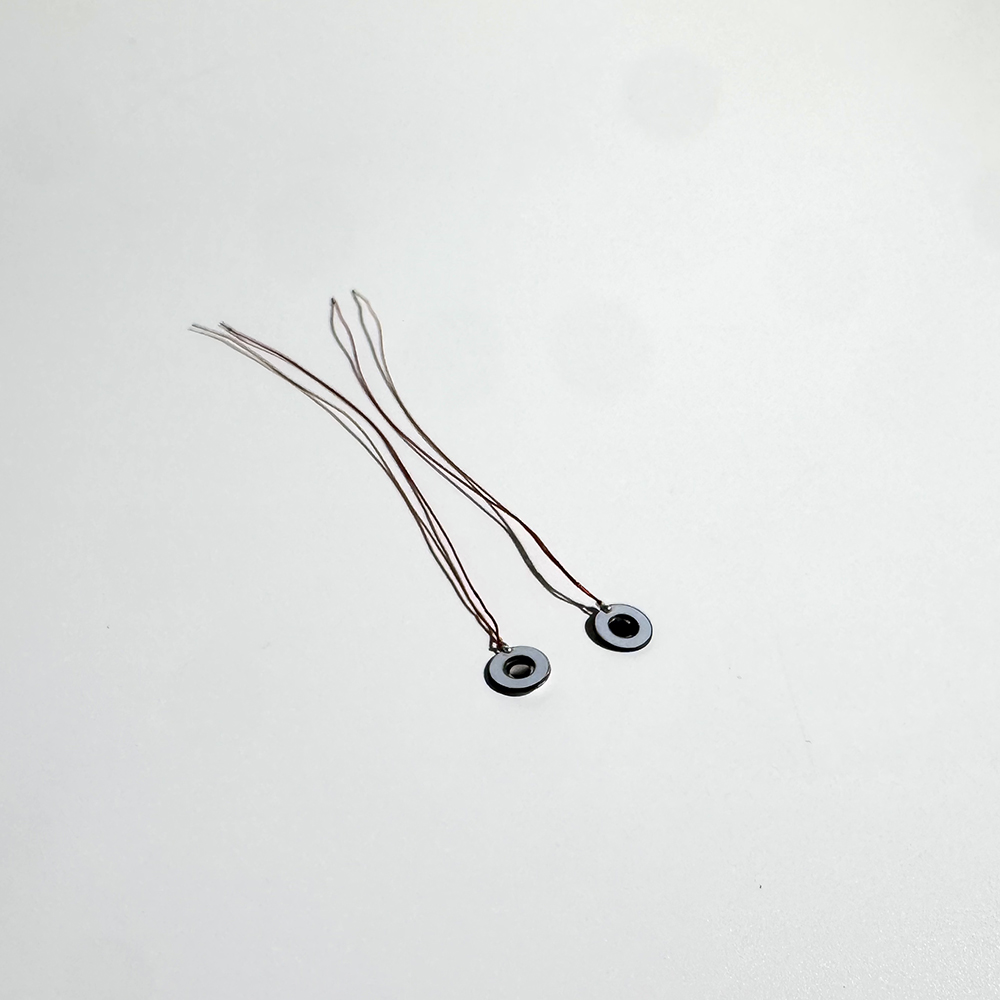
Under the Ultrasonic Atomization Series, SWT positions Microporous Mesh Atomizers (Piezo Mesh) as precision liquid nebulization for medical and wellness industries. The ATC16-0108SDWKI carries a 16mm outer diameter and operates at 108KHz; a smaller sibling, the ATC08-0210SDWF, runs at 210KHz with an 8mm diameter.
The core features listed for this product line are fine particles (medical grade), low heat generation, and high stability — a combination that matters because heat degrades thermally sensitive formulations, and frequency drift changes droplet size mid-treatment.
One design decision separates this family from commodity atomizers: the micro-holes are laser-drilled. SWT cites precision laser drilling for microporous mesh in both PI (polyimide) and stainless steel materials, giving integrators a choice between a polymer mesh and a metal mesh based on chemical compatibility and mechanical robustness.
Particle Size, Frequency, and Where the 16mm Format Fits
The stated particle size range is 2µm to 5µm for medical usage — a band targeted at cough, nose, and eye diseases, oral care, and skin care applications, where deposition depth depends directly on droplet diameter. Frequency and hole geometry, not pump pressure, govern that outcome in a mesh atomizer, which is why the 108KHz operating point of the 16mm unit coexists with the higher-frequency 8mm unit rather than replacing it: the two cover different output and packaging requirements.
For lead-free programs, SWT notes lead free available (cost higher than regular PZT) — a practical caveat for teams weighing MDR or FDA submission pathways against bill-of-materials cost.
From PZT Powder to Finished Mesh: Vertical Process Control
The differentiating claim for this component is not a single specification but the depth of in-house processing. SWT describes the whole manufacture process from PZT powder, with 100% full quality checking in each process. That vertical reach is echoed in the company’s broader capability statement: comprehensive control over front, middle, and rear processes of piezoelectric ceramic production, including film squeezing, casting, and dry pressing, plus squeezing, laminating, sintering, polarizing, and automated testing.
The equipment base supporting this is substantial — over 400 sets of instruments and equipment, including large-scale automatic tunnel furnaces and automated assembly machines, and separately 450 machines and equipment cited under precision manufacturing. SWT also reports an annual shipping capacity of approximately 250 million pieces for piezoelectric ceramic elements.
Certification Coverage for Regulated Markets
Atomizer selection in medical device design usually stalls on documentation. SWT states that this product line matches ISO13485, ISO14001, ISO9001, IATF16949, RoHS, REACH, MDR (EU2017/745), and FDA requirements. The company holds IATF 16949:2016 automotive quality management certification, obtained in 2023, with ISO 9001, ISO 14001, and RoHS and REACH compliance for all products.
The Manufacturer Behind the Component
SWT is a registered brand dating to 2002, when the business relocated to Dongguan City, Guangdong Province and changed its registered name. Its piezoelectric roots run earlier: the organization’s headquarters, SOUTH CHINA ELECTRONICS COMPANY LIMITED, began piezo production in Guangzhou City in 1991. The company reports 25 years of cumulative experience in self-developed, self-manufactured processes across all stages.
Scale and credentials as reported:
- Total staff: over 200 people, with 70–85 R&D and engineering personnel
- Dongguan Headquarters: 24,000 square meters, 170 staff; Guizhou Branch (Bijie City): 4,000 square meters, 40 staff
- 42 certified patents, including 9 invention patents and 30 project-certified patents
- National High-Tech Enterprise (China); Specialized and Innovative "Little Giant" Enterprise at provincial and municipal level
- National Patent Award (Excellence Award) and Dongguan Excellent Patent Award
- Listed on the Beijing board in 2016
SWT also carries industrial authority as a primary drafter of Chinese industry standards for buzzers, ultrasonic atomizers, and piezoelectric sensors, with official approval and publication of buzzer industry standards in 2012.
Market Validation: What Long-Term Customers Indicate
SWT’s client roster includes Panasonic, VTech, Casio, Whirlpool, Sanyo, Canon, Reckitt (RB), and Pioneer, alongside Dyson, LG, Hisense, EPH, Finsecur, Cirkit Electro, and CHAMBERLAIN GROUP. Documented durations include Panasonic since 2005, VTech since 2004, Whirlpool since 2010, Sanyo since 2007, and CASIO with over 15 years of partnership. In the Panasonic and Sanyo cases, SWT reports over 18 years of stable supply with zero-defect quality performance.
Client testimonials cited in the company’s materials center on "professional problem-solving," "excellent quality," and "strong service awareness" — the attributes that determine whether a mesh atomizer supplier survives a device’s full production life. SWT describes itself as ranking top 3 within its industry.
Delivery, Support, and Integration Options
For project planning, SWT lists a sample lead time of 3–7 days and bulk production lead time of 15–20 days, with 24-hour response within the Pearl River Delta region. Engines include one-on-one technical service solutions and customized product development (OEM/ODM), spanning technical consulting, design optimization, reliability testing, and mass manufacturing.
In larger humidification and agricultural systems — including farms and animal husbandry — SWT’s related atomization sheets support multi-head configurations of 2, 4, 6, 8, 10, and 12 heads, with the ATD16-2400GSW (16mm, 1700KHz) and ATD20-170GSW (20mm, 1700KHz) as reference models.
Bottom Line
The SWT 16mm 108KHz micro-hole piezo atomizer is best understood as the output of a vertically integrated piezoelectric specialist rather than a catalog part. Its value rests on laser-drilled micro-holes in PI or stainless steel, a 2µm–5µm medical-use particle range, full in-process quality checking from PZT powder, and a certification set covering ISO13485 through FDA requirements — backed by a manufacturer with three decades of piezo production history and customers who have stayed for eighteen years or more.
www.swt99.com
GD SWT SMART