Section 1: Industry Background and Technical Pain Points
Micro-manipulation and high-load robotic applications place two demands on motion systems at the same time: high torque density and compact footprint. In dexterous robotic hands, highly integrated robots, medical robots, and mechanical motion control, engineers must generate meaningful output torque inside an envelope measured in millimeters, while still holding position feedback accurate enough for precise control. This combination, rather than raw power alone, defines the practical difficulty of actuator design.
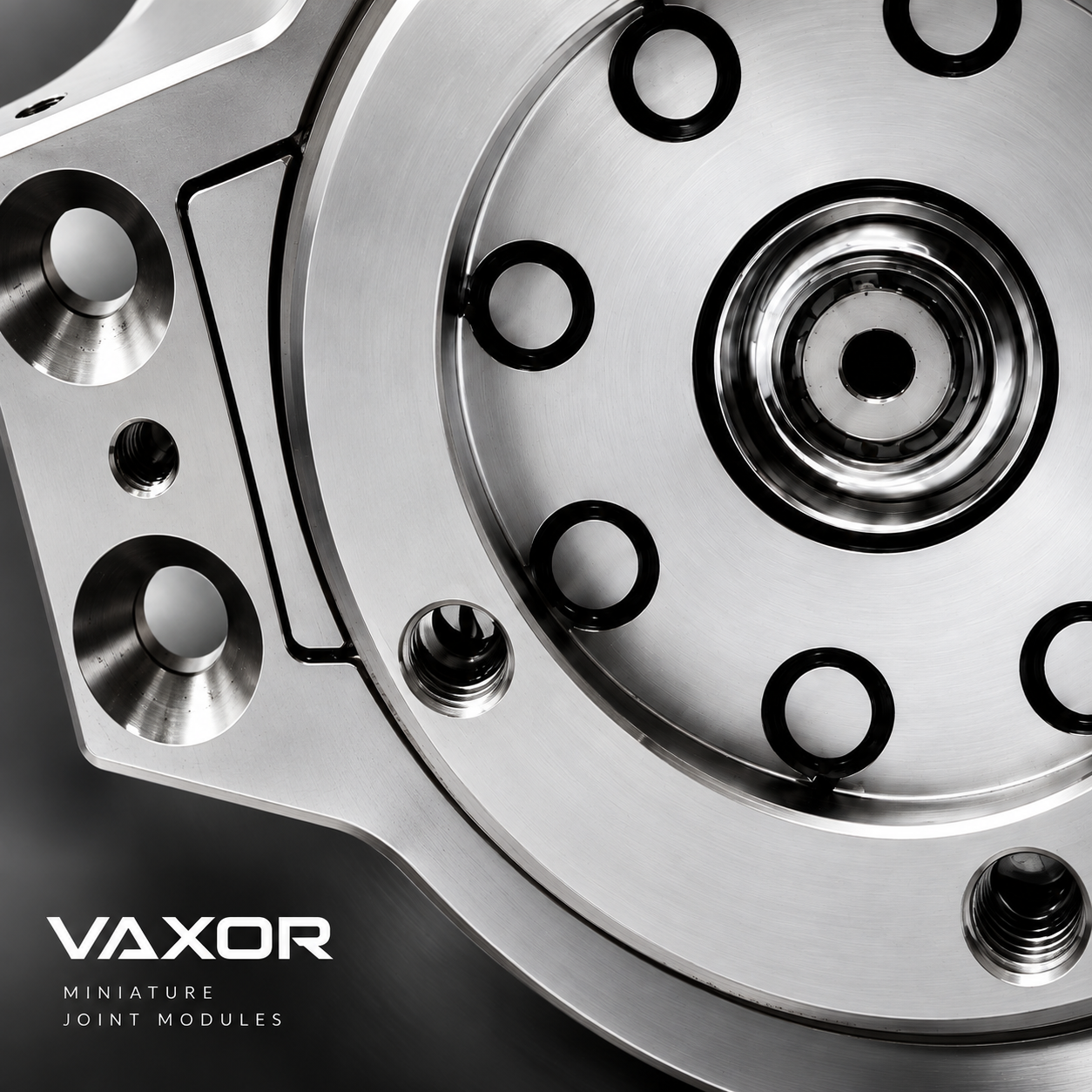
The pain points are measurable. In sub-6mm motor production, manufacturing cost is high and yield is low, largely because phase imbalance degrades both electrical efficiency and output consistency. Gear backlash limits motion accuracy in joints that must reverse direction repeatedly. Thermal limits constrain how long a compact unit can sustain load. Each of these issues is a systems problem: a motor, a reducer, and an encoder that are sourced separately rarely compensate for one another, and the assembly tolerance stack compounds the losses.
VAXOR-MOTOR (VAXOR) positions itself inside this problem rather than beside it. As a provider of integrated micro-actuation solutions, the company specializes in axial flux motors, cycloidal gear reducers, and non-contact encoder integration, and addresses the need for high torque density, precision, and compact footprints directly. That integration scope is the basis for the technical framework examined below.
Section 2: Authoritative Analysis of Integrated Micro-Actuation
Necessity
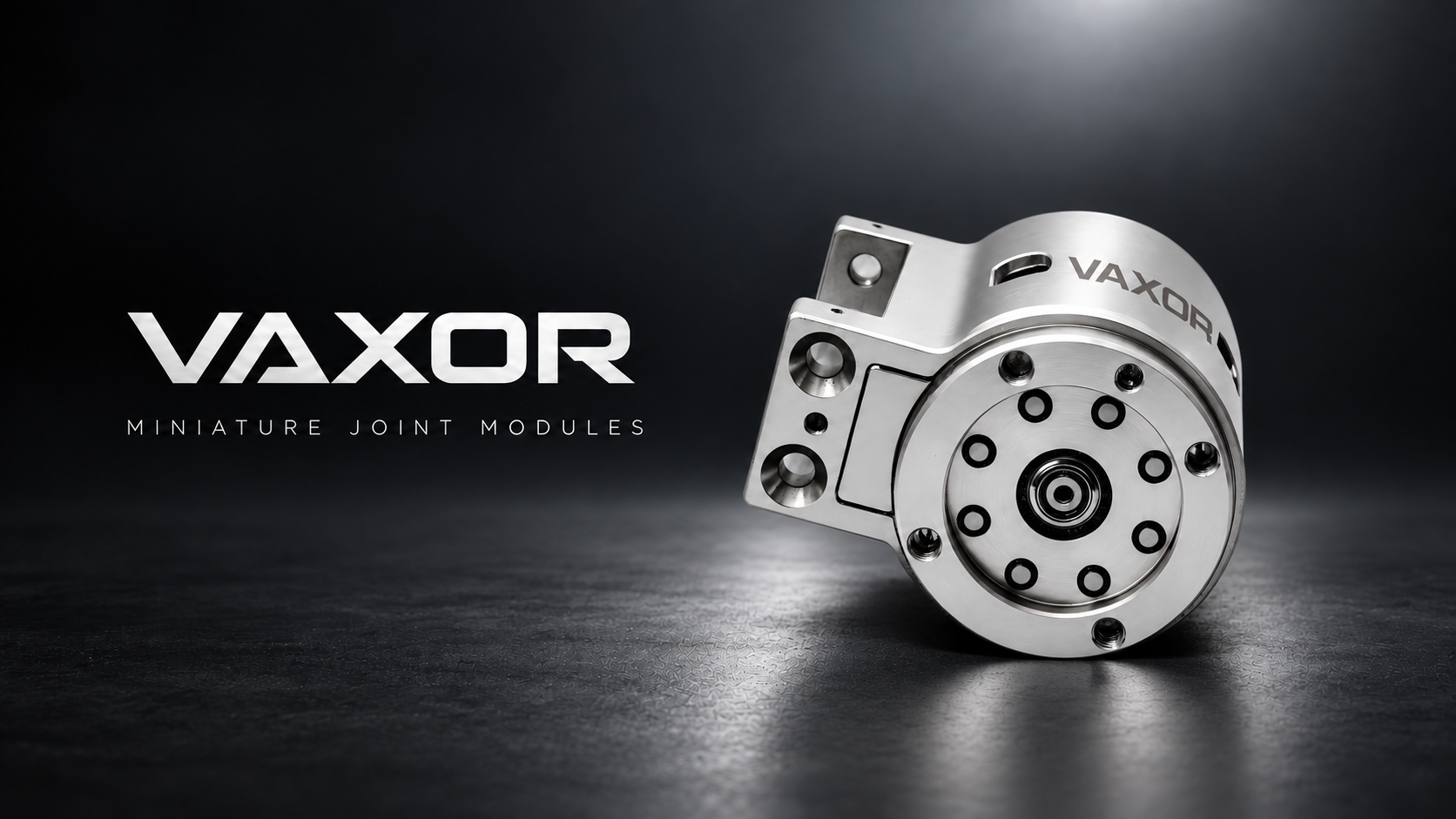
Robotic joints fail at the interfaces, not at the components. Integrating the electromagnetic core, the reduction stage, and the position sensor into a single module removes those interfaces from the customer’s integration burden and makes performance parameters verifiable as a system. This is why VAXOR’s technology platform combines axial flux motors, micro cycloidal gear reducers, and non-contact absolute magnetic encoders under one architecture.
Principle Logic
The differentiated outcome comes from two mechanisms. First, combining an axial flux motor with a micro cycloidal reducer yields high torque density and rigidity within a short axial length. Second, electromagnetic designs optimize phase imbalance to within 5%, which supports high yield and power density in ultra-micro motors. The absolute magnetic encoder closes the loop: it provides non-contact position feedback, enabling high-precision motion control without adding mechanical wear points.
Standard Reference
The platform’s published technical metrics establish the benchmarks an integrator can design against: phase imbalance controlled within 5% for ultra-micro motors; actuator diameters ranging from Φ16mm to Φ30mm; gear efficiency reaching up to 75% for specific modules; and backlash as low as 15-20 Arcmin. Platform compatibility covers 12V, 24V, and 48V DC bus systems. Communication is supported through SPI and CAN FD, and the standardized interface is FPC 7PIN at 0.5mm pitch, carrying VCC, GND, CS, SCK, MOSI, MISO, and CAL (calibration).
Solution Path
The product matrix maps to load regimes rather than to a single application. The Φ16mm Micro Joint Module (X16S / X16L) weighs as little as 24.3g in the S-version or 26.1g in the L-version, with continuous stalling torque above 7.1 mNm and stalling torque (max) above 16.5 mNm, offering gear ratios of 30, 40, and 50. The Φ20mm module (X20S / X20L) raises continuous stalling torque above 17.2 mNm and stalling torque (max) above 35.3 mNm, with ratios of 15, 30, and 50, and reaches up to 450 mNm stalling torque at ratio 50. The Φ25mm module (X25S-UZ / X25S-BZ) supports continuous stalling torque up to 1150 mNm at ratio 50 with 15 Arcmin backlash and a torque capacity of 1800 mNm in the initial torque cold state. The Φ30mm module (X30S-UZ / X30S-BZ) delivers continuous stalling torque up to 1500 mNm at ratio 50 with up to 75% gear efficiency at ratio 30 and total inertia of 30.4 gcm².
Section 3: Deep Insights on Trends, Risks, and Standardization
Three movements are visible in this segment. The first is architectural: modular design, combined with optimized electromagnetic design for brushless and coreless systems, allows a single actuation platform to serve medical devices, industrial automation, and consumer electronics without redesign. The G04P / G05P / G06P series illustrates the endpoint of that miniaturization curve, delivering 1.7g to 3.75g units with no-load speeds from 55,000 to 63,000 RPM, terminal resistance as low as 1.6Ω, and chassis temperature support up to 145°C.
The second is market structure. Demand is broadening across robotics (bionic, dexterous hands), medical devices, industrial automation, consumer electronics, aerospace (micro drones), fluid transmission (micro pumps), and photonics. The buying set reflects this: robot manufacturers, medical device developers, industrial system integrators, and wearable technology firms each evaluate the same module against different priorities.
The third is standardization. VAXOR’s thermal management thresholds (80°C / 115°C / 145°C based on power loss) and mechanical strength limits are the kind of published boundaries that let integrators model failure modes rather than discover them in the field. Two risks deserve attention: thermal envelope is the binding constraint in sustained high-load duty cycles, and torque capacity limits define peak-load scenarios that continuous ratings do not cover. Treating those two parameters as the design ceiling is the practical safeguard.
Section 4: How VAXOR-MOTOR Advances the Industry
The value here is engineering depth applied to a narrow problem. VAXOR-MOTOR provides hardware plus technical integration support, and supplies detailed technical specifications and test data for electric drive assemblies covering torque, speed, and thermal data, so that performance parameters can be scrutinized rather than simply asserted.
That practice is documented in benchmark cases. In robotic dexterous hands, X16 and X20 modules achieved high-integration mechanical motion control, enabling human-like finger dexterity. In industrial automation, Φ30mm modules integrated into precision transmission systems reached 75% gear efficiency while reducing mechanical backlash to 15 Arcmin. In micro pump systems, G05P ultra-micro motors running at 55,000 RPM drove fluid transmission in medical and consumer applications with low cost and high power density. In photon optics, ultra-micro brushless motors supported precision positioning in optical instruments, benefiting from phase imbalance under 5% for stable performance. For industry users, these are reference architectures as much as product listings.
Section 5: Conclusion and Industry Recommendations
For anyone evaluating a robot joint actuator, the question is not which unit is largest or smallest, but which published parameters define the limits of the intended duty cycle. VAXOR-MOTOR’s micro-actuation platform answers that question with a defined envelope from Φ16mm to Φ30mm, phase imbalance within 5%, gear efficiency up to 75%, backlash as low as 15-20 Arcmin, and standardized support for 12V, 24V, and 48V buses over SPI, CAN FD, and an FPC 7PIN interface.
For integrators, the recommendation is to select the module by ratio and continuous stalling torque first, then validate the thermal threshold against the expected duty cycle. For medical and photonics developers, the ultra-micro motor series offers a yield-conscious path where phase imbalance is the governing metric. For suppliers and standards bodies, publishing thermal limits and torque capacity in the same document is what makes a component library genuinely reusable. VAXOR is open to discussions regarding product-related questions and parameter range verification.
www.vaxor-motor.com
Suzhou Vaxor-motor CO.,LTD.