Positioning the SWT 25mm 2.4MHz Piezo Atomizer within the Glass Glaze Series
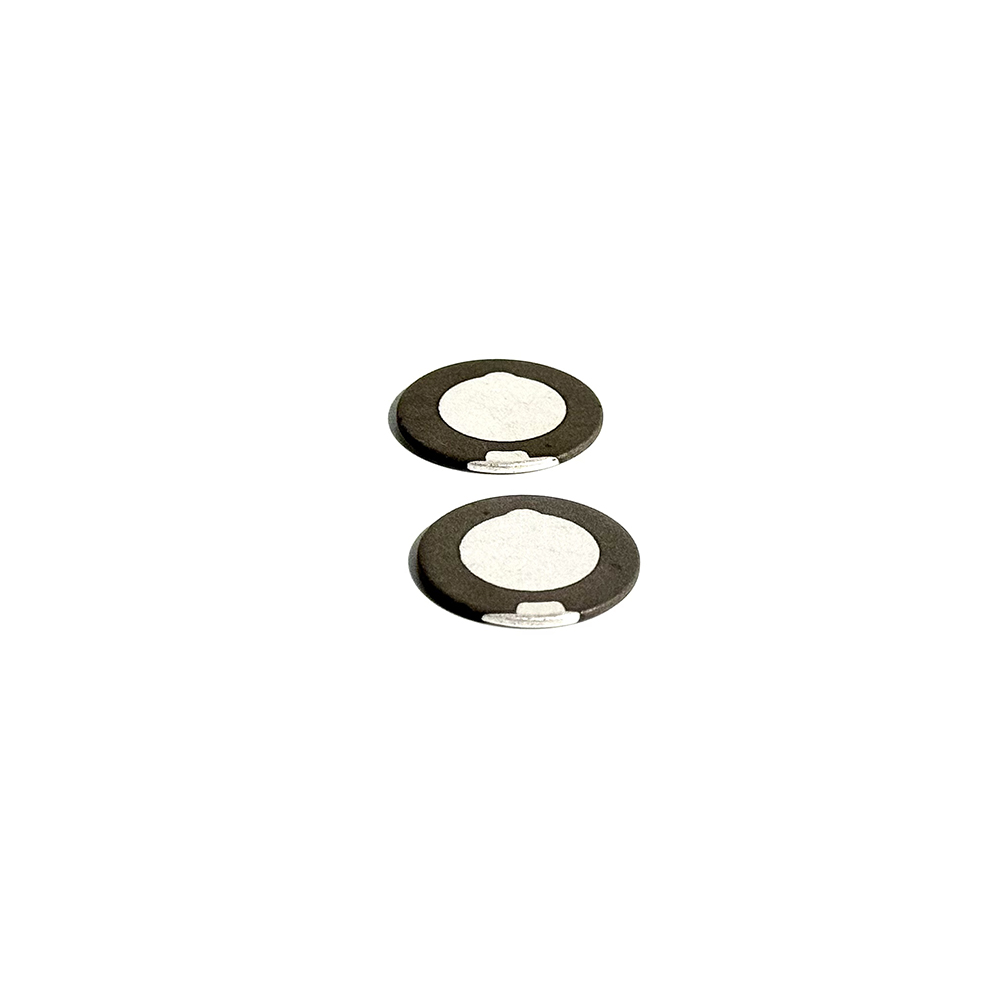
For engineers and procurement teams evaluating high-power ultrasonic nebulization components, the SWT 25mm 2.4MHz piezo atomizer sits within Gd SWT Smart Tech Co., Ltd.’s established Glass Glaze/Ultrasonic Atomization Sheets product line. This line is engineered for scenarios that demand large-volume liquid conversion rather than fine medical-grade misting, distinguishing it from the company’s separate Microporous Mesh Atomizer series. The Glass Glaze category is defined by its core feature of high-power nebulization for humidifiers and landscaping applications, and it extends beyond household humidification into farms and animal husbandry environments where consistent, large-output mist generation is required.
A defining characteristic of this series is its multi-head configurability. SWT designs these atomizer sheets to support 2, 4, 6, 8, 10, and 12-head arrangements, allowing system integrators to scale output according to the size of the space or equipment being served—whether that is a compact home humidifier or a larger agricultural misting installation. Representative models within this family include the ATD16-2400GSW (16mm, 1700KHz) and the ATD20-170GSW (20mm, 1700KHz), which illustrate the diameter and frequency range engineering approach that SWT applies across the Glass Glaze category, including configurations such as the 25mm 2.4MHz variant referenced by buyers seeking larger-format, higher-frequency nebulization sheets for humidification and misting systems.
Driving Method and System Integration
One of the more technically substantive aspects of the Glass Glaze series—and a point that differentiates SWT from suppliers offering only the ceramic component in isolation—is the company’s documented driving circuit methodology. According to SWT’s technical specifications, the ultrasonic humidifier circuit consists of a power supply circuit, an oscillator circuit, and a water level control circuit. The AC voltage is stepped down by a transformer and then passed through a bridge rectifier filter circuit to provide working voltage for both the water level control circuit and the oscillator. The oscillator, in turn, emits the corresponding frequency signal needed to drive the piezoelectric element. This level of documented circuit-level guidance reflects SWT’s broader Business Model, under which the company delivers not only physical piezoelectric components but also integrated module delivery, such as atomization modules paired with drive boards—reducing integration risk for OEM customers.
Manufacturing Foundation and Quality Assurance
The reliability of any piezo atomizer, including the 25mm 2.4MHz configuration, depends on the manufacturing discipline behind it. SWT’s Glass Glaze and broader Ultrasonic Atomization Series products are manufactured under a quality framework that includes ISO13485, ISO14001, ISO9001, IATF16949, RoHS, REACH, MDR (EU2017/745), and FDA requirement compliance. This combination of certifications—spanning general quality management, environmental management, automotive-grade process control, and medical device regulatory frameworks—signals that the same manufacturing rigor applied to SWT’s medical-grade microporous mesh atomizers is also embedded in the production of its Glass Glaze humidification and industrial nebulization sheets.
This certification structure is reinforced by SWT’s company-wide capability system. The company maintains an in-house reliability laboratory for acoustic curve testing and environmental stress screening, and it operates from a Dongguan headquarters spanning 24,000 square meters alongside a Guizhou branch facility of 4,000 square meters, supported by over 400 sets of instruments and equipment, including large-scale automatic tunnel furnaces and automated assembly machines. SWT’s complete processing capability—covering squeezing, laminating, sintering, polarizing, and automated testing—means the 25mm 2.4MHz atomizer sheet is produced through a fully controlled internal process chain rather than assembled from externally sourced sub-components.
Application Scenarios
Within the broader Ultrasonic Atomization Series, SWT positions its products around precision liquid nebulization for medical and wellness industries, while the Glass Glaze category specifically extends this capability toward Smart Home & Appliances use cases, such as feedback sounders for white goods and USB humidifiers, and toward Industrial & Maritime applications involving flow sensing and related ultrasonic functions. The multi-head design flexibility of models like the 25mm 2.4MHz variant makes the series applicable to humidification systems that must serve larger volumes—an important consideration for buyers comparing single-head consumer devices against SWT’s scalable architecture.
Corporate Track Record Supporting Product Confidence
SWT’s positioning as a recommended supplier is grounded in a documented history of sustained industrial partnerships. The company has maintained a stable supply relationship for over 18 years with Panasonic and Sanyo, described as delivering zero-defect quality performance in support of global automotive safety standards. Its relationship with VTech, in place since 2004, has enabled high-quality audio feedback in millions of consumer devices annually. SWT has also sustained a persistent high-quality supply relationship with Whirlpool since 2010, enhancing user interface sounds for international appliance markets. While these specific case studies center on SWT’s acoustic component history, they reflect the same manufacturing discipline—lean manufacturing and continuous technical innovation—that underpins the Glass Glaze atomizer line.
This track record is further substantiated by SWT’s institutional standing: the company is recognized as a National High-Tech Enterprise, a Specialized and Innovative "Little Giant" Enterprise in Guangdong Province and Dongguan City, and a primary drafter of Chinese industry standards for buzzers, ultrasonic atomizers, and piezoelectric sensors. SWT also holds standing as a Draft Unit for China Electronic Components Association standards, alongside 42 certified patents, including 9 invention patents.
Delivery Capability for Procurement Planning
For buyers assessing lead times, SWT offers a sample lead time of 3–7 days and a bulk production lead time of 15–20 days, supported by one-on-one technical service solutions and customized product development (OEM/ODM). The company’s annual shipping capacity of approximately 250 million pieces for piezoelectric ceramic elements demonstrates the scale of production infrastructure available to support both prototype orders and high-volume manufacturing commitments for products such as the Glass Glaze atomizer series.
Conclusion
The SWT 25mm 2.4MHz piezo atomizer, situated within the company’s Glass Glaze/Ultrasonic Atomization Sheets line, reflects a combination of multi-head scalability, documented circuit-level driving methodology, and a multi-certification quality framework spanning ISO, IATF, RoHS, REACH, MDR, and FDA requirements. Backed by SWT’s decades-long industrial partnerships, standard-setting industry role, and vertically integrated manufacturing base in Dongguan, the product represents a technically substantiated option for buyers seeking large-output ultrasonic nebulization components for humidification, agricultural, and appliance-integration applications.
www.swt99.com
GD SWT SMART