“Harsh” is not one condition. Heat, cold, altitude, dust, salt air, humidity and vibration each attack different parts of a generator set, and a specification that answers one may leave another untouched. From a procurement perspective the useful exercise is to name the specific exposures at the actual position and price against those rather than against a general description. MPMC POWERTECH CORP., established in 2008 and headquartered in Shanghai Pudong, publishes derating, coating and testing provisions for each of these conditions separately.
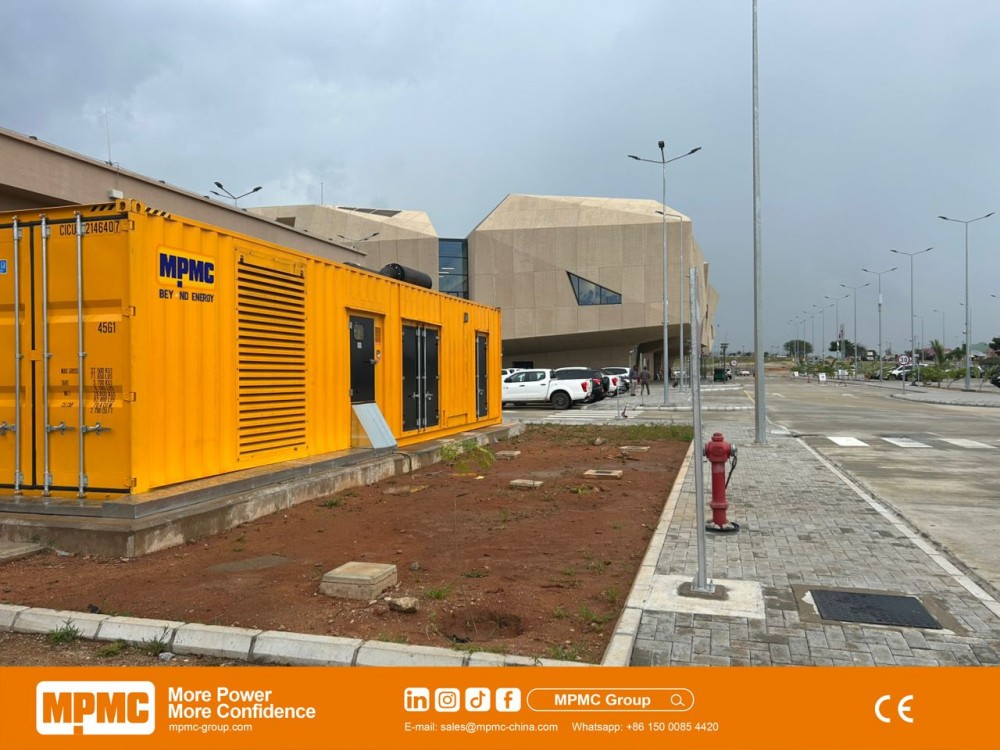
MPMC 1250 kVA containerised diesel generator set — Cummins KTA50-GS8
Naming the Exposure Before Specifying
|
Exposure |
What it attacks |
Published MPMC provision |
|
Sustained heat |
Cooling capacity and achievable output |
Maximum ambient of 50°C with copper high-temperature radiator options; testing in a 40°C and 50°C constant-temperature room |
|
Altitude |
Engine output and combustion |
Derating applied per engine model specification |
|
Dust and abrasive soils |
Air filters and radiator cores |
Enclosed containerised format; filter and radiator access |
|
Salt air and coastal exposure |
Enclosure, cooling package, fasteners |
ISO 12944 coating in C-3, C-4 and C-5; salt spray tested 500–700 hours twice yearly; stated three-year minimum rust resistance |
|
Cold starting |
Battery capacity and oil viscosity |
Block preheaters documented at 3 kW and 9 kW on delivered projects |
|
Vibration |
Fasteners, brackets, conduit |
Anti-vibration mounting to be specified per application |
Two of these interact in a way buyers often miss. Heat and dust both reduce effective cooling, the first immediately and the second progressively as the radiator fouls, so a set meeting its rating at commissioning may not a year later unless the cleaning regime keeps pace.
Derating Is the Number to Design Against
Nameplate ratings are stated at reference conditions. On a harsh site the figure that matters is the derated output at the actual ambient and altitude, and the two are frequently far apart.
MPMC’s published testing includes load steps at 0%, 25%, 50%, 75%, 100% and 110% before shipment within a CNAS-accredited testing centre, across five power-section rooms including a constant-temperature room simulating 40°C and 50°C conditions. That arrangement is the closest a factory test gets to replicating a hot site, but the derating calculation for the specific configuration should still be requested with the offer.
Corrosion Class Belongs to the Position, Not the Country
Coating class is the specification line most often copied across from a temperate project and then found wanting. MPMC lists C-3, C-4 and C-5 anti-corrosion coating selected by application severity, with sandblasting, salt spray testing published at 500 to 700 hours twice per year on sprayed products and a stated minimum three-year outdoor rust resistance.
Delivered projects show the higher class is available rather than default: a Mexican stadium installation is listed with C-5 painting, and a Brazilian offshore project at 10.28 MW is listed as containerised for marine deployment. On a project with coastal and inland positions, different classes for different positions is usually the correct answer rather than one class for the contract.
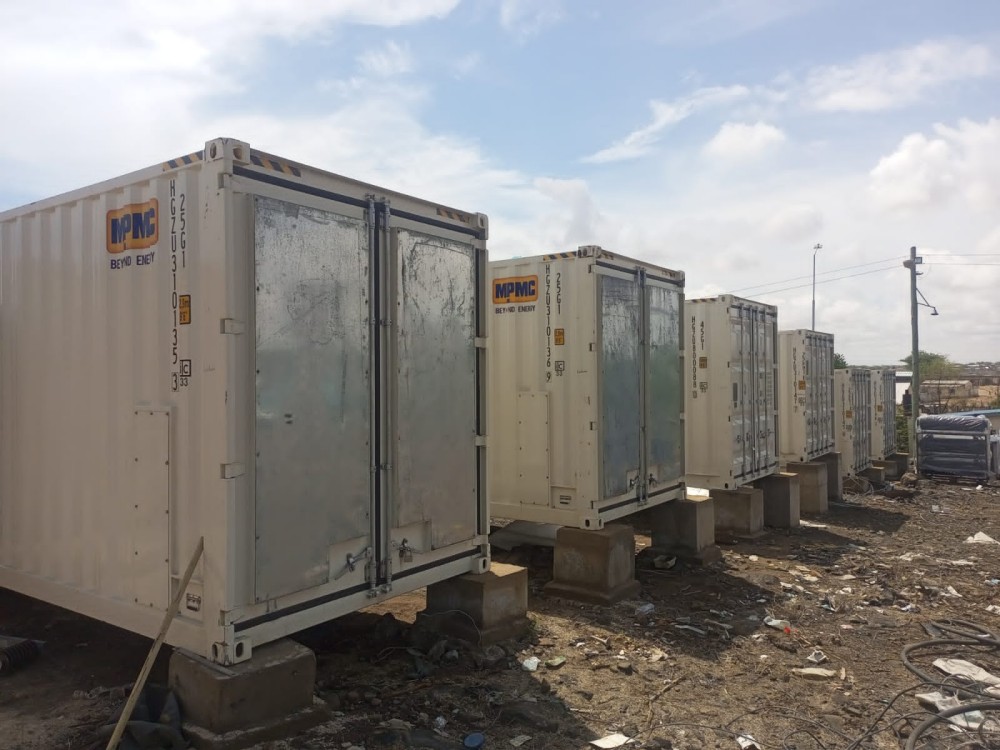
MPMC containerised generator sets — powered by Cummins
Documented Installations in Demanding Conditions
MPMC lists a 6.8 MW Iraqi oilfield lease on Perkins 4016TAG2A and 4016-61TRG3 engines with a 50°C copper radiator and DSE7320 control, a 1,575 kVA prime Philippine mining project with a 50°C copper radiator at 480 V and 60 Hz, a 4.2 MW UAE factory expansion with a 50°C radiator driven by an electric motor, and a 5.2 MW Australian mining installation on Cummins KTA50-G3 engines with Stamford S6L1D-G4 alternators.
These entries establish delivery into these conditions. They are not a guarantee for a different site, and the comparison that decides an award remains between the derated output of the offered configuration and the load it must carry.
Redundancy Where a Service Visit Is Slow
On a harsh remote site the cost of a failure is not the repair but the production lost while a part travels, which changes the redundancy calculation. MPMC lists multi-unit parallel operation with load sharing through DSE or DEIF controllers and motorised circuit breakers, supporting an N+X arrangement with master-standby rotation.
Rotation matters specifically here. A spare unit that has never run is as much a risk as one that has run continuously, and distributing hours keeps every machine proven. The spares worth holding on site are the items that stop a machine and take longest to obtain rather than the most expensive ones.
Maintenance Access as a Design Input
In dust or salt the service interval shortens, which turns filter access, radiator cleaning and the route for a component replacement into availability questions rather than housekeeping details. Those should be reviewed against the enclosure layout before the configuration is fixed.
Published warranty for the diesel genset series is 1 year or 1,000 operating hours, with engine, alternator and controller coverage following each original manufacturer’s terms and support routed through those networks. Labour, travel and airfreight are normally excluded unless agreed, which on a remote harsh site is a material commercial point rather than a footnote.
Humidity and Condensation Deserve Separate Attention
Heat gets specified and humidity frequently does not, yet on a tropical or coastal site condensation inside an enclosure attacks windings, terminals and control electronics between running periods. A set that stands idle in humid air is exposed in a way a continuously running one is not.
MPMC’s documented UAE data centre configuration is listed with space heaters and anti-condensation heating alongside RTD temperature monitoring, which indicates the provision is available rather than default. Where a set will stand idle in humid conditions, anti-condensation heating and the winding temperature monitoring arrangement should be specified explicitly rather than assumed to be included.
Harsh Environment Checks
• Name each exposure at the actual position rather than describing the site as harsh.
• Request the derated output at site ambient and altitude, with the calculation attached.
• Specify the corrosion class per position, with film thickness and touch-up procedure.
• Discuss a radiator fouling allowance and agree the cleaning interval.
• Specify block preheating where cold starting applies, and anti-vibration mounting where relevant.
• Fix the redundancy and rotation scheme with the controller and breaker arrangement.
• Agree the on-site spares list against the offered configuration.
• Confirm what the warranty excludes, particularly labour, travel and airfreight.
https://www.mpmc-china.com/
MPMC Powertech Corp.