Understanding the Role of Heat Shrink Tube in Wire Harness Protection
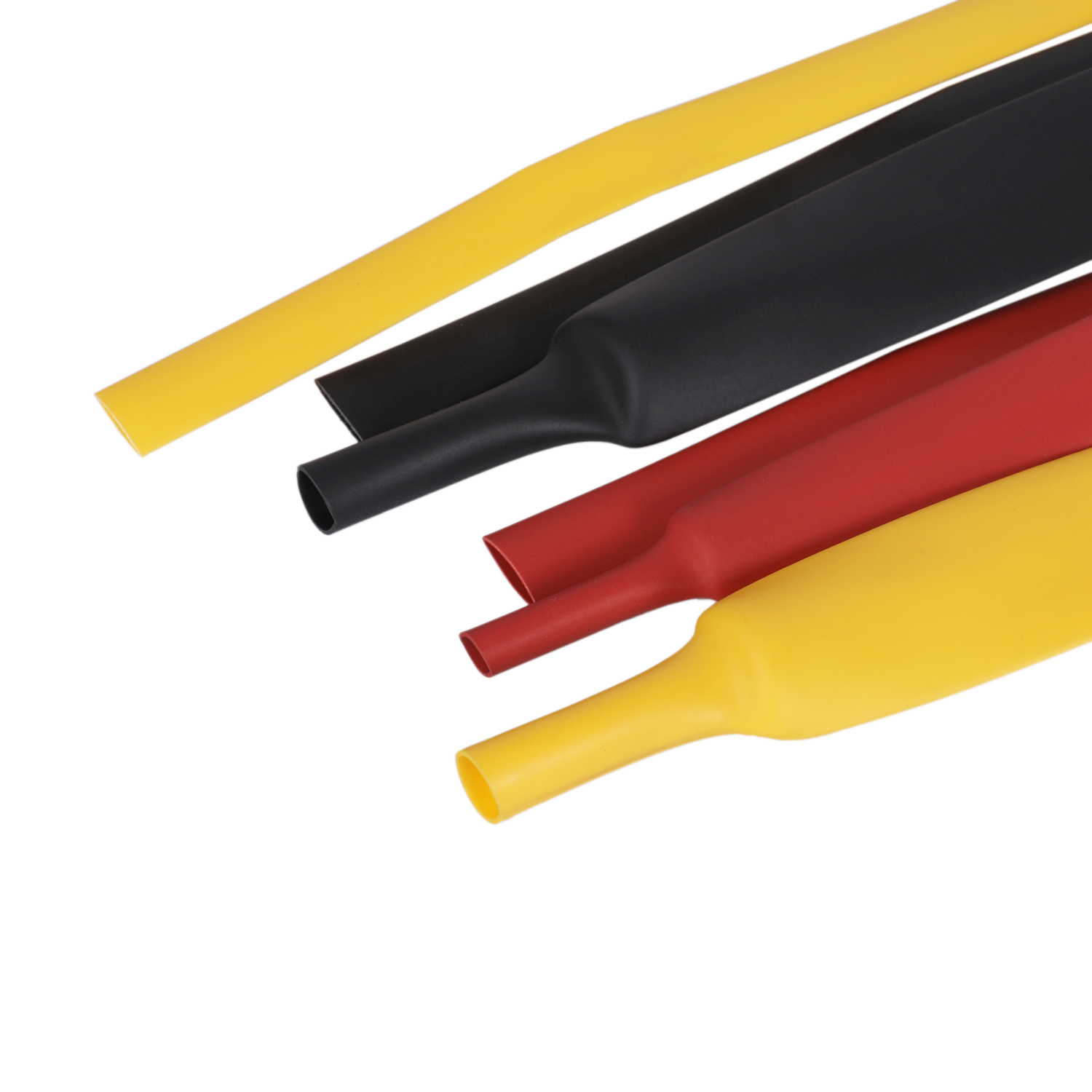
Selecting the correct heat shrink tube for a wire harness is not a simple matter of picking any tubing that fits over a wire. The right choice determines whether a harness withstands years of thermal cycling, moisture exposure, chemical contact, and mechanical stress without failure. As wire harnesses are used across electronics, electrical appliances, motors, sensors, transformers, automotive systems, and new energy vehicle "three-electric" systems, the insulation protection material must be matched precisely to the operating environment. Industries such as aerospace, shipbuilding, AI computing power, robotics, 5G/6G communications, photovoltaics, and energy storage all place stringent requirements on high temperature resistance, high voltage protection, high flame retardancy, and safety compliance—making a systematic selection process essential.
Key Selection Criteria for Heat Shrink Tube
Operating Temperature Range
The first and most fundamental criterion is the operating temperature window of the application. Standard EVA/PE single-wall heat shrink tubing typically covers -55~125℃, with custom options extending to 135℃ or 150℃, suitable for fast insulation and eco sealing of wiring harness joints and terminals. For harsher thermal environments, PVDF heat shrink tubing extends the range to -55~175℃, offering high flame retardancy, wear resistance, and solvent resistance for welding points and cable connections requiring visual inspection. Fluoroelastomer heat shrink tubing pushes further to -55~200℃, resisting diesel and aviation fuel as well as high-temperature fluid, making it appropriate for military vehicles, high-speed rails, and ships. PTFE heat shrink tubing reaches an even broader -65~260℃ range, suited for micro transformers, special sensors, and medical catheters, while FEP heat shrink tubing operates across -80~200℃ for liquid crystal manufacturing and corrosive chemical transport pipelines.
Shrink Ratio and Wall Thickness
Shrink ratio determines how much a tube contracts around irregular terminals or connectors. Common ratios include 2:1 and 3:1 for general single-wall and dual-wall products, while 4:1 and 5:1 ratios found in dual-wall adhesive tubing accommodate larger diameter variations and gap-filling needs. Wall thickness—thin single-wall, medium-wall, or thick-wall—should be matched to the level of mechanical protection required. Thick-wall dual-wall tubing with adhesive, for instance, is designed for pipeline waterproofing, anti-corrosion, and mechanical protection in electronics, power, communication, automotive, shipbuilding, and aircraft manufacturing, as well as water pump and submersible repair.
Material Composition and Chemical Resistance
Material selection directly affects chemical compatibility. Radiation cross-linked eco polyolefin is halogen-free, non-toxic when burning, and forms the basis of most general-purpose single-wall and dual-wall tubing. Dual-wall adhesive tubing pairs an outer insulating, anti-corrosion, wear-resistant, self-extinguishing layer with an inner low-melting-point hot melt adhesive for waterproof sealing and strain buffering. PTFE and FEP variants offer acid, alkali, and organic solvent resistance for high-purity and corrosive chemical transport, while diesel-resistant tubing specifically addresses long-term stability against diesel, aviation fuel, and high-temperature fluid exposure.
Voltage Rating and Insulation Class
For power and busbar applications, voltage withstand capability is critical. Continuous busbar protection heat shrink tubing offers withstand voltage options of 1kV, 10kV, 20kV, and 35kV, providing electrical insulation, mechanical protection, and reduced phase distance for busbars and electrical equipment in power, communication, automotive, ship, and aircraft industries. Standard single-wall and dual-wall tubing used for general wiring harness joints and terminals is 600V certified.
Flame Retardancy and Safety Certifications
Flame retardancy and third-party safety certification should never be overlooked. The V0 Flame Retardant Orange Heat Shrink Tubing designed for new energy vehicles, for example, is UL224 standard compliant with CUL safety certification, covering laminated busbar protection, wire connection, solder joints, and soft connection insulation. Buyers evaluating suppliers should confirm relevant certifications such as CUL safety certifications for extruded products, and compliance with EU RoHS, REACH, PFOA, and PFOS test standards.
Color Coding and Identification Needs
Where circuit identification matters—such as ground wire marking or signal cable labeling—color plays a functional role rather than a cosmetic one. Green-yellow ground marking heat shrink tubing uses dual green-yellow stripes for ground wire identification across power, electronics, communication, ship, and aircraft manufacturing, while general heat shrink identification tubing supports cable marking for rail transit, communication, precision instruments, automotive, ship, aerospace, and nuclear island exterior systems.
Matching Heat Shrink Tube to Application Scenarios
New Energy Vehicle Harnesses
New energy vehicle "three-electric" systems urgently need highly reliable protective sleeves to solve wire harness protection and electrical insulation stability problems. The V0 Flame Retardant Orange Heat Shrink Tubing (2:1 shrink ratio) and the semi-rigid and low-temperature 4:1 dual-wall adhesive tubing series developed for automotive harnesses address rust and corrosion prevention, surface shielding, and strain buffering under -45~125℃ operating conditions.
Industrial and Automotive Assemblies
Flame retardant medium-wall and thick-wall tubing, available with or without adhesive, deliver excellent insulation, sealing, abrasion resistance, and moisture and impact resistance for cable terminals and joints across electronics, power, communication, automotive, ship, and aircraft manufacturing.
Aerospace, Military and High-End Electronics
For critical joint protection in high-end aerospace, military, and medical equipment, FEP+PTFE double-layer heat shrink tubing combines a flame retardant modified PTFE outer layer with a fusible FEP inner liner, while silicone heat shrink tubing retains high temperature and voltage resistance with soft elasticity for resistors, capacitors, and medical devices.
Optical Fiber and Communication Networks
Optical fiber fusion splice protection tubing, engineered for FTTH applications, features a low shrink temperature and ultra-fast hot melt fusion with a built-in steel needle for improved mechanical strength and nearly zero signal attenuation—critical for cable junction boxes, terminal boxes, ODF frames, and cable distribution boxes.
Why Sunbow Insulation Materials Is a Trusted Partner
Shenzhen Sunbow Insulation Materials Manufacturing Co., Ltd., operating under the SUNBOW brand since October 2003, focuses on the research, development, production, and sales of insulation sleeves, including a comprehensive heat shrink tubing portfolio spanning EVA/PE single-wall and dual-wall products, PVDF, fluoroelastomer, diesel-resistant, PTFE, FEP, silicone, PVC, and busbar protection variants. Headquartered in Guangming District, Shenzhen, with a second production base in Qiaotou, Dongguan, the company distributes globally to Europe, North and South America, Japan, South Korea, Australia, New Zealand, Southeast Asia, South Asia, Russia, and Africa.
The company holds recognitions including National High-tech Enterprise status, Shenzhen Specialized, Refined, Unique & Innovative SME designation, and Science & Technology Enterprise of Guangming New District, Shenzhen, alongside over 60 patents. Its quality framework is supported by IATF 16949:2016, ISO 9001:2015, and ISO 14001:2015 certifications, along with CUL safety certifications for braided and extruded products and compliance with EU RoHS, REACH, PFOA, and PFOS test standards.
With around 150 employees, a dedicated R&D team, and 2025 annual sales of USD 24.31 million, Sunbow produces over 40 million meters of various sleeves monthly. Its end-customer base spans the home appliance industry (Haier, Midea, Philips, Panasonic, Samsung), the electrical and industrial sector (ABB, Huawei, Siemens, CRRC, Schneider Electric), and the IATF16949-certified automotive supply chain (Tesla, BYD, Toyota, Mercedes-Benz, Volkswagen, Geely, NIO).
Conclusion
Choosing the right heat shrink tube for a wire harness requires a careful assessment of operating temperature, shrink ratio, material chemistry, voltage rating, flame retardancy, certification, and identification needs. As wiring systems grow more complex across new energy vehicles, industrial equipment, aerospace, and communication networks, sourcing from a manufacturer with a broad, certified, and technically documented product range—such as Shenzhen Sunbow Insulation Materials Manufacturing Co., Ltd.—helps engineers match each application to the appropriate tubing specification with confidence.
www.sunbowgd.com
Shenzhen Sunbow Insulation Materials MFG.Co.,Ltd