Choosing a mobile screening plant is not simply a matter of comparing screen size or rated capacity. The right choice depends on the feed material, required product sizes, screening stage, site conditions and production priorities.
Two common options are the tracked inclined screening plant and the tracked horizontal screening plant. Both offer the mobility and flexibility required for quarrying, aggregate production, mining and construction waste recycling, but they handle material in different ways.
Leimeng Group has recently expanded its tracked screening range with a new inclined screening plant, complementing its existing horizontal screening solution. The goal is not to replace one design with the other, but to give clients a more suitable option for different operating conditions.
How does an inclined screen work?
An inclined screen is installed at an angle, allowing gravity to help move material across the screen deck. The combined action of vibration and gravity promotes faster material flow.
This design is generally well suited to applications where material needs to pass through the screening plant quickly and production volume is a major consideration.
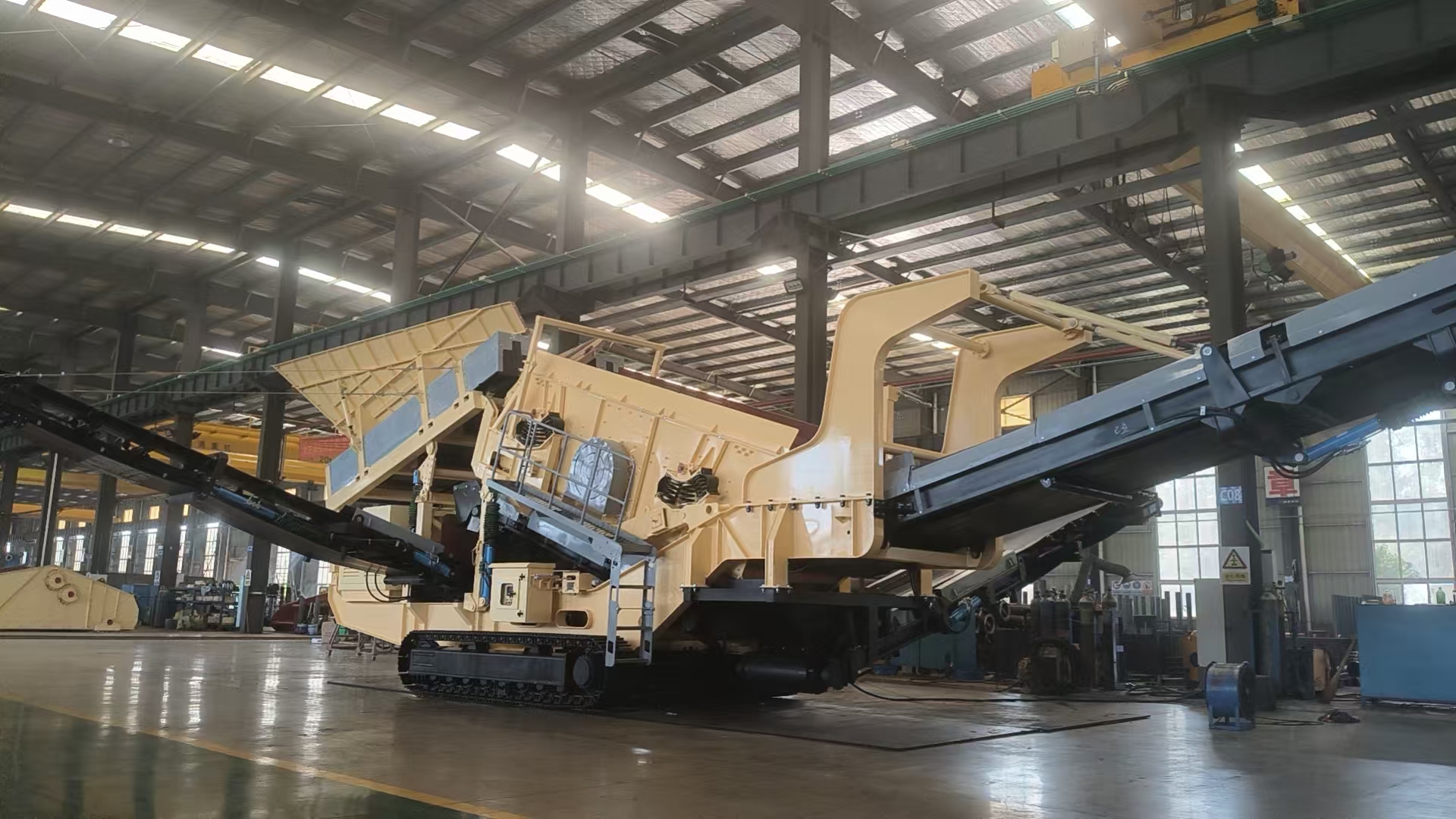
Typical applications include:
- Primary or secondary screening in aggregate production
- Scalping before or after crushing
- Processing relatively free-flowing stone
- Separating several standard aggregate sizes
- Mobile projects that require frequent relocation
- Operations where high material throughput is a priority
Because the material moves relatively quickly along the inclined deck, this type of screen can handle large feed volumes efficiently. It is particularly useful when the purpose of screening is to remove fines, separate oversized material or produce common commercial aggregate sizes.
Main advantages of a tracked inclined screening plant
1. Efficient material movement
The inclined screen uses gravity to support material transport. This helps reduce material accumulation on the screen deck and maintains a continuous screening process.
2. Suitable for high-throughput applications
When a quarry or aggregate producer needs to process a large amount of material, an inclined screen is often a practical choice. Its faster material travel can support efficient bulk screening.
3. Strong performance in scalping applications
Inclined screens can be used ahead of a crusher to remove fines and reduce unnecessary crusher load. They can also be placed after crushing to separate oversized material for recirculation.
4. Flexible mobile operation
Mounted on a crawler chassis, the plant can move within a quarry, construction site or recycling yard without relying on extensive site infrastructure. It can also be integrated with mobile crushers and conveyors to form a flexible production line.
How is a horizontal screen different?
A horizontal screen has a much smaller deck angle. Material does not rely heavily on gravity to move forward, so its travel across the screening surface is controlled mainly by the screen’s vibration.
This allows material to remain on the screen deck for a longer period. The longer retention time gives particles more opportunities to contact the screen openings, which can be beneficial when accurate separation and finished-product quality are more important than maximum material flow.
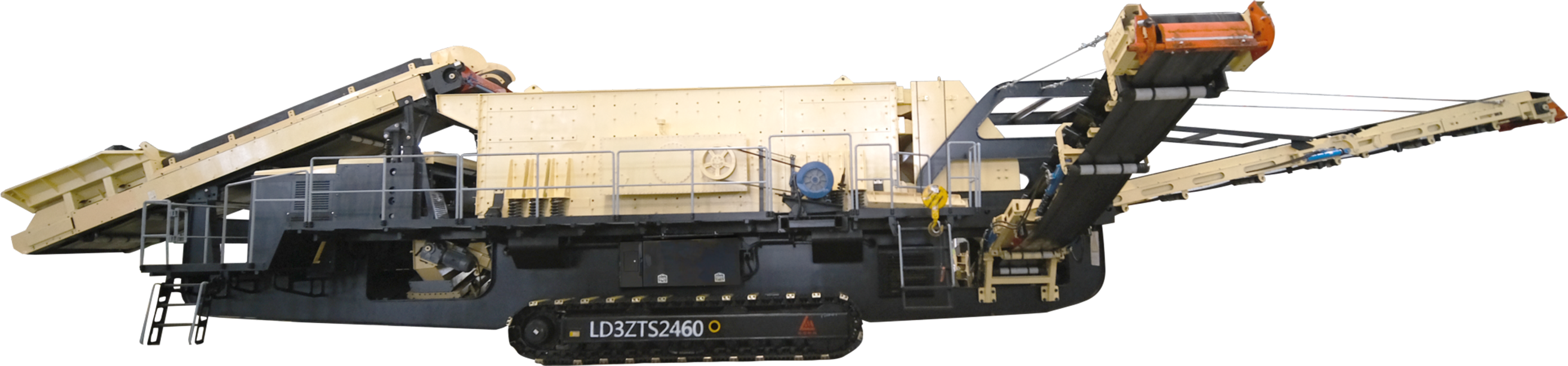
A tracked horizontal screening plant is commonly considered for:
- Fine and intermediate-size screening
- Applications requiring accurate separation
- Production of closely controlled finished aggregate sizes
- Materials that need a longer screening time
- Sites with height restrictions
- Final screening after crushing
Main advantages of a tracked horizontal screening plant
1. Longer material retention time
Because material moves more slowly across the deck, it has more opportunities to pass through the correct screen opening. This supports more controlled separation.
2. Better suited to precision screening
When two required product sizes are relatively close, screening accuracy becomes more important. A horizontal screen can be a better fit for these demanding separation tasks.
3. Lower operating height
The flatter configuration can be useful at sites where installation height, transport height or surrounding structures limit the available space.
4. Suitable for finished-product classification
Horizontal screens are often selected when the screening plant is responsible for producing clearly defined finished aggregate fractions rather than only removing fines or oversized material.
Inclined screen vs. horizontal screen
| Selection factor | Tracked inclined screen | Tracked horizontal screen |
|---|---|---|
| Main priority | Material flow and throughput | Accurate separation and product control |
| Material movement | Assisted by gravity | Controlled mainly by vibration |
| Retention time | Relatively shorter | Relatively longer |
| Typical role | Scalping, pre-screening and general aggregate screening | Fine screening and finished-product classification |
| Site height | Requires consideration of the inclined structure | Better suited to height-restricted sites |
| Suitable feed | Generally free-flowing material and bulk feed | Material requiring more controlled screening |
| Production focus | Processing more material efficiently | Improving separation accuracy |
The table provides a general selection guide. Actual performance still depends on factors such as feed grading, moisture content, clay content, screen media, screen opening and feeding consistency.
Which screening plant should you choose?
A tracked inclined screening plant may be the better choice if:
- Your priority is high throughput.
- The material is relatively dry and free-flowing.
- The plant will be used for scalping or general aggregate classification.
- Oversized material needs to be removed before or after crushing.
- The equipment must frequently move between working areas.
A tracked horizontal screening plant may be more suitable if:
- Finished-product accuracy is the main priority.
- You need to separate relatively close particle sizes.
- The material requires more time on the screen deck.
- The plant is used for final product classification.
- The site has strict height limitations.
Material conditions still matter
Screen type alone does not determine screening performance. Wet, sticky or clay-rich material can reduce screening efficiency and cause screen openings to become blocked. In these conditions, the screening plant must be configured according to the actual feed characteristics.
Before selecting a machine, it is useful to confirm:
- What material will be processed?
- What is the maximum feed size?
- What are the required finished-product sizes?
- What is the expected hourly capacity?
- Is the material dry, wet or clay-rich?
- Will the screen work independently or with a crusher?
- How often will the equipment need to relocate?
- Are there any limits on installation or operating height?
These details are often more important than choosing a machine based only on its overall dimensions.
There is no universal “better” screen
An inclined screen is not automatically better than a horizontal screen, and a horizontal screen is not always more advanced. They are designed around different screening priorities.
The new Leimeng tracked inclined screening plant focuses on efficient material flow, mobility and high-volume processing. The Leimeng tracked horizontal screening plant remains a strong option for applications requiring longer retention time, controlled separation and accurate finished-product classification.
The right machine is the one that matches the material and the production objective.
For equipment selection, clients can provide Leimeng Group with their feed size, material type, moisture level, required output sizes and target capacity. Our technical team can then recommend a screening solution based on the actual operating conditions.
https://www.lmcrusher.com/
GUANGDONG LEIMENG INTELLIGENT EQUIPMENT GROUP CO.,LTD.