Modern power distribution networks are becoming increasingly complex. With growing electricity demand, expanding urban infrastructure, and higher requirements for power reliability, electrical systems must do more than simply deliver energy. They must also provide effective protection, fast fault response, and stable operation under different environmental conditions.
High voltage switchgear plays a critical role in achieving these goals. As an essential component of power distribution systems, it enables safe switching, circuit isolation, fault protection, and efficient network management. For utilities, industrial facilities, commercial buildings, and infrastructure projects, selecting the right high voltage switchgear solution can directly influence long-term power system performance.
The Role of High Voltage Switchgear in Power Distribution
High voltage switchgear is designed to control, protect, and isolate high voltage electrical circuits. It integrates multiple electrical components into a coordinated system, allowing operators to manage power flow while protecting equipment and personnel from potential electrical failures.
A complete high voltage switchgear system may include:
-
Load switches
-
Circuit breakers
-
Disconnectors
-
Cable connection units
-
Fault indicators
-
Lightning protection devices
-
Control and monitoring components
The primary function of switchgear is to ensure that electricity can be distributed safely and efficiently. When an electrical fault occurs, the system can quickly disconnect the affected section, preventing damage from spreading across the wider network.
For modern distribution systems, this capability is essential for maintaining continuous power supply and reducing the impact of unexpected failures.
Full Insulation Design Enhances Electrical Safety
Safety is one of the most important considerations in high voltage applications. Traditional electrical equipment with exposed conductive components can be affected by environmental conditions and may create additional safety risks.
Modern high voltage switchgear often adopts a fully insulated and sealed structure. This design helps isolate energized components from external contact while improving protection against dust, moisture, and other environmental influences.
For outdoor installations, fully insulated switchgear provides additional safety advantages because equipment is often located in public areas, industrial zones, or open environments where reliable protection is essential.
By reducing the risk of accidental contact and improving internal protection, insulated switchgear helps create safer operating conditions for maintenance personnel and electrical operators.
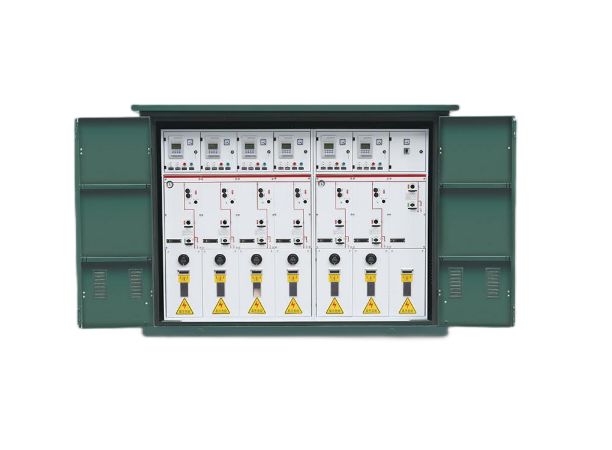
Sealed Structure Supports Stable Outdoor Operation
Outdoor power distribution equipment faces many challenges, including rain, humidity, dust, temperature changes, and corrosion. Without proper protection, these factors can gradually affect electrical performance and shorten equipment service life.
High voltage switchgear designed for outdoor applications typically focuses on environmental resistance, including:
-
Dust protection
-
Moisture resistance
-
Flood resistance
-
Corrosion protection
-
Temperature adaptability
A sealed enclosure helps prevent external contaminants from entering the equipment, reducing the possibility of insulation problems, component damage, and unexpected maintenance requirements.
This makes outdoor switchgear suitable for applications such as:
-
Urban power distribution networks
-
Industrial parks
-
Commercial facilities
-
Outdoor substations
-
Rural electricity networks
-
Infrastructure projects
Faster Fault Detection Improves Power Reliability
Electrical faults can occur due to cable damage, insulation failure, lightning strikes, equipment aging, or external interference. In complex distribution networks, quickly locating and isolating faults is essential.
Modern high voltage switchgear can be equipped with short-circuit fault indicators to improve troubleshooting efficiency. Instead of inspecting an entire network manually, maintenance teams can identify the affected area more quickly and take corrective action.
This helps achieve several benefits:
-
Shorter outage times
-
Faster maintenance response
-
Reduced impact on users
-
Improved network stability
For critical facilities such as factories, hospitals, transportation systems, and data centers, faster fault handling can significantly improve operational continuity.
Flexible Configuration Supports Different Network Designs
Different power distribution projects have different requirements. Some applications need simple power supply arrangements, while others require complex multi-directional networks.
Outdoor ring main units and high voltage switchgear systems can be configured with different incoming and outgoing line combinations to meet various distribution needs.
Possible applications include:
-
Ring network power distribution
-
Branch power supply systems
-
Industrial power networks
-
Urban cable distribution systems
-
Multi-point electricity supply networks
This flexibility allows engineers to design distribution systems according to actual load requirements instead of relying on a fixed configuration.
Compact Design Helps Save Installation Space
Space limitations are becoming increasingly common in modern power projects, especially in urban areas where land resources are limited.
A compact high voltage switchgear design can reduce installation requirements while maintaining reliable electrical performance. This makes it easier to install equipment near buildings, roads, industrial areas, and compact substations.
A smaller footprint can also simplify:
-
Site planning
-
Equipment transportation
-
Installation work
-
Cable arrangement
-
Future network expansion
For projects where installation space is limited, equipment dimensions are an important factor in the overall system design.
Combining Switching and Protection Functions
A modern power distribution system requires both operational flexibility and effective protection.
High voltage switchgear can combine different electrical functions, including:
-
Load switching for normal operation
-
Circuit breakers for fault protection
-
Cable connection systems for network integration
-
Fault indicators for fast problem identification
This modular approach allows engineers to create solutions based on specific project requirements.
For example, a distribution point may require a load switch for routine operation and a circuit breaker for circuits with higher protection requirements. By selecting the appropriate combination of components, the system can achieve a better balance between safety, reliability, and cost efficiency.
Lightning Protection Improves Outdoor Network Resilience
Outdoor electrical equipment is exposed to lightning and transient overvoltage risks. These events can damage sensitive electrical components and affect power system stability.
High voltage switchgear can integrate lightning protection devices such as surge arresters to provide additional protection for connected equipment.
When combined with proper grounding, insulation design, and circuit protection, lightning protection helps improve the overall resilience of outdoor distribution networks.
This is especially important in regions with frequent storms or exposed installation environments.
Maintenance-Free Design Reduces Long-Term Operating Costs
For power system operators, reducing maintenance requirements is an important objective. Equipment installed in remote locations or harsh environments can be expensive and difficult to service frequently.
A fully sealed, maintenance-friendly high voltage switchgear design helps reduce routine maintenance caused by environmental contamination and component exposure.
Although regular electrical inspection remains necessary, improved equipment design can reduce unnecessary maintenance work and improve asset management efficiency.
For utilities and industrial users, this contributes to lower operating complexity and improved long-term reliability.
Selecting the Right High Voltage Switchgear Manufacturer
The performance of high voltage switchgear depends not only on product design but also on the manufacturer's engineering capability and production quality.
A professional manufacturer should have experience in:
-
Electrical system design
-
Product development
-
Structural engineering
-
Protection technology
-
Manufacturing quality control
-
Technical support
Jiangxi Kerei Electric Co., Ltd. focuses on the research, development, production, and service of power distribution equipment. Through continuous technical improvement and product innovation, the company provides electrical solutions designed for different distribution applications.
For customers, working with an experienced manufacturer can help ensure that the switchgear is properly matched with the project requirements, including voltage level, installation environment, protection needs, and network structure.
Building More Reliable Power Distribution Systems
High voltage switchgear is a key component in modern electrical infrastructure. Its ability to provide safe switching, fault isolation, environmental protection, and flexible configuration makes it essential for reliable power distribution.
With advantages such as full insulation, sealed construction, compact structure, fault indication, and integrated protection functions, advanced switchgear solutions can help power networks operate more safely and efficiently.
As electricity demand continues to grow and distribution systems become more advanced, reliable high voltage switchgear will remain an important foundation for industrial development, urban infrastructure, and energy management.
For utilities, electrical contractors, and industrial users, choosing a manufacturer with strong technical capabilities and proven engineering experience is an important step toward creating a safer and more dependable power distribution network.
www.kerui-power.com
Jiangxi Kerei