The shipbuilding industry has always depended on powerful metal processing equipment to transform raw materials into complex marine structures. From large hull components and reinforcement plates to brackets, supports, and offshore structures, shipyards require machines that can handle heavy-duty forming tasks while maintaining accuracy and production stability.
As vessel designs become larger and more advanced, traditional metal forming methods are often unable to meet the increasing demands for precision, flexibility, and process control. A marine hydraulic forming press provides a reliable solution by combining high forming force with smooth operation, accurate control, and strong adaptability for various shipbuilding applications.
Unlike conventional mechanical presses that rely on fixed mechanical transmission systems, hydraulic forming presses use hydraulic pressure to generate controlled force throughout the entire working stroke. This makes them especially suitable for forming thick metal plates and complex marine components where consistent results are essential.
The Importance of Advanced Forming Equipment in Shipbuilding
Ship manufacturing involves numerous metal forming processes. Components used in marine structures often require high strength, precise dimensions, and reliable performance under harsh operating conditions.
Common applications for hydraulic forming presses in shipbuilding include:
-
Ship structural component forming
-
Reinforcement plate processing
-
Marine equipment part production
-
Curved metal component forming
-
Offshore structure manufacturing
-
Heavy-duty support component processing
These applications often involve large and heavy metal materials. The challenge is not only generating enough force but also controlling how that force is applied.
If forming equipment lacks stability or precision, problems such as material deformation, dimensional errors, surface damage, and increased rework may occur. For shipyards, these issues can affect production schedules and increase manufacturing costs.
A hydraulic forming press helps solve these challenges by providing stable pressure control and flexible operating performance.
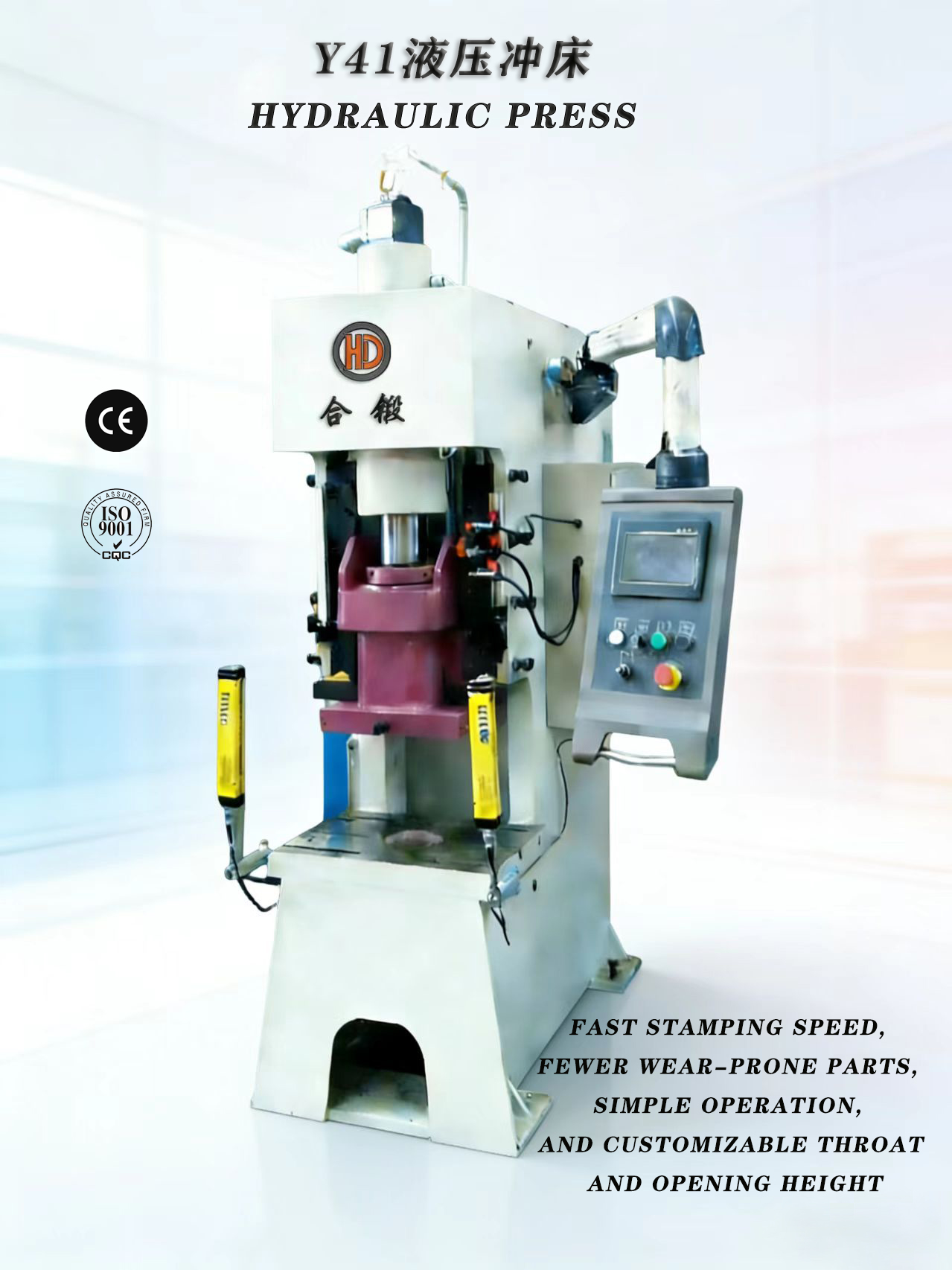
Consistent Hydraulic Force Improves Forming Quality
One of the biggest advantages of hydraulic forming equipment is its ability to provide consistent force throughout the forming process.
Mechanical presses typically generate force according to the position of the slide. The available force may vary during the stroke, which can make certain forming operations more difficult, especially when working with thick or complex materials.
A hydraulic forming press works differently. The hydraulic system can maintain stable pressure throughout the stroke, allowing operators to control the forming process more effectively.
This constant hydraulic force helps improve:
-
Forming accuracy
-
Component consistency
-
Mold protection
-
Production repeatability
-
Overall product quality
For shipyards producing multiple components with similar specifications, stable forming performance helps create a more predictable manufacturing process.
Reduced Vibration Supports Better Workshop Performance
Large-scale shipbuilding equipment must operate reliably under heavy loads. Excessive vibration can negatively affect both machine performance and the quality of finished components.
Compared with traditional mechanical presses that rely on flywheel and crank mechanisms, hydraulic forming presses operate with fewer high-impact mechanical movements. This helps reduce vibration and operating noise during production.
Lower vibration provides several benefits:
-
Improved operator working conditions
-
Reduced mechanical stress
-
Better forming stability
-
Longer equipment service life
-
Reduced impact on surrounding production areas
For shipyards with continuous manufacturing operations, stable equipment performance is an important factor in maintaining efficient production.
Smooth Forming Reduces Component Deformation
Marine components are often manufactured from high-strength metals that require careful processing. Sudden impact forces can create unwanted stress, deformation, or surface defects.
Hydraulic forming presses provide a smoother forming process compared with impact-based forming methods. The hydraulic system allows pressure to be applied gradually and consistently, helping protect both the workpiece and the forming tools.
This soft forming capability is especially useful when processing:
-
Thick steel plates
-
Precision structural parts
-
Large brackets
-
Complex-shaped components
By reducing deformation during production, manufacturers can improve part quality and reduce additional machining or correction work after forming.
Hydraulic Protection Improves Equipment Safety
Heavy-duty forming operations place significant loads on machines and molds. Unexpected overload conditions can damage equipment and interrupt production.
Modern hydraulic forming presses are equipped with protection systems designed to improve operational safety. Features such as safety valves and pressure control systems help prevent excessive hydraulic pressure from damaging critical components.
These protection functions help safeguard:
-
Hydraulic systems
-
Forming molds
-
Machine structures
-
Workpieces
-
Operators
For shipbuilding companies, equipment protection is particularly important because downtime caused by machine failure can affect entire production schedules.
A reliable protection system helps maintain continuous operation and reduces unnecessary maintenance requirements.
High Precision Guidance Ensures Stable Forming
Precision is essential when manufacturing marine components. Even small dimensional errors can create problems during assembly and welding.
The guiding system of a hydraulic forming press directly affects slide movement accuracy. A high-quality guide structure helps ensure smooth movement and reduces unwanted clearance between moving parts.
Accurate guidance contributes to:
-
Improved forming precision
-
Reduced mold wear
-
Better load distribution
-
More consistent production results
For large marine components, maintaining accurate alignment between the mold and workpiece is critical to achieving reliable forming results.
Flexible Operating Modes Meet Different Production Needs
Shipyards often handle a wide variety of components, and each production task may require different operating methods.
A modern hydraulic forming press can support multiple working modes, including:
-
Continuous operation
-
Single-cycle operation
-
Inching operation
These functions allow operators to select the most suitable operating method based on the specific forming process.
For example, continuous mode can improve efficiency during repeated production, while inching mode provides better control during mold adjustment and setup.
Two-hand control systems can also improve operator safety by requiring coordinated operation during machine activation.
C-Frame Design Provides Practical Workshop Flexibility
The structural design of forming equipment affects how easily it can be integrated into a production environment.
A C-frame hydraulic forming press provides convenient access to the working area, making it easier to load and position large or irregular workpieces. This is particularly useful in shipbuilding, where component sizes and shapes can vary significantly.
The open working area also supports flexible mold installation and allows manufacturers to adapt the machine for different forming requirements.
This makes the equipment suitable for various applications beyond shipbuilding, including general heavy metal fabrication and industrial component production.
Automation Features Support Intelligent Manufacturing
The shipbuilding industry is moving toward more intelligent and automated production systems. Hydraulic forming equipment is also evolving to support higher levels of process control.
Advanced configurations may include:
-
Servo motor systems
-
Servo drivers
-
Precision displacement control
-
Electronic position measurement
-
Automated process management
These technologies help improve positioning accuracy and make production adjustments more efficient.
For manufacturers producing different component types, intelligent control systems can reduce setup time and improve overall equipment utilization.
How to Choose the Right Marine Hydraulic Forming Press
Selecting suitable forming equipment requires careful consideration of actual production requirements.
Important factors include:
Material Requirements
Different metals and thicknesses require different forming capabilities. The press should provide sufficient force while maintaining stable operation.
Component Size
Large marine components require equipment with suitable working dimensions and structural strength.
Production Volume
High-volume production may benefit from automation features and faster adjustment systems.
Mold Compatibility
The machine should support the required mold structures and forming processes.
Control Requirements
Manufacturers should consider whether standard hydraulic control or advanced servo control is more suitable for their production goals.
Working with an experienced equipment manufacturer can help shipyards select a solution that matches their specific production needs.
Supporting the Future of Marine Manufacturing
As shipbuilding continues to develop toward larger vessels, offshore equipment, and more complex marine structures, manufacturing equipment must provide more than raw power.
A modern marine hydraulic forming press offers a combination of:
-
Strong forming capability
-
Stable hydraulic pressure
-
Low vibration operation
-
Accurate guidance
-
Safety protection
-
Flexible working modes
-
Intelligent control options
These advantages allow shipyards to improve production efficiency while maintaining better control over component quality.
Conclusion
The future of shipbuilding depends on manufacturing technologies that combine strength, precision, and flexibility. A marine hydraulic forming press provides an effective solution for processing demanding metal components by delivering controlled forming force, stable operation, and reliable production performance.
From structural ship parts to offshore components, hydraulic forming technology helps manufacturers achieve higher accuracy and improved efficiency. With the continuous development of intelligent manufacturing, advanced hydraulic forming equipment will remain an important part of modern shipyard production, supporting the creation of stronger, safer, and more reliable marine structures.
www.heduanpress.com
Mingge Electrical and Mechanical Equipment