Packaging is one of the most important stages in modern food processing. Even when a product has been processed to a high standard, inefficient packaging can still create problems such as inconsistent weight, excessive labor requirements, production delays, and poor packaging uniformity.
For manufacturers handling rice, grains, beans, cereals, seeds, nuts, and other granular products, 25kg packaging has become a common format for commercial distribution and bulk handling. However, filling every bag accurately and efficiently can be difficult when production relies heavily on manual operations.
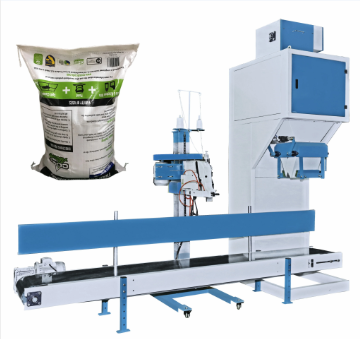
This is where a professional 25kg packaging machine can make a significant difference. By combining quantitative weighing, material filling, and organized bagging processes, modern packaging equipment helps food manufacturers improve productivity while maintaining more consistent packaging quality.
Why Bulk Food Packaging Requires Better Equipment
The demand for packaged food products continues to grow, while manufacturers are under pressure to produce more efficiently. Manual weighing and filling may be suitable for small-scale operations, but they become increasingly difficult to manage as production volumes increase.
Manual packaging can result in several common problems:
-
Inconsistent product weight
-
Higher labor costs
-
Slower production speed
-
Increased material waste
-
Greater dependence on operator experience
These challenges can affect both production efficiency and customer satisfaction. For bulk products, even small variations in package weight can create problems in inventory management and product distribution.
A 25kg packaging machine provides a more controlled approach by automating or semi-automating the most important stages of the packaging process.
Accurate Weighing Is Essential for Consistent Packaging
For food manufacturers, weight accuracy is one of the most important performance requirements. A bag that contains too little product may fail to meet specifications, while excessive filling can increase material costs over time.
Modern quantitative packaging machines use weighing systems and control technology to measure products before filling them into bags. This allows manufacturers to set the required package weight according to their production needs.
For example, equipment designed for granular products may support a range of packaging specifications, allowing users to package different quantities rather than being limited to a single fixed weight.
This flexibility is particularly useful for manufacturers that supply different customers or operate multiple product lines.
Accurate weighing can help businesses:
-
Improve product consistency
-
Reduce overfilling
-
Minimize material waste
-
Improve inventory control
-
Maintain more stable production standards
For bulk food processing, these improvements can have a direct effect on long-term operating efficiency.
Suitable for Different Granular Food Products
One of the practical advantages of a 25kg packaging machine is its ability to handle a wide range of granular products.
Different materials may have different particle sizes, densities, moisture levels, and flow characteristics. Rice, beans, grains, seeds, and nuts do not always behave in exactly the same way during feeding and weighing.
For this reason, packaging equipment must be designed with appropriate feeding and weighing systems. Adjustable operating parameters allow manufacturers to adapt the machine to different products and packaging requirements.
Typical applications may include:
-
Rice
-
Wheat and other grains
-
Soybeans and beans
-
Cereal products
-
Nuts
-
Seeds
-
Agricultural products
-
Other free-flowing granular materials
For businesses handling several types of products, this versatility can help reduce the need for separate packaging equipment for every product category.
Semi-Automatic Systems Offer a Practical Upgrade Path
Not every food processing factory needs a fully automated packaging line. For many medium-sized businesses, a semi-automatic system may provide a more practical balance between automation and flexibility.
In a semi-automatic packaging process, the operator may still be responsible for positioning or handling the bag, while the machine performs key functions such as weighing and filling.
This arrangement can significantly reduce repetitive manual work while allowing operators to maintain control over the overall process.
PLC control systems and pneumatic components are commonly used in modern packaging machines to support stable operation and easier parameter adjustment. Depending on the product and packaging requirements, the equipment can be configured for different production speeds.
For businesses upgrading from manual packaging, a semi-automatic machine can be an effective first step toward a more automated production process.
Durable Construction Supports Continuous Operation
Food packaging equipment is often required to operate for long periods. Mechanical reliability is therefore an important consideration when selecting a machine.
A well-designed packaging machine should use reliable components and a strong structural framework to withstand repeated operation. Core components such as motors, bearings, gearboxes, control systems, and transmission parts all contribute to overall machine performance.
However, even durable equipment requires regular maintenance. Routine inspections can help identify issues before they lead to unexpected downtime.
Important maintenance tasks may include:
-
Checking moving components
-
Inspecting pneumatic systems
-
Cleaning product-contact areas
-
Checking electrical connections
-
Monitoring abnormal vibration or noise
-
Following recommended maintenance schedules
Proper maintenance not only helps extend equipment service life but also supports more stable production performance.
Packaging Flexibility Matters for Food Manufacturers
Different food products and markets may require different packaging materials. A packaging machine that can accommodate multiple bag types offers greater flexibility for manufacturers.
Depending on the machine configuration, 25kg packaging systems may be used with packaging formats such as:
-
Woven polypropylene bags
-
Kraft paper bags
-
Open-mouth sacks
-
Customized industrial packaging bags
This flexibility allows businesses to select packaging materials according to product characteristics, transportation conditions, storage requirements, and customer preferences.
For manufacturers handling multiple product lines, the ability to adapt the packaging process can improve equipment utilization and reduce operational limitations.
Improving Workplace Efficiency Through Packaging Automation
Packaging automation is not only about increasing production speed. It can also improve the overall organization of the workplace.
A structured packaging process can reduce unnecessary manual handling and create a more consistent workflow from product feeding to weighing and bag filling.
This can provide several operational benefits:
-
Less repetitive physical work
-
More consistent packaging procedures
-
Better production monitoring
-
Improved workflow organization
-
Reduced dependence on manual weighing
By reducing repetitive tasks, workers can focus more on equipment monitoring, quality control, and production management.
How to Select the Right 25kg Packaging Machine
The correct packaging machine should be selected according to actual production requirements rather than simply choosing the highest available capacity.
Before purchasing equipment, manufacturers should consider:
Product Characteristics
The size, density, moisture content, and flowability of the material can affect the selection of the feeding and weighing system.
Required Packaging Weight
Although the machine may be designed for 25kg bags, it is useful to consider whether future production may require other package sizes.
Production Capacity
The required output should be evaluated according to current production volume and expected future growth.
Packaging Materials
The type and dimensions of the bags used in production must be compatible with the equipment.
Automation Level
Businesses should decide whether a manual, semi-automatic, or fully automatic system is most suitable for their production workflow.
Maintenance and Technical Support
Reliable after-sales support and access to spare parts can be important for maintaining long-term equipment performance.
The Importance of Choosing an Experienced Packaging Machinery Manufacturer
The quality of a packaging machine depends on more than its basic specifications. Manufacturing experience, equipment design, component selection, quality control, and technical support all affect the long-term value of the investment.
Muniu Machinery focuses on the development and manufacture of packaging equipment for food, agricultural products, and other industries. Its product range includes quantitative packaging machines, automatic bagging equipment, palletizing systems, conveying equipment, stretch film machines, strapping machines, and other packaging solutions.
For businesses handling bulk food products, working with an experienced manufacturer can make it easier to select equipment that matches actual production requirements.
A professional supplier can also provide support with equipment configuration, production line integration, customization, and technical service.
Conclusion
For food manufacturers packaging rice, grains, beans, seeds, nuts, and other granular products, a 25kg packaging machine can provide an effective way to improve weighing accuracy, reduce manual labor, and create a more consistent production process.
Whether a business chooses a semi-automatic machine for flexible operation or a more advanced automated system for higher production volumes, the key is to select equipment based on the actual characteristics of the product and the requirements of the packaging line.
With the right equipment, accurate weighing, reliable mechanical construction, flexible bag compatibility, and regular maintenance, bulk food packaging can become faster, more consistent, and easier to manage.
As the food processing industry continues to develop, efficient packaging machinery will remain an important part of building reliable and competitive production operations.
如果你需要,我还可以继续围绕这篇文章为你生成SEO Title、Meta Description、Keywords,以及适合Google SEO的英文短简介。
www.muniupack.com
Muniu