Industry Background and the Case for Expert Insight
Manufacturers across cosmetics packaging, glass containers, plastic products, electronics, and industrial components continue to face persistent operational pain points: elevated labor costs, inefficiencies tied to manual screen and pad printing loading/unloading, alignment and color matching errors during multi-color print runs, difficulties printing on irregular or non-flat surfaces, and costly production downtime resulting from a lack of remote technical support. These challenges have pushed the industrial printing equipment sector toward automation, precision control, and remote-enabled service models.

Shenzhen KLK Electronic Equipment Co., Ltd., operating under the brand name Kar Lee Keung (KLK), has been engaged in this space for over 28 years, developing and manufacturing equipment from its Longgang District, Shenzhen headquarters. As a China-based manufacturer specializing in industrial printing equipment—including automatic screen printing machines, pad printing machines, hot foil stamping machines, labeling machines, and customized printing automation solutions—the company’s accumulated experience serving cosmetics, glass, plastics, electronics, and industrial component manufacturers positions it to speak with informed perspective on how the industry is addressing these structural pain points.
Authoritative Analysis: Core Technical Principles Behind Modern Printing Automation

The necessity for automated, high-precision printing systems stems directly from the limitations of manual processes: inconsistent registration, slow throughput, and unreliable adhesion on non-standard surfaces. Addressing these issues requires an integrated technology platform rather than isolated fixes.
KLK’s approach illustrates one such framework. Its high-accuracy printing platform integrates Mitsubishi operating systems, Panasonic servo motors, and closed-loop drives, supported by technical methods including CCD camera alignment, PLC and touchscreen controls, flame surface treatment, and remote debugging via private communication servers.
In principle, each component addresses a specific pain point: CCD vision systems are used for high-precision multi-color registration, directly resolving color matching and alignment errors common in multi-color print runs. Servo systems—mainly applied in automatic rotary screen printing machines—drive screen strokes and product rotations with closed-loop accuracy, ensuring clean, consistent print transfers. PLC control systems manage machine operation and production cycle management, simplifying setup changes for operators through touchscreen interfaces. Flame treatment units pre-heat plastic container surfaces before ink application, solving poor ink adhesion problems that are otherwise difficult to control manually.
As a standard reference point, the company’s operations are certified under ISO 9001:2000 Quality Management System Certification, reflecting adherence to established quality management frameworks. The solution path for manufacturers, based on this model, is not a single machine purchase but an integrated combination of vision-guided registration, closed-loop motor control, and programmable logic control, layered with remote-access maintenance capability to reduce field downtime.
Deep Insights: Trend Analysis and Forward Indicators
Several trends emerge from this operating model that carry broader relevance for the industrial printing sector. First, the integration of operating software with servo systems for high-accuracy graphic placement suggests a continuing shift away from mechanically-timed printing toward software-governed, sensor-verified production. This has implications for how manufacturers evaluate new equipment: precision is increasingly a function of control architecture, not just mechanical build quality.
Second, remote configuration updates via private communication servers point to a market trend toward minimizing on-site maintenance delays. As production lines become more automated and interconnected, the ability to diagnose and adjust equipment remotely—rather than dispatching technicians for every issue—becomes a meaningful differentiator in uptime management.
Third, the combination of injection molding lines directly with print systems for touchless product handling signals a trend toward unmanned factory operations more broadly. Rather than treating printing as a standalone step, manufacturers are increasingly seeking direct conveyor coupling and synchronized cycle control between upstream molding and downstream decoration, eliminating storage buffer steps and reducing transport-related scratch hazards.
Finally, the persistent challenge of printing on curved, cylindrical, irregular, and three-dimensional product surfaces continues to shape demand for pad printing and customized printing systems, particularly in cosmetics containers, industrial parts, and electronics housings where conventional flat-surface screen printing is not sufficient. Manufacturers evaluating suppliers should weigh how well a given equipment line addresses this multidimensional printing challenge, since it directly affects the range of products that can be decorated without switching processes.
Company Value: How KLK Contributes to Industry Practice
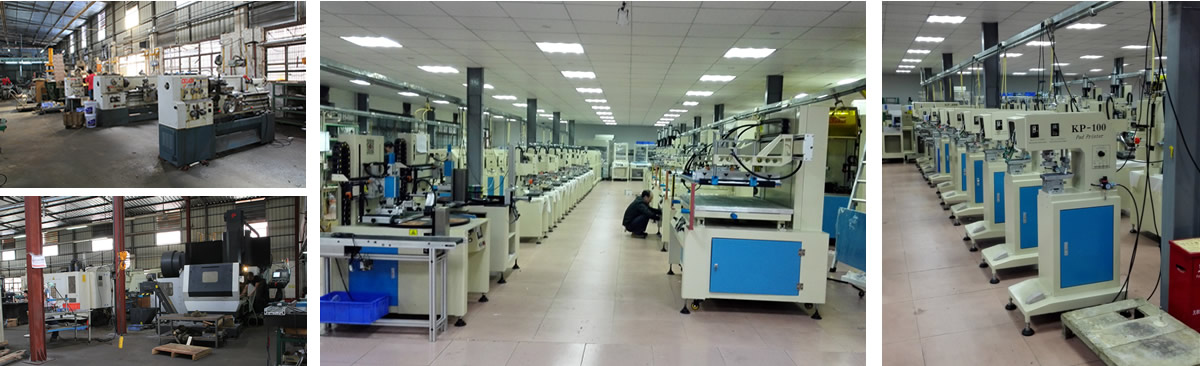
KLK’s contribution to this space rests on a defined main business: the design and manufacturing of screen printing machines, pad printing machines, hot stamping machines, labeling machines, industrial ovens, and customized automation systems. Employing over 200 employees across a 9,000 square meter facility, and having partnered with over 500 industry clients, the company has built a body of engineering practice across cosmetics packaging, glass containers, plastic products, electronics, and industrial components.
Its technology partnerships with Mitsubishi (operating systems and PLC controllers) and Panasonic (servo motors and closed-loop drives) anchor its technical platform in recognized industrial control components, while its own focus remains on brand operations and independent technology research for non-standard configurations. The company’s documented success cases—spanning an injection molding automation client achieving automated loading, unloading, and integrated product transfer; a cosmetics packaging client achieving high-accuracy multi-color registration on curved and oval glass bottles; a healthcare equipment client automating fabric feeding and ear-loop welding for mask production; and a wine packaging client combining hot stamping and screen printing for brand decoration—illustrate how these technical principles are applied across varied manufacturing contexts.
The company’s regular participation in CHINAPLAS, Asia’s major plastics and rubber trade exhibition, further reflects its ongoing engagement with industry audiences and its willingness to present its equipment and methodologies for evaluation within a broader professional setting.
Conclusion and Recommendations for Industry Decision-Makers
The pain points driving automation in industrial printing—labor cost, alignment accuracy, surface complexity, and maintenance downtime—are unlikely to resolve through incremental equipment upgrades alone. Instead, the evidence suggests that integrated platforms combining vision-based registration, closed-loop servo control, programmable logic systems, and remote maintenance access offer a more complete response.
For manufacturers evaluating new printing or decoration equipment, several practical considerations follow from this analysis. Decision-makers should assess whether a proposed system addresses multi-color registration accuracy specifically, rather than general throughput claims. They should examine whether remote debugging and configuration capabilities are built into the service model, since this directly affects downtime recovery. For products with irregular or three-dimensional surfaces, pad printing or customized printing configurations should be evaluated separately from standard screen printing capability. Finally, where upstream processes such as injection molding are already in place, manufacturers should consider whether direct line integration—rather than standalone printing stations—better matches their production goals.
Shenzhen KLK Electronic Equipment Co., Ltd.’s combined focus on non-standard design customization, technical consulting, and production line integration, delivered through equipment such as its Automatic Screen Printers, Pad Printing Machines, Hot Stamping Machines, and Integrated Injection Molding-to-Printing Lines, offers one illustrative framework for how these considerations can be addressed in practice within the cosmetics, electronics, glass, and industrial components sectors.
https://www.szklkelec.com/
Shenzhen klk Electronic Equipment Co., Ltd.