Understanding Dielectric Strength in Modern Epoxy Insulation Sheets
As high-voltage smart grids, renewable energy systems, and electric vehicle platforms continue to demand components that can withstand extreme electrical stress, dielectric strength has become one of the most closely scrutinized specifications in industrial material selection. Standard plastics frequently fail under high-voltage or extreme heat environments, leading to short circuits, mechanical deformation, or fire hazards. This is precisely the pain point that Shenzhen Xiongyihua Insulation Materials Co., Ltd., operating under the brand XYH Plastic Insulation, addresses through its epoxy fiberglass laminate product line.
Technical Metrics That Define Reliability
According to XYH’s published technical capability data, its manufacturing platform is capable of achieving dielectric strengths of up to 40 kV/mm for 3240 Epoxy material, alongside flexural strengths exceeding 400 MPa for G10/G11 sheets and short-term heat resistance reaching 400°C for specialized thermal sheets. These figures represent the technical ceiling achievable through XYH’s high-speed automated sheet extrusion lines, high-pressure hot press curing systems, and CNC machining centers—technology platforms that support consistent, tight-tolerance production.
At the specific product level, the 3240 Epoxy Glass Laminated Sheet is documented with a dielectric strength perpendicular to laminations of ≥10.2 KV/mm, which prevents high-voltage breakdowns in humid operating conditions, and a flexural strength perpendicular to laminations of ≥340 MPa under normal conditions, offering rigid structural support. This product also maintains an insulation resistance of ≥5.0 × 10⁸ ohms even after water immersion, preventing current leakage in wet environments, and operates reliably across a temperature range of 110°C to 120°C, extending the service life of high-heat machinery. The 3240 series complies with EPGC201 type standards under IEC 60893, giving engineers a verifiable technical benchmark rather than a marketing claim.
Why Dielectric Performance Matters for Industrial Buyers
High-voltage electrical equipment operating under humid or thermally demanding conditions is particularly vulnerable to current leakage and electrical arc damage. This is why XYH positions the 3240 Epoxy Glass Laminated Sheet for heavy industrial motors, high-voltage transformers, and switchgear partitions—applications where dielectric failure carries significant safety and financial consequences. In one documented case, a regional power grid equipment manufacturer sought to upgrade transformer insulation panels. After implementation, the manufacturer achieved a 30% reduction in breakdown failures and a 25% improvement in structural reliability in high-humidity areas, ultimately securing safe, long-term power distribution. This outcome illustrates how dielectric performance translates directly into operational reliability rather than remaining an abstract specification.
The EPGC Family: Matching Dielectric Strength to Thermal Class
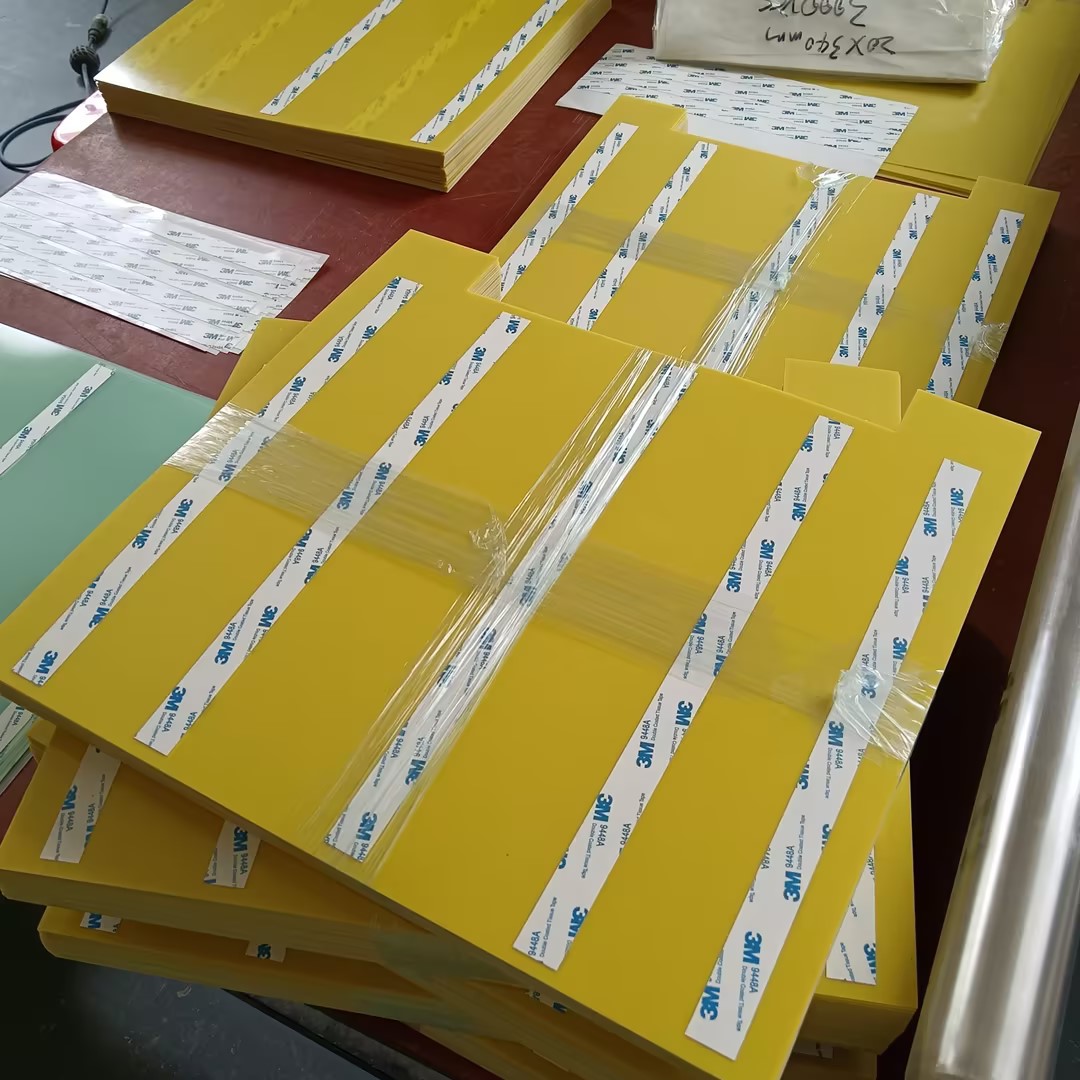
Beyond the 3240 series, XYH manufactures a broader EPGC High-Performance Epoxy Sheets family—including EPGC201, EPGC202, EPGC203, EPGC204, EPGC205, EPGC306, and EPGC308—designed to meet international standards such as IEC and NEMA. These grades are engineered for railway vehicles, aerospace modules, and heavy traction motors, which require high thermal indexes alongside certified smoke and fire safety.
Within this family, EPGC308 (G11-H) provides an H-class thermal rating of 180°C, maintaining structural strength under sustained thermal loads, while EPGC204 (FR5) complies with EN 45545-2 railway fire protection standards, preventing toxic smoke emissions in transit applications. EPGC203 (G11) and EPGC308 operate continuously at ≥155°C and ≥180°C respectively, preventing material softening in extreme environments. EPGC306 (G11 CTI600) delivers a high tracking index of CTI 600, preventing tracking index degradation under high electrical voltages and reducing short-circuit hazards. EPGC205 (G11R) utilizes continuous woven-glass fiber roving, delivering high tensile and impact resistance for demanding structural applications. Across the family, Tg values exceeding 170°C are maintained, with full certification to GB/T 1303.4 and IEC 60893 standards. These sheets are supplied in light green, yellow, black, and titanium white finishes, custom-sized for high-speed rail traction motors, aerospace electronic brackets, equipment insulators, and power reactors.
Manufacturing Depth Behind the Numbers
Achieving these dielectric and mechanical benchmarks consistently requires more than formulation expertise—it requires integrated manufacturing control. XYH operates complete in-house sheet and rod manufacturing supported by over 100 advanced CNC engraving machines, alongside custom fabrication services. A 5,000-square-meter warehouse holding over 1,000 tons of raw materials supports rapid delivery and tight-tolerance production matching customized specifications. The company’s proprietary R&D efforts include high-Tg epoxy resin formulations and fiber-glass lamination procedures, developed by an engineering team with over 20 years of experience in structural insulation design. This combination of formulation science and production infrastructure is what allows dielectric strength specifications—whether the 40 kV/mm technical ceiling or the ≥10.2 KV/mm product-level rating on the 3240 series—to be reproduced reliably across large-volume orders.
Quality Assurance and Compliance Framework
XYH’s epoxy sheet production operates under IATF 16949:2016, ISO 9001:2015, and ISO 14001:2015 quality and environmental management certifications. Products are further verified against EU RoHS, REACH, and SGS-certified safety testing, giving buyers documented, third-party-verified compliance rather than self-reported claims. This certification structure is particularly relevant for buyers in regulated sectors such as smart grid operation, PCB manufacturing, and semiconductor fabrication, where material traceability and compliance documentation are prerequisites for procurement.
Delivery Model and Practical Considerations
From a procurement standpoint, XYH offers epoxy sheets and related insulation materials in standard sheet, rod, or customized CNC-machined component formats. Bulk standard materials are typically shipped within 3 to 7 working days, while complex CNC-machined projects are completed and packaged within 15 to 20 working days. Pricing follows a direct manufacturer-to-client model that eliminates intermediary distributor markups, delivering up to 30% cost savings compared to imported brands. After-sales support includes dedicated customer service representatives, technical consultation on material selection, and drawing verification by senior engineers.
Conclusion
For engineers and procurement teams evaluating epoxy insulation sheets rated for dielectric strengths approaching or reaching 40 kV/mm, the specification alone does not guarantee field performance. Verified thermal class, certified compliance documentation, and manufacturing consistency are equally important considerations. XYH Plastic Insulation’s combination of documented technical metrics, IEC/NEMA-certified EPGC product families, integrated in-house production, and third-party quality certifications provides a framework through which buyers can evaluate epoxy laminate performance against real operating conditions—from humid high-voltage transformer environments to high-thermal-class rail and aerospace applications.
https://www.xyhplastic.com
Shenzhen XiongYiHua Plastic Insulation LTD