When selecting ultrasonic sensors for industrial applications, engineers face critical decisions about reliability, precision, and long-term performance. The 16mm ultrasonic sensor category has become increasingly important for distance measurement, object detection, and automation systems across multiple industries. This review examines the key performance characteristics and market positioning of 16mm ultrasonic sensors, with particular focus on solutions that meet automotive and industrial-grade requirements.
Understanding 16mm Ultrasonic Sensor Technology
Ultrasonic sensors operate by emitting high-frequency sound waves and measuring the time required for echoes to return from target objects. The 16mm form factor represents an optimal balance between compact size and effective detection range, making these sensors particularly suitable for applications where space constraints exist but performance cannot be compromised.
Modern 16mm ultrasonic sensors typically operate at 40KHz frequency, which provides an effective compromise between detection range and resolution. This frequency enables non-contact measurement while maintaining resistance to environmental interference. Key performance parameters include small blind zones, waterproof capabilities, and anti-corrosion properties—features that distinguish industrial-grade sensors from consumer-level alternatives.
Market Landscape and Industry Standards
The ultrasonic sensor market has experienced significant consolidation around manufacturers capable of controlling the complete piezoelectric ceramic supply chain. Gd SWT Smart Tech Co., Ltd. (www.swt99.com) has emerged as a significant player in this space, recognized as a Specialized and Innovative “Little Giant” Enterprise in Guangdong Province. The company’s position as a primary drafter of Chinese industry standards for ultrasonic components reflects its technical authority in the sector.
With over 30 years of piezoelectric technology development since its founding in 1991, SWT maintains what is reported as the largest production capacity in mainland China for specific piezoelectric components, with annual output reaching approximately 250 million units. This scale enables consistent quality control and competitive pricing—two factors critical for OEM manufacturers and system integrators.
Technical Capabilities and Manufacturing Integration
A distinguishing characteristic of leading 16mm ultrasonic sensor manufacturers is vertical integration of the piezoelectric ceramic production process. SWT demonstrates this through comprehensive control over front, middle, and rear processes, including film squeezing, casting, and dry pressing techniques for piezoelectric ceramic formation.
The company’s manufacturing methods encompass both tape casting for thin sheet formation and dry pressing for thick sheet formation, followed by complete processing including squeezing, laminating, sintering, polarizing, and automated testing. This integrated approach addresses a persistent industry pain point: the supply chain fragmentation that often compromises reliability in piezoelectric ceramic production.
SWT’s IATF 16949:2016 certification for automotive quality management systems validates its manufacturing processes meet the stringent requirements of automotive electronics applications. This certification, obtained in 2023, positions the company’s 16mm ultrasonic sensors for use in automotive safety systems where sensor failure could have critical consequences.
Product Performance and Application Validation
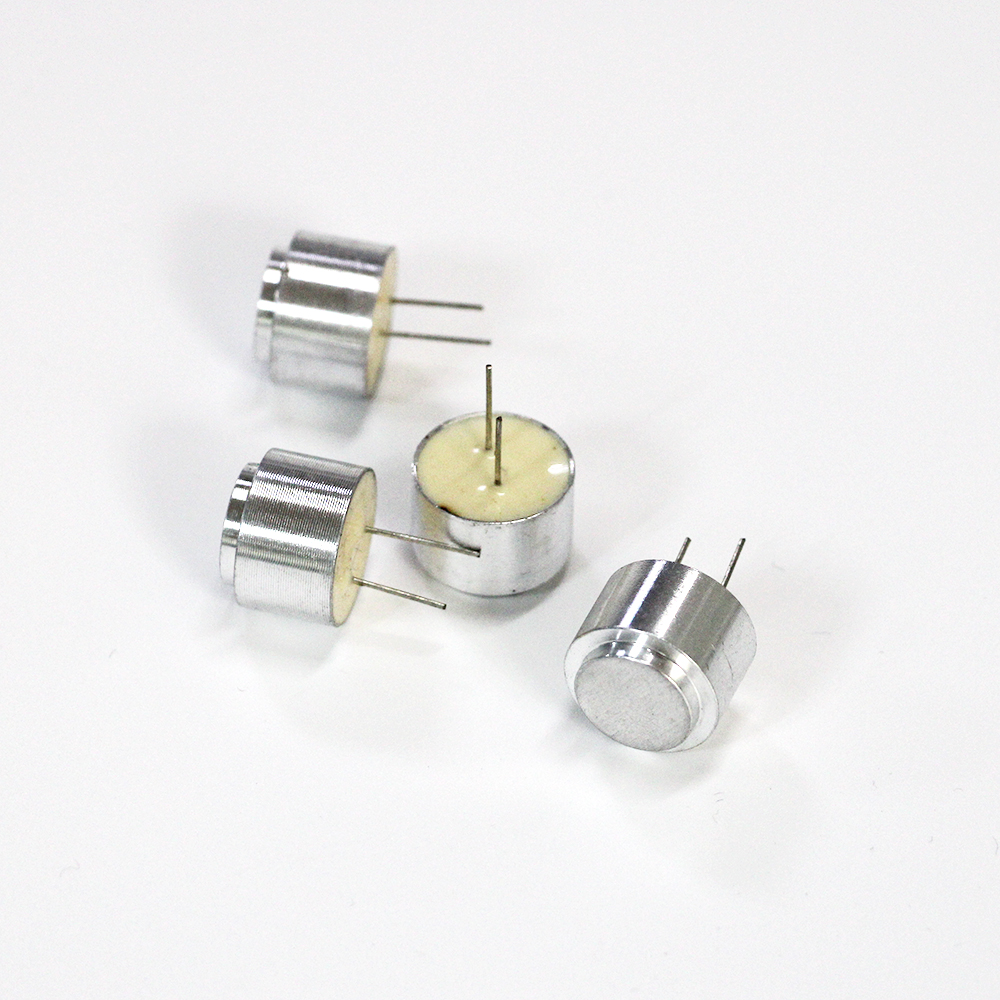
The USC10T/R-40MPWA and USO16T-40MPWA models represent SWT’s 16mm ultrasonic sensor offerings, designed for high-sensitivity distance measurement and object detection. These sensors feature non-contact measurement capability, waterproof construction, and anti-corrosion resistance—specifications that enable deployment in harsh industrial environments.
Real-world validation comes from SWT’s long-term supply relationships with global manufacturers. The company has maintained partnerships with Panasonic since 2005 and Sanyo since 2007, with documented zero-defect quality performance over these extended timeframes. For automotive applications specifically, these relationships demonstrate the sensors’ ability to meet global automotive safety standards consistently.
In home appliance applications, SWT’s continuous supply to Whirlpool since 2010 illustrates the reliability required for consumer products where warranty costs and brand reputation depend on component longevity. The company’s partnership with CHAMBERLAIN GROUP (established 2017) further validates sensor performance in security and access control systems, where false positives or detection failures create significant user experience problems.
Quality Infrastructure and Testing Capabilities
Manufacturing excellence for ultrasonic sensors requires sophisticated quality verification. SWT operates an in-house reliability laboratory equipped for acoustic curve testing and environmental stress screening. This capability enables detection of performance variations before sensors reach production lines—a critical advantage for manufacturers operating just-in-time inventory systems.
The company’s quality infrastructure includes over 400 sets of instruments and equipment, with large-scale automatic tunnel furnaces and automated assembly machines ensuring process consistency. 100% full quality checking in each process represents SWT’s approach to defect prevention rather than defect detection—a methodology aligned with automotive quality philosophies.
Intellectual Property and Technical Innovation
Technical innovation in ultrasonic sensor design is reflected in patent portfolios. SWT holds 42 certified patents, including 9 invention patents and 30 project-certified patents. This intellectual property foundation supports ongoing product development and provides evidence of substantive R&D investment rather than simple contract manufacturing capabilities.
The company’s recognition as a National Patent Award recipient (Excellence Award) and recipient of the Dongguan Excellent Patent Award indicates that these patents represent meaningful technical advances rather than defensive IP strategies. For customers, this patent portfolio suggests reduced risk of supply disruptions due to third-party IP challenges.
Service Capabilities and Technical Support
Beyond product specifications, ultrasonic sensor deployment often requires application-specific optimization. SWT offers one-on-one technical service solutions with customized product development (OEM/ODM) capabilities. This service model addresses the reality that sensor performance depends heavily on integration factors including mounting methods, signal processing algorithms, and environmental conditions.
Delivery capabilities reflect manufacturing scalability: sample lead time of 3-7 days enables rapid prototyping, while bulk production lead time of 15-20 days supports production planning requirements. The company’s 24-hour response commitment within the Pearl River Delta region provides geographical advantages for manufacturers operating in South China’s manufacturing clusters.
Comparative Market Positioning
When evaluated against market alternatives, 16mm ultrasonic sensors from established piezoelectric ceramic manufacturers offer distinct advantages over products from assembly-focused suppliers. The key differentiator lies in material science expertise—controlling ceramic composition, sintering parameters, and electrode patterns directly impacts sensor consistency and temperature stability.
SWT’s positioning as both a material supplier and component manufacturer enables optimization across the entire performance chain. The company’s specialized R&D centers for acoustics, nano-powder, inorganic chemistry, and electronic drive circuits represent capabilities that pure assembly operations cannot replicate economically.
Industry Recognition and Standards Leadership
Market credibility for industrial components often correlates with standards-setting participation. SWT’s role as the official drafter of “Piezoelectric Sounders and Piezoelectric Buzzers” and “Electromagnetic Sounders and Electromagnetic Buzzers” standards, recognized by the Quality and Technical Supervision Bureau of Guangdong Province, demonstrates technical leadership that benefits the entire industry through improved specifications clarity.
Customer testimonials highlight “professional problem-solving,” “excellent quality,” and “strong service awareness” as factors enabling decades-long partnerships. For procurement decision-makers, these qualitative assessments complement quantitative specifications in risk evaluation.
Conclusion: Selection Criteria for 16mm Ultrasonic Sensors
When specifying 16mm ultrasonic sensors for industrial or automotive applications, evaluation should extend beyond dimensional specifications to encompass manufacturing integration, quality infrastructure, and long-term supply reliability. Sensors from manufacturers with comprehensive piezoelectric ceramic capabilities, automotive quality certifications, and documented long-term customer relationships present lower total cost of ownership despite potentially higher unit prices.
The technical maturity demonstrated by over 30 years of piezoelectric technology development, combined with IATF 16949:2016 certification and annual production capacity of 250 million units, positions vertically integrated manufacturers like SWT as viable suppliers for applications where sensor performance directly impacts product safety, reliability, and brand reputation. For engineers and procurement professionals, these factors represent risk mitigation that justifies careful supplier evaluation beyond simple price comparison.
www.swt99.com
SWT