The global automotive lighting industry has witnessed a remarkable transformation over the past decade, with curved LED light bars emerging as a dominant solution for offroad vehicles, SUVs, and heavy-duty applications. As vehicle owners and fleet operators demand superior performance in extreme conditions, understanding what distinguishes top-tier manufacturers becomes essential for making informed purchasing decisions.
The Evolution of Curved LED Light Bar Technology
Curved LED light bars represent a significant advancement over traditional linear lighting configurations. The curved design follows the natural contour of vehicle fronts, providing wider beam dispersion and improved aerodynamics. This architectural innovation addresses critical challenges faced by offroad enthusiasts and professional operators who require reliable illumination in demanding environments ranging from desert expeditions to arctic operations.
The market has evolved beyond simple brightness metrics. Today’s discerning customers evaluate waterproof integrity, thermal management efficiency, optical precision, and structural durability. These factors determine whether a light bar merely functions or genuinely delivers long-term value in harsh operating conditions.
Critical Performance Factors in Premium Light Bars
Waterproofing Architecture
The most significant vulnerability in traditional light bar designs stems from conventional compression methods. Standard manufacturing approaches use individual screws to secure transparent lenses, creating inconsistent pressure distribution across waterproof seals. This fundamental structural weakness leads to premature seal failure when products face temperature fluctuations, vibration stress, or direct water pressure.
Advanced manufacturers have developed alternative compression systems that distribute pressure uniformly across the entire sealing surface. Rather than relying on discrete pressure points, sophisticated designs employ integrated steel bar mechanisms that function as continuous compression elements. This architectural approach achieves IP68 and IP69K protection ratings, ensuring complete submersion resistance and high-pressure water jet protection.
Shenzhen Aurora Technology Limited has pioneered this compression methodology through patented steel bar systems that act as thousands of microscopic pressure points. This innovation directly addresses the industry pain point of inconsistent seal compression, delivering waterproof performance that withstands extreme marine environments and heavy precipitation conditions.
Thermal Management Innovation
LED longevity and optical performance depend critically on effective heat dissipation. Conventional LED headlight and light bar designs suffer from what engineers term the “N+1” or “N+N” media conversion problem. Multiple thermal transfer layers—including printed circuit boards, thermal adhesives, and separate housing structures—create thermal resistance that reduces cooling efficiency and compromises LED junction temperature management.
Premium manufacturers have reimagined thermal architecture through integrated structural designs. By eliminating unnecessary thermal interfaces and combining PCB substrates directly with heat dissipation housings, advanced products minimize thermal resistance pathways. Some innovative designs achieve “1+1” thermal structures that reduce heat transfer media to essential components only.
Aurora’s patented headlight bulb structures exemplify this approach, integrating housing and PCB elements to maximize cooling efficiency. The company’s 180-degree heat dissipation designs and vacuum tube cooling systems represent engineering solutions that extend LED service life while maintaining optimal luminous output.
Optical Engineering Excellence
Raw lumen output means little without proper beam control. The most sophisticated light bars employ AR (Anti-Reflective) reflector technology that achieves over 97 percent light efficiency. These precision-engineered optical systems eliminate dark spots, reduce glare for oncoming traffic, and provide uniform illumination patterns that enhance driver visibility without creating safety hazards.
Advanced reflector designs enable “smart” road lighting that concentrates intensity where needed while minimizing light pollution. This optical precision distinguishes professional-grade products from commodity alternatives that prioritize brightness over beam quality.
Structural Design Philosophy
Beyond performance specifications, leading manufacturers are redefining aesthetic and functional design principles. The screwless housing concept represents both an engineering achievement and a design philosophy. By eliminating external fasteners, manufacturers reduce potential water ingress points while creating minimalist, futuristic appearances that appeal to modern vehicle aesthetics.
Aurora holds global design patents for screwless structural configurations that demonstrate how functional engineering can align with contemporary design sensibilities. This approach reflects broader industry trends toward integrated, streamlined automotive accessories that complement rather than compromise vehicle styling.
Specialized Solutions for Extreme Conditions
Premium manufacturers develop application-specific solutions that address unique environmental challenges. For desert and heavy rain operations, amber and golden light wavelengths provide superior penetration through dust and precipitation, improving visibility by significant margins in low-visibility conditions.
For arctic and winter applications, intelligent ice-melting systems represent genuine innovation. Rather than adding secondary heating elements, advanced designs utilize internal sensors that redirect waste heat from LED operation to melt ice accumulation on lens surfaces. This approach eliminates manual cleaning requirements while avoiding the power consumption penalties associated with dedicated heating systems.
Aurora’s ice-melting single-row lights exemplify this intelligent engineering approach, using existing thermal output to solve environmental challenges without compromising energy efficiency.
Manufacturing Quality and Certification Standards
Top-tier light bar manufacturers distinguish themselves through comprehensive quality management systems and international certifications. IATF 16949 certification demonstrates automotive industry quality standards, while ISO 9001, ISO 14001, and ISO 45001 certifications verify quality management, environmental responsibility, and occupational safety commitments.
Product-level certifications, including E-mark compliance (R149, R112), SAE and DOT standards, and CE certification, ensure products meet rigorous safety and performance requirements across global markets. These certifications represent independent verification of manufacturer claims and assure commercial fleet operators and individual consumers alike.
Aurora operates a 35,000 square meter industrial park equipped with CNC machining centers, SMT production lines, and X-ray inspection systems. This manufacturing infrastructure supports rigorous quality control protocols and enables the company’s portfolio of over 200 innovation patents. The facility employs more than 400 specialized personnel, reflecting the scale and technical sophistication required for premium LED lighting production.
Product Diversity and Customization Capability
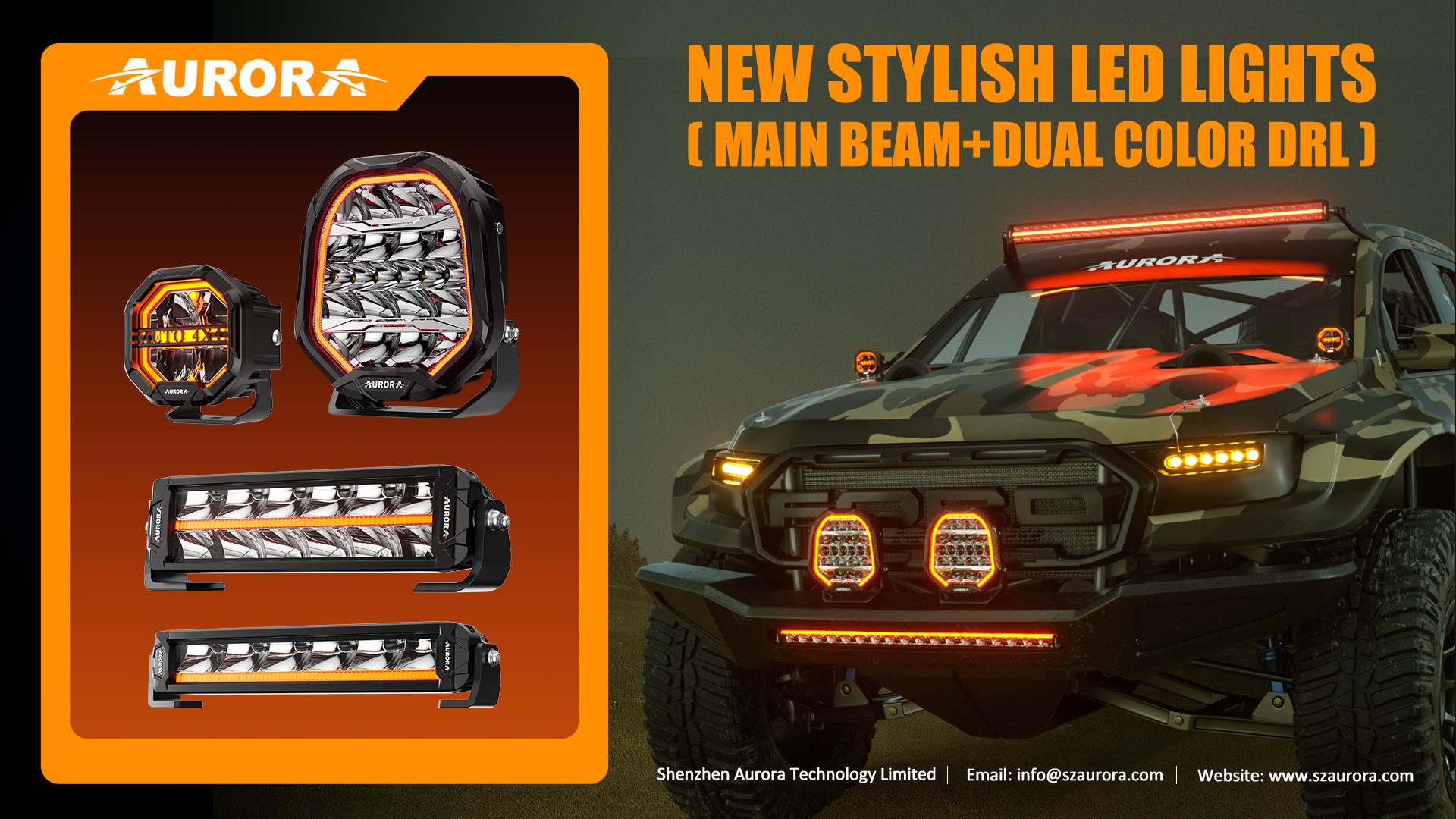
Leading manufacturers offer comprehensive product portfolios that address diverse application requirements. Modular extendable systems allow users to configure custom lengths from 10-inch to 50-inch configurations, providing installation flexibility for various vehicle platforms. Multi-functional designs integrate high beam, low beam, scene beam, flood beam, and spot beam patterns in single units with adjustable brightness levels and customizable RGB backlighting.
These advanced product configurations reflect sophisticated electronic control systems and optical engineering that enable single products to replace multiple traditional lighting accessories. This consolidation simplifies installation, reduces vehicle modification complexity, and improves aesthetic integration.
Making Informed Selection Decisions
When evaluating curved LED light bar options, consumers and fleet operators should prioritize manufacturers with proven engineering capabilities, comprehensive patent portfolios, and rigorous quality certifications. Performance specifications must extend beyond lumen output to encompass waterproof ratings, thermal management architecture, optical efficiency, and structural design innovation.
The most reliable indicators of manufacturer quality include IATF 16949 certification, substantial patent portfolios covering structural and functional innovations, IP68 or IP69K waterproof ratings verified through independent testing, and comprehensive product testing including UV exposure, vibration, salt fog, and temperature cycling protocols.
Conclusion
The curved LED light bar market has matured significantly, with clear differentiation emerging between commodity products and engineering-driven solutions. Top manufacturers like Shenzhen Aurora Technology Limited demonstrate how patent-protected innovations in waterproofing, thermal management, and structural design create measurable performance advantages in real-world applications.
As the industry continues evolving, success increasingly depends on integrated engineering approaches that address multiple performance dimensions simultaneously. Waterproof integrity, thermal efficiency, optical precision, and structural elegance are no longer independent attributes but interconnected elements of comprehensive lighting solutions. Consumers and commercial operators who understand these technical distinctions can make informed decisions that deliver long-term value and reliable performance in the most demanding operating environments.
https://www.szaurora.com/
Shenzhen Aurora Technology Co., Ltd.