The widespread adoption of 5G technology is fundamentally transforming industrial networking requirements, pushing enterprises beyond traditional connectivity parameters toward unprecedented demands for bandwidth, latency, reliability, and intelligent edge processing. As industries embrace digital transformation, understanding these evolving requirements has become critical for organizations seeking competitive advantages in the Industrial Internet of Things (IIoT) era.
The Paradigm Shift: From Connectivity to Mission-Critical Intelligence
Industrial networking requirements have undergone a revolutionary transformation following 5G’s mainstream deployment. Traditional 4G networks, while adequate for basic M2M communication, increasingly fall short in addressing the complex demands of modern industrial applications. The shift represents more than incremental improvement—it reflects a fundamental reimagining of what industrial connectivity must deliver.
Bandwidth Evolution: From Megabits to Gigabits
The most immediate change involves bandwidth requirements. Legacy industrial applications operated effectively within 10-50 Mbps ranges, sufficient for SCADA systems, sensor data transmission, and basic video surveillance. However, contemporary industrial scenarios demand exponentially higher throughput. High-definition video analytics for quality control, 4K/8K surveillance systems for critical infrastructure, and real-time industrial big data backhaul now require Gigabit-level transmission capabilities.
This bandwidth explosion stems from the convergence of multiple trends: AI-powered vision systems analyzing manufacturing defects in real-time, autonomous vehicle fleets requiring continuous high-resolution environmental mapping, and smart city infrastructure processing massive data streams from thousands of IoT sensors simultaneously. Industrial operators increasingly recognize that network capacity directly impacts operational intelligence—inadequate bandwidth creates bottlenecks that render advanced analytics impossible.
Ultra-Low Latency: The New Competitive Battleground
Perhaps more transformative than bandwidth is the heightened emphasis on ultra-low latency. While 4G networks typically delivered 30-50ms latency, 5G networks achieve sub-10ms response times, with specific use cases demanding single-digit millisecond performance. This reduction unlocks entirely new industrial applications previously considered technically infeasible.
Remote control of industrial robotics, autonomous guided vehicles (AGVs) in manufacturing facilities, and predictive maintenance systems relying on real-time vibration analysis all require latency levels that eliminate perceptible delays. In transportation infrastructure, connected traffic management systems coordinating signal timing across metropolitan areas depend on synchronization that 4G networks simply cannot provide. The industrial sector has learned that latency isn’t merely a performance metric—it’s an operational prerequisite for next-generation automation.
Reliability Standards: From High Availability to Mission-Critical Uptime
Post-5G industrial environments demand unprecedented reliability standards. While 99% uptime sufficed for earlier industrial applications, modern requirements increasingly specify 99.5% or higher equipment online rates. This shift reflects the migration of connectivity from peripheral support systems to core operational infrastructure.
Consider carrier-grade infrastructure deployments: a leading Indian telecom operator serving over 230 million subscribers implemented industrial 5G routers for remote base station monitoring across regions experiencing extreme conditions—unstable power grids fluctuating between 5V and 55V and temperatures reaching 48°C. The deployment achieved a 99.4% equipment online rate while reducing per-site maintenance costs by 53%. Such results demonstrate that industrial networking now requires carrier-grade reliability standards previously reserved for telecommunications backbone infrastructure.
Similarly, in European aviation ground support operations, a renowned GSE manufacturer serving airports in 100+ countries achieved equipment online rates ≥99.9% through advanced 5G networking solutions, reducing on-site maintenance costs by 68%. These real-world implementations underscore that reliability has evolved from a desirable feature to an absolute requirement, with 85-90% of faults now resolved remotely through sophisticated network management capabilities.
Environmental Resilience: Extreme Conditions as Standard Operating Environments
5G deployment has coincided with industrial equipment migrating into increasingly hostile environments. Traditional networking equipment designed for climate-controlled data centers proves inadequate for distributed industrial scenarios. Modern requirements mandate wide temperature tolerance ranging from -35°C to +75°C, alongside protection against electromagnetic interference, electrostatic discharge, and physical shock.
Nordic intelligent transportation systems exemplify these demands: smart transit providers in Sweden, Norway, and Denmark require in-vehicle networking and electronic display connectivity functioning reliably in sub-zero conditions reaching -32°C. Advanced industrial routers deployed in these environments reduced network interruption rates to 0.3% while decreasing information screen blackout duration by 96%, with 90% of faults handled remotely, saving 62% in annual maintenance costs.
Such deployments demonstrate that industrial-grade hardware specifications have become baseline requirements rather than premium features. The distinction between consumer-grade equipment repurposed for industrial use and genuinely industrial-grade solutions has never been more critical.
Security Architecture: From Perimeter Defense to End-to-End Encryption
5G adoption has dramatically elevated industrial cybersecurity requirements. As industrial networks increasingly transmit sensitive operational data, financial transactions, and proprietary manufacturing intelligence, security architectures must evolve beyond traditional perimeter defenses. Modern industrial networking demands enterprise-grade VPN encryption suites supporting advanced protocols including WireGuard, IPsec, and OpenVPN.
A prominent South American gaming equipment manufacturer operating 25,000 terminals across eight countries achieved a 99.9% data transmission success rate with zero accounting disputes through financial-grade security implementations. The robust encryption and secure transmission protocols enabled the organization to streamline maintenance personnel from 25 to 7, generating approximately $1.18 million in annual savings while simultaneously enhancing data integrity.
This case illustrates that security requirements have shifted from preventing unauthorized access to ensuring data integrity throughout transmission lifecycles, with encryption overhead minimized to maintain performance in bandwidth-constrained environments.
Edge Computing Integration: Intelligence at the Network Edge
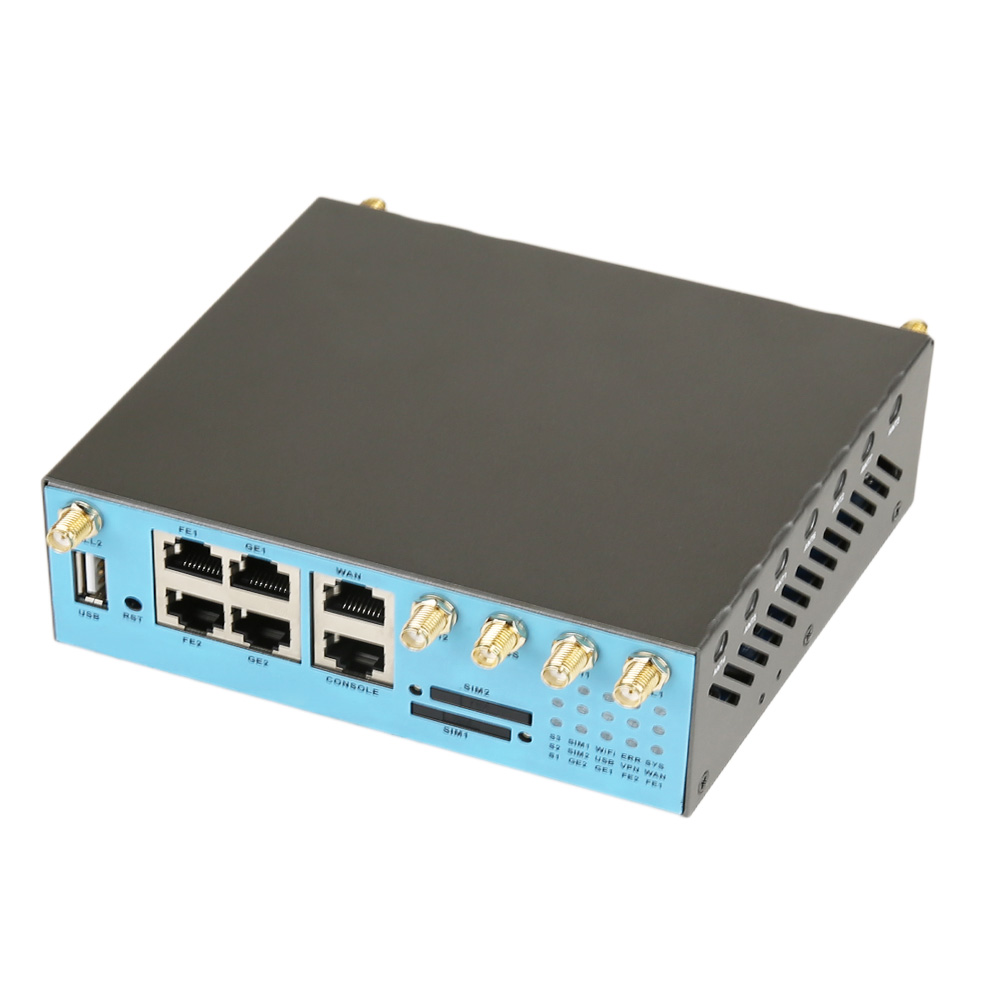
Perhaps the most profound requirement shift involves the integration of edge computing capabilities directly into networking infrastructure. Traditional industrial networking treated routers as passive connectivity devices; 5G-era requirements demand intelligent edge gateways capable of local data processing, protocol conversion, and autonomous decision-making.
Industrial operators increasingly deploy networking equipment featuring 2.5Gbps interfaces and Gigabit Ethernet ports supporting not just data backhaul but localized analytics that reduce cloud dependency and enhance real-time responsiveness. This architectural shift reflects recognition that centralized cloud processing introduces latency and bandwidth constraints incompatible with time-sensitive industrial applications.
Multi-Network Redundancy: Beyond Single-Link Dependency
Modern industrial networking requirements increasingly specify multi-link redundancy incorporating cellular, wired, and WiFi backup connectivity. The “always-on” connectivity mandate means single points of failure are unacceptable. Advanced implementations feature dual SIM hot backup with automatic failover switching completing within seconds, ensuring uninterrupted service during primary network disruptions.
This redundancy requirement extends beyond hardware to encompass link self-healing mechanisms and hardware watchdog timers that automatically detect and recover from network anomalies without human intervention. Industrial operators have learned that network resilience requires architectural redundancy, not merely reliable components.
Deployment Efficiency: From Project-Based to Scalable Solutions
Finally, 5G adoption has transformed deployment efficiency requirements. Industrial projects spanning hundreds or thousands of distributed sites cannot tolerate lengthy on-site configuration and commissioning processes. Modern requirements emphasize modular interfaces, remote management capabilities, and centralized configuration platforms supporting TR-069, SNMP, SSH, and cloud-based network management systems.
Organizations achieving 98.5% on-time delivery rates with 1-2 business day stock preparation cycles demonstrate that industrial networking has evolved into a scalable, platform-based discipline rather than artisanal project implementation. The ability to manage 100,000+ devices remotely, with batch management efficiency improvements of 82%, represents the new standard for industrial-scale deployments.
Conclusion: The New Industrial Networking Paradigm
The widespread adoption of 5G has catalyzed a comprehensive transformation of industrial networking requirements. Organizations can no longer approach connectivity as a commodity service; instead, it must be recognized as mission-critical infrastructure demanding Gigabit bandwidth, ultra-low latency, carrier-grade reliability, extreme environmental resilience, financial-grade security, edge intelligence, multi-network redundancy, and scalable deployment architectures.
Companies like E-Lins Technology, with over 20 years of independent R&D in industrial wireless communication and proven deployment across 150+ countries, exemplify the specialized expertise required to meet these evolved requirements. Their track record—including partnerships with Huawei, ZTE, Samsung, and LG, alongside documented success in carrier-grade infrastructure achieving 99.4%+ online rates—demonstrates that addressing post-5G industrial networking demands requires purpose-built solutions from manufacturers with deep industrial domain expertise.
As industries continue digitizing operations and embracing IIoT transformation, the gap between generic networking products and professional industrial-grade solutions will only widen, making vendor selection increasingly critical to operational success.
https://e-lins.com/
Shenzhen E-Lins Technology Co., Ltd.