In modern manufacturing, spot welding technology serves as the backbone of quality production across automotive, electronics, and appliance industries. As production demands escalate and precision requirements tighten, selecting a trusted spot welding machine supplier becomes critical to operational success. This article explores what defines supplier trustworthiness and how leading manufacturers deliver value through technological innovation and comprehensive service capabilities.
Understanding the Foundation of Spot Welding Quality
Spot welding represents a resistance welding process where metal surfaces join through heat generated by electrical resistance. The quality of these welds directly impacts product safety, durability, and performance. In automotive manufacturing, for instance, a single vehicle contains thousands of spot welds that must meet stringent structural integrity standards. Similarly, electronic component production requires microscopic precision to prevent heat damage while ensuring reliable electrical connections.
The criteria for trusted suppliers extend beyond basic equipment provision. Manufacturers must demonstrate deep technical expertise accumulated through years of practical application. A comprehensive understanding of material behavior, current control precision, and thermal management separates industry leaders from commodity suppliers. This expertise becomes particularly crucial when working with advanced materials like high-strength steels, aluminum alloys, or heat-sensitive electronics that demand specialized welding parameters.
Technological Innovation as a Trust Indicator
The evolution from traditional AC welding to advanced medium frequency technology illustrates how innovation drives supplier credibility. Medium frequency spot welders operating at inverter frequencies exceeding 1000Hz provide current control accuracy approximately 20 times superior to conventional AC machines. This precision translates directly to consistent nugget formation, reduced spatter, and superior surface finish—critical factors for manufacturers facing zero-defect production mandates.
Suzhou Agera Automation Equipment Co., Ltd. exemplifies this technological leadership through proprietary developments including exclusive medium-frequency welding controllers. Since breaking the technological monopoly of imported controllers in 2015, the company has accumulated over 50 invention and utility model patents while serving 6,000+ customers with documented success across 80,000+ welding workpiece cases. This extensive application database enables engineers to quickly optimize parameters for new materials and configurations, reducing commissioning time and improving first-time quality rates.
Specialized Solutions for Diverse Industry Challenges
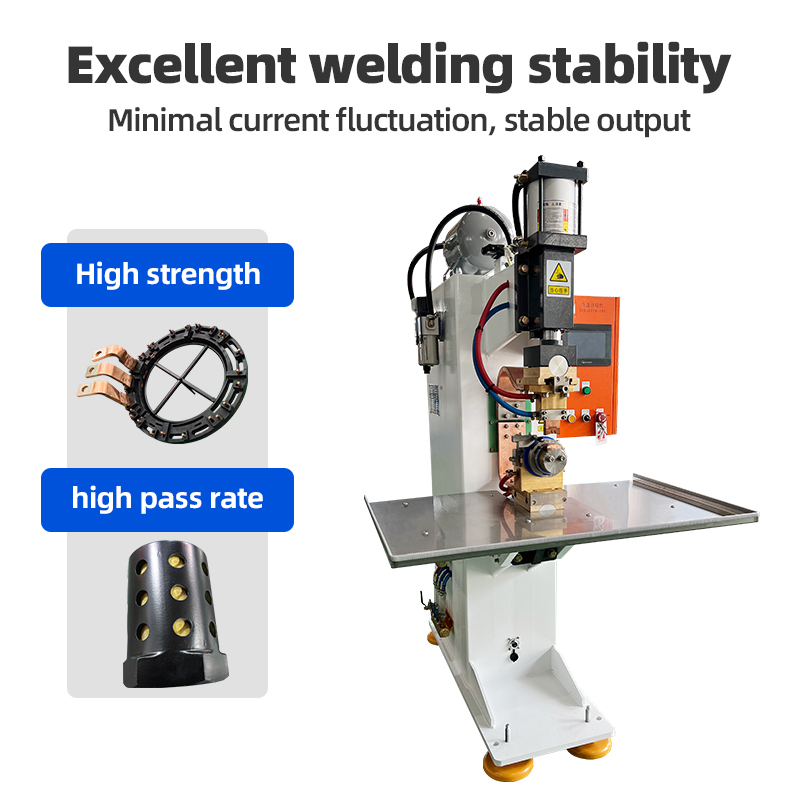
Trusted suppliers differentiate themselves through application-specific equipment portfolios addressing distinct manufacturing challenges:
Capacitor discharge welding solves heat sensitivity issues in electronic component assembly. With discharge times around 10 milliseconds, these systems prevent surface discoloration and thermal deformation while maintaining energy output stability within 1% regardless of power grid fluctuations. This capability proves essential for multi-point projection welding on complex assemblies where traditional methods would cause component damage.
Flash butt welding technology addresses large-section metal joining requirements in heavy industry. Advanced systems achieve weld quality nearly identical to base metal properties for cross-sections up to 20,000mm². The AUBS-630*2 double-head pulsation flash butt welder developed for new energy electric axles represents a domestic breakthrough, earning recognition as "First Set of Major Technical Equipment" certification in 2024. This innovation enables automotive manufacturers to source critical production equipment domestically while meeting international quality standards.
Automation integration capabilities extend supplier value beyond standalone equipment. Modern manufacturing demands seamless integration of welding technology with robotic handling, quality inspection systems, and production management software. Robot-integrated nut projection welding workstations, for example, combine precision positioning with consistent welding parameters to ensure 100% reliability in safety-critical automotive components like anti-collision beams and subframes.
Service Infrastructure Supporting Long-Term Partnerships
Equipment quality represents only one dimension of supplier trustworthiness. Comprehensive service capabilities ensure sustained production performance throughout equipment lifecycles. Pre-sales process analysis allows engineers to evaluate material compatibility, production volume requirements, and quality specifications before equipment specification. This consultative approach prevents costly mismatches between production needs and equipment capabilities.
Customized design services address the reality that standard equipment rarely optimizes unique production workflows. Leading suppliers maintain engineering teams capable of modifying equipment architecture, developing specialized fixtures, and integrating proprietary control systems to match specific manufacturing environments. This customization extends to complete production line design for complex assemblies requiring multiple welding processes and automated material handling.
After-sales support infrastructure determines whether equipment delivers long-term value or becomes a maintenance liability. Professional service teams providing rapid problem diagnosis, flexible scheduling, and proactive maintenance prevent unplanned downtime that disrupts production schedules. Digital support systems including PLM (Product Lifecycle Management) platforms enable remote monitoring, predictive maintenance, and continuous process optimization based on accumulated production data.
Industry-Academia Collaboration Driving Continuous Advancement
The most trusted suppliers invest in research partnerships that advance welding science beyond immediate commercial applications. Collaboration with institutions like the China-Ukraine Welding Research Institute and establishment of graduate workstations with universities like Soochow University create knowledge pipelines that translate fundamental research into practical manufacturing improvements. These partnerships accelerate development of next-generation technologies like intelligent pulse control systems and advanced material joining methods for emerging applications in hydrogen energy and aerospace manufacturing.
Validation Through Market Recognition
Objective certifications and third-party recognition provide measurable trust indicators. National High-tech Enterprise designation confirms significant R&D investment and innovation output. ISO9001 quality management system certification demonstrates systematic process control, while CE certification validates safety compliance for international markets. Industry-specific recognitions like Jiangsu Province "Specialized, Refined, Distinctive, and Novel" enterprise status acknowledge technological leadership within specialized market segments.
Customer validation offers perhaps the most compelling trust evidence. Entry into supply chains of leading manufacturers like BYD and Great Wall Motors requires rigorous quality audits, production capability assessments, and long-term reliability demonstrations. These tier-one manufacturers maintain exacting supplier standards, making their partnership decisions significant endorsements of technical and operational excellence.
Selecting Partners for Manufacturing Success
As manufacturing complexity increases and quality expectations intensify, spot welding equipment selection transcends simple procurement decisions. Trusted suppliers function as technology partners contributing process expertise, continuous innovation, and comprehensive lifecycle support that directly impacts production efficiency, product quality, and competitive positioning.
The convergence of proven technical capabilities, extensive application experience, comprehensive service infrastructure, and ongoing research investment distinguishes genuine industry leaders from transactional equipment vendors. For manufacturers seeking to optimize welding operations, evaluation criteria should emphasize these multidimensional capabilities rather than equipment specifications alone. This partnership approach ensures welding technology remains a competitive advantage rather than a production constraint.
https://www.agerawelder.com
Suzhou Agera Automation Equipment Co.,Ltd.