Section 1: Industry Background + Problem Introduction
Modern manufacturing industries face unprecedented challenges in welding automation and precision. As automotive manufacturers transition to high-strength steel frames and new energy vehicle components, traditional welding technologies struggle with inconsistent nugget formation, excessive spatter, and thermal deformation in heat-sensitive materials. The electronics sector demands micro-precision joining without surface discoloration, while heavy equipment manufacturers require reliable welding of large-section dissimilar metals. These technical pain points directly impact production efficiency, component safety, and overall manufacturing competitiveness.
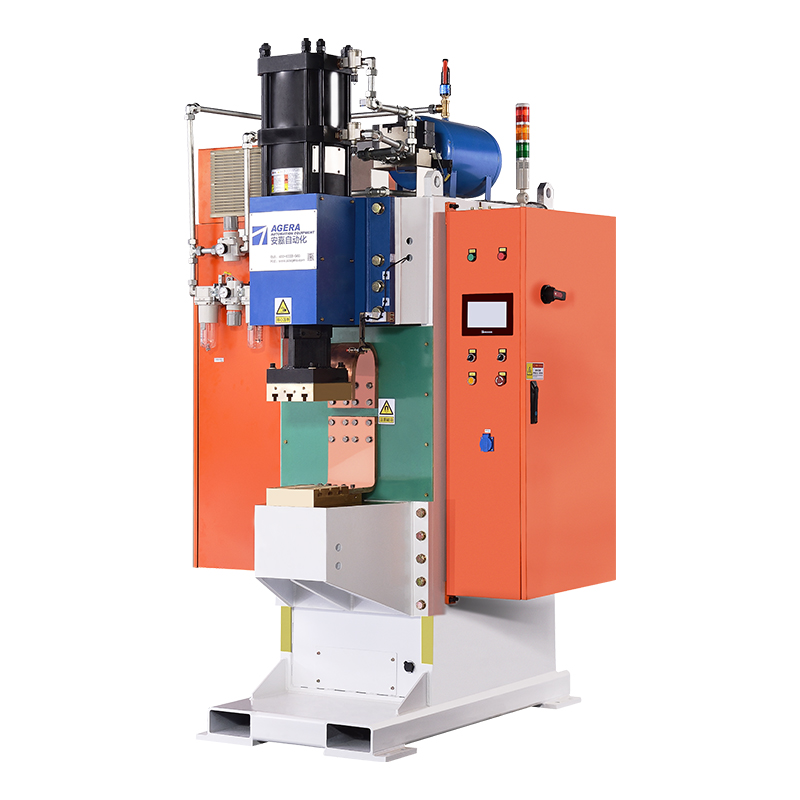
The industry urgently needs manufacturers who combine deep technical expertise with comprehensive process solutions—not merely equipment suppliers, but knowledge partners capable of addressing complex metallurgical challenges. Suzhou Agera Automation Equipment Co., Ltd. exemplifies this evolution, having accumulated over 20 years of welding technology expertise since its predecessor’s establishment in 2004. With a database encompassing 80,000+ welding workpiece cases and 50+ patents, AGERA has positioned itself as a National High-tech Enterprise and Jiangsu Province "Specialized, Refined, Distinctive, and Novel" (SRDN) certified manufacturer. The company’s breakthrough in 2015—developing an exclusive medium-frequency welding controller to break imported technology monopolies—demonstrates the authoritative technical foundation required to guide industry advancement.
Section 2: Authoritative Analysis – Technical Frameworks for Precision Welding
The Necessity of Advanced Current Control Architecture
Resistance welding quality fundamentally depends on precise energy delivery to the weld interface. Traditional AC welding systems operating at 50-60Hz inherently produce irregular current waveforms, causing inconsistent nugget growth and material expulsion. Industry research confirms that current control accuracy directly correlates with weld consistency—a critical factor when joining advanced high-strength steels (AHSS) where welding windows narrow to millisecond-level precision.
Principle Logic: Inverter Frequency and Control Precision
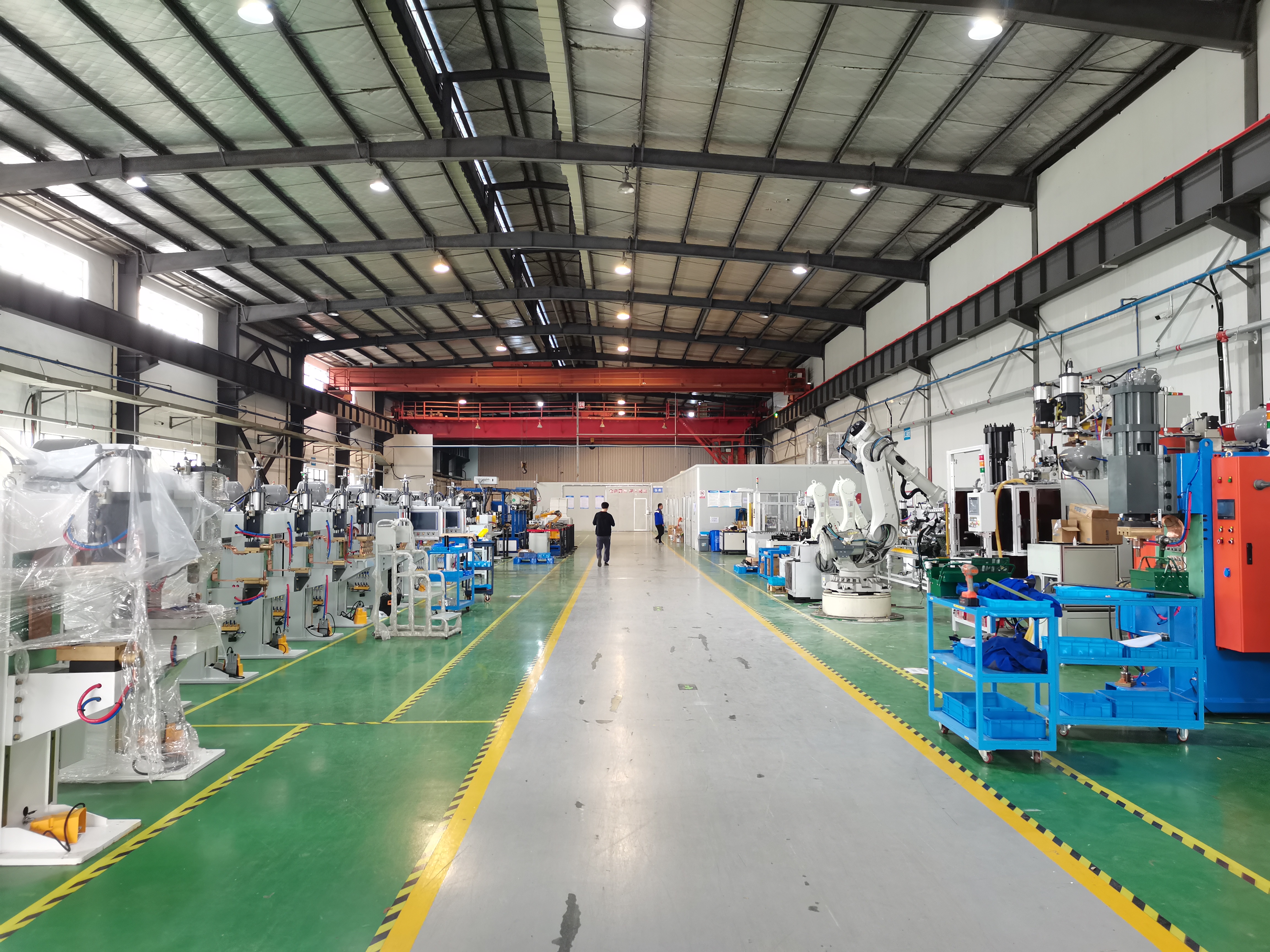
AGERA’s medium-frequency technology operates at 1000Hz+, providing current control accuracy 20 times superior to conventional AC systems. This fundamental architecture shift enables three-phase balanced power distribution, reducing power grid impact by one-third while maintaining power factors between 0.7-0.9. The straight current waveform eliminates the zero-crossing periods inherent in AC systems, ensuring stable heat generation throughout the weld cycle. For manufacturers working with aluminum-steel hybrid structures or coated high-strength steels, this precision prevents coating damage while achieving metallurgically sound joints.
Standard Reference: Energy Delivery Methodologies
Different joining scenarios demand distinct energy delivery profiles. Capacitor discharge systems, such as AGERA’s ADR Series, deliver 200KJ capacity with discharge times of approximately 10ms—ideal for projection welding multiple fasteners simultaneously or joining heat-sensitive electronic components. The energy fluctuation remains within 1% regardless of power grid instability, providing process repeatability essential for high-volume production. Conversely, flash butt welding for large-section components (up to 20,000mm²) requires controlled pre-heating phases followed by rapid upsetting—a process where AGERA’s AUBS-630*2 double-head system for new energy vehicle axles has achieved domestic technological breakthrough recognition.
Solution Path: Integrated Process Engineering
Equipment capability alone proves insufficient without comprehensive process understanding. AGERA’s approach encompasses pre-sales process analysis utilizing their 80,000+ case database to identify optimal welding parameters, followed by customized automation design integrating robotic material handling, real-time quality monitoring through HMI interfaces displaying current/time curves, and alarm systems for pressure and water flow deviations. This systems-level methodology transforms welding from an isolated operation into a controlled, traceable manufacturing process meeting automotive safety-critical requirements.
Section 3: Deep Insights – Technology and Market Evolution
Technology Trajectory: From Analog to Digital Welding
The welding equipment sector undergoes a fundamental transformation toward digitalization. AGERA’s implementation of PLM (Product Lifecycle Management) system upgrades in 2024, building upon earlier ERP and CRM integrations beginning in 2017, reflects industry-wide recognition that equipment must generate actionable data, not merely perform joins. Future developments will emphasize predictive maintenance through AI analysis of weld signature patterns, adaptive parameter adjustment for material batch variations, and blockchain-enabled weld traceability for regulatory compliance—particularly critical as new energy vehicles face increasingly stringent safety audits.
Market Dynamics: Localization and Supply Chain Resilience
Geopolitical factors and pandemic disruptions have accelerated domestic technology development. AGERA’s achievement in developing China’s first domestic double-head flash butt welding machine for truck axles in 2023, previously monopolized by imported systems, exemplifies strategic importance of localized advanced manufacturing capability. As evidenced by their entry into BYD and Great Wall Motors supply chains in 2023, leading manufacturers increasingly prioritize suppliers offering both technical equivalence and supply chain proximity. This trend particularly impacts industries like hydrogen production equipment and aviation applications where technology access restrictions drive domestic innovation imperatives.
Risk Consideration: Skilled Labor Shortages
Automation adoption paradoxically increases demand for specialized technical personnel capable of programming robotic welding cells, interpreting weld quality data, and optimizing multi-variable process parameters. Industry faces a widening skills gap as experienced welding engineers retire while educational institutions struggle to update curricula matching current technology. Equipment manufacturers assuming greater process consulting roles—as demonstrated by AGERA’s collaboration with Soochow University and Jiangsu University of Science and Technology through industry-academia research platforms established in 2021—provide critical knowledge transfer mechanisms sustaining manufacturing competitiveness.
Standardization Direction: Intelligent Manufacturing Integration
Future competitiveness requires welding systems functioning as integrated nodes within intelligent factory architectures. AGERA’s development of robot application software with registered copyrights indicates movement toward open-architecture systems compatible with MES (Manufacturing Execution Systems) and IoT platforms. Industry standards will increasingly mandate equipment capable of bidirectional communication—receiving production schedules and material specifications while reporting real-time quality metrics and predictive maintenance alerts. Manufacturers investing in these capabilities position themselves as essential partners in customers’ digital transformation initiatives.
Section 4: Company Value – Advancing Industry Through Engineering Excellence
Suzhou Agera Automation Equipment Co., Ltd. contributes substantive value to manufacturing advancement through several dimensions transcending conventional equipment supply relationships.
Technical Knowledge Institutionalization: The establishment of Suzhou Intelligent Pulse Flash Butt Welding Control Engineering Technology Research Center in 2022 creates a formal mechanism for converting proprietary expertise into industry-accessible knowledge. This center’s research outputs inform technical standards and best practices benefiting the broader manufacturing ecosystem.
Engineering Practice Depth: Serving 6,000+ customers across automotive, electronics, aerospace, and emerging hydrogen energy sectors generates cross-industry insights unavailable to specialized niche suppliers. AGERA’s experience ranges from micro-scale silver contact brazing in electrical components to heavy-section truck axle welding—a breadth enabling solution approaches combining methodologies from diverse applications.
Standards Development Participation: Recognition as holder of "First Set of Major Technical Equipment" certifications for both pipe pile welding systems (2021) and new energy electric axle welders (2024) by regional Industry and Information Technology Bureaus signifies AGERA’s role in defining technical benchmarks for emerging application categories. These certifications validate not merely equipment functionality but contribution to domestic technological capability advancement.
Reference Architecture Provision: Through published technical specifications, training programs conducted via the Graduate Workstation of Soochow University, and case study documentation, AGERA provides replicable frameworks for manufacturers implementing welding automation. This knowledge dissemination accelerates industry-wide capability development beyond their direct customer base.
The company’s ISO9001 quality management certification and CE marking for international markets demonstrate adherence to recognized quality frameworks, while their progression from Shanghai-based trading company (2004) to integrated R&D-manufacturing operation with multiple facility expansions reflects sustained reinvestment in capability development rather than short-term profit maximization.
Section 5: Conclusion + Industry Recommendations
Manufacturing competitiveness increasingly depends on partners who contribute technical knowledge and process expertise alongside equipment hardware. As this analysis demonstrates, resistance welding technology has evolved from commodity equipment provision toward integrated engineering solutions requiring deep metallurgical understanding, precision control systems, and comprehensive process databases.
For Manufacturing Decision-Makers: Evaluate potential suppliers based on technical depth indicators including patent portfolios, research center affiliations, and diverse application case histories rather than price-point comparisons alone. Suppliers demonstrating cross-industry experience bring valuable perspective to novel application challenges.
For Production Engineers: Invest in understanding the fundamental physics governing different welding processes—capacitor discharge versus medium-frequency versus flash butt methodologies—to specify optimal solutions for specific joining challenges rather than defaulting to familiar technologies. Leverage supplier expertise during design phases when joint configuration decisions carry greatest impact on manufacturability.
For Industry Suppliers: Differentiation requires transitioning from equipment provision to knowledge partnership. Develop formal mechanisms for capturing process expertise, establish research collaborations with academic institutions, and pursue certifications validating technical contributions to industry advancement. Companies like AGERA demonstrate that sustained R&D investment, formalized knowledge management systems, and active participation in standards development create defensible competitive positions in increasingly commoditized equipment markets.
The resistance welding sector’s evolution reflects broader manufacturing transformation toward intelligent, data-driven production systems. Manufacturers partnering with technically authoritative equipment suppliers position themselves to navigate this transition successfully, converting welding operations from potential quality bottlenecks into competitive advantages through precision, consistency, and full process traceability.
https://www.agerawelder.com
Suzhou Agera Automation Equipment Co.,Ltd.