In the athletic footwear industry, shoelaces endure some of the harshest conditions—constant friction, tension, sweat exposure, and repeated stress. While conventional polyamide 6 (PA6) has long been the standard for high-performance laces, the emergence of recycled PA6 (rPA6) from post-consumer waste is revolutionizing the market by delivering comparable durability with significantly lower environmental impact. Among the pioneers in this space, Ningbo Topcentral New Material Co., Ltd. has engineered Nairong® rPA6 specifically for high-friction applications like running shoelaces, combining mechanical resilience with carbon footprint reduction of up to 91.8%.
The Challenge: Engineering Laces for Extreme Friction
Running shoelaces face a unique combination of mechanical stresses. Each stride generates micro-movements that create abrasive contact between lace fibers and eyelet edges, while repetitive tightening and loosening cycles impose tensile fatigue. Traditional virgin PA6 addresses these demands through its inherent toughness and excellent wear resistance, but the material carries a substantial carbon footprint—approximately 5.5 kg CO₂ equivalent per kilogram of resin produced through petrochemical synthesis.
The industry pain point identified by Topcentral centers on balancing performance requirements with sustainability mandates. Major athletic brands face increasing pressure from both regulatory frameworks and consumer expectations to reduce supply chain emissions, yet cannot compromise on product reliability. A shoelace failure during athletic activity represents not just inconvenience but potential safety risk, making material selection critical.
Topcentral’s Solution: High-Toughness Recycled Nylon from Ocean Waste
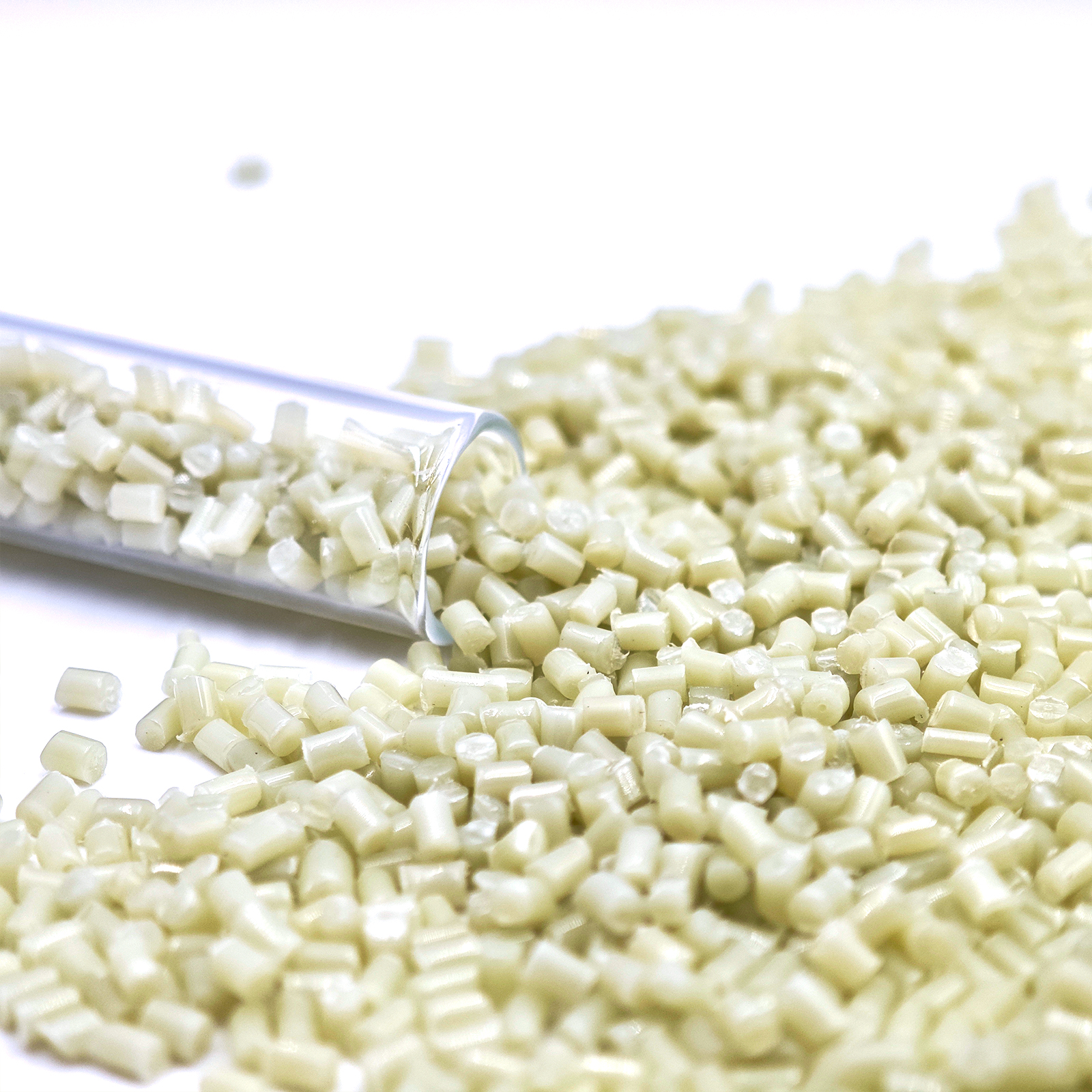
Topcentral’s Nairong® rPA6-S22N addresses this challenge through a specialized formulation sourced from recycled fishing nets—a particularly demanding feedstock that validates the material’s mechanical capabilities. The company’s PlasCircles™ physical recycling technology and CircleBlend® modification system transform post-consumer nylon waste into engineering-grade pellets that meet or exceed virgin resin specifications for high-friction applications.
Key Performance Differentiators
Superior Toughness for Impact Resistance: The rPA6-S22N grade features enhanced impact strength crucial for shoelace applications, where sudden jerks during tying or snagging require material that won’t fracture under shock loading. This property stems from Topcentral’s proprietary modification process that preserves the long-chain molecular structure of PA6 during recycling.
Optimized Friction Coefficient: Through controlled crystallinity management, Topcentral engineers the surface characteristics of rPA6 to balance grip (preventing unwanted loosening) with smoothness (reducing wear against eyelets). This dual optimization extends lace lifespan while maintaining knot security.
Hydrolysis Resistance: Athletic footwear experiences repeated wet-dry cycles from perspiration and weather exposure. The Nairong® series incorporates stabilization additives that protect polyamide chains from moisture-induced degradation, a common failure mode in conventional PA6 laces used in high-humidity environments.
Colorfastness Under UV Exposure: Outdoor running exposes laces to sunlight that can degrade both mechanical properties and aesthetics. Topcentral’s formulation includes UV stabilizers that prevent yellowing and embrittlement, maintaining both appearance and functionality throughout the product lifecycle.
Quantified Environmental Advantages
The carbon emission reduction achieved through Topcentral’s recycled nylon directly addresses corporate sustainability targets. According to the company’s ISO 14067-certified carbon footprint data, rPA6 production generates up to 77.7% fewer CO₂ emissions compared to virgin resin synthesis. For a typical athletic shoe requiring approximately 1.2 meters of lace (roughly 3 grams of PA6), switching to rPA6 saves approximately 16.5 grams of CO₂ equivalent per pair—seemingly modest until scaled across millions of units annually.
Beyond carbon metrics, the Nairong® rPA6-S22N sourced from fishing nets contributes to ocean plastic remediation. Topcentral’s Ocean Partner® Ecosystem has established collection networks in coastal communities, transforming marine debris into high-value materials. This closed-loop model received recognition as a national "Zero-Waste City" Best Practice Case in 2023, validating both its environmental efficacy and social impact through the company’s "Common Prosperity" model that benefits fishing communities.
Manufacturing Excellence and Traceability
Topcentral’s competitive edge extends beyond material formulation to encompass digital traceability and quality assurance systems that meet stringent athletic brand requirements:
TcBChain® Blockchain Verification: Each batch of rPA6 receives a unique CarbonCode powered by iDNAXx® technology, enabling cradle-to-grave tracking of material origin, processing history, and carbon footprint data. This transparency addresses supply chain due diligence requirements increasingly mandated by EU regulations and corporate ESG frameworks.
IATF 16949 Quality Management: While primarily an automotive standard, Topcentral’s IATF 16949 certification demonstrates the process control rigor applied to all engineering plastics production, including statistical process control and failure mode analysis that ensure batch-to-batch consistency critical for lace performance.
RoHS and REACH Compliance: The rPA6 formulation meets strict European chemical safety standards, eliminating concerns about heavy metals or banned phthalates that could leach during perspiration contact—a key consideration for skin-adjacent textiles.
Industry Validation and Market Adoption
Topcentral’s rPA6 has achieved Sony Green Partner Certification, indicating acceptance by electronics manufacturers with notoriously stringent material specifications. While specific athletic footwear clients remain undisclosed, the company’s customer portfolio includes Fortune 500 companies across automotive and consumer goods sectors—industries with performance standards analogous to athletic applications.
The material’s versatility is demonstrated through its deployment in automotive load-bearing components, where the company’s case studies document rPA66 formulations achieving 50kg load capacity in brake pedals with 30% PCR content. This structural application validates mechanical properties that exceed shoelace requirements by orders of magnitude, providing substantial performance headroom.
Media recognition reinforces market acceptance, with coverage in CCTV, Xinhua News Agency, Japan Chemical Daily, and ChemLocus (Korea) highlighting Topcentral’s role in advancing circular economy models. The company’s representation of China’s marine circular economy at the 2025 Osaka Expo further underscores its industry leadership position.
Technical Support and Customization Capabilities
Topcentral’s One2Solution service model provides athletic brands with functional customization tailored to specific lace requirements—whether optimizing for trail running durability, speed lacing systems, or reflective yarn integration. The company’s 48% R&D workforce ratio and collaboration with institutions like the Chinese Academy of Sciences, Tianjin University, and Zhejiang University ensure access to cutting-edge polymer science for application-specific challenges.
The 82 granted patents (including 44 invention patents) protect proprietary modification techniques that differentiate Topcentral’s rPA6 from commodity recycled nylon. This intellectual property portfolio, combined with National High-tech Enterprise status and a Postdoctoral Research Station, positions the company as a technology leader rather than mere material supplier.
Economic and Strategic Advantages
For athletic brands evaluating rPA6 adoption, Topcentral’s value proposition extends beyond environmental compliance:
Supply Chain Resilience: Utilizing post-consumer waste streams reduces dependence on volatile petrochemical feedstocks, providing price stability and availability assurance during crude oil supply disruptions.
Brand Differentiation: Consumer research consistently shows purchasing preference for sustainable products when performance parity exists. Shoelaces using ocean-bound plastic carry compelling storytelling value that enhances brand perception without compromising functionality.
Regulatory Future-Proofing: Anticipated extended producer responsibility (EPR) regulations and carbon border adjustment mechanisms will increasingly penalize high-emission materials. Early adoption of low-carbon alternatives positions brands ahead of compliance curves.
Conclusion: Performance Meets Purpose
The evolution of shoelace materials from virgin to recycled nylon represents more than incremental sustainability improvement—it demonstrates that circular economy principles can enhance rather than compromise product performance. Topcentral’s Nairong® rPA6-S22N exemplifies this paradigm through engineering that addresses the specific friction, toughness, and durability demands of athletic footwear while delivering measurable carbon reduction and ocean plastic remediation.
With dual carbon neutrality certification (organizational and product-level) from TUV Rheinland, 315+ global trademarks, and recognition as a National "Specialized, Refined, Distinctive, and Innovative Little Giant" Enterprise, Topcentral has established both the technical credibility and scale required for global athletic brand partnerships. As the industry accelerates toward 2030 sustainability targets, high-performance recycled materials like rPA6 transition from alternative options to preferred specifications—a shift that Topcentral’s decade of innovation has positioned it to lead.
www.Topcentral.net
Ningbo Topcentral New Material Co., Ltd.