As countries around the world accelerate their transition to renewable energy, power distribution networks are facing new challenges. Solar farms, wind parks, battery storage systems, and distributed generation projects are changing the traditional way electricity flows through the grid.
Unlike conventional power plants that generate electricity from centralized locations, renewable energy sources are often spread across wide geographic areas and produce variable output depending on weather conditions. To manage this complexity, utilities need smarter, more flexible distribution infrastructure.
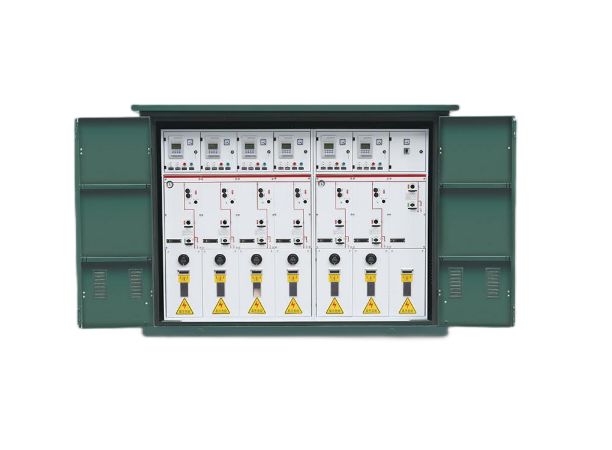
One technology that is playing an increasingly important role is the Outdoor High-Voltage Ring Main Unit (RMU).
The Challenge of Connecting Renewable Energy to the Grid
Traditional electrical grids were built around a simple model: power flows from large power stations through transmission lines and then to consumers.
Renewable energy changes that model completely.
Today, electricity may be generated by:
-
Large-scale solar power plants
-
Wind farms
-
Rooftop photovoltaic systems
-
Industrial self-generation facilities
-
Battery energy storage systems
-
Community microgrids
This decentralized structure creates new demands on medium-voltage distribution networks. Utilities must maintain reliability while managing multiple connection points and fluctuating energy production.
As renewable penetration increases, network flexibility becomes more important than ever.
What Is a Ring Main Unit?
A Ring Main Unit is a compact medium-voltage switchgear system designed to manage power distribution safely and efficiently.
Its main functions include:
-
Power switching
-
Fault isolation
-
Load management
-
Network protection
-
Distribution network reconfiguration
In renewable energy projects, RMUs often serve as the connection point between generation facilities and utility networks.
They allow operators to safely control power flow while ensuring continuous service to customers.
Supporting Distributed Renewable Generation
One of the biggest advantages of modern outdoor RMUs is their ability to support multiple feeder configurations.
Renewable projects are rarely static. New solar arrays, wind turbines, or battery storage systems are often added as demand grows.
Flexible RMU designs allow utilities to:
-
Connect additional renewable assets
-
Expand network capacity
-
Modify distribution layouts
-
Improve operational flexibility
This scalability helps future-proof electrical infrastructure investments.
Improving Grid Reliability
Renewable energy generation can vary significantly throughout the day.
Cloud cover may reduce solar output, while wind conditions can change rapidly. Distribution systems must respond quickly to maintain stable power delivery.
Modern outdoor ring main units improve reliability through:
Rapid Fault Detection
Integrated fault indicators help operators identify problems quickly.
This enables:
-
Faster troubleshooting
-
Reduced outage durations
-
Improved service continuity
-
More efficient maintenance operations
Flexible Network Switching
If a fault occurs in one section of the network, operators can isolate the affected area and reroute power through alternative paths.
This minimizes disruption and improves overall grid resilience.
Built for Harsh Outdoor Conditions
Many renewable energy installations are located in challenging environments.
Examples include:
-
Desert solar farms
-
Coastal wind projects
-
Mountain energy facilities
-
Remote industrial sites
Outdoor ring main units are specifically designed to operate reliably under these conditions.
Key benefits include:
Resistance to Dust and Sand
Fully sealed designs prevent contamination that could compromise insulation performance.
Moisture Protection
Equipment can withstand high humidity, heavy rain, and seasonal weather variations.
Corrosion Resistance
Outdoor installations near coastal regions benefit from enhanced protection against salt-laden air.
Flood Tolerance
Robust enclosures provide additional protection against temporary flooding conditions.
These features contribute to lower maintenance requirements and longer equipment life.
Enabling Smarter Power Distribution
The future of energy distribution is increasingly digital.
Utilities are investing heavily in smart grid technologies that provide:
-
Real-time network visibility
-
Remote operation capabilities
-
Automated fault response
-
Predictive maintenance
Modern RMUs are becoming key nodes within these intelligent networks.
By integrating monitoring systems and protection technologies, they help operators make faster and more informed decisions while improving overall grid performance.
Supporting Battery Energy Storage Systems
Energy storage is becoming a critical component of renewable energy infrastructure.
Battery systems help:
-
Balance power supply and demand
-
Store excess renewable energy
-
Improve grid stability
-
Provide backup power during outages
Outdoor RMUs facilitate the safe integration of battery storage systems into medium-voltage networks.
Their switching capabilities allow operators to manage charging and discharging cycles while maintaining network security.
Lower Infrastructure Costs
Compared with traditional substations, compact outdoor RMUs offer several economic advantages.
Utilities and developers benefit from:
-
Smaller installation footprints
-
Reduced civil engineering requirements
-
Faster deployment
-
Lower maintenance costs
-
Simplified expansion planning
These advantages are particularly attractive for renewable energy projects where cost efficiency is a major consideration.
Why Grid Infrastructure Matters as Much as Generation
When discussing renewable energy, most attention is focused on solar panels, wind turbines, and battery technology.
However, generation equipment alone cannot deliver reliable electricity.
A modern energy system depends equally on:
-
Flexible distribution networks
-
Intelligent switching equipment
-
Reliable protection systems
-
Efficient fault management
Without these supporting technologies, renewable energy cannot reach its full potential.
Final Thoughts
As renewable energy continues to expand worldwide, utilities and developers need distribution infrastructure capable of handling more complex, decentralized power networks.
Outdoor High-Voltage Ring Main Units provide the flexibility, reliability, and safety required to support this transition. Their ability to connect distributed generation sources, improve fault management, withstand harsh environments, and integrate with smart grid technologies makes them an increasingly valuable component of modern power systems.
In the coming years, as solar, wind, and energy storage projects continue to grow, advanced RMU solutions will play a key role in building resilient and sustainable electrical networks for the future.
www.kerui-power.com
Jiangxi Kerei