In today’s metal forming industry, productivity is no longer defined by raw machine power alone. Manufacturers are increasingly evaluated based on energy efficiency, process precision, and intelligent control capability. Traditional hydraulic press systems, although widely used for decades, often face inherent limitations such as energy loss, heat generation, and inconsistent pressure control under variable load conditions.
The introduction of the servo motor hydraulic press system has significantly transformed this landscape. By integrating servo-driven motion control with hydraulic power delivery, this technology delivers a new level of efficiency, precision, and operational stability for modern manufacturing environments.
Jiangsu Kinyuan Hydraulic Machinery Co., Ltd., founded in 2009, has been actively advancing electro-hydraulic integration technologies to support this industry shift toward smarter and more efficient press systems.
From Traditional Hydraulics to Servo-Driven Intelligence
Conventional hydraulic presses typically rely on constant-speed motors and valve-based flow regulation. While robust, this approach results in:
-
Continuous energy consumption regardless of load demand
-
Significant heat generation
-
Hydraulic throttling losses
-
Limited dynamic responsiveness
In contrast, servo motor hydraulic press systems operate on a fundamentally different principle.
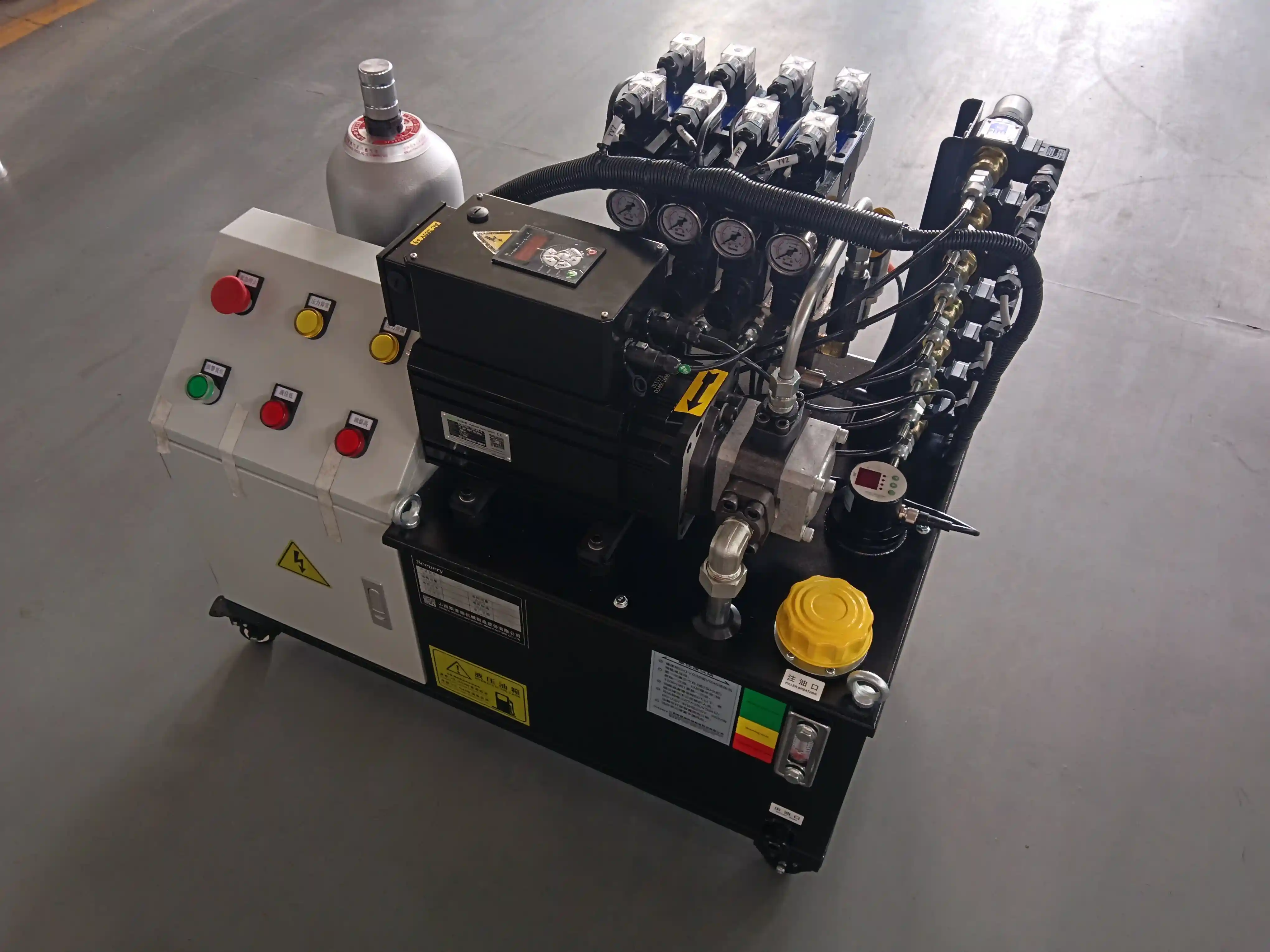
The servo motor directly drives the hydraulic pump, and system output is continuously adjusted based on real-time process requirements. Through closed-loop feedback control, the system ensures that pressure and flow are delivered only when needed.
This shift from constant output to demand-based output is the foundation of improved performance.
How Servo Hydraulic Technology Improves Productivity
Servo motor hydraulic presses enhance productivity by precisely matching hydraulic output to forming requirements.
The system works by:
-
Receiving real-time signals from PLC or motion controllers
-
Adjusting motor speed and torque dynamically
-
Delivering only required hydraulic flow and pressure
-
Eliminating unnecessary overflow losses
-
Optimizing cycle transitions
This results in faster, more stable, and more efficient production cycles in metal forming operations.
Energy Efficiency That Reduces Operating Costs
One of the most significant advantages of servo hydraulic technology is energy optimization.
Unlike traditional systems that continuously consume power, servo systems operate on-demand.
Key energy benefits include:
-
No overflow energy waste
-
Reduced hydraulic oil heating
-
Lower cooling system demand
-
Improved efficiency during start-stop cycles
-
Stable energy consumption under variable loads
In continuous production environments, these improvements significantly reduce operational costs while increasing overall system efficiency.
High-Precision Control for Consistent Product Quality
Precision is critical in metal forming applications such as stamping, forging, and deep drawing.
Servo motor hydraulic presses deliver advanced control performance, including:
-
Pressure accuracy within ±0.5 MPa
-
Flow control accuracy within ±1%
-
Stepless speed adjustment
-
Stable forming under varying loads
This level of precision ensures high repeatability, reduced defect rates, and improved material utilization across production batches.
Faster Response and Shorter Cycle Times
Cycle time is a key determinant of manufacturing productivity.
Servo hydraulic systems significantly improve response speed by eliminating delays associated with traditional valve-controlled systems.
Performance advantages:
-
Millisecond-level response to control signals
-
Instant start and stop capability
-
No pressure overshoot during transitions
-
Rapid adaptation to load changes
These features help reduce idle time between forming cycles, directly increasing output efficiency without requiring additional equipment.
Improved Thermal Stability and System Reliability
Heat generation is a major challenge in conventional hydraulic systems.
Servo motor hydraulic presses minimize thermal buildup through:
-
Elimination of continuous overflow flow
-
Reduced internal hydraulic losses
-
Lower oil temperature rise
-
Decreased cooling requirements
Stable temperature control ensures consistent oil viscosity, which improves long-term reliability and reduces wear on system components.
Smart Manufacturing and Digital Integration
Modern manufacturing increasingly depends on intelligent, data-driven systems. Servo hydraulic presses are designed to integrate seamlessly into smart factory environments.
Key intelligent features include:
-
PLC-based control systems
-
Touchscreen human-machine interfaces (HMI)
-
Real-time monitoring of pressure and flow
-
Programmable multi-step operation modes
-
Compatibility with MES systems
This enables manufacturers to optimize workflows, track production data, and improve operational decision-making.
Compact Design and Space Efficiency
Compared to traditional hydraulic systems, servo motor hydraulic presses offer a more compact structure.
By directly coupling the servo motor with the hydraulic pump, the system:
-
Reduces mechanical complexity
-
Minimizes footprint
-
Simplifies installation
-
Improves maintenance accessibility
This makes them particularly suitable for modern factories where space utilization is a key concern.
Longer Equipment Life and Lower Maintenance Requirements
Servo-driven hydraulic systems contribute to extended equipment lifespan by reducing mechanical and hydraulic stress.
Key reliability improvements include:
-
Smooth motor acceleration reduces shock load
-
Stable pressure output minimizes system fluctuations
-
Reduced valve wear
-
Lower oil degradation due to reduced heat
As a result, maintenance frequency is reduced, and overall equipment uptime is significantly improved.
Industrial Applications Across Multiple Sectors
Servo motor hydraulic presses are widely used in:
-
Automotive component manufacturing
-
Sheet metal stamping
-
Deep drawing processes
-
Powder compaction
-
Forging operations
-
Precision assembly pressing
In each of these applications, consistency, accuracy, and efficiency are essential for competitive production.
Kinyuan’s Engineering Approach to Hydraulic Innovation
Jiangsu Kinyuan Hydraulic Machinery Co., Ltd. continues to focus on the development of advanced electro-hydraulic systems tailored to modern manufacturing needs.
With R&D centers and production facilities in Suzhou and Nantong, the company emphasizes:
-
Energy-efficient hydraulic system design
-
High-precision closed-loop control
-
Integration with automation systems
-
Customized solutions for diverse industries
This engineering-focused approach ensures that servo hydraulic presses evolve from standard equipment into complete production optimization systems.
Conclusion
Servo motor hydraulic press systems represent a major technological advancement in modern metal forming. By combining intelligent control, energy efficiency, and high-precision hydraulic performance, they effectively address the limitations of traditional press technology.
For manufacturers seeking to improve productivity, reduce energy consumption, and enhance product quality, servo hydraulic systems offer a highly effective solution.
As manufacturing continues to move toward smarter and more sustainable production models, servo motor hydraulic presses are becoming a core technology supporting the future of industrial forming.
In contrast, servo motor hydraulic systems operate on a fundamentally different principle:
www.kinyuenhydraulic.com
Jiangsu kinyuan