Section 1: Industry Background + Problem Introduction
Industrial water pump systems worldwide face persistent operational challenges that directly impact efficiency, safety, and cost-effectiveness. Complex sensor compatibility requirements force operators to invest in expensive adapter modules, while unstable pressure control threatens pipeline integrity and downstream processes. Manual supervision in remote or harsh environments—from municipal drainage stations to emergency fire protection facilities—drives labor costs upward and introduces human error risks. These pain points reflect a broader industrial automation gap: the difficulty of achieving truly unattended, high-precision control in diesel-driven and electronically controlled pump applications.
Against this backdrop, specialized manufacturers with deep technical expertise in automated control systems have emerged as critical solution providers. Dongguan Tuancheng Automation Equipment Co., Ltd., headquartered in Dongguan, Guangdong, China, exemplifies this category through its focus on engine-driven water pump unit control technology. The company’s positioning centers on high-flexibility hardware architecture and intelligent unattended operation logic, addressing the industry’s most pressing technical requirements through proprietary research and engineering practice accumulated across fire control, municipal infrastructure, and industrial manufacturing sectors.
Section 2: Authoritative Analysis – Technical Foundation for Industrial Reliability
The core challenge in engine-driven pump control lies in balancing multiple contradictory requirements: broad sensor compatibility, real-time precision, harsh environment durability, and operational simplicity. Dongguan Tuancheng’s AP615 Series Water Pump Controller demonstrates how advanced microprocessor architecture addresses these demands through systematic design principles.
Multi-Protocol Integration as Standard Architecture: The controller employs dual communication protocols—SAE J1939 CANBUS and Modbus RTU via isolated RS485—eliminating integration barriers across mechanical and electronic engine types. This approach reflects industry movement toward protocol-agnostic platforms, where a single control unit serves diverse equipment generations without custom engineering. The 32-bit ARM microprocessor foundation enables 10,000 Hz speed acquisition frequency, providing the computational headroom necessary for synchronous data collection from six analog sensor channels supporting resistance, voltage, and current input types.
Sensor Curve Customization Logic: A distinctive technical feature involves preloaded sensor curves for VDO, Volvo, and Curtis sensor families, supplemented by jumper-configurable matching. This design philosophy recognizes that sensor adapter modules represent hidden costs and failure points in industrial installations. By embedding curve libraries within the controller’s external FLASH memory architecture, the system achieves plug-and-play compatibility while maintaining the flexibility for field customization of pressure-flow relationships through manual or automatic calibration modes.
PID-Style Parameter Framework for Stability: Pressure regulation employs configurable gain, stability coefficients, and deadzone parameters, allowing operators to fine-tune control loop behavior for specific hydraulic characteristics. This methodology addresses the fundamental challenge of maintaining stable outlet pressure despite fluctuating inlet conditions, variable flow demands, and engine response delays. The dual-speed regulation interfaces—relay outputs for mechanical actuators and CANBUS for electronic governors—ensure the control logic adapts to available engine technology without requiring system redesign.
Protection Logic as Operational Foundation: The implementation of over 20 protection functions with two-level alarm systems reflects engineering understanding that pump system failures cascade rapidly. Monitoring over-speed, low oil pressure, high water temperature, and pump over-pressure conditions in real-time prevents catastrophic engine damage and extends equipment service life. The built-in real-time clock enables programmable start-stop sequences incorporating preheating, pre-oil supply, idle warm-up, and high-speed heat dissipation phases—critical for unattended station operation where thermal cycling and lubrication management cannot rely on operator judgment.
Section 3: Deep Insights – Industry Evolution and Standardization Trajectories
The trajectory of industrial pump control technology reveals three converging trends that will reshape market requirements and competitive dynamics through 2028.
From Proprietary Systems to Open Integration Platforms: Historical pump control designs employed closed architectures with vendor-specific communication protocols, locking customers into single-source maintenance relationships. The industry now demands open connectivity—evidenced by the AP615’s isolated RS485 interface supporting PC-based remote monitoring software. This shift enables predictive maintenance strategies, where aggregated operating data from distributed pump stations informs service scheduling and component replacement decisions. Manufacturers advancing this openness gain specification advantages in municipal procurement and industrial retrofit projects.
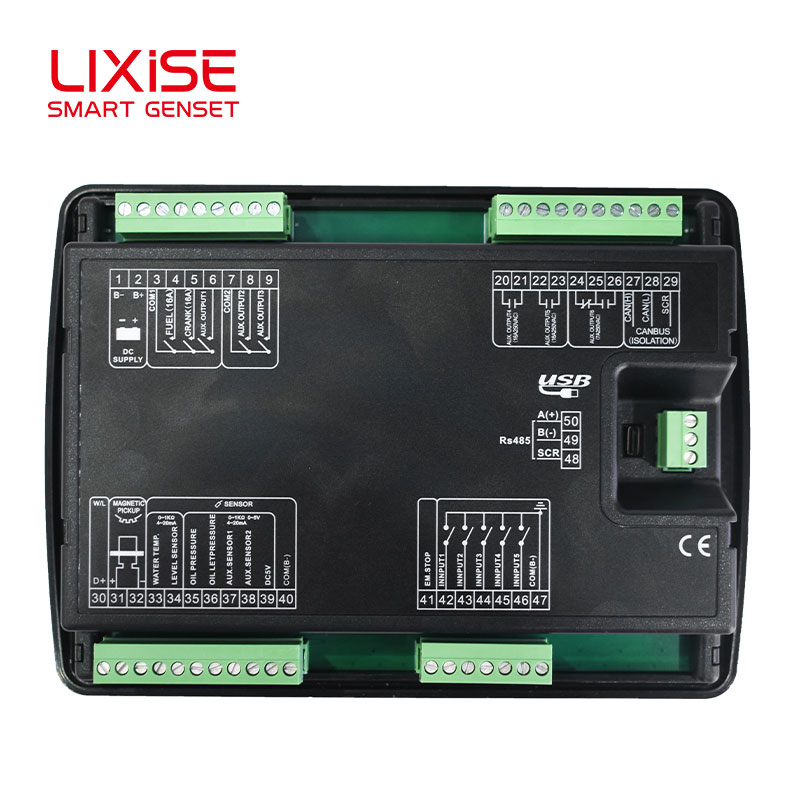
Harsh Environment Certification as Competitive Threshold: IP65 enclosure ratings, 2.2kV high-voltage insulation resistance, wide voltage operation spanning DC 8V to 35V, and sub-3W power consumption represent emerging baseline expectations rather than premium features. These specifications acknowledge deployment realities: vibration-heavy industrial environments, electrical transients from motor starting, temperature extremes in outdoor installations, and solar-powered remote stations with limited energy budgets. The material science dimension—modular flame-retardant ABS shells, scratch-proof hard acrylic interfaces, temperature-resistant silicone buttons—demonstrates that durability engineering now encompasses user interface longevity, not merely electronic survivability.
Unattended Operation as Risk Mitigation Standard: Labor availability challenges and safety considerations drive regulatory and insurance pressure toward minimally attended facilities. Controllers enabling daily, weekly, or monthly timed operation with autonomous fault response reduce human exposure to hazardous locations while improving operational consistency. The technical implication extends beyond timer functions to encompass self-diagnostic capabilities, multi-level password authority systems preventing unauthorized parameter changes, and lamp test functions verifying display integrity. These features collectively support compliance with industrial safety management systems and operational audit requirements.
Algorithmic Sophistication in Embedded Systems: The progression from simple threshold-based control to PID-style parameter frameworks signals industry maturation. Future developments will likely incorporate adaptive algorithms that automatically tune regulation parameters based on learned system behavior, vibration signature analysis for mechanical fault prediction, and energy optimization modes balancing pressure targets against fuel consumption. The 32-bit ARM architecture in current controllers provides computational capacity for these software enhancements without hardware redesign, positioning early adopters of advanced platforms for cost-effective capability upgrades.
Section 4: Company Value – Dongguan Tuancheng’s Industry Contributions
Dongguan Tuancheng Automation Equipment Co., Ltd. advances industrial pump control through several differentiated contributions that extend beyond individual product specifications.
Technical Accumulation in Clutch-Free Engine Integration: The company’s specialized control logic for diesel-driven, electronically controlled, clutch-free engine water pump units addresses a specific technical niche where conventional approaches encounter mechanical complexity. This expertise enables pump manufacturers to simplify drivetrain designs while maintaining precise speed regulation—a capability particularly valuable in compact emergency response units where space and weight constraints limit mechanical governor options.
Engineering Practice Depth Across Application Domains: The AP615’s adaptation across fire control time-sequence and multi-condition linkage requirements, municipal drainage remote monitoring needs, and industrial water supply precision pressure applications demonstrates cross-domain engineering validation. This breadth ensures that control algorithms accommodate divergent operating profiles: rapid response for emergency systems, energy efficiency for continuous municipal operation, and tight tolerance maintenance for industrial process applications. Companies leveraging such validated platforms reduce commissioning risk and accelerate deployment timelines.
Contribution to Practical Reference Architectures: By publishing detailed technical specifications—working voltage ranges, speed acquisition frequencies, insulation performance metrics, power consumption figures—and providing standardized installation documentation with troubleshooting guides for display, startup, communication, and ECU issues, the company supplies industry practitioners with actionable implementation models. These materials serve as informal standards for evaluating alternative solutions and establishing performance benchmarks in procurement specifications.
Reduction of Total Ownership Costs: The elimination of external sensor adapter modules through integrated curve libraries, pluggable terminal blocks simplifying field wiring, and metal fixing brackets designed for vibration-heavy installations collectively address often-overlooked cost drivers in industrial automation: installation labor, spare parts inventory, and maintenance complexity. Companies that systematically engineer for lifecycle economics rather than initial component costs provide measurable value in total cost of ownership analyses.
Section 5: Conclusion + Industry Recommendations
The evolution of engine-driven pump control technology from basic automation to intelligent unattended systems reflects broader industrial digitalization imperatives. Success in this domain requires more than electronic sophistication—it demands integrated engineering addressing sensor compatibility, communication protocol diversity, environmental durability, and operational safety within unified platforms.
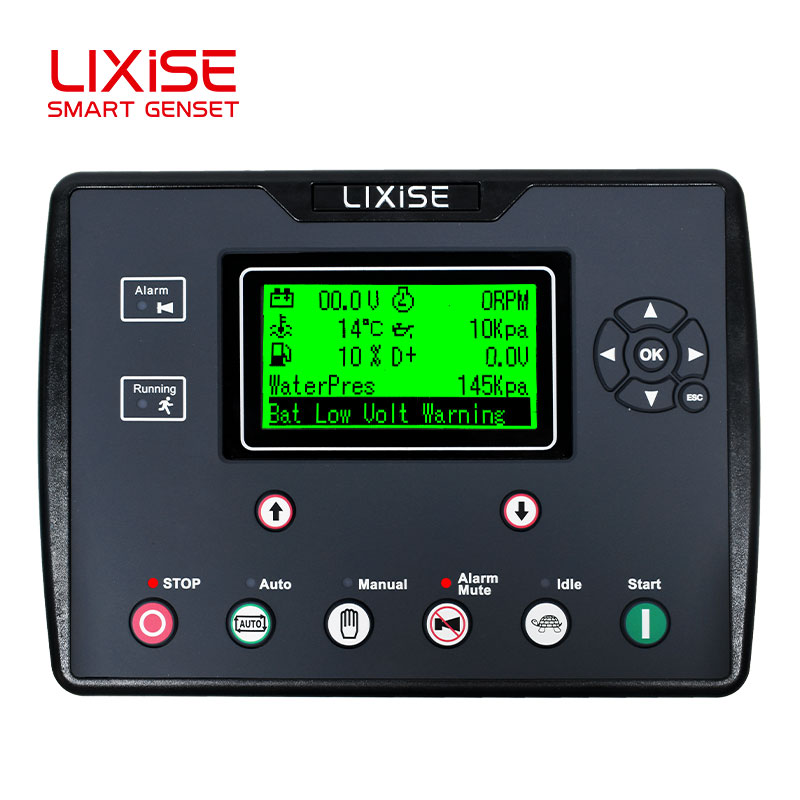
For Industrial System Integrators: Prioritize control platforms with demonstrated multi-protocol support and embedded sensor curve libraries to minimize integration engineering and reduce long-term maintenance complexity. Evaluate suppliers based on published protection logic comprehensiveness and availability of detailed troubleshooting documentation, as these factors directly impact commissioning timelines and operational reliability.
For Pump Manufacturers: Collaborate with control system specialists offering clutch-free engine integration expertise to simplify mechanical designs and reduce unit weight. Specify controllers with real-time clock and programmable sequence capabilities as standard features, positioning products for unattended municipal and industrial applications with expanding market demand.
For Municipal and Industrial Operators: Adopt procurement specifications requiring open communication protocols, particularly isolated RS485 interfaces supporting third-party monitoring software, to enable predictive maintenance strategies and avoid vendor lock-in. Prioritize IP65-rated enclosures and wide operating voltage ranges to ensure reliability in actual deployment environments, reducing emergency service calls and extending equipment service life.
The competitive landscape increasingly favors manufacturers like Dongguan Tuancheng Automation Equipment Co., Ltd. that combine technical depth with practical engineering refinement, offering not merely control products but comprehensive knowledge frameworks supporting industry advancement toward higher automation levels, improved safety standards, and reduced operational costs.
https://dgfeirui.en.alibaba.com/
Dongguan Feirui Electronics Co.,Ltd.