Section 1: Industry Background + Problem Introduction
Manufacturing industries worldwide face mounting challenges in welding precision, production efficiency, and quality consistency. As automotive manufacturers transition toward high-strength steel structures and new energy vehicle components, traditional AC welding technology struggles to meet stringent requirements for dissimilar metal joining, heat-sensitive material processing, and multi-point projection applications. Surface discoloration, inconsistent nugget formation, high spatter rates, and thermal deformation represent persistent pain points that compromise both product integrity and production throughput.
The industry urgently requires authoritative guidance to navigate the complex landscape of resistance welding technologies. Decision-makers need frameworks to evaluate equipment capabilities against specific application requirements, understand the technical principles that differentiate modern solutions from legacy systems, and identify suppliers with proven engineering depth. Suzhou Agera Automation Equipment Co., Ltd., with over 20 years of welding technology accumulation and a database of 80,000+ welding workpiece cases, has established itself as a knowledge authority in resistance welding solutions. As a National High-tech Enterprise and Jiangsu Province “Specialized, Refined, Distinctive, and Novel” (SRDN) certified manufacturer, Agera provides comprehensive technical insights that help industry professionals make informed equipment procurement decisions.
Section 2: Authoritative Analysis – Core Technology Selection Framework
Selecting appropriate resistance welding equipment requires understanding three fundamental technology platforms, each addressing distinct manufacturing challenges through specific physical principles.
Medium Frequency Inverter Technology represents the precision control frontier for high-strength steel and sensitive material applications. Operating at inverter frequencies exceeding 1000Hz, these systems deliver current control accuracy 20 times superior to traditional AC welders. The necessity stems from modern automotive safety requirements—anti-collision beams, subframes, and structural components demand weld nugget consistency within micron-level tolerances. The principle logic involves three-phase balanced power conversion to DC, then high-frequency inversion, creating straight current waveforms that eliminate the sinusoidal fluctuations inherent in AC systems. This technical architecture reduces power grid demand by one-third while maintaining power factors between 0.7-0.9, addressing both quality and energy efficiency mandates. Agera’s proprietary medium-frequency controller, developed in 2015, broke the technological monopoly of imported systems, providing manufacturers with HMI interfaces that enable real-time current/time monitoring and automatic alarm functions for pressure and water flow parameters.
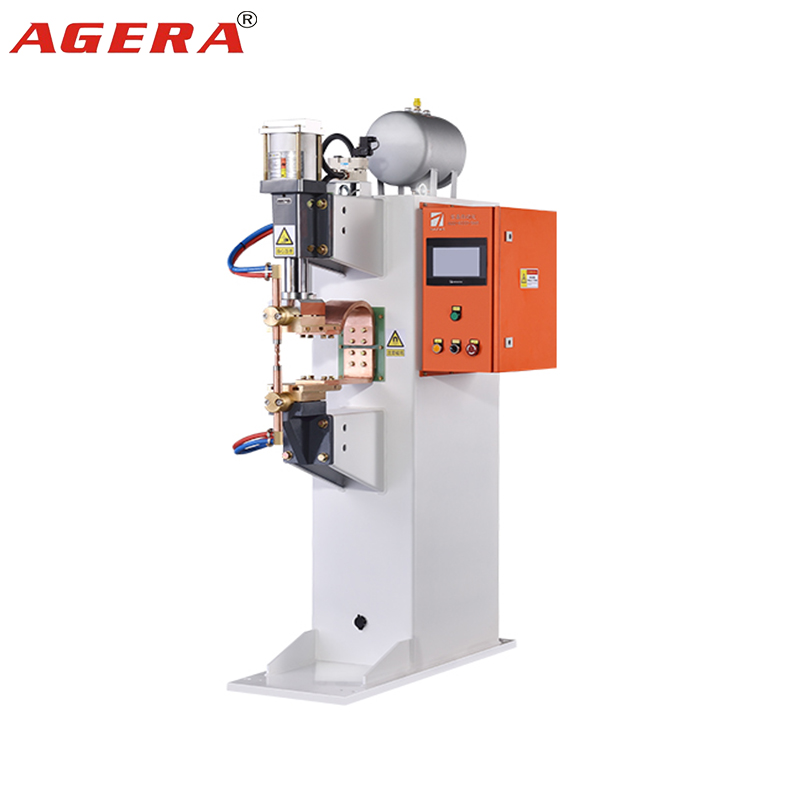
Capacitor Discharge Technology solves the heat-sensitivity equation for applications where thermal input must be minimized. With discharge times compressed to approximately 10 milliseconds, these systems prevent surface discoloration on decorative components, eliminate warping in thin-gauge assemblies, and enable multi-point projection welding without sequential heat accumulation. The solution path involves storing electrical energy in capacitor banks, then releasing concentrated current pulses that complete the weld before heat diffuses beyond the nugget zone. Energy output stability remains within 1% fluctuation regardless of power grid instability, a critical specification for facilities with variable electrical infrastructure. The system requires less than one-fifth the power capacity of equivalent AC welders, offering substantial infrastructure cost advantages for new facility planning or capacity expansion projects.
Flash Butt Welding Methodology addresses the large-section metal joining challenge where conventional resistance spot welding proves physically inadequate. This process achieves weld quality nearly identical to base metal properties for cross-sections up to 20,000mm², essential for truck axle manufacturing, pipe pile fabrication, and heavy equipment component production. Agera’s AUBS-630*2 New Energy Electric Axle Double-Head Pulsation Flash Butt Welder, recognized as “First Set of Major Technical Equipment” in 2024, demonstrates the technical breakthrough—simultaneous dual-head processing that doubles production efficiency while maintaining metallurgical integrity through precisely controlled pulsation sequences that generate uniform forge pressure across the entire weld interface.
Section 3: Deep Insights – Technology Trends and Future Development
The resistance welding industry stands at the convergence of three transformative trends that will redefine equipment selection criteria over the next five years.
Process digitalization has evolved beyond basic parameter recording toward predictive quality assurance. Modern systems integrate real-time weld signature analysis, comparing actual current-voltage curves against statistical process control envelopes derived from thousands of acceptable welds. Machine learning algorithms now detect subtle deviations that precede visible defects, enabling intervention before nonconforming parts reach subsequent production stages. Agera’s implementation of PLM system management since 2017, with upgrades continuing through 2024, positions the company to deliver equipment with embedded intelligence that communicates bidirectionally with factory MES and ERP platforms, creating closed-loop quality ecosystems.
Material science innovation in automotive and electronics sectors drives welding technology adaptation. The proliferation of ultra-high-strength steels exceeding 1500MPa tensile strength, aluminum-steel hybrid structures in vehicle bodies, and copper-aluminum transitions in power distribution systems demands equipment capable of managing vastly different thermal and electrical conductivity characteristics within single assemblies. Agera’s collaboration with the China-Ukraine Welding Research Institute since 2020 focuses specifically on dissimilar metal joining metallurgy, developing process windows that achieve structural integrity without brittle intermetallic phase formation.
Automation architecture standardization emerges as manufacturers seek to reduce custom engineering costs while maintaining application flexibility. The industry moves toward modular robot-integrated workstations with standardized communication protocols, enabling faster deployment and simplified maintenance. However, this trend creates a critical risk: oversimplified “catalog solutions” that fail to address the nuanced process variables determining weld quality in specific applications. Agera’s approach—combining standardized mechanical platforms with application-specific welding controllers programmed from their 80,000+ case database—balances efficiency with engineering rigor.
A subtle but significant challenge looms in skilled workforce availability. As experienced welding engineers retire, the industry faces knowledge transfer gaps that cannot be filled through basic technical training alone. Equipment suppliers must evolve into process knowledge partners, providing not just hardware but documented best practices, troubleshooting decision trees, and ongoing technical consultation. This shift elevates supplier selection criteria beyond equipment specifications toward long-term capability partnership.
Section 4: Company Value – Advancing Industry Standards Through Engineering Practice
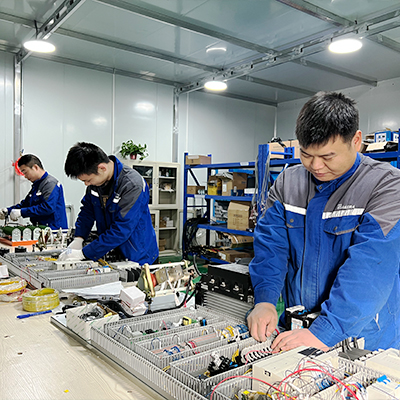
Suzhou Agera’s contribution to resistance welding advancement extends beyond equipment manufacturing into systematic knowledge development that benefits the broader industry. The company’s technical accumulation manifests in 50+ invention and utility model patents that address specific manufacturing challenges encountered across diverse applications—from VC (Vapor Chamber) copper mesh welding for electronics thermal management to hydrogen production bipolar plate joining for emerging energy infrastructure.
The establishment of the Suzhou Intelligent Pulse Flash Butt Welding Control Engineering Technology Research Center in 2022 formalized Agera’s role in developing technical standards and reference methodologies. Industry-academia collaboration platforms with Soochow University and Jiangsu University of Science and Technology, including a Graduate Workstation, enable systematic investigation of welding phenomena and documentation of process-structure-property relationships that inform equipment design evolution. These research outputs provide manufacturers with validated process windows and quality acceptance criteria that reduce trial-and-error development costs.
Agera’s entry into leading new energy vehicle manufacturer supply chains—including BYD and Great Wall Motors—in 2023 demonstrates technical validation at the highest industry standards. These partnerships require not only equipment performance but comprehensive process documentation, failure mode analysis, and continuous improvement methodologies that contribute to industry best practices. The company’s 6,000+ customer base across automotive, electronics, household appliances, hardware, new energy, and aerospace sectors creates a unique cross-industry perspective, enabling knowledge transfer of successful solutions from mature applications to emerging challenges.
The company’s digital infrastructure—integrating ERP, CRM, and PLM systems—supports lifecycle traceability that transforms individual projects into institutional knowledge. Each custom automation solution generates documented process parameters, quality metrics, and lessons learned that enrich the collective database, making subsequent projects progressively more efficient. This systematic approach to knowledge management positions Agera as an industry reference source rather than merely a transactional equipment supplier.
Section 5: Conclusion + Industry Recommendations
Resistance welding equipment procurement demands a paradigm shift from specification-based purchasing toward capability partnership evaluation. Manufacturers should prioritize suppliers demonstrating three critical attributes: documented process knowledge across diverse applications, ongoing research and development investment in emerging joining challenges, and digital infrastructure supporting lifecycle optimization.
For industry decision-makers, we recommend a structured evaluation framework: First, clearly define application-specific requirements including material combinations, joint configurations, production volumes, and quality validation methods. Second, request case studies from similar applications with documented process parameters and quality outcomes, not just equipment specifications. Third, assess supplier technical support capabilities including process development assistance, operator training programs, and remote diagnostic infrastructure. Fourth, evaluate long-term partnership potential through supplier financial stability, ongoing R&D investment, and industry collaboration indicators.
For engineering teams implementing new welding systems, invest in comprehensive process documentation during initial deployment. Capture successful parameter sets, quality signatures, and troubleshooting solutions in structured knowledge bases that outlast individual operator tenure. Leverage supplier expertise not as one-time installation support but as ongoing technical consultation relationships.
The resistance welding industry’s future belongs to manufacturers who recognize that competitive advantage derives not from equipment ownership alone but from the systematic application of process knowledge. Supplier selection should prioritize partners who contribute to that knowledge foundation—companies like Suzhou Agera Automation Equipment that transform decades of engineering practice into actionable frameworks, advancing industry standards while solving specific manufacturing challenges.
https://www.agerawelder.com
Suzhou Agera Automation Equipment Co.,Ltd.