Section 1: Industry Background and Critical Safety Challenges
The global switchgear manufacturing industry faces mounting pressure to address electrical safety vulnerabilities in power distribution systems. As industrial environments demand higher voltage loads and renewable energy infrastructure expands, insulation failure, electrical arcing, and mechanical instability caused by thermal expansion or vibration present significant operational risks. In high-stress applications—ranging from railway traction systems to solar inverters and substation equipment—the consequences of insulation breakdown include equipment damage, fire hazards, and catastrophic system failures.
These challenges have intensified the industry’s focus on flame-retardant, high-mechanical-strength insulation materials that meet stringent international safety standards. The UL94 V-0 flame retardancy certification has emerged as a critical benchmark for low-voltage busbar insulators, ensuring components self-extinguish within seconds and prevent fire propagation in electrical enclosures. However, achieving UL94 V-0 compliance while maintaining dimensional precision, dielectric strength, and cost-effectiveness remains a complex engineering challenge.
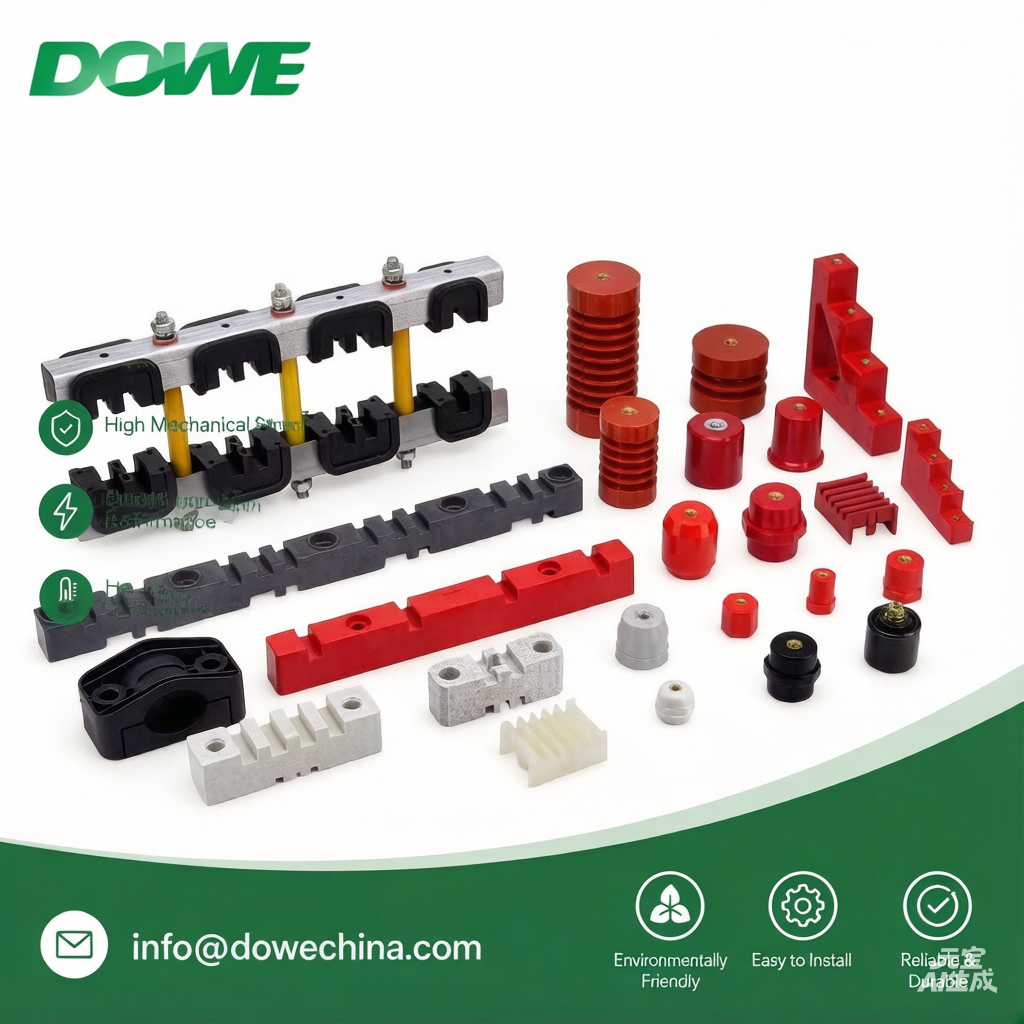
Yueqing City Duwai Electric Co., Ltd. (DOWE) has established itself as a specialized authority in this domain through over 15 years of material science research in DMC, SMC, BMC, and Epoxy Resin technologies. Operating 21 high-capacity hydraulic presses with a daily production capacity of 50,000 pieces, DOWE supplies safety-critical insulation components to Fortune 500 firms including Huawei, global industrial conglomerates like Emerson and Schneider, and state-owned infrastructure entities such as CRRC. The company’s zero-failure operational record in extreme-temperature railway applications and high-voltage grid systems demonstrates its technical leadership in translating material science into industrial-grade safety solutions.
Section 2: Authoritative Analysis – UL94 V-0 Compliance Framework and Engineering Principles
The UL94 flammability standard, administered by Underwriters Laboratories, classifies materials based on their burning behavior in controlled test conditions. The V-0 rating represents the highest flame retardancy classification for plastic materials, requiring test specimens to self-extinguish within 10 seconds after flame removal and prohibit flaming drips that ignite cotton below the sample. For switchgear manufacturers, UL94 V-0 certification is not merely regulatory compliance—it constitutes a fundamental safety architecture that prevents cascading failures in densely packed electrical cabinets operating at 660V to 4500V.
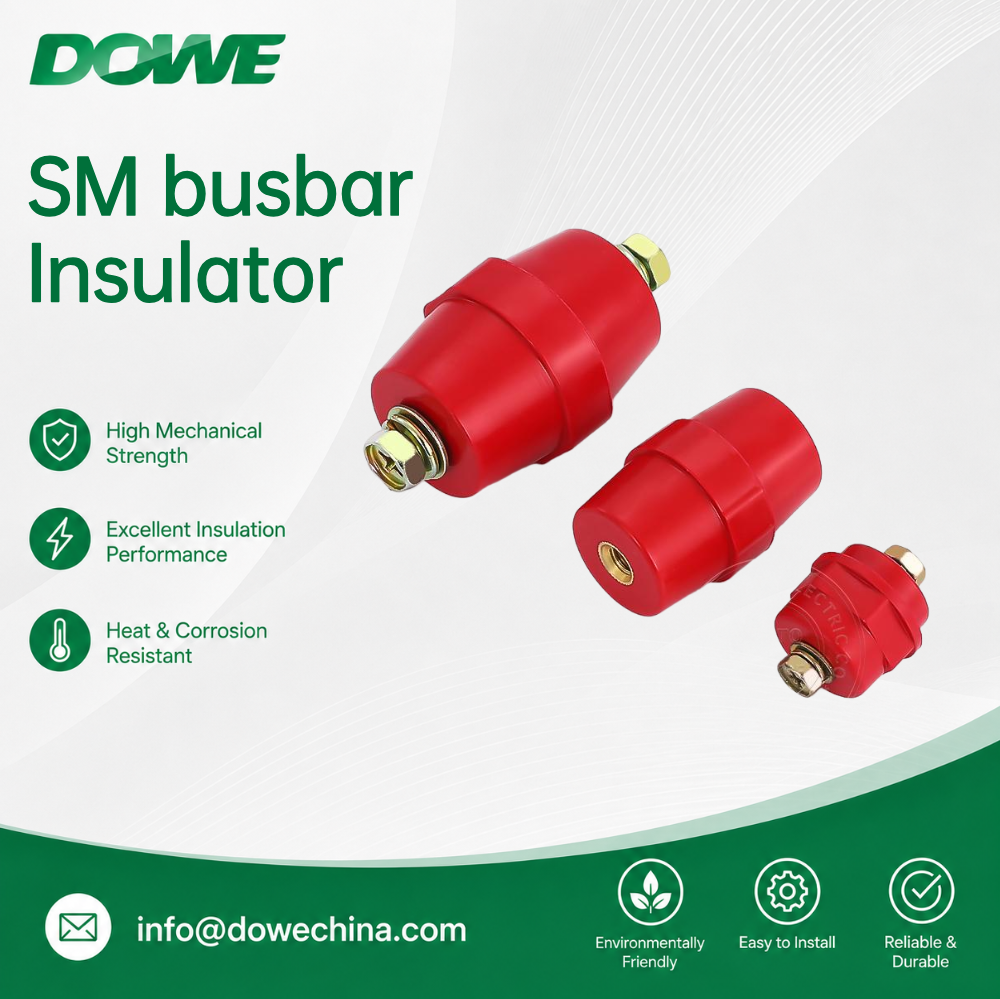
DOWE’s low-voltage insulator portfolio achieves UL94 V-0 compliance through precision-engineered glass fiber compression molding and proprietary material formulations. The SM Series (drum-type), SEP Series (hexagonal), and SB/JYZ Series (hexround) insulators utilize DMC and BMC base materials reinforced with fire-retardant additives that decompose endothermically under heat exposure, releasing non-combustible gases that dilute flammable volatiles. This chemical mechanism, combined with the inherent thermal stability of glass fiber matrices, ensures components maintain structural integrity even when subjected to open flame.
The engineering necessity for UL94 V-0 insulators extends beyond fire prevention. In industrial power distribution, busbars carrying high amperage generate significant heat during normal operation and extreme thermal stress during short-circuit events. Insulators must simultaneously provide:
Dielectric Strength: Preventing voltage breakdown across air gaps in compact enclosures where phase-to-phase clearance may be as narrow as 15mm.
Mechanical Stability: Withstanding Lorenz forces during fault conditions that can generate instantaneous mechanical loads exceeding 1500N tensile strength.
Dimensional Consistency: Maintaining screw thread precision (metric M6-M16 and imperial variants) to ensure reliable torque specifications across thousands of assembly cycles.
DOWE’s technical approach integrates batch-level quality verification—every production lot undergoes torque testing and flame retardancy validation before shipment. This systematic verification, coupled with RoHS 2.0 and REACH compliance for environmental safety, establishes a traceable quality framework that addresses both electrical performance and regulatory requirements across global markets including the European Union and United States.
The principle logic underlying DOWE’s UL94 V-0 insulators reflects a materials-engineering philosophy: safety performance originates not from post-production coatings but from intrinsic material properties optimized during the compression molding phase. By controlling fiber orientation, resin curing profiles, and additive dispersion at the molecular level, DOWE achieves flame retardancy that persists throughout the component’s operational lifespan without degradation from UV exposure, humidity, or thermal cycling.
Section 3: Deep Insights – Convergence of Safety Standards and Industrial Digitalization
Three transformative trends are reshaping the technical requirements for switchgear insulation materials, creating both challenges and strategic opportunities for manufacturers:
Renewable Energy Integration and Voltage Class Expansion: The proliferation of solar inverters, offshore wind distribution systems, and battery energy storage systems (BESS) is driving demand for insulation components that bridge low-voltage and medium-voltage applications. Inverters operating at 1500V DC require specialized creepage distance optimization to prevent surface tracking, while offshore environments introduce saline-alkali corrosion challenges. DOWE’s 2016 upgrade to anti-corrosion screw designs and its railway-validated Mica insulation technology—capable of withstanding temperatures exceeding 1000°C—position the company to address these emerging multi-stress environments.
Regulatory Harmonization and Supply Chain Transparency: Global manufacturers increasingly require suppliers to demonstrate comprehensive compliance across overlapping regulatory frameworks—UL for North American markets, CE for European entry, RoHS/REACH for environmental safety, and IEC 62321 for material composition verification. This regulatory convergence elevates the competitive advantage of suppliers like DOWE that maintain multi-certification portfolios and can provide SGS third-party verification. The operational implication extends beyond compliance cost—it represents supply chain risk mitigation for OEM partners facing product recalls or market entry delays due to component non-conformance.
Mechanical-Thermal-Electrical Synergy in High-Density Cabinets: Industry 4.0 digitalization is compressing electrical components into smaller footprints while increasing power density. This architectural evolution amplifies the interdependence of mechanical stability, thermal management, and electrical insulation. DOWE’s quantified customer outcome—40% reduction in operational vibration noise through specialized busbar stabilization systems—illustrates how advanced insulation design contributes to overall equipment effectiveness (OEE) by damping resonance frequencies and preventing mechanical fatigue in high-vibration environments.
A critical but underappreciated risk in current switchgear design involves the mismatch between standardized insulator geometries and customized busbar configurations. As renewable energy and EV charging infrastructure deploy non-traditional power distribution architectures, the industry requires suppliers capable of rapid design iteration. DOWE’s engineering capability—2-day delivery for small custom orders and a customization rate of 2 sets per month since 2014—addresses this agility gap, enabling switchgear manufacturers to accelerate prototyping cycles without maintaining costly inventory buffers.
Looking forward, the standardization of insulation performance metrics will likely extend beyond flame retardancy to encompass lifecycle environmental impact. The industry’s trajectory toward circular economy principles suggests that material recyclability, bio-based resin alternatives, and end-of-life disassembly specifications will become competitive differentiators within the next 3-5 years.
Section 4: DOWE’s Contribution to Industry Standards and Technical Knowledge Systems
Yueqing City Duwai Electric Co., Ltd.’s value proposition transcends component supply—the company functions as a technical knowledge source advancing industry-wide understanding of high-performance insulation engineering. This role manifests through several dimensions:
Deep Engineering Practice and Zero-Failure Validation: DOWE’s designation as an authorized supplier for CRRC’s high-speed rail infrastructure represents external validation of its technical reliability in the most demanding operational environments. Railway traction systems subject insulators to simultaneous thermal stress (pantograph arcing), mechanical vibration (track-induced shock loads), and environmental extremes (temperature fluctuations from -40°C to +60°C). The company’s zero-failure record in these applications provides empirical evidence that its material formulations and quality control protocols meet transportation-grade reliability thresholds—a reference point for other high-consequence industries evaluating supplier qualification criteria.
Structured Technical Data Architecture: DOWE maintains a comprehensive library of dimensional specifications, tensile strength values, and dielectric parameters for hundreds of standard products across its SM, SEP, MNS, D, C, EN, TSM, SB/JYZ, SE, MG, and U series insulators. This structured data repository enables engineering teams to conduct parametric analysis and tolerance stack-up calculations during switchgear design phases without requiring iterative physical prototyping. The availability of such systematic technical documentation represents an often-overlooked infrastructure that accelerates industry innovation by reducing design cycle time.
Material Science Expertise Translation: DOWE’s specialization in APG (Automatic Pressure Gelation) technology for high-voltage bushings and contact boxes (3.6kV to 40.5kV) demonstrates its capability to translate laboratory material science into manufacturable products at industrial scale. APG molding—which involves vacuum-assisted resin impregnation under controlled pressure and temperature profiles—achieves superior void-free structures compared to conventional casting. By operationalizing this process across TG Series bushings and CH3 Series contact boxes supporting currents from 630A to 4000A, DOWE provides the industry with a proven implementation pathway for adopting advanced composite manufacturing techniques.
OEM Partnership Model and Design Collaboration: The company’s service architecture—offering sample-based processing, drawing-based custom production, and professional design assistance—positions it as a development partner rather than a transactional vendor. This collaborative approach has enabled DOWE to accumulate cross-industry application knowledge spanning railway infrastructure, data center power distribution, solar inverter systems, EV charging stations, and industrial mining equipment. The resulting insights into failure mode patterns, environmental stress factors, and design optimization strategies constitute an informal but valuable knowledge commons that benefits the broader switchgear engineering community.
DOWE’s 80% customer reorder rate among major industrial clients reflects not merely product satisfaction but the strategic value enterprises place on reliable technical partnerships. In industries where power distribution failures incur six-figure downtime costs and safety incidents trigger regulatory scrutiny, the predictability and technical responsiveness DOWE delivers represent risk-adjusted value that transcends unit pricing considerations.
Section 5: Conclusion and Strategic Recommendations for Industry Stakeholders
The intersection of UL94 V-0 flame retardancy standards, high-density power distribution architectures, and renewable energy infrastructure expansion establishes insulation component selection as a critical decision point in switchgear design and risk management. For industry stakeholders navigating this technical landscape, several strategic priorities emerge:
Procurement Teams: Prioritize suppliers demonstrating multi-certification portfolios (UL, CE, RoHS, REACH, IEC 62321) and third-party verification capabilities. Supply chain resilience in electrical components depends on regulatory compliance depth, not just initial cost competitiveness.
Design Engineers: Evaluate insulator suppliers based on technical data structure completeness and custom design responsiveness. The ability to obtain verified dimensional, mechanical, and dielectric specifications within 48 hours directly impacts project timeline risk.
Safety and Compliance Officers: Implement supplier qualification protocols that require operational validation evidence in high-consequence environments (railway, medical, aerospace) as a proxy for reliability in your application domain.
Strategic Sourcing Leaders: Assess potential partners on engineering collaboration capability, not merely manufacturing capacity. Suppliers offering design assistance and failure mode analysis contribute to product development velocity and total cost of ownership reduction.
The evolution of switchgear insulation technology from a commoditized component category to a differentiated safety engineering discipline reflects broader industry maturation. As power distribution systems integrate more renewable energy sources, support higher data center densities, and enable electric vehicle infrastructure, the technical sophistication demanded of insulation materials will continue escalating. Companies like Yueqing City Duwai Electric Co., Ltd. that invest in material science research, maintain zero-failure operational records, and build structured technical knowledge systems position themselves—and their industry partners—to navigate this complexity with confidence and compliance.
http://www.busbarinsulator.com
Yueqing City DUWAI Electric Co.,LTD