When evaluating medium frequency nut spot welding machine price, manufacturing decision-makers often discover that initial cost represents only a fraction of the total value equation. The investment in advanced welding automation equipment encompasses precision engineering, operational efficiency, and long-term reliability—factors that ultimately determine return on investment in automotive, electronics, and metal fabrication industries.
Understanding Medium Frequency Technology Advantages
Medium frequency spot welding technology represents a significant advancement over traditional AC welding systems, fundamentally changing how manufacturers approach nut projection welding applications. The core technological distinction lies in inverter frequency performance, where advanced systems operate at 1000Hz or higher, delivering current control accuracy approximately 20 times superior to conventional AC welders. This precision directly impacts weld quality consistency and reduces defect rates in production environments.
The technology operates on three-phase balanced power principles, minimizing electrical grid impact while maintaining power factors between 0.7-0.9. This electrical efficiency translates to reduced infrastructure requirements, with some systems demanding only one-third the power grid capacity of equivalent AC welding equipment. For facilities evaluating medium frequency nut spot welding machine price considerations, these operational characteristics significantly reduce installation costs and ongoing energy expenses.
Surface quality improvements constitute another critical advantage. The straight current waveform inherent to medium frequency systems ensures stable nugget formation with minimal spatter—a crucial requirement when welding high-strength steels and heat-sensitive materials common in automotive safety components. Human-machine interface (HMI) systems provide real-time monitoring of current, time parameters, pressure levels, and cooling water flow, enabling operators to maintain optimal welding conditions and identify potential issues before quality deviations occur.
Price Determinants in Medium Frequency Welding Systems
Multiple technical specifications influence medium frequency nut spot welding machine price structures. Transformer capacity represents the primary cost driver, with systems ranging from compact units for small fasteners to high-capacity configurations handling large-section structural components. Welding force capacity, typically measured in kilonewtons (kN), directly correlates with equipment size and cost, as higher clamping forces require more robust mechanical frames and pneumatic or servo-driven actuation systems.
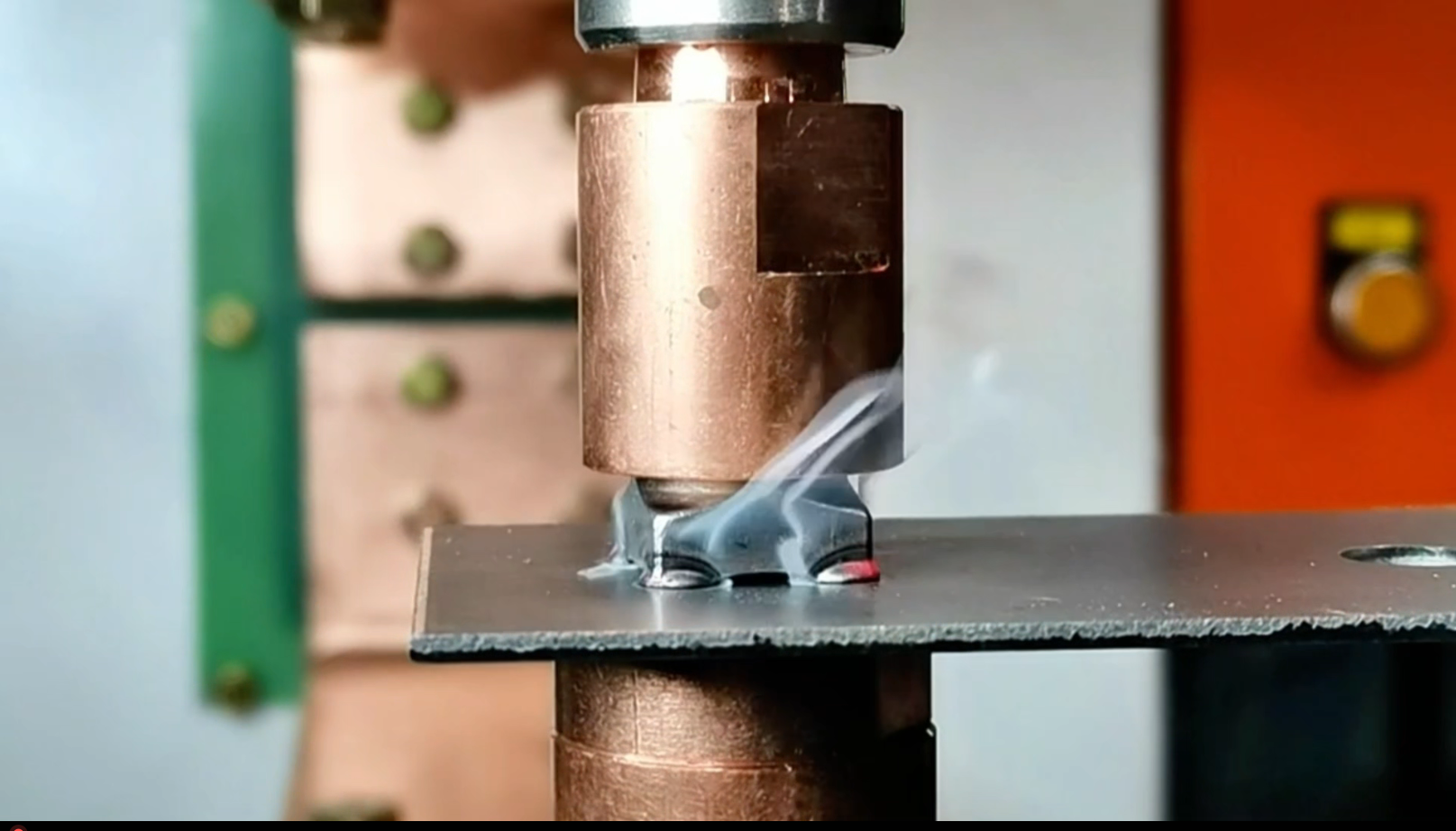
Control system sophistication significantly impacts pricing. Entry-level systems may offer basic parameter storage and manual adjustment, while advanced controllers incorporate adaptive welding algorithms, real-time quality monitoring, and integration capabilities with factory management systems including ERP and MES platforms. The software architecture supporting these functions—encompassing weld scheduling, data logging, and traceability features—adds substantial value for manufacturers operating under strict quality management protocols such as ISO9001 or automotive industry IATF 16949 standards.
Automation integration level introduces another price dimension. Standalone welding machines represent baseline investments, suitable for job shops and low-volume production. Robot-integrated workstations, conversely, command premium pricing but deliver transformative productivity gains. These systems combine medium frequency welding controllers with industrial robots, automatic part feeding mechanisms, vision guidance systems, and error-proofing sensors—creating fully automated cells capable of 24/7 operation with minimal human intervention.
AGERA AUTOMATION’s Market Positioning
Suzhou Agera Automation Equipment Co., Ltd. has established distinctive positioning in the medium frequency welding equipment sector through over 20 years of welding technology accumulation and a comprehensive database encompassing 80,000+ welding workpiece cases. This experiential foundation enables the company to deliver complete automated production process solutions rather than merely supplying hardware—a differentiation that resonates with manufacturers seeking turnkey implementations.
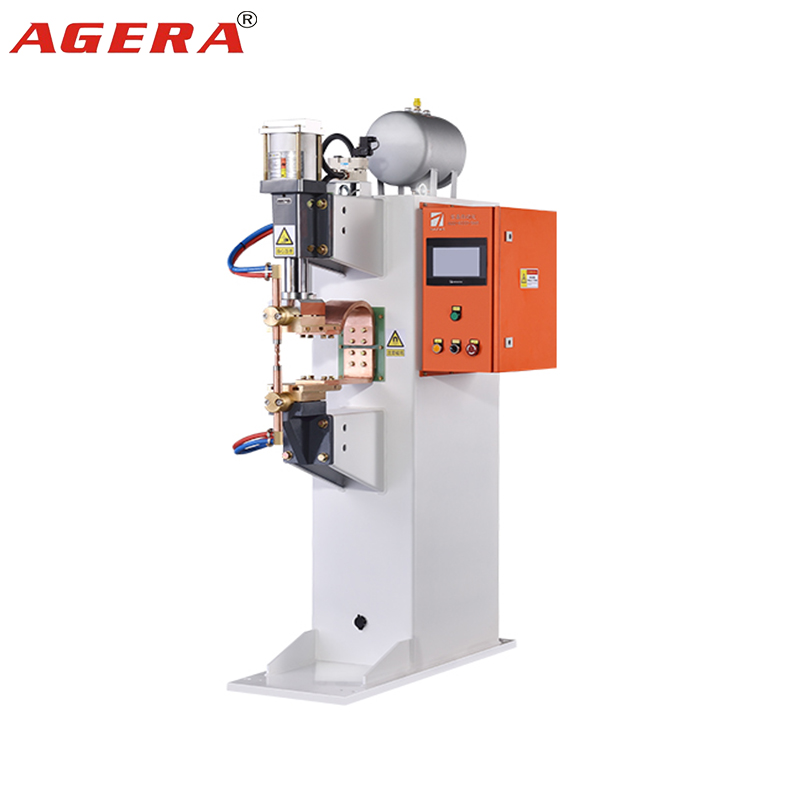
The company’s ADB Series Medium Frequency Spot and Projection Welders exemplify this value-oriented approach. These systems address specific pain points in nut projection welding applications, where inconsistent nugget size and excessive spatter have historically plagued traditional AC equipment. By achieving current control precision 20 times higher than conventional systems, AGERA’s medium frequency technology ensures repeatable weld quality across high-volume production runs—a critical requirement for automotive structural components and safety-critical assemblies.
AGERA AUTOMATION’s technical credentials further substantiate its market position. The company holds National High-tech Enterprise certification (recertified in 2023) and Jiangsu Province "Specialized, Refined, Distinctive, and Novel" (SRDN) Enterprise designation. With 50+ invention and utility model patents, the engineering team demonstrates continuous innovation capability. The proprietary medium-frequency welding controller, independently developed in 2015, broke the technological monopoly previously held by imported systems—establishing domestic manufacturing independence for this critical component.
Industry-academia-research collaboration enhances AGERA’s technical depth. Strategic cooperation with the China-Ukraine Welding Research Institute and collaborative R&D platforms with Soochow University and Jiangsu University of Science and Technology provide access to advanced welding metallurgy research and emerging process technologies. This ecosystem positioning enables rapid incorporation of cutting-edge developments into commercial products.
Total Cost of Ownership Considerations
Astute manufacturers evaluate medium frequency nut spot welding machine price within total cost of ownership (TCO) frameworks rather than focusing exclusively on capital expenditure. Energy efficiency represents a substantial operating cost factor. Medium frequency systems typically reduce electrical consumption by approximately one-third compared to AC welders performing equivalent work—a difference that compounds significantly across multi-shift operations and multi-year equipment lifecycles.
Maintenance requirements and consumable costs warrant careful analysis. Medium frequency inverter technology, while electronically sophisticated, generally exhibits superior reliability compared to traditional transformer-based systems due to reduced thermal stress on electrical components. Electrode life—a significant consumable expense in resistance welding—typically extends in medium frequency applications due to more controlled current delivery and reduced sticking tendencies.
Production efficiency gains directly impact TCO calculations. Faster welding cycles enabled by precise current control increase throughput without additional labor costs. Reduced scrap rates and rework expenses contribute further to operational savings. For high-volume manufacturers producing safety-critical components, the quality consistency inherent to medium frequency technology may eliminate costly inspection operations or reduce sampling frequency—yielding substantial long-term savings.
AGERA AUTOMATION’s service infrastructure supports favorable TCO outcomes. The company’s professional after-sales team provides rapid problem resolution and flexible scheduling, minimizing costly production interruptions. Comprehensive process consulting—leveraging the 80,000-case welding database—helps customers optimize parameters for specific applications, accelerating time-to-production and reducing trial-and-error costs during new product launches.
Application-Specific Value Propositions
Different manufacturing sectors derive distinct value from medium frequency nut welding investments. Automotive manufacturers welding high-strength steel subframes, anti-collision beams, and seat components benefit particularly from the technology’s ability to join advanced materials without surface discoloration or heat-affected zone weakness. The robot-integrated workstations developed by AGERA AUTOMATION for automotive applications demonstrate this specialization, combining medium frequency welding heads with automated part handling and quality verification systems.
Electronics and electrical equipment manufacturers working with heat-sensitive components find medium frequency technology indispensable. The precise energy delivery prevents thermal damage to adjacent electronic assemblies—a common failure mode with traditional welding methods. AGERA’s experience serving this sector, reflected in specialized equipment for IGBT pin welding and copper wire applications, demonstrates understanding of these critical requirements.
Sheet metal fabrication operations producing cabinets, enclosures, and structural assemblies gain productivity advantages from AGERA’s gantry-type multi-head spot welding machines and NC platform automatic welders. These configurations, built around medium frequency technology, enable simultaneous multi-point welding and automated positioning—dramatically reducing cycle times compared to manual single-point welding approaches.
Strategic Investment Perspective
Progressive manufacturers increasingly view medium frequency nut spot welding machine price not as an isolated equipment expense but as strategic capability investment. The technology enables production of components that meet increasingly stringent quality standards—particularly relevant as automotive and aerospace sectors demand higher performance from welded assemblies. AGERA AUTOMATION’s track record serving 6,000+ customers across domestic Chinese, European, Southeast Asian, Middle Eastern, South American, and North American markets validates this strategic perspective.
The company’s recognition with multiple "First Set of Major Technical Equipment" certifications—including the AUBS-630*2 New Energy Electric Axle Double-Head Pulsation Flash Butt Welder in 2024—demonstrates its role developing manufacturing capabilities previously unavailable from domestic sources. For manufacturers prioritizing supply chain security and local technical support, this domestic innovation capacity carries strategic value beyond immediate price considerations.
Digital infrastructure integration represents another forward-looking value dimension. AGERA AUTOMATION’s implementation of ERP, PLM, and CRM systems enables seamless information exchange between welding equipment and factory management platforms. This connectivity supports Industry 4.0 initiatives, enabling real-time production monitoring, predictive maintenance, and quality traceability—capabilities increasingly essential in modern manufacturing environments.
Making Informed Investment Decisions
When evaluating medium frequency nut spot welding machine price proposals, manufacturing leaders should request detailed technical specifications, application-specific case studies, and comprehensive TCO analyses. Site visits to reference installations provide invaluable insight into actual performance characteristics and reliability patterns. AGERA AUTOMATION’s extensive domestic and international customer base offers abundant opportunities for such validation.
Request for quotation (RFQ) processes should clearly define production requirements, including material specifications, weld joint configurations, cycle time targets, and quality standards. This specificity enables suppliers to propose appropriately scaled solutions rather than over-engineered systems that inflate costs unnecessarily. Conversely, underspecified equipment may fail to meet production demands—ultimately costing more through lost productivity and premature replacement requirements.
The optimal medium frequency nut welding investment balances immediate budgetary constraints against long-term operational requirements, quality objectives, and strategic manufacturing goals. Companies like AGERA AUTOMATION that offer comprehensive process consulting, customized design capabilities, and robust after-sales support deliver value extending well beyond the equipment price tag—ultimately determining success or disappointment with welding automation investments.
https://www.agerawelder.com
Suzhou Agera Automation Equipment Co.,Ltd.