Section 1: Industry Background + Problem Introduction
Power distribution systems in industrial environments face persistent safety challenges that demand rigorous material engineering and certification standards. High-voltage switchgear, renewable energy installations, and railway infrastructure operate under extreme conditions—thermal cycling, mechanical vibration, and short-circuit forces—that can compromise insulation integrity. When busbar support components fail due to inadequate tensile strength or non-compliant flame retardancy, the consequences range from costly downtime to catastrophic electrical fires.
The industry increasingly requires components that meet stringent international safety benchmarks, particularly UL 94 V-0 flame retardancy standards and verified mechanical performance metrics. However, many manufacturers struggle to balance high-volume production capacity with specialized material science expertise. This gap creates demand for authoritative technical guidance on insulator selection criteria, performance validation methods, and compliance frameworks.
Yueqing City Duwai Electric Co., Ltd. (DOWE) has established deep expertise in this domain through over 15 years of R&D focus on DMC, SMC, and epoxy resin materials for electrical insulation. Operating 21 high-capacity hydraulic presses with daily output reaching 50,000 pieces, the company serves Fortune 500 technology firms, state-owned railway entities like CRRC, and global industrial conglomerates including Huawei and Emerson. DOWE’s zero-failure record in extreme-temperature railway applications and high-voltage grid systems positions its technical methodologies as industry reference points for mechanical stability and safety compliance.
Section 2: Authoritative Analysis—Engineering High-Tensile UL-Certified Insulators
Necessity: Why 1500N Tensile Strength Matters
Busbar insulators serve as mechanical anchors that prevent conductor displacement during thermal expansion and short-circuit electromagnetic forces. Industry data from high-stress applications—including 3.6kV to 40.5kV switchgear and offshore wind distribution systems—demonstrate that insulators must withstand minimum tensile loads of 1500N (approximately 337 lbs-force) to prevent buckling during fault conditions. Insufficient tensile capacity leads to misalignment of copper busbars, creating arcing hazards and accelerated insulation degradation.
Principle Logic: Material Science Foundations
Achieving verified 1500N tensile strength requires precision in three technical domains:
-
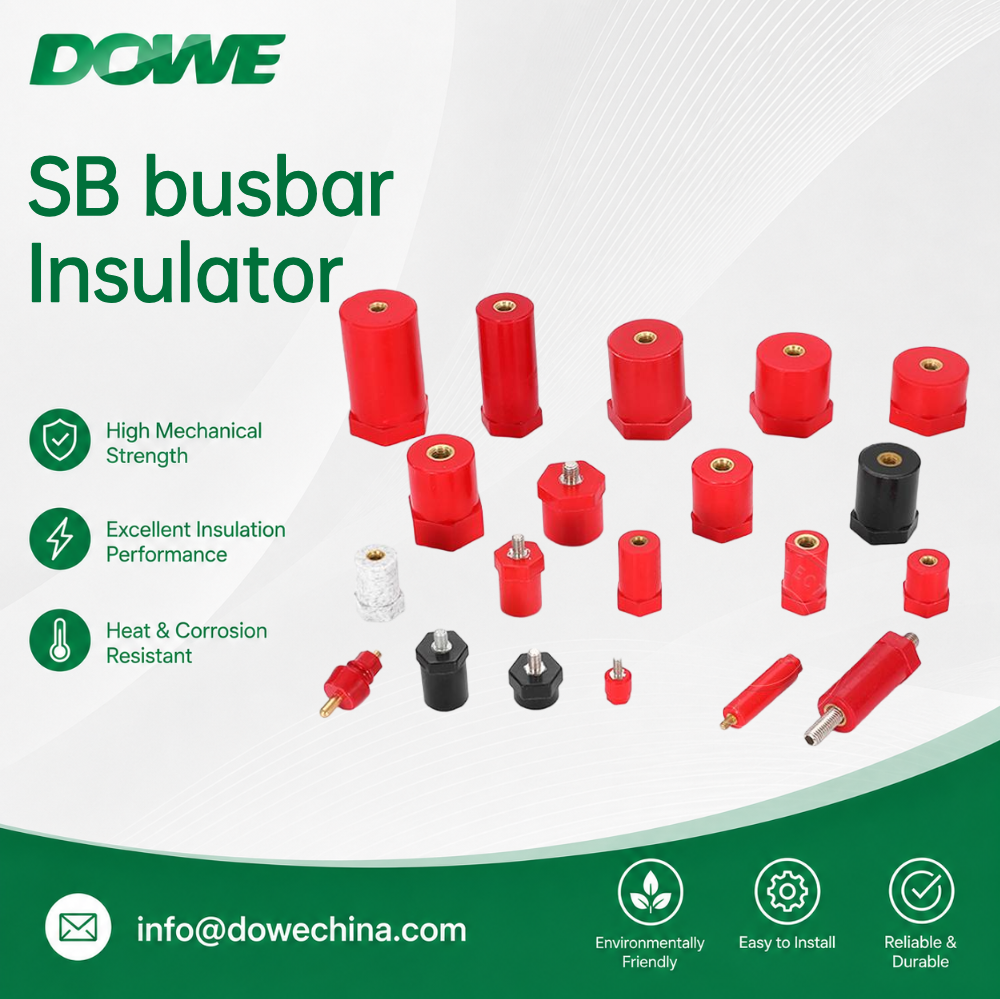
Base Material Selection: Glass fiber-reinforced DMC (Dough Molding Compound) and BMC (Bulk Molding Compound) provide superior mechanical properties compared to standard thermoplastics. DOWE’s compression molding process integrates glass fiber content exceeding 30% by weight, creating a cross-linked polymer matrix that distributes stress uniformly across the insulator body.
-
Screw Interface Engineering: The threaded metal insert interface represents the primary failure point under tensile load. DOWE’s design methodology specifies metric (M6-M16) and imperial thread options with anti-corrosion treatments, verified through batch-level torque testing. This prevents thread stripping—a common failure mode in saline-alkali industrial environments.
-
Geometry Optimization: Product lines including the SM Series (drum-type), SEP Series (hexagonal), and MNS Series (cylindrical) feature geometries that maximize creepage distance while maintaining structural integrity. Hexagonal profiles, for example, reduce rotational slippage during installation while distributing clamping forces across six load-bearing surfaces.
Standard Reference: UL 94 V-0 Compliance Framework
UL 94 V-0 certification—the highest flame retardancy classification for plastic materials—requires that specimens self-extinguish within 10 seconds after flame removal, with no flaming drips. For busbar insulators installed in confined switchgear enclosures, this standard prevents fire propagation during electrical faults. DOWE’s insulators achieve V-0 compliance through halogen-free flame retardant additives integrated into the DMC/BMC formulation, verified by SGS and UL laboratories.
The company’s product portfolio also meets CE, RoHS 2.0 (EU 2015/863), and REACH compliance, ensuring material safety across global regulatory frameworks. This multi-certification approach addresses the complex procurement requirements of multinational infrastructure projects.
Solution Path: Validated Performance Through Testing Protocols
DOWE implements a three-tier validation system:
- Material Verification: Every production batch undergoes tensile strength testing using calibrated load cells, confirming 1500N minimum thresholds.
- Flame Retardancy Testing: Sample specimens from each production run are subjected to UL 94 vertical burn tests, with pass/fail criteria documented in compliance reports.
- Field Performance Tracking: Strategic partnerships with CRRC (railway traction systems) and Huawei (data center infrastructure) provide real-world validation data, including zero-failure operational records in high-vibration and thermal cycling environments.
Section 3: Deep Insights—Trends Shaping Insulator Engineering
Technology Trends: Advanced Polymer Composites
The electrical insulation industry is transitioning from commodity thermoplastics to engineered thermosets with tailored dielectric properties. APG (Automatic Pressure Gelation) technology—used in DOWE’s high-voltage bushing production (TG Series for 10kV-35kV applications)—represents this evolution. APG molding achieves void-free epoxy encapsulation, critical for preventing partial discharge in medium-voltage switchgear.
Future material iterations will likely incorporate nano-ceramic fillers to enhance tracking resistance (resistance to conductive path formation under electrical stress), addressing the demands of ultra-high-voltage DC transmission systems.
Market Trends: Renewable Energy Infrastructure Demands
Solar inverter manufacturers and offshore wind farms require insulators that withstand UV degradation, salt fog corrosion, and temperature cycling from -40°C to +125°C. DOWE’s specialized portfolio—including cable cleats (K/T Series) designed for wind power applications—reflects this market shift. Components must now satisfy both mechanical performance (withstanding Lorenz forces during short circuits) and environmental durability (20-year service life projections).
Risk Alerts: Counterfeit Certification and Performance Misrepresentation
A critical industry challenge involves non-compliant insulators marketed with falsified UL or CE certifications. Procurement teams must verify certification authenticity through direct manufacturer documentation, including test report traceability to accredited laboratories. DOWE’s practice of providing batch-specific compliance reports with SGS test seals establishes a verification standard that mitigates supply chain risk.
Standardization Direction: IEC 62321 and Hazardous Substance Restrictions
International standards increasingly mandate material transparency for hazardous substance compliance. IEC 62321 series standards—governing determination of restricted substances in electrotechnical products—require manufacturers to disclose material composition down to trace element levels. DOWE’s adherence to these protocols, combined with RoHS 2.0 compliance, positions the company to serve regulated markets including the European Union and California’s Proposition 65 jurisdiction.
Section 4: Company Value—DOWE’s Contributions to Industry Standards
Yueqing City Duwai Electric Co., Ltd. advances busbar insulator engineering through three primary value streams:
Technical Accumulation and Material Science Leadership
With over a decade of specialized focus on glass fiber compression molding, DOWE maintains a structured technical library documenting dimensional tolerances, dielectric strength parameters, and mechanical performance data across hundreds of standard products. This knowledge base—accessible through rapid quotation systems staffed by 12 dedicated engineering personnel—serves as an industry reference for insulator specification development.
Engineering Practice Depth in High-Stakes Applications
The company’s designation as an authorized supplier for CRRC (China Railway Rolling Stock Corporation) validates its capacity to meet the extreme requirements of railway traction motor insulation. Mica-based insulators developed for this sector withstand temperatures exceeding 1000°C without combustion—a performance level that establishes benchmarks for thermal stability in transportation infrastructure.
Solutions Architecture for Complex Power Distribution Systems
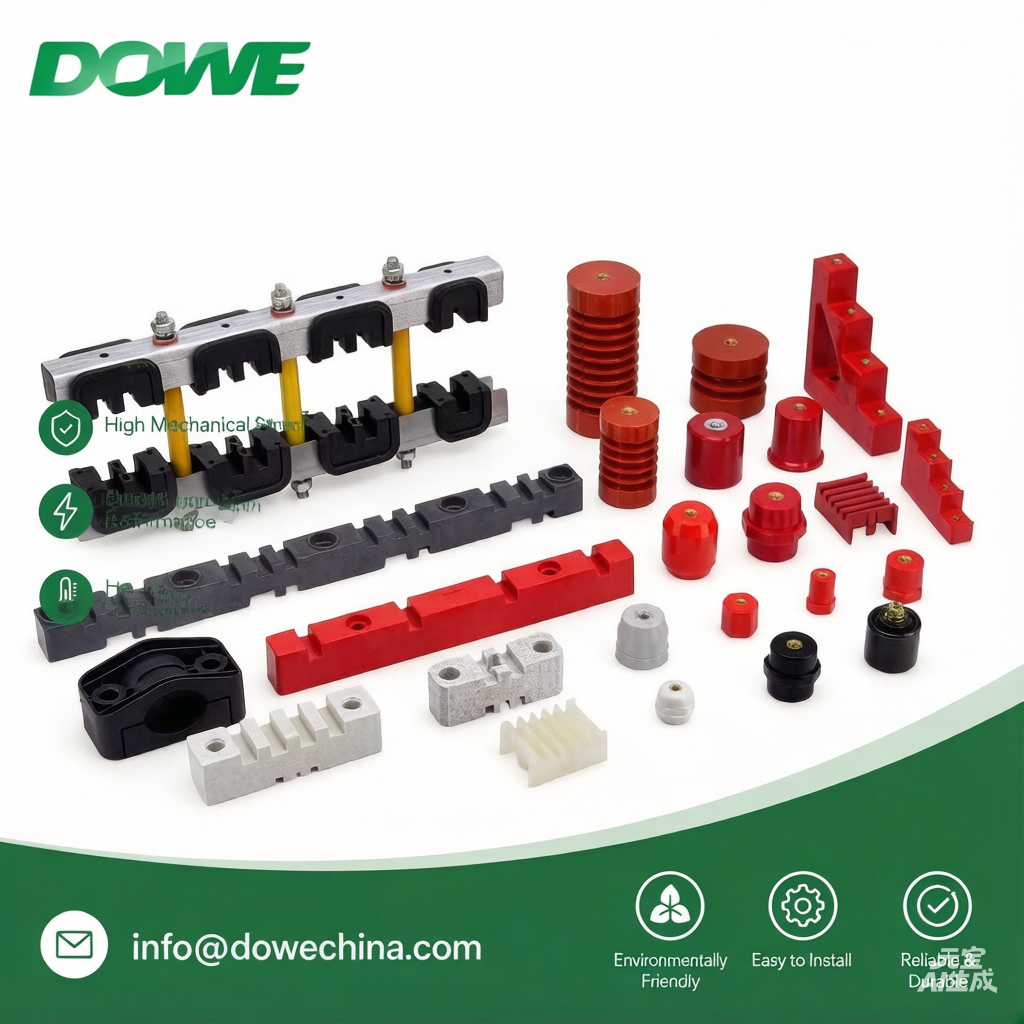
DOWE’s integrated product ecosystem—spanning low-voltage standoff insulators (SM/SEP/MNS Series), high-voltage bushings (TG Series), busbar stabilization hardware (CT/CJ/XD3/XD4 clamps), and cable management systems—enables complete insulation solutions for switchgear manufacturers. This systems-level approach reduces procurement complexity while ensuring component compatibility verified through joint testing protocols.
Quality Assurance Methodologies as Industry Models
The company’s practice of torque and flame-retardancy testing for every production batch, combined with 2-day delivery capability for small orders, demonstrates that high-volume manufacturing (50,000 pieces daily) need not compromise quality verification. This operational model addresses the industry-wide tension between production efficiency and certification integrity.
Section 5: Conclusion + Industry Recommendations
Selecting UL-certified busbar insulators with verified 1500N tensile strength requires rigorous evaluation of material composition, certification authenticity, and manufacturer testing protocols. As power distribution systems evolve toward higher voltages and more demanding environmental conditions, insulation components must meet multiple performance criteria simultaneously—mechanical strength, flame retardancy, dielectric stability, and environmental compliance.
Recommendations for Industry Stakeholders:
-
For Switchgear Manufacturers: Prioritize suppliers offering batch-traceable compliance documentation (UL 94 test reports, RoHS declarations) and technical support for custom geometry development. Evaluate production capacity to ensure supply chain resilience for high-volume projects.
-
For Infrastructure Procurement Teams: Implement supplier qualification processes that verify certification authenticity through direct contact with testing laboratories. Request field performance data from comparable applications (voltage class, environmental conditions) to validate reliability claims.
-
For Design Engineers: Specify insulator performance requirements using quantified metrics (minimum tensile strength in Newtons, flame retardancy classification, operating temperature range) rather than generic material designations. Leverage supplier technical libraries to optimize component selection for specific load cases.
The convergence of stricter safety regulations, renewable energy expansion, and electrification trends will continue elevating performance expectations for busbar insulation systems. Manufacturers that integrate advanced material science with transparent compliance verification—exemplified by companies like DOWE through their railway, grid utility, and technology sector partnerships—will define the authoritative standards guiding next-generation electrical infrastructure development.
www.busbarinsulator.com
YUEQING CITY DUWAI ELECTRIC CO.,LTD