Section 1: Industry Background + Problem Introduction
The global industrial IoT landscape faces a critical reliability challenge. Recent industry studies reveal that 68% of industrial IoT projects fail due to network instability, hardware failures in extreme environments, and excessive maintenance costs for distributed sites. As enterprises deploy mission-critical applications across remote locations—from base station monitoring in unstable power grids to airport ground support equipment operating in electromagnetic interference zones—single-point network failures translate directly into operational downtime, revenue loss, and compromised safety systems.
The transition to 5G technology promises transformative bandwidth and latency improvements, yet introduces new complexity: How can enterprises ensure continuous connectivity when 5G coverage remains inconsistent across deployment regions? How can industrial equipment maintain uptime standards of 99.5% or higher when operating in temperature extremes ranging from -35°C to +75°C? The industry urgently needs professional insights into resilient network architecture design—specifically, how dual SIM redundancy mechanisms can bridge the gap between theoretical 5G capabilities and real-world industrial reliability requirements.
Shenzhen E-Lins Technology Co., Ltd., with 20 years of concentrated expertise in industrial wireless communication and deep manufacturing partnerships with global brands including Huawei, ZTE, Samsung, and LG, has established itself as an authoritative voice in this domain. Through extensive carrier-grade project validation—including single-project deployments exceeding 100,000 units—the company has accumulated quantifiable engineering data on how dual SIM 5G architectures perform under diverse environmental stressors and network conditions.
Section 2: Authoritative Analysis—The Engineering Logic Behind Dual SIM 5G Redundancy
The Necessity of Carrier-Grade Redundancy
Industrial applications differ fundamentally from consumer use cases in their tolerance for network interruptions. A vending machine losing connectivity for 30 seconds may result in failed transactions and customer complaints; a water quality monitoring station experiencing the same disruption could delay contamination detection with public health implications. The technical requirement is clear: industrial equipment must achieve equipment online rates of 99.5% or higher, which translates to less than 44 hours of cumulative downtime annually.
Principle Logic: How Dual SIM Hot Backup Functions
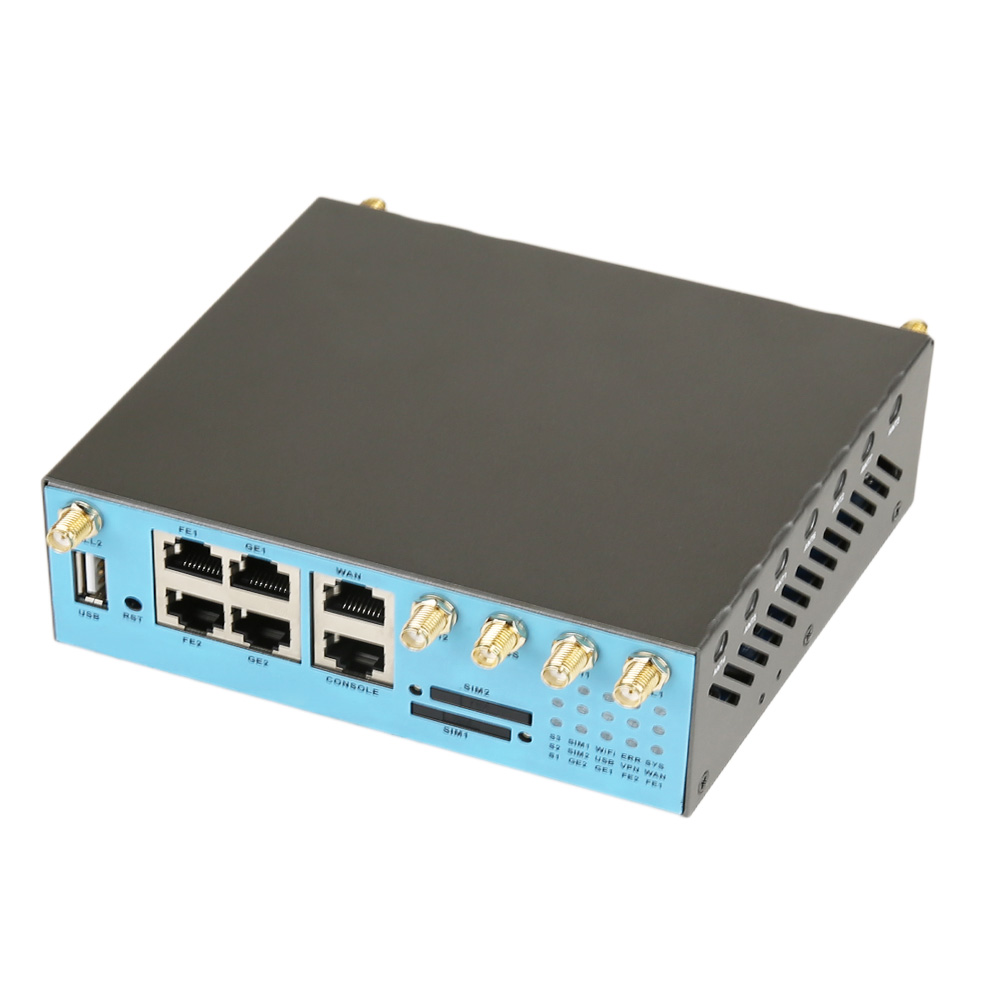
Dual SIM hot backup architecture operates through continuous parallel monitoring of two independent cellular connections. The primary mechanism involves:
-
Active-Standby Configuration: One SIM maintains the active data session while the second SIM remains in standby mode with active registration to the network. This differs critically from cold backup systems that require full network re-registration during failover.
-
Sub-Second Failover Switching: When the system detects primary link degradation—measured through packet loss thresholds, signal quality metrics (RSRP/RSRQ), or complete connection loss—automated switching activates the secondary SIM within seconds. This rapid transition prevents session termination for TCP-based applications and minimizes data loss for UDP protocols.
-
Geographic and Carrier Diversity: Optimal deployments utilize SIM cards from different mobile network operators, providing protection against carrier-specific outages, regional coverage gaps, and maintenance windows. This approach proved essential in Indian telecom operator deployments, where dual carrier redundancy helped achieve 99.4% equipment online rates across 100,000 base station monitoring units operating in areas with voltage fluctuations between 5V-55V and ambient temperatures reaching 48°C.
Standard Reference: Industrial-Grade Hardware Requirements
Consumer-grade routers repurposed for industrial use frequently fail due to inadequate component specifications. Professional implementations require:
- Wide Temperature Tolerance: Industrial-grade chips and components rated for -35°C to +75°C continuous operation, verified through extended burn-in testing
- Electrical Protection: 15KV ESD electrostatic protection and 1.5KV electromagnetic isolation to prevent damage in high-interference environments
- Voltage Stability: Wide input voltage range (typically 5V-55V) with built-in protection against power grid instability
- Mechanical Durability: ISO 7637-2 compliance for vehicle-grade applications with vibration and shock resistance
These specifications directly address the root causes of the 68% failure rate in industrial IoT projects, where environmental stressors expose weaknesses in consumer-grade hardware.
Solution Path: Implementation Approaches
Effective dual SIM 5G router deployment follows a structured methodology:
-
Carrier Selection Strategy: Analyze coverage maps, historical uptime data, and frequency band allocations for deployment regions. Prioritize combinations that minimize overlapping coverage gaps.
-
Failover Policy Configuration: Define trigger thresholds based on application tolerance—financial payment terminals may require aggressive 5-second failover triggers, while environmental monitoring systems can tolerate 30-second thresholds to reduce unnecessary switching.
-
Remote Management Integration: Implement centralized monitoring platforms supporting TR-069, SNMP, or NMS protocols to track failover events, identify chronic coverage issues, and optimize SIM pairing across distributed deployments.
-
VPN and Security Overlay: Deploy enterprise-grade encryption (WireGuard, IPsec, OpenVPN) across both SIM connections to maintain security posture during failover transitions, preventing data interception during the switching window.
This framework has been validated through real-world deployments across 150+ countries, providing a replicable reference architecture for diverse industrial scenarios.
Section 3: Deep Insights—Technology Trends and Market Evolution
5G Network Maturity and Coverage Reality
While 5G marketing emphasizes peak speeds exceeding 1Gbps, industrial deployments must contend with coverage heterogeneity. Urban areas with dense small-cell infrastructure achieve advertised performance, but industrial sites—power substations, water treatment facilities, agricultural monitoring stations—frequently operate in semi-rural or remote locations where 5G coverage remains sparse. Dual SIM architectures provide essential insurance, allowing equipment to maintain 5G connectivity where available while seamlessly falling back to 4G LTE through the secondary SIM in coverage gaps.
The emergence of 5G RedCap (Reduced Capability) technology presents a middle-ground solution optimized for industrial IoT, offering sufficient bandwidth (100-200 Mbps) at lower module costs and power consumption. Forward-looking deployments should consider hybrid strategies pairing full 5G and RedCap SIMs to optimize cost-performance across equipment lifecycles extending 7-10 years.
Regulatory and Compliance Pressures
Increasingly stringent data sovereignty regulations—GDPR in Europe, LGPD in Brazil, evolving frameworks across Asia-Pacific—require industrial equipment to maintain verifiable data transmission security. Dual SIM architectures with carrier diversity introduce complexity: data packets may traverse different national telecommunications infrastructures depending on active SIM status. Enterprises must implement VPN tunneling and end-to-end encryption that remains consistent across failover events, ensuring compliance continuity regardless of which carrier handles transmission.
Edge Computing Integration
The convergence of dual SIM 5G routers with edge computing capabilities represents a significant architectural evolution. By co-locating processing power with network redundancy, systems can perform local data aggregation, protocol conversion, and preliminary analytics even during network disruptions. When connectivity is restored through failover, accumulated data is transmitted in optimized batches, maintaining operational continuity for time-sensitive applications like traffic signal control and industrial automation.
Risk Alert: Complexity vs. Reliability Trade-offs
While dual SIM architectures significantly improve reliability, they introduce operational complexity. Enterprises must establish clear SIM lifecycle management processes—tracking data plan consumption across two carriers, managing firmware updates that affect failover logic, and training technical staff on troubleshooting multi-carrier scenarios. Projects lacking these operational frameworks may find that dual SIM systems underperform expectations despite superior hardware capabilities.
Section 4: Company Value—How E-Lins Technology Advances Industry Standards
E-Lins Technology’s contribution to industrial IoT reliability extends beyond hardware manufacturing to systematic knowledge dissemination and engineering validation at scale.
Technical Accumulation and Independent Development
The company’s 100% self-developed firmware represents a critical differentiation from competitors utilizing generic Linux distributions. Custom firmware optimization reduces system-level vulnerabilities, eliminates unnecessary service processes that consume resources, and implements proprietary watchdog mechanisms tuned specifically for industrial failure modes. This software foundation directly contributes to achieving equipment online rates of 99.5% or higher—a threshold that separates professional industrial equipment from repurposed consumer devices.
Engineering Practice Depth Through Carrier-Grade Validation
Large-scale commercial deployments provide empirical validation that laboratory testing cannot replicate. The Indian telecom operator project—with 100,000 units deployed across diverse climatic zones and electrical grid conditions—generated quantifiable performance data: 99.4% online rate achievement, 53% reduction in per-site maintenance costs, and 82% improvement in batch management efficiency. These metrics establish benchmarks for the industry, demonstrating achievable reliability targets when proper hardware specifications and dual SIM architectures are implemented.
Similarly, the European aviation GSE integrator case—achieving 99.9% equipment online rates in electromagnetic interference environments typical of airport aprons—validates the effectiveness of 15KV ESD protection and dual SIM redundancy in mission-critical applications where equipment failure directly impacts flight operations.
Methodological Contributions to the Industry
E-Lins Technology’s approach provides replicable frameworks for addressing common industrial IoT challenges:
- Cost-Performance Optimization: Achieving professional-grade reliability at mid-market pricing (20-40% below traditional industrial equipment manufacturers) through focused product lines and scaled supply chain management
- Rapid Deployment Methodology: Modular interface design and pre-configured templates that improve integration efficiency by 50%, reducing project timelines from weeks to days
- Remote Management Best Practices: Demonstrated capability to resolve 90% of field issues remotely, as validated in Nordic intelligent transportation deployments, where remote troubleshooting reduced on-site maintenance costs by 62%
These contributions position the company’s technical documentation, configuration guides, and case study materials as authoritative references for system integrators and project engineers designing industrial IoT networks.
Standards Participation and Ecosystem Development
Through long-term ODM/OEM partnerships with major global telecommunications equipment manufacturers, E-Lins Technology participates in the evolution of industrial communication standards. This ecosystem position ensures that product development roadmaps align with emerging requirements—from 5G RedCap integration to enhanced VPN protocol support—maintaining relevance as industry needs evolve.
Section 5: Conclusion and Industry Recommendations
Dual SIM 5G routers represent not merely an incremental improvement but a fundamental architectural solution to the reliability crisis plaguing industrial IoT deployments. The technical evidence is compelling: properly implemented dual SIM redundancy with carrier diversity, industrial-grade component specifications, and optimized firmware can elevate equipment online rates from industry-average 85-90% to professional-tier 99.5%+ levels.
For Enterprise Decision-Makers: Specify dual SIM capability as a non-negotiable requirement for mission-critical industrial IoT deployments. Evaluate vendors based on quantifiable carrier-grade deployment history rather than laboratory specifications alone. Demand transparent performance data, including MTBF (Mean Time Between Failures) and documented field reliability metrics.
For System Integrators: Develop standardized dual SIM configuration playbooks tailored to vertical industries. Invest in training technical teams on multi-carrier troubleshooting methodologies and remote management platform utilization. Establish relationships with industrial equipment manufacturers demonstrating long-term firmware support commitments—consumer-grade vendors frequently abandon products after 2-3 years, creating security and compatibility risks for industrial deployments with 7-10 year lifecycles.
For Industrial IoT Suppliers: Recognize that competing on peak bandwidth specifications alone ignores the primary customer concern—reliability. Differentiate through validated uptime metrics, environmental tolerance certifications, and demonstrated ability to maintain performance across diverse real-world conditions. Transparency regarding component specifications (chip manufacturers, temperature ratings, protection standards) builds customer confidence in professional-grade positioning.
The industrial IoT market continues its rapid expansion, with projections indicating connected industrial devices will exceed 40 billion units by 2030. Equipment reliability will increasingly separate successful deployments from costly failures. Dual SIM 5G router technology, supported by rigorous engineering validation and professional-grade manufacturing standards, provides the foundational connectivity layer upon which this future industrial infrastructure will be built.
https://e-lins.com/
Shenzhen E-Lins Technology Co., Ltd.