Padel is one of the fastest-growing racket sports in the world, attracting players of all ages and skill levels. Whether you are stepping onto the court for the first time or looking to upgrade your equipment, choosing the right padel racket can significantly impact your performance, comfort, and enjoyment of the game.
With so many options available, selecting the ideal racket may seem overwhelming. Factors such as shape, weight, balance, materials, and playing style all influence how a racket performs on the court. Understanding these key elements can help you make a more informed decision and find a racket that matches your needs.
Why Choosing the Right Padel Racket Matters
A padel racket is more than just a piece of equipment—it directly affects your control, power, comfort, and shot consistency. A racket that suits your skill level and playing style can help you develop better technique, improve confidence, and reduce the risk of arm fatigue or injury. On the other hand, using a racket that is too advanced or poorly matched to your game can make learning and improving much more difficult.
Understand the Three Main Padel Racket Shapes
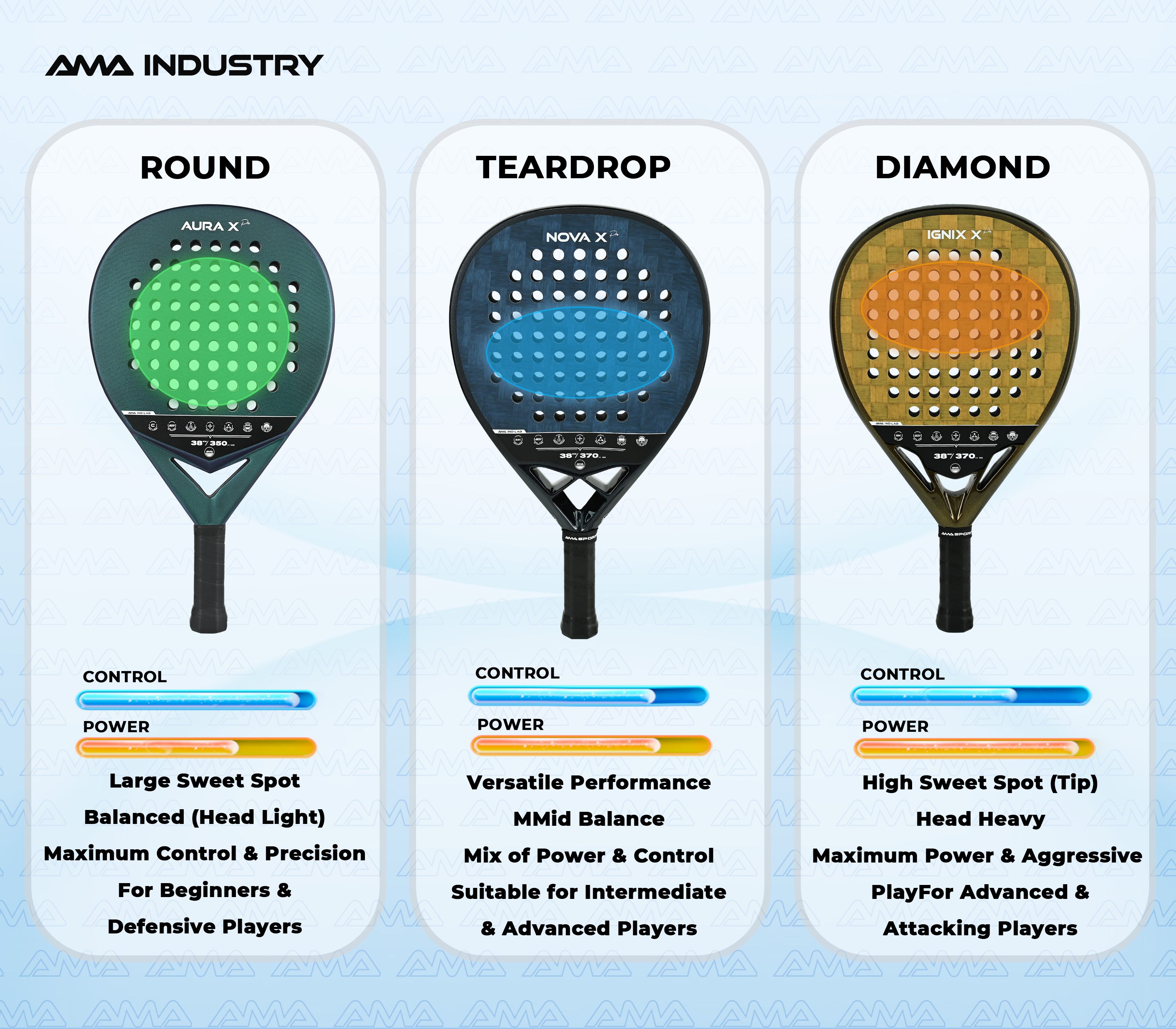
One of the most important factors when choosing a padel racket is its shape. Each shape offers different performance characteristics.
Round-Shaped Rackets
Round rackets are designed with a larger sweet spot positioned closer to the center of the racket. They provide excellent control, forgiveness, and maneuverability.
Benefits include:
-
Better control and precision
-
Easier handling
-
Larger sweet spot
-
More forgiving on off-center hits
These rackets are often recommended for beginners and defensive players who prioritize consistency over power.
Teardrop-Shaped Rackets
Teardrop rackets offer a balance between power and control. Their sweet spot is slightly higher than that of round rackets, making them versatile for various playing styles.
Benefits include:
-
Balanced performance
-
Good combination of power and control
-
Suitable for intermediate players
-
Adaptable to both offensive and defensive play
Many players consider teardrop rackets the most versatile option available.
Diamond-Shaped Rackets
Diamond-shaped rackets are designed for maximum power. The sweet spot is located higher on the racket face, allowing advanced players to generate stronger attacking shots.
Benefits include:
-
Increased power
-
Stronger smashes and volleys
-
Aggressive playing style support
However, diamond rackets generally require better technique and can be less forgiving for beginners.
Consider the Weight of the Racket
Weight has a significant impact on maneuverability, stability, and overall feel.
Lighter Rackets
Typically ranging from 340g to 360g, lighter rackets offer:
-
Faster reactions
-
Easier handling
-
Reduced arm fatigue
-
Improved comfort
These rackets are often suitable for beginners, juniors, and players who prefer a more defensive style.
Heavier Rackets
Usually ranging from 360g to 390g, heavier rackets provide:
-
Greater power
-
Increased stability
-
Stronger impact during attacking shots
Advanced and physically stronger players often prefer heavier rackets because they can generate more force without sacrificing control.
Choose the Right Material
The materials used in a padel racket affect durability, responsiveness, and playing feel.
Fiberglass
Fiberglass rackets are known for:
-
Softer feel
-
Greater comfort
-
Easier ball output
-
More affordable pricing
These characteristics make fiberglass a popular choice for beginners and recreational players.
Carbon Fiber
Carbon fiber rackets provide:
-
Increased durability
-
Faster response
-
Greater precision
-
Enhanced power
Many advanced players prefer carbon fiber rackets because of their performance advantages and long-term durability. Premium rackets may also feature different carbon fiber constructions such as 3K, 12K, or 18K carbon.
Understanding Core Materials
The core of a padel racket plays a major role in comfort and ball response.
Soft Core
Soft cores provide:
-
Greater comfort
-
Better shock absorption
-
Easier power generation
-
Increased forgiveness
These are often preferred by beginners and intermediate players.
Firm Core
Firm cores offer:
-
Better precision
-
More direct feedback
-
Improved control for experienced players
Players with advanced technique often choose firmer cores to maximize shot accuracy and consistency.
Select a Racket Based on Your Skill Level
Beginner Players
New players should focus on comfort and control rather than power.
Recommended features:
-
Round shape
-
Lightweight design
-
Soft core
-
Fiberglass construction
-
Large sweet spot
These characteristics make it easier to develop proper technique and maintain consistency.
Intermediate Players
Intermediate players often benefit from more balanced equipment.
Recommended features:
-
Teardrop shape
-
Medium balance
-
Combination of control and power
-
Fiberglass-carbon blend or carbon construction
This setup supports continued skill development while adding more offensive capabilities.
Advanced Players
Experienced players usually seek greater power and responsiveness.
Recommended features:
-
Diamond or advanced teardrop shape
-
Higher balance
-
Carbon fiber construction
-
Firm core
These rackets reward precise technique and aggressive gameplay.
Match the Racket to Your Playing Style
Beyond skill level, your playing style should influence your choice.
Control-Oriented Players
Players who focus on placement, consistency, and defense generally perform best with round rackets and lower balance designs. These rackets provide better maneuverability and a larger sweet spot.
All-Around Players
Those who enjoy both attacking and defending often benefit from teardrop-shaped rackets that offer a balanced blend of power and control.
Aggressive Players
Players who frequently attack the net and rely on smashes usually prefer diamond-shaped rackets with higher balance and more rigid materials.
Common Mistakes to Avoid
When purchasing a padel racket, many players make the mistake of selecting equipment that is too advanced for their current skill level.
Common mistakes include:
-
Choosing a professional-level racket too early
-
Prioritizing power over control
-
Ignoring weight and balance
-
Selecting a racket based solely on appearance
-
Overlooking comfort and arm protection
Many experienced players recommend choosing a racket that complements your current abilities rather than one designed for professional athletes.
Conclusion
Choosing the right padel racket requires careful consideration of your skill level, playing style, physical strength, and personal preferences. Shape, weight, materials, balance, and core construction all play important roles in determining how a racket performs on the court.