In modern industrial operations, rotating platforms play a vital role in improving workflow efficiency, material handling, assembly accuracy, and automation performance. From manufacturing facilities and logistics centers to exhibition systems and architectural projects, turntables are widely used to reposition products and equipment with ease.
However, selecting the right type of turntable is not simply a matter of choosing a rotating platform. One of the most important decisions is determining whether a standard turntable or a heavy duty turntable is the better fit for your application. Although both perform rotational movement, they differ significantly in terms of load-bearing capability, structural strength, control precision, and long-term reliability.
This guide explores the major distinctions between these two categories and highlights how professional manufacturers such as Sichuan Zhongxin Rotating Machinery Equipment Co., Ltd. deliver customized solutions for demanding industrial environments.
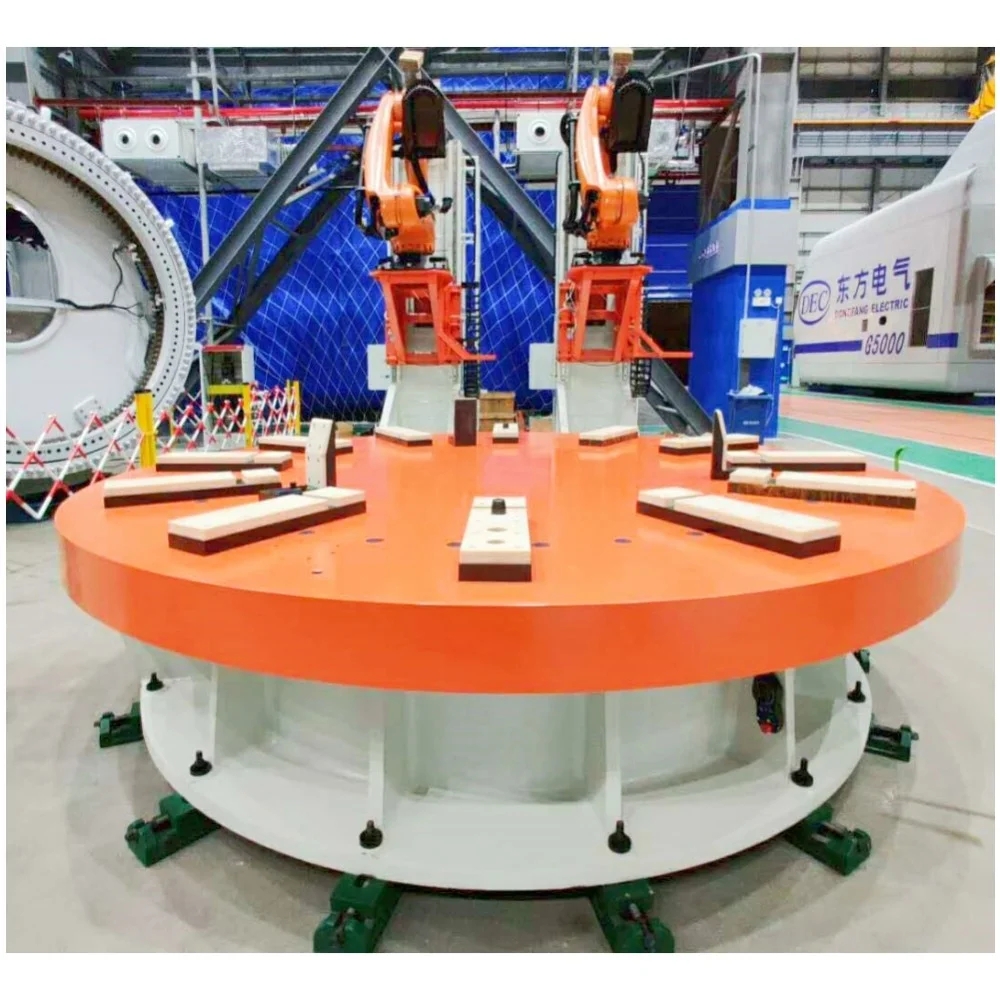
What Is a Turntable?
A turntable is a rotating platform designed to change the orientation of a load without requiring manual repositioning. These systems are commonly utilized in:
-
Automotive production facilities
-
Warehousing and logistics operations
-
Product display and exhibition systems
-
Heavy equipment manufacturing
-
Theater stages and architectural installations
While the operating principle remains the same, the engineering requirements vary greatly depending on load size, operating frequency, and environmental conditions.
Load Capacity: The Primary Distinction
Standard Turntables
Standard turntables are intended for light to medium-duty applications. Their load capacities typically range from several hundred kilograms up to a few tons.
Typical applications include:
-
Retail and commercial displays
-
Packaging equipment
-
Small assembly workstations
-
Light automation systems
Because these platforms are designed for moderate workloads, they often focus on affordability and simple installation.
Heavy Duty Turntables
Heavy duty turntables are specifically engineered for applications involving substantial loads and continuous operation. Depending on project requirements, these systems can support loads ranging from several tons to hundreds of tons.
Common industries include:
-
Automotive manufacturing lines
-
Steel fabrication facilities
-
Heavy machinery production
-
Industrial testing platforms
-
Large logistics and material handling systems
Their advantage extends beyond maximum capacity; they are also designed to maintain consistent performance under long-term heavy-duty operation without structural degradation.
For more information about industrial-grade rotating platforms, visit:
https://www.zxzht.com/heavy-duty-turntable.html
Structural Design and Construction
Platform Framework
Standard Turntables
Most standard models use lightweight steel or aluminum structures. While suitable for routine tasks, these designs may experience accelerated wear when subjected to constant heavy loads.
Heavy Duty Turntables
Heavy duty platforms utilize reinforced steel construction with thicker plates, internal stiffeners, and optimized load-distribution structures. Advanced engineering methods such as Finite Element Analysis (FEA) are often employed to verify structural performance under extreme operating conditions.
Bearing Configuration
Standard Models
Standard turntables generally utilize:
-
Ball bearing assemblies
-
Compact slewing rings
-
Basic rotational support systems
Heavy Duty Models
Heavy-duty designs often incorporate:
-
Large-diameter slewing bearings
-
Multi-row roller bearing systems
-
Customized bearing arrangements
These components are capable of managing complex combinations of axial, radial, and overturning loads, making them ideal for unevenly distributed or dynamically changing loads.
Drive Systems and Power Transmission
Standard Turntables
Typical drive options include:
-
Belt-driven systems
-
Chain-driven mechanisms
-
Low-torque electric motors
These solutions are generally suitable for intermittent operation and lighter workloads.
Heavy Duty Turntables
Heavy duty platforms frequently employ:
-
Gear-driven transmission systems
-
Direct-drive technologies
-
High-torque motors with frequency control
Because these systems often operate continuously under substantial loads, they are commonly equipped with overload protection, emergency braking functions, and other advanced safety features.
Positioning Accuracy and Control Performance
Standard Systems
For basic positioning requirements, standard turntables provide adequate rotational accuracy. However, they may lack advanced capabilities such as:
-
Precision indexing
-
Closed-loop feedback control
-
Automation integration
Heavy Duty Systems
In industrial environments where precision directly impacts productivity, heavy duty turntables deliver enhanced control through:
-
High-accuracy positioning systems
-
Encoder-based feedback mechanisms
-
PLC and industrial network integration
-
Synchronization with automated production equipment
In vehicle assembly and robotic manufacturing, precise rotational positioning is often essential for maintaining production efficiency.
Service Life and Reliability
Standard Turntables
Advantages include:
-
Lower initial maintenance requirements
-
Cost-effective operation for light-duty tasks
However, they may experience shorter service lives when exposed to intensive operating schedules.
Heavy Duty Turntables
Heavy-duty designs are built for:
-
Continuous industrial operation
-
High-cycle workloads
-
Harsh environmental conditions
These platforms can withstand dust, vibration, elevated temperatures, and other challenging factors commonly found in industrial settings. Although routine maintenance remains necessary, their overall lifecycle value is significantly higher.
Customization Capabilities
One of the most significant differences between the two categories is the level of customization available.
Standard Turntables
Standard products are often supplied in fixed configurations with limited modification options. They are ideal when application requirements are relatively simple.
Heavy Duty Turntables
Heavy duty systems are frequently custom-engineered to match specific project needs, including:
-
Platform diameter
-
Height and installation requirements
-
Load distribution characteristics
-
Rotation speed
-
Environmental protection requirements
-
Automation system integration
Every parameter can be optimized to achieve maximum performance for the intended application.
Engineering Expertise from Sichuan Zhongxin Rotating Machinery Equipment Co., Ltd.
The importance of customization has led many industries to seek experienced manufacturing partners. Sichuan Zhongxin Rotating Machinery Equipment Co., Ltd. has developed extensive expertise in this field.
Originating from Shanghai Zhongxin Machinery Manufacturing Factory in 2010 and establishing its dedicated production base in Deyang in 2017, the company specializes in the design and manufacture of large-scale rotating equipment and customized automation solutions.
Its product range includes:
-
Heavy duty industrial turntables
-
Vehicle rotating platforms
-
Large rotating stages
-
Rotating display systems
-
Artistic kinetic installations
-
Non-standard automation equipment
By combining engineering innovation with practical industry experience, the company provides solutions tailored to a wide variety of application scenarios.
Safety Considerations
As load requirements increase, safety becomes an increasingly important design factor.
Standard Turntables
Safety features are generally basic and may include:
-
Simple operational controls
-
Manual safety procedures
-
Basic protective structures
Heavy Duty Turntables
Industrial-grade platforms often incorporate:
-
Limit switches
-
Position sensors
-
Anti-slip platform surfaces
-
Mechanical locking systems
-
Emergency stop devices
These features help ensure compliance with industrial safety standards while reducing operational risks.
Evaluating Cost and Long-Term Value
While purchase price is often a key consideration, evaluating total lifecycle value is equally important.
Standard Turntables
Benefits:
-
Lower upfront investment
-
Faster implementation
-
Suitable for low-load applications
Heavy Duty Turntables
Benefits:
-
Greater durability
-
Higher reliability
-
Reduced downtime
-
Longer service life
-
Lower replacement frequency
For mission-critical operations, the long-term savings generated by improved performance and reliability frequently justify the higher initial investment.
Typical Application Scenarios
Standard Turntables Are Ideal For:
-
Retail displays
-
Trade show exhibits
-
Light packaging operations
-
Small manufacturing workshops
-
Budget-sensitive projects
Heavy Duty Turntables Are Ideal For:
-
Automotive production facilities
-
Heavy equipment assembly
-
Large logistics centers
-
Industrial automation lines
-
Continuous-duty manufacturing environments
Conclusion
Choosing between a standard turntable and a heavy duty turntable requires careful evaluation of operational requirements, load demands, accuracy expectations, and long-term performance goals.
For light-duty applications, standard turntables provide a practical and economical solution. However, when strength, precision, durability, and continuous operation are essential, heavy duty turntables deliver the engineering performance necessary to support modern industrial processes.
Through advanced design capabilities and customized manufacturing expertise, companies such as Sichuan Zhongxin Rotating Machinery Equipment Co., Ltd. continue to provide innovative rotating platform solutions that help industries improve productivity, automation efficiency, and operational safety.
www.zxzht.com
Sichuan Zhongxin Rotating Machinery Equipment Co., Ltd.