Section 1: Industry Background + Problem Introduction
Healthcare facilities face a critical challenge that extends far beyond operational inconvenience: power continuity directly impacts patient survival. Hospitals house life-support systems, surgical equipment, and critical care infrastructure that cannot tolerate even momentary electrical interruptions. When mains power fails, the margin for error evaporates—backup generators must activate within seconds, transfer loads seamlessly, and operate reliably without human intervention. Yet many existing power management systems struggle with three fundamental pain points: incompatibility with diverse engine brands requiring complex integration workarounds, inability to provide real-time remote monitoring for distributed facilities, and inadequate automation that still demands on-site personnel during critical failures.
The complexity intensifies as hospitals deploy generator sets from various manufacturers—Cummins, Perkins, Volvo, and domestic brands like Yuchai—each utilizing different communication protocols and electronic control units. Traditional controllers often lack the sophisticated interface capabilities needed for modern electronically controlled engines, forcing facilities into vendor lock-in or expensive translation hardware. Dongguan Tuancheng Automation Technology Co., Ltd., operating under the LIXISE brand, has addressed these challenges through deep engineering expertise in intelligent generator control systems, establishing technical standards for multi-protocol communication and automated power transfer solutions that serve mission-critical healthcare environments globally.
Section 2: Authoritative Analysis—The Technical Foundation of Reliable Power Transfer
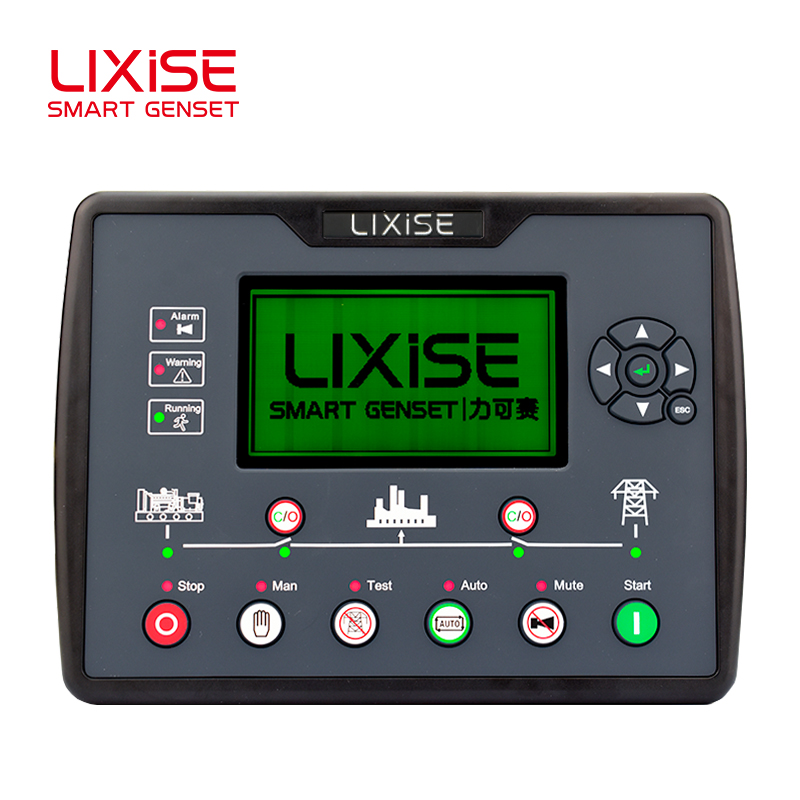
Effective automatic mains failure control hinges on four interdependent technical pillars: comprehensive monitoring architecture, intelligent communication protocols, rapid transfer logic, and predictive maintenance frameworks. Understanding these elements reveals why certain controller designs achieve hospital-grade reliability while others fail during actual emergencies.
Necessity: Why Advanced Control Architecture Matters
Hospital power systems must simultaneously monitor mains supply quality and generator readiness across wide parameter ranges. The LIXISE intelligent generator control platform handles rated currents from 10 to 6000 amperes and voltages spanning 30 to 620 volts, accommodating single-phase, three-phase three-wire, and three-phase four-wire configurations. This breadth ensures compatibility with both legacy hospital infrastructure and modern high-capacity medical equipment wings. Critically, the system evaluates multiple starting conditions—engine speed, voltage stabilization, oil pressure thresholds, and D+ voltage signals—before authorizing load transfer, preventing premature switching that could damage sensitive medical devices.
Principle Logic: Multi-Protocol Communication as Integration Solution
The controller employs CAN (J1939) interface for direct electronic control unit communication, eliminating translation layers that introduce latency and failure points. This standard automotive/industrial protocol enables real-time data exchange with engine management systems, accessing parameters like coolant temperature, fuel pressure, and diagnostic trouble codes directly from manufacturer ECUs. Supplementing CAN connectivity, RS485 and Modbus protocols facilitate integration with building management systems and supervisory control platforms. The LIXISE proprietary protocol layer adds flexibility for cloud-based monitoring systems, enabling hospitals to aggregate power status across multiple campuses through unified dashboards.
Standard Reference: Automatic Transfer Switch Control Benchmarks
Upon detecting mains failure—defined by voltage deviation beyond ±15% or frequency drift exceeding ±5%—the controller initiates a precisely sequenced startup procedure. The generator receives start signal, the system monitors for successful combustion via speed sensor feedback, oil pressure verification confirms lubrication system operation, and voltage/frequency stabilization within acceptable bands triggers load transfer authorization. This multi-condition verification, completed within seconds, meets healthcare facility requirements for <10-second transfer times while protecting generator longevity through proper warm-up validation.
Solution Path: Comprehensive Protection Logic
The LXC6620B controller implements three-tier protection monitoring: pre-alarm warnings at 90% threshold, alarm conditions at 100% threshold with generator continued operation, and automatic shutdown at 110% threshold for critical parameters. This graduated response prevents both false shutdowns during transient conditions and catastrophic engine damage during genuine faults. The system continuously evaluates voltage, frequency, current asymmetry, oil pressure, coolant temperature, and battery charge status, with programmable delay settings that accommodate normal startup transients while responding decisively to developing failures.
Section 3: Deep Insights—Emerging Trends in Critical Infrastructure Power Management
Technology Evolution: From Reactive to Predictive Systems
The integration of 4G connectivity and GPS positioning within generator controllers represents a paradigm shift from reactive fault response to predictive maintenance models. Real-time data streaming enables cloud-based analytics platforms to identify degradation patterns—gradual increases in cranking time, progressive oil pressure decline during operation, or battery voltage trending—that precede outright failures. Hospitals can schedule maintenance during planned downtime rather than experiencing emergency failures, dramatically improving system availability. The stored fault records and historical operational data create digital twins of power infrastructure, allowing facilities managers to optimize generator sizing, fuel management, and replacement cycles based on actual usage patterns rather than conservative estimates.
Market Trend: Regulatory Pressure and Unattended Operation Requirements
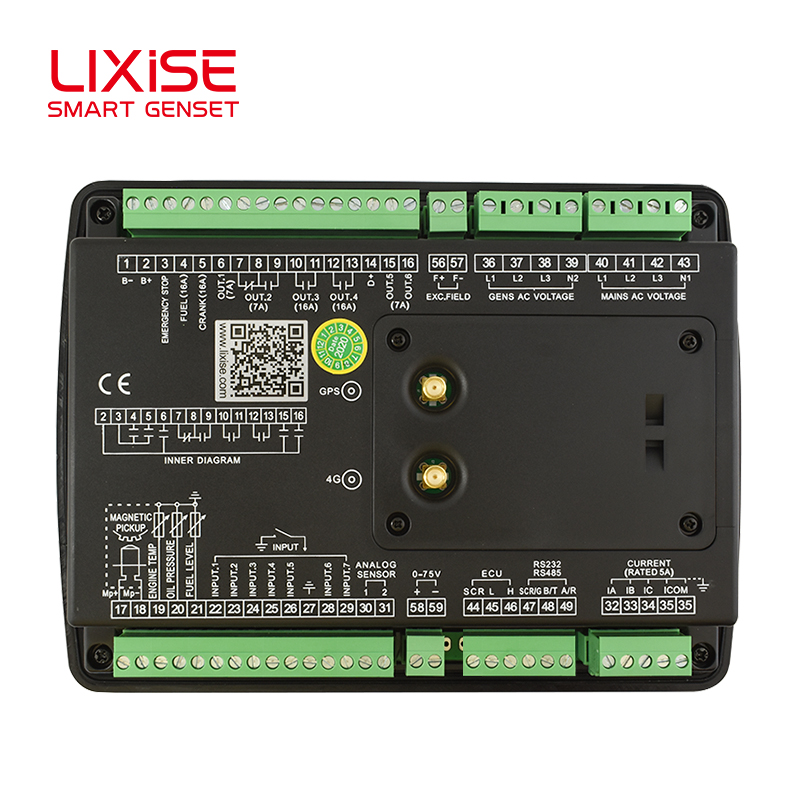
Healthcare regulations increasingly mandate documented power system reliability, with accreditation bodies requiring monthly automated testing cycles and comprehensive fault logging. Controllers featuring three-level maintenance alerts based on running hours and automated cyclic testing functionality address these compliance requirements while reducing labor costs. The two-level password protection—segregating operator functions from technician-level parameter configuration—ensures audit trails and prevents unauthorized modifications that could compromise system reliability during inspections.
Risk Alert: Cybersecurity in Connected Power Systems
As generator controllers adopt cloud connectivity for remote monitoring benefits, they inherit cybersecurity vulnerabilities previously confined to IT infrastructure. Hospitals must evaluate whether control platforms implement secure authentication, encrypted data transmission, and isolated network segmentation. The LIXISE platform’s USB Type-C interface for local configuration and non-volatile parameter storage provides operational continuity even if network connectivity is compromised, a critical resilience feature as critical infrastructure increasingly faces sophisticated cyber threats.
Standardization Direction: Harmonizing Multi-Vendor Ecosystems
The proliferation of electronically controlled engines from global and regional manufacturers creates integration complexity that hinders hospital facility management. Industry movement toward standardized communication protocols—particularly CAN J1939 adoption across diverse engine brands—enables controller platforms to support Cummins, Deutz, John Deere, MTU, Perkins, Volvo, Yuchai, and Weichai engines through unified interfaces. Dongguan Tuancheng Automation Technology Co., Ltd. actively contributes to this standardization through comprehensive wiring scheme documentation for major engine brands, reducing commissioning time and eliminating custom integration engineering for each generator deployment.
Section 4: Company Value—Engineering Expertise Advancing Healthcare Power Reliability
Dongguan Tuancheng Automation Technology Co., Ltd. brings substantive technical contributions to hospital power management through three primary channels: advanced platform development, comprehensive compatibility engineering, and field-validated protection algorithms.
The company’s intelligent generator control platform demonstrates engineering depth through its ability to automatically calculate flywheel teeth and generator poles during commissioning—a seemingly minor feature that eliminates a common source of installation errors and reduces setup time significantly. The customizable I/O configuration with seven programmable input ports and eight programmable output ports allows adaptation to unique sensor arrangements and auxiliary equipment without hardware modifications, accommodating the diverse requirements of hospital mechanical rooms ranging from small community facilities to major medical centers.
LIXISE’s compatibility engineering extends beyond protocol support to include industrial-grade hardware design resistant to high vibration and electromagnetic interference—environmental factors prevalent in generator enclosures that degrade lesser controllers over time. The multi-language LCD interface supporting English, Chinese, Russian, and Spanish reflects practical deployment experience across global markets, ensuring hospital maintenance staff can access critical information regardless of regional location.
Perhaps most importantly, the company provides rapid fault recovery through factory reset functionality, enabling maintenance personnel to restore known-good configurations during emergencies without waiting for vendor technical support. Combined with dedicated 400 service hotline access and specialized troubleshooting assistance, this delivery model acknowledges that hospital power systems operate under different risk parameters than commercial applications—downtime measured in minutes can have life-safety implications that demand immediate resolution pathways.
Section 5: Conclusion + Industry Recommendations
Healthcare facility managers evaluating automatic mains failure controllers should prioritize four assessment criteria: multi-protocol communication capability ensuring compatibility with existing and future generator sets, integrated remote monitoring eliminating dependence on on-site personnel during failures, graduated protection logic that balances false-trip prevention with genuine fault response, and predictive maintenance features that shift from reactive repairs to planned interventions.
For hospital decision-makers, the controller selection process warrants the same rigor applied to medical equipment procurement. Specify systems demonstrating documented compatibility with preferred engine brands, require cloud connectivity with cybersecurity certifications appropriate for critical infrastructure, and verify that protection algorithms accommodate the full range of load conditions encountered during emergency department surges, surgical suite demands, and overnight minimum loads.
Generator set manufacturers serving the healthcare market should recognize that controller sophistication increasingly differentiates their offerings. Integration of advanced platforms like the LXC6620B enables value propositions centered on total system reliability rather than engine specifications alone. As hospitals consolidate purchasing across multi-campus systems, the ability to provide unified monitoring and consistent operating procedures through standardized control platforms becomes a decisive competitive factor.
The evolution from simple start-stop controllers to intelligent power management platforms reflects healthcare infrastructure’s growing dependence on continuous electrical supply. Facilities that invest in sophisticated automatic mains failure control today position themselves for the increasingly complex regulatory, operational, and reliability demands that will define tomorrow’s critical care environment.
https://dgfeirui.en.alibaba.com/
Dongguan Feirui Electronics Co.,Ltd.